
When engineers and procurement managers evaluate structural materials for wind power infrastructure, the AS/NZS 1163 C350 pipe consistently emerges as the preferred choice. This cold-formed structural steel hollow section delivers a minimum yield strength of 350 MPa and a minimum tensile strength of 430 MPa, striking an optimal balance between load capacity, weight efficiency, and cost. Whether supporting turbine tower base frames, equipment mounting brackets, or ancillary structural components, C350 hollow sections offer the mechanical consistency and compliance credentials that demanding renewable energy projects require.
|
|
|
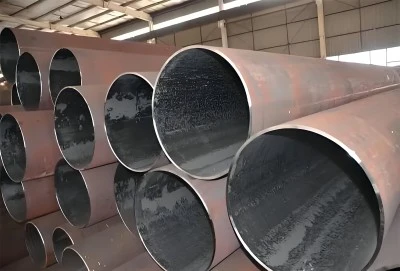
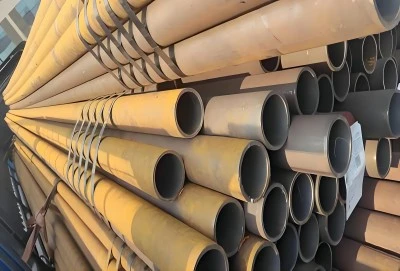
AS/NZS 1163 C350 Pipe – Specifications and Structural Advantages
What the Standard Actually Requires
AS/NZS 1163 is the standard that both Australia and New Zealand agree on for cold-formed structural steel hollow sections. The number C350 means that the minimum yield strength is 350 MPa, the minimum tensile strength is 430 MPa, and the extension ranges from 16% to 22%, based on the thickness of the wall. Tight tolerances on outside diameter, wall thickness, and straightness are required by the standard. This makes sure that every production batch performs the same way. The maximum amount of carbon is about 0.20%, and the maximum amount of manganese is about 1.60%. This keeps the carbon equivalent low enough that most normal widths can be welded in the field without pre-heating.
The C350L0 Variant for Dynamic Environments
At wind power sites, equipment is often exposed to low temperatures and is loaded and unloaded many times. This is directly dealt with by the AS/NZS 1163 C350 pipe grade, which guaranties Charpy V-notch impact energy absorption at 0°C. This makes it a good choice for structure parts that have to deal with both changing temperatures and wind loads. When engineers choose structural tube for places near the coast or on higher ground, they should check to see if the L0 designation is valid for the intended design life and loading situation.
Structural Benefits of C350 Pipes in Wind Power Projects
Superior Mechanical Performance Over Alternative Grades
When compared to C250 or mild steel versions, AS/NZS 1163 C350 pipes can hold significantly more weight while keeping the same cross-section size. In real life, this means that engineers can make members smaller while keeping the same safety limits. This lowers the weight of the structure and makes installation easier. ASTM A500 Grade B, which is similar in North America, sets a minimum yield of 317 MPa, which is much lower than C350's 350 MPa level. This makes C350 the better choice when compliance with Australasian standards is needed.
Support platforms for wind turbines are always being loaded from all directions. These are the main mechanical features of C350 hollow sections that make them perfect for that setting:
- High yield-to-tensile ratio: The range of 350 MPa for yield and 430–600 MPa for tensile strength creates a large plastic reserve that can handle rapid energy spikes during storm loading events without breaking.
- Consistent wall thickness tolerances: AS/NZS 1163's strict measurement control limits thickness variation, which lowers stress concentration at weld joints—an important factor in wind structures that are prone to wear.
- Weldability without pre-heat: Low carbon equivalent values allow welding on-site, which cuts down on the time it takes to make and the risk of thermal distortion during tower assembly.
- Versatile connection compatibility: AS/NZS 1163 C350 pipe can be joined in a number of different ways, including mechanically, welded, or bolted. This gives structural engineers a lot of options when planning base frames, transition pieces, and secondary steelwork.
All of these features mean that maintenance intervals are longer and service interruptions caused by fatigue are less likely. These are important factors when turbines are used in remote or offshore locations.
Procurement Insights – Sourcing C350 Structural Hollow Sections for Wind Power Projects
There's more to finding structural pipe for a wind power project than just comparing prices per unit. There is equal weight given to the honesty of the certification, the regularity of the batches, and the dependability of the delivery.
When buying things, teams should give more weight to suppliers who offer Mill Test Certificates (MTC) that are certified to EN 10204 Type 3.1 or 3.2. These certificates show that the heat chemical analysis and mechanical test results meet the requirements of AS/NZS 1163. Third-party checking by a neutral party, such as 100% eddy current or ultrasonic testing of longitudinal weld seams, provides an extra level of protection against problems below the surface that can't be seen.
In terms of logistics, wind energy projects usually have set dates for when they are ready to go live. Making sure that a manufacturer has enough inventory and can commit to 15–30 day delivery windows can help avoid costly program delays. When you buy in bulk, you can often get tiered prices, which lowers the cost of the job without lowering the quality of the work.
Comparing C350 Pipes with Other Structural Pipe Options – Making the Right Decision
Choosing the right pipe grade is both an engineering and business choice that affects the whole job. For lighter-duty uses, C250 structural hollow sections are fine as long as the yield strength is above 250 MPa. However, they need bigger cross-sections to carry the same amount of weight, which adds to the cost of the material and the weight. For wind turbine support applications, where member size directly impacts foundation design and crane capacity, AS/NZS 1163 C350 pipe's higher strength usually results in a net cost advantage, even though it costs a little more per ton.
The zinc coating on galvanized mild steel pipe protects it from rusting, but it usually has a lower yield strength and less consistent mechanical properties. Specifying C350 sections with a purpose-applied corrosion protection system—such as 3LPE or FBE coating—tends to work better than relying on galvanizing alone over a 20–25 year design life in coastal and offshore wind environments where salt spray speeds up coating degradation.
The choice should always be based on confirmed load estimates, link geometry, buckling conditions, and the site surroundings, not just the cost of the materials.
Ensuring Quality and Long-Term Performance of AS/NZS 1163 C350 Pipes
The buying and quality teams should check the following before taking a shipment of AS/NZS 1163 C350 pipes:
- MTC documentation: The MTC paperwork says to check the validity of heat numbers and real mechanical results, not just nominal minimums.
- Dimensional verification: Check the outside width, wall thickness, and mass per unit length by looking them up in Table 7 of AS/NZS 1163.
- NDT records: Every production lot should have a report on the weld seam integrity from eddy current or ultrasonic testing.
- Surface condition: Look for thin spots, deep pits, or laminations that could affect the bonding of the next step or the quality of the weld.
For L0 grades, look at the Charpy V-notch test results that confirm impact absorption at 0°C against the minimum energy number that was given. Regular checks after installation, focused on the state of the weld joints, the stability of the coating, and the retention of fastener torque, protect the capital investment and extend the service life. Case studies from wind farm operators regularly show that C350 structural members that are well taken care of reach and often exceed their 25-year design life when they are paired with the right surface protection from the start.
Conclusion
It is well known that AS/NZS 1163 C350 pipe is the most reliable grade for wind power structural applications in Australia, New Zealand, Singapore, and the Middle East. Their high yield strength, controlled weldability, precise dimensions, and agreement with AS/NZS 1163 standards take away a lot of technical risk from project performance. Setting the project up for long-term structural stability means selecting a certified C350 section and getting it from a maker with proven MTC paperwork and a track record of on-time delivery. This is true whether the section is used for a turbine base frame, an equipment support bracket, or a bridge auxiliary member.
FAQ
What is the minimum yield strength of C350 structural pipe?
In order to meet AS/NZS 1163 C350 pipe requirements, the minimum yield strength is 350 MPa and the minimum tensile strength is 430 MPa. These numbers show that it is significantly stronger than C250 sections and can be used for medium to high load-bearing structural uses in industrial building and wind energy.
What is the difference between C350 and C350L0?
The Charpy V-notch impact energy requirement at 0°C is added by C350L0. The standard C350 doesn't come with this guarantee against impacts. C350L0 gives extra assurance of fracture toughness for wind turbine parts that are exposed to low temperatures or cyclic fatigue loading.
What certifications should I request from a C350 pipe supplier?
Ask for an MTC that is certified to EN 10204 Type 3.1 or 3.2, shows that it meets AS/NZS 1163, and has real heat, chemical, and mechanical test results. Extra NDT reports and records of dimensional inspections make it easier to trust the quality of the batch.
How long does procurement typically take?
For medium-sized projects, the whole process usually takes three to six weeks, which includes shortlisting suppliers, comparing quotes, confirming samples, signing the contract, production, inspection, and shipping.
Partner with Longma Group for Certified AS/NZS 1163 C350 Pipe Supply
Since 2003, Longma Group has been making certified structural steel pipe for projects in more than 90 countries. The quality of the products can be tracked from the raw materials to the finished products. We are a reliable company that makes AS/NZS 1163 C350 pipes. We have ISO 9001, API 5L, and other foreign quality certifications, and we only buy steel from approved mills like Baosteel, HBIS, and Shagang. To get an MTC sample, shipping timeline, or competitive bulk quote, email our technical team at info@longma-group.com or visit longma-group.com.