
Cold-formed hollow sections of high reliability are a top choice in the industry for structural engineers and procurement managers looking for AS/NZS 1163 C350 pipe. The lowest yield strength of this steel grade is 350 MPa and the lowest tensile strength is 430 MPa. This steel grade is the preferred material for commercial building frames, bridge components and industrial mechanical structures . This all-inclusive guide provides the fundamental technical specifications, cross-grade performance comparison, critical procurement considerations, and real engineering applications of it, providing the right and actionable knowledge for procurement professionals for supplier selection and on-time project completion.
|
|
|
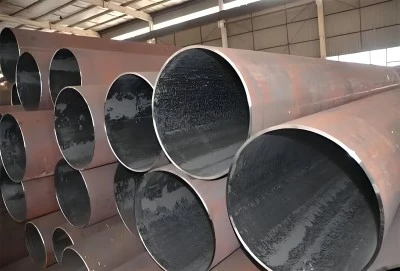
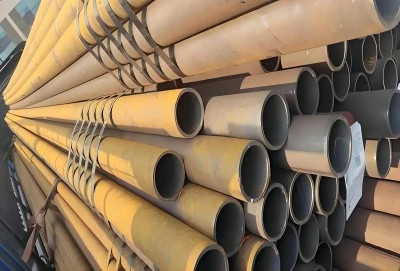
AS/NZS 1163 C350 Pipe Core Specifications
Mechanical & Chemical Properties
AS/NZS 1163, the joint Australian and New Zealand standard for cold-formed structural steel hollow sections, defines strict performance and safety requirements for C350-grade products. The “C350” designation denotes cold-formed manufacturing and a minimum yield strength of 350 MPa. Its tensile strength ranges from 430 MPa to 600 MPa, with elongation rates of 16%–22%, varying according to section wall thickness.
Engineered for excellent weldability, C350 pipe features a low carbon equivalent (CE) composition. Its carbon content is limited to a maximum of 0.20% and manganese to 1.60%, enabling on-site welding of most standard wall thicknesses without pre-heating. This property significantly simplifies on-site fabrication workflows and reduces construction costs.
Dimensional Tolerances & Surface Protection Solutions
The AS/NZS 1163 standard enforces rigorous tolerance controls for key parameters including outer diameter, wall thickness, unit mass, and section straightness. Per Table 7 of the standard, these precise dimensional tolerances ensure tight fabrication fit-up, structural accuracy, and consistent assembly quality on construction sites.
To adapt to harsh operating environments, multiple surface treatment options are available, including hot-dip galvanizing, FBE coating, and 3LPE wrapping. These anti-corrosion treatments effectively extend the service life of AS/NZS 1163 C350 pipe, making it ideal for coastal infrastructure, humid industrial facilities, and other corrosion-prone scenarios.
C350L0 Low-Temperature Resistant Variant
For projects in cold climates or structures subjected to frequent dynamic impact loads, the C350L0 subgrade delivers enhanced structural safety. This variant is certified to meet specified Charpy V-notch impact energy absorption requirements at 0 °C, making it well-suited for refrigeration facilities, elevated temperate-zone structures, and mechanical equipment bearing cyclic shock loads.
AS/NZS 1163 Grade Comparison: C250 vs C350 vs C450
Choosing the right grade of steel is crucial to prevent over-engineering, under-performance and unnecessary project costs. The three main grades under AS/NZS 1163 standard have different performance positioning and application scenarios:
C250: With a minimum yield strength of 250 MPa, C250 is designed for light-duty applications such as handrails, fences and non-load-bearing partition structures. The lower strength of C250 means thicker section specifications are needed for the same load capacity as C350, leading to greater structural dead weight and less cost efficiency for medium and heavy-load cases.
C350 The best all-round middle grade solution. AS/NZS 1163 C350 pipe is an efficient option to withstand medium to high structural loads while balancing section size, self weight and material cost. The most economical and versatile solution for most commercial building frames and bridge support structures.
C450: The highest strength grade in the series, with minimum yield strength of 450 MPa. Intended for heavy duty industrial frames and long span truss structures. But it has a higher market premium and strict welding qualification requirements due to its higher carbon equivalent value.
C350 is internationally equivalent to EN 10219 S355 for global engineering and procurement teams, with structural performance between ASTM A500 Grade B and Grade C. These cross-standard equivalencies are critical reference points for multinational projects and multi-specification engineering document reviews .
Key Procurement Checkpoints for AS/NZS 1163 C350 Pipe
Overseas sourcing of C350 cold-formed hollow sections requires rigorous due diligence to ensure consistent batch quality and full standard compliance. Procurement teams must verify the following core indicators before order confirmation:
1. Mill Test Certificate (MTC): Require EN 10204 Type 3.1 or 3.2 certified test reports that record actual heat analysis and mechanical test data for each production batch, rather than generic average values, to ensure traceable quality.
2. Full Non-Destructive Testing (NDT): Mandate 100% eddy current or ultrasonic testing of longitudinal weld seams to eliminate internal welding defects before shipment.
3. Third-Party Dimensional Verification: Conduct independent inspection of roundness, wall thickness, and unit mass to ensure full compliance with AS/NZS 1163 Table 7 tolerance limits.
4. Low-Temperature Impact Test Records (C350L0 Only): Review complete 0 °C Charpy V-notch impact test data to confirm low-temperature toughness meets design specifications.
5. Batch Consistency Documentation: Request statistical process control (SPC) and batch sampling reports to minimize on-site fabrication risks caused by heat batch fluctuations.
These verification measures effectively reduce project quality risks and streamline owner acceptance inspections. In terms of delivery cycles, reliable suppliers typically deliver standard-sized C350 pipe within 15–30 days, while custom dimensions and special thicknesses require a 4–6 week lead time. Aligning procurement schedules with construction timelines is essential to avoid site shutdown delays.
Engineering Applications & Core Advantages
AS/NZS 1163 C350 pipe features an outstanding strength-to-weight ratio, enabling smaller, lighter section designs without compromising load-bearing capacity. This advantage reduces overall steel consumption, cuts structural dead load, and simplifies on-site hoisting and construction operations, making it widely adopted in high-value engineering projects:
-
Building Structures: RHS and SHS C350 sections serve as core columns and load-bearing frames for commercial buildings and industrial factories, reliably bearing axial and combined structural loads.
-
Bridge Engineering: Used for bridge auxiliary components and support frameworks, optimizing structural self-weight and facilitating orderly erection and construction sequencing.
-
New Energy Infrastructure: Ideal for wind power equipment bases and solar panel support frames, delivering stable ductility and fatigue resistance under cyclic loading conditions.
-
Logistics & Industrial Facilities: Extensively applied in conveyor platforms, mezzanine floors, and heavy-duty storage racking systems.
-
Mechanical Manufacturing: Replaces bulky open profiles for vehicle and mechanical chassis components, reducing equipment weight while enhancing structural rigidity.
Batch quality stability is pivotal for these application scenarios. Inconsistent heat batch performance can lead to on-site rework and remedial costs that far outweigh material savings.
Selection & Fabrication Best Practices
Final steel grade selection should not rely solely on yield strength. Engineers need to comprehensively evaluate section size, wall thickness, effective span, connection methods, buckling performance, and design load combinations. A section qualified for tensile testing may still fail column buckling verification if its diameter-to-thickness ratio exceeds the compact section limits specified in AS 4100 and other mainstream design codes.
During fabrication, follow AS/NZS 1554.1 standards by adopting qualified welding procedures and low-hydrogen welding electrodes to protect the mechanical properties of weld heat-affected zones. Avoid unprocessed flame cutting of thick walls, and store steel pipes on dunnage off the ground to prevent surface contamination before anti-corrosion treatment. Regular inspection of coated surfaces for mechanical damage and coating defects can effectively extend service life, especially in marine and heavy industrial environments.
Conclusion
AS/NZS 1163 C350 pipe has established itself as a benchmark structural solution for medium-to-high load engineering scenarios. Its certified stable mechanical performance, excellent fabrication compatibility, and superior cost-strength balance make it the preferred choice for engineering and procurement teams in Australia, New Zealand, Singapore, the UAE, and other global markets. Partnering with qualified manufacturers that provide complete MTC documentation, consistent batch quality, and professional technical support transforms conventional steel procurement into a reliable guarantee for project success.
FAQ
1. What are the key structural differences between C350 and C250?
C350 delivers a 100 MPa higher minimum yield strength (350 MPa) compared to C250 (250 MPa). Its higher strength allows smaller, lighter sections to bear equivalent structural loads, reducing overall project steel tonnage and dead load. C250 is only suitable for light-duty, low-load applications such as railings and non-load-bearing structures.
2. Can C350 pipe be customized to non-standard dimensions?
Professional manufacturers support custom outer diameters, wall thicknesses, and lengths beyond standard specifications, subject to minimum order quantities. It is critical to confirm customized dimensional tolerances, production lead times, and pre-production sample MTC verification before formal ordering.
3. What is the standard lead time for bulk C350 pipe orders?
In-stock standard sizes can be delivered within 15–30 days of order confirmation. Custom dimensions and large-tonnage bulk orders typically require 4–6 weeks of production time. Procurement plans should reserve sufficient lead time to avoid delaying fabrication and construction progress.
4. Is C350L0 mandatory for all cold-climate projects?
Not universally required. C350L0 is only mandatory for projects with design temperatures of 0 °C or below, or structures subjected to dynamic impact and cyclic loads. Standard C350 grade fully meets the design requirements of temperate and tropical region projects without dynamic load demands.
Source Certified AS/NZS 1163 C350 Pipe from Longma Group
Founded in 2003, Longma Group is a professional manufacturer of certified cold-formed structural steel hollow sections, with an annual output exceeding 1 million tons and global service coverage across 90+ countries. Our AS/NZS 1163 C350 pipe is fully compliant with international standards, supported by complete MTC certification, 100% weld seam NDT inspection, and dedicated English-language technical support, meeting the strict compliance requirements of projects in Australia, New Zealand, Singapore, the UAE, and other regions.
Contact our team via email at info@longma-group.com or visit longma-group.com to obtain the latest technical specifications, customized quotations, and accurate lead time confirmation for your project.