
When engineers design structural hollow sections for columns and trusses, the material grade chosen directly affects how a structure performs under load. The AS/NZS 1163 C450 pipe is a cold-formed structural steel hollow section having a minimum yield strength of 450 MPa and tensile strength ranging from 500 to 620 MPa. These characteristics make it one of the top-performing grades in the AS/NZS 1163 series. Before placing an order for materials for heavy-duty mining equipment, industrial frames, or large-span trusses, procurement teams must understand how C450 performs in real-world structural applications.
|
|
|
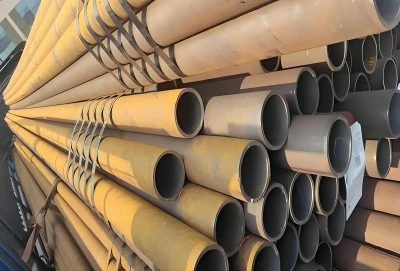
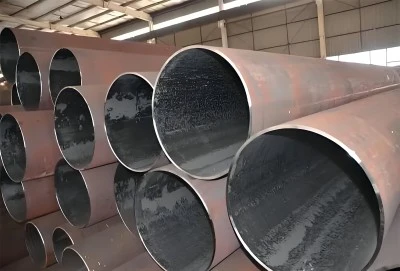
Understanding AS/NZS 1163 C450 Pipe Specifications for Structural Use
Before specifying a steel hollow section, an engineer must ensure that the material satisfies all mechanical and dimensional requirements of the project. The C450 pipes have several qualities that distinguish them from the lesser grade pipes.
Mechanical Performance Parameters
The grade C450 has a minimum yield strength of 450 MPa and a minimum tensile strength of 500 MPa. Depending on the wall thickness the elongation values are between 12 % and 16 %. These are based on AS/NZS 1163 and are verified by mill test certificates and third party inspection reports. Such statistics directly result in reduction of diameters of structural column sections of the same high load without reducing their load capacity.
Chemical Composition and Weldability
The C450 has a maximum carbon equivalent (CEV) value of around 0.43 and, thus, should be weldable if the suitable parameters of preheat and heat input are used. C450 is stronger than C250 and C350, but less flexible. The chemical composition requires more strict supervision of the production process. Engineers should take into account these differences at the design stage to minimize field welding issues.
Dimensional Accuracy and Section Profiles
C450 is available in hollow section configurations including AS/NZS 1163 C450 pipe in round, square and rectangular shapes. Tight dimensional tolerances ensure the consistency of the outer diameter and wall thickness from run to run. This is especially critical for bolted and welded truss joints During the installation process, accurate measurements also determine how well items fit together, which may cut down on the costs of repairs on large construction projects.
Design Principles and Best Practices for Using C450 Pipes in Columns and Trusses
Half the task is to check that the material requirements are accurate. The high yield strength is advantageous for the project depending on how the C450 pipes are incorporated into the building.
Safety Margins and Load Calculations
Capacity reduction factors are considered by engineers developing columns from C450 hollow sections as mandated by AS 4100 (Steel Structures). The yield strength is higher and the sections may be thinner, but there are still limitations on the slenderness ratio. Designers should maintain small safety margins and incorporate load forecasts clearly in the design basis for trusses subject to dynamic or impact loads such as mine conveyor gantries.
Welding Techniques and Heat Input Control
The lower elongation of C450 compared with softer grades implies that controlled heat input is needed during welding to avoid cracking in the heat affected zones. The temperature of the heating depends on the wall thickness and the CEV. Sometimes the thicker areas need a preheat of 50-100°C. Filler metals should be equivalent or slightly weaker than the parent metal to retain the flexibility of the weld tip. You can't turn them off, since they have a direct impact on long term performance of the truss members under load.
Inspection, Maintenance, and Defect Detection
Regular non-destructive testing (NDT) of weld zones, for example ultrasonic testing or magnetic particle inspection, detects defects below the surface before they spread. Systematic examination of coatings and connecting points of structural columns in industrial buildings significantly enhances the service life of such structures. Maintenance plans should be established at the time of initial project commissioning and examined after any earthquakes or other damages.
Procurement Considerations: How to Source Quality AS/NZS 1163 C450 Pipes
High-strength structural tubing for crucial applications is not only a pricing exercise to secure. Project results are influenced by certification, lead times and supplier capabilities.
Verifying Supplier Certification and Compliance
A reliable C450 pipe supplier should have ISO 9001 certification and provide material test certificates (MTCs) traceable to every manufacturing heat. In the US, Australia and Canada, procurement teams sometimes request a third party examination by the likes of SGS, Bureau Veritas or TÜV for an additional layer of verification. It is usual to ask for sample MTCs as part of the supplier validation procedure prior to a trial purchase.
Minimum Order Quantities, Lead Times, and Logistics
Large diameter or thick walled C450 sections such as AS/NZS 1163 C450 pipe are frequently production scheduled rather than stock available. Reputable manufacturers will usually have a lead time of 4-6 weeks for conventional dimensions, and more for non-standard lengths or bespoke wall thicknesses. For large structural pipe, the quality of packing is important. Steel banding, end caps and bundled packaging may prevent transportation damage that can affect surface coatings or dimensional tolerances.
Evaluating Customization Capability
specialized cut lengths, precision wall thickness or surface treatments are often required for projects with specialized equipment frames or non-standard truss geometries . Cutting, end treatment and options for anti-corrosion coating are all done in-house, reducing the number of procedures in the supply chain and reducing project lead times.
Future Trends and Innovations in Structural Steel Pipes for Columns and Trusses
The structural steel pipe market is changing constantly because of greater load requirements, shorter project timeframes and environmental performance goals.
Advanced Coatings and Corrosion Resistance
New coating methods such as fusion-bonded epoxy (FBE) and three-layer polyethylene (3LPE) enhance the service life of structural hollow sections in aggressive environments such as coastal mining sites and offshore platforms. These coatings also reduce lifetime maintenance costs, a key consideration for procurement managers evaluating total cost of ownership.
BIM Integration and Digital Specification Tools
BIM technologies now allow engineers to specify structural hollow sections with the relevant grade, size and certification standards included into the model data. This prevents specification errors in procurement, and shortens the approval cycle between technical teams and supply chain management.
Updates to AS/NZS 1163 and Related Standards
From time to time standards groups evaluate AS/NZS 1163 to reflect advancements on steel manufacturing and structural engineering practice. Procurement teams should be aware of standard revision cycles and verify that supplier mill procedures are up to date. Active monitoring of standard updates demonstrates a level of technical engagement that is ideal for long term supplier relationships.
Conclusion
For example, AS/NZS 1163 C450 pipe provide a performance advantage in columns, trusses and heavy equipment frames where both load capacity and weight economy are important. Controlled welding techniques, exact section size, confirmed mechanical qualities and AS/NZS 1163 compliance are the primary design factors that must be addressed simultaneously from the specification stage through to installation. For procurement experts running complicated, high-value equipment projects, material quality and supplier dependability are equally critical. Getting both correctly minimizes project risk and enhances long-term structural performance.”
FAQ
1. What does "C450" mean in AS/NZS 1163 C450 pipe?
The "C" stands for "cold-formed," which is the process of making the product. "450" means that the minimum yield strength is 450 MPa. In the AS/NZS 1163 series, this puts it in the high-strength group.
2. What is the difference between C450 and C450L0?
The mechanical qualities of C450L0 are the same as those of C450, but at 0°C, it also guaranties the lowest impact energy. For work in cold places or where fracture-critical performance is needed, the "L0" marking is needed.
3. Can C450 pipe be welded on-site?
Yes, but it needs controllable heat input, the right filler metals, and a preheating process that depends on the thickness of the wall and the CEV. When welding is not managed, the heat-affected zone can become less flexible.
4. Is C450 pipe suitable for mining equipment frames?
Yes. Because it is strong for its weight, it works well for structures like cranes, processing plant frames, and conveyor gantries that have to handle a lot of pressure and impact.
5. How do I confirm C450 pipe meets specification before delivery?
Ask for a material test report that can be linked to the production heat and ask for a review by a third party that is recognized by that body. Before accepting shipment, compare the results of the tensile, yield, and elongation tests to the limits set by AS/NZS 1163.
Source Your C450 Structural Pipe from Longma Group
Since 2003, Longma Group has been making ERW and LSAW steel pipes for customers in more than 90 countries. We are certified by ISO 9001 and make AS/NZS 1163 C450 pipe supplier-grade material. You can get full MTC paperwork and an optional third-party review. Our production team can handle large, long-term orders, whether you need standard stock sizes or custom wall thicknesses for specialized equipment. To get a price, email us at info@longma-group.com.