
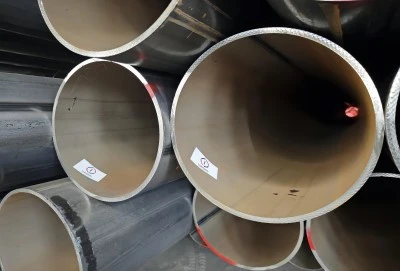
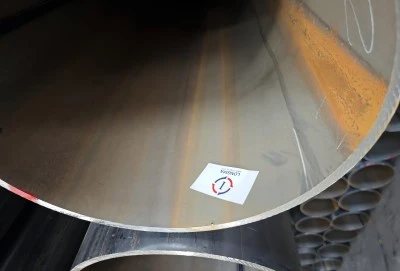
The 3PE anti-corrosion treatment on API 5L Gr B pipe can be fully modified. Carbon steel line pipe is often treated with this three-layer polyethylene method by top makers like Longma Group. It protects against soil stress, water intrusion, and chemical attack. The coating process works well with both ERW and LSAW production lines. It meets ISO, API, and NACE standards and keeps the pipe's structural stability and weldability for tough oil, gas, and water transportation projects around the world.
|
|
|
Understanding API 5L Gr B Pipe: Specifications and Properties
API 5L Grade B, which is also known as L245 under ISO 3183, is a standard-grade carbon steel line pipe made to move oil, gas, and water over long distances. It is widely used because it has a good mix of mechanical performance, weldability, and cost that makes it suitable for medium-pressure gathering lines, distribution networks, and industrial process pipes.
Material Properties and Mechanical Performance
At least 245 MPa (35,500 psi) of yield strength and 415 MPa (60,200 psi) of tensile strength can be found in Grade B pipe. These numbers give enough load-bearing ability for most onshore and offshore uses without the higher cost that comes with metals of a better grade, like X52 or X60. Because the material is flexible, it can handle installation pressures like bending while digging, heat expansion cycles, and small ground movements without breaking into brittle pieces.
Product Specification Levels: PSL1 and PSL2
Two levels of Product Specification are set by the API 5L standard. PSL1 is the normal quality level, which means it needs simple chemical testing and mechanical testing. In PSL2, sulfur (max 0.015%) and phosphorus (max 0.025%) are limited more strictly. Charpy V-notch impact testing for low-temperature toughness is required, as well as 100% non-destructive testing of welds. When selecting underground or underwater pipelines, procurement teams often choose PSL2 to reduce the risk of hydrogen-induced cracking and make sure that the pipeline will work reliably in tough service conditions.
Manufacturing Methods: ERW, LSAW, and Seamless
There are three different ways to make Grade B pipe api 5l gr b pipe. Electric Resistance Welded (ERW) pipe is great for widths up to 24 inches because it has tight size limits and smooth inside surfaces. Longitudinal Submerged Arc Welded (LSAW) pipe can handle outside widths of up to 48 inches and thick walls, which makes it a good choice for high-pressure trunk lines. When solid billets are pierced to make seamless pipe, there are no weld seams at all, but the price is higher. Each method has an effect on how well the coating sticks. For example, soldered pipe needs careful joint preparation to make sure that the FBE bonds evenly, while seamless pipe has a smooth surface.
Chemical Composition and Weldability
The managed carbon content—0.28% at most for PSL1 and 0.24% on average for PSL2—makes it easy to weld in the field. Lower carbon levels make it less likely that heat-affected zones will become hard and rigid during welding. This is very important when joining covered pipe sections on-site. Manganese content of up to 1.20% makes it stronger and tougher without making it less flexible. Tough limits on sulfur and phosphorus keep the formation of flaws to a minimum. These can act as stress collectors and rust start points.
By knowing these basic qualities, procurement professionals can better match pipe specifications to project needs and check to see if the substrate will be able to accept and hold the 3PE coating under practical stresses.
Why 3PE Anti-Corrosion Coating Is Essential for API 5L Gr B Pipe?
Soil, water, and chemicals found in drilling brines or industry effluents can quickly corrode carbon steel pipe that is not protected. Traditional single-layer finishes, like coal tar enamel or solo fusion-bonded epoxy, aren't very resistant to damage from handling and backfilling. The 3PE coating system was created to get around these problems by combining materials that work well together to make a secure shell that works better.
The Three-Layer Defense Mechanism
The 3PE system is made up of three separate layers, and each one handles a different type of failure. Fusion-bonded epoxy (FBE), which is applied as a powder that melts and cross-links on the hot pipe surface at about 230°C, is the deepest layer. Electrochemical corrosion can't happen because FBE forms a thick, impenetrable barrier at the steel contact. The middle layer is an extruded copolymer glue that holds the hard FBE to the flexible polyethylene layer on the outside. This glue can handle different levels of temperature growth and keeps things from coming apart. The top layer is a 2.5–3.5 mm thick high-density polyethylene (HDPE) or medium-density polyethylene (MDPE) jacket that is resistant to mechanical damage, soil stress, UV breakdown, and bacteria attack.
Corrosion Challenges in Oil, Gas, and Water Pipelines
The ground is not a good place for buried pipes api 5l gr b pipe. Microbes in the soil make sulfides that speed up the cracking process. Chloride ions from saltwater getting in can get through thin layers. If the layer doesn't stick well, cathodic protection systems can cause it to come off. In underwater and undersea uses, these dangers are made worse by hydrostatic pressure and the saltiness of the water. The 3PE coating solves all of these problems: the FBE layer stops ions from getting in, the glue keeps the bond strong even when loaded and unloaded many times, and the HDPE finish protects the system from outside wear and biological contamination.
Cost-Effectiveness and Lifecycle Benefits
Even though 3PE coating costs more at first—usually 15 to 25% more than the price of the bare pipe, based on the width and thickness of the coating—it saves a lot over the life of the pipe. In harsh settings, field studies in the Middle East and Australia have shown that 3PE-coated pipes can last more than 50 years, while coal tar or single-layer epoxy coatings only last 10 to 15 years. The total cost of ownership goes down because upkeep is done less often, fixes are done less often, and less cathodic protection current is needed. Engineering companies can use these measures to show why they should be able to make changes to the specifications during feasibility studies for projects.
Customizing API 5L Gr B Pipe with 3PE Coating: Process and Feasibility
Customizing line pipe with a 3PE coating is a well-known business practice that is backed by approved makers all over the world. Longma Group builds coating processes right into our LSAW and ERW factories. This way, we can keep a close eye on quality from the raw coil to the finished, coated pipe.
Surface Preparation: The Foundation of Coating Adhesion
Carefully preparing the surface is the first step to a successful finish. Abrasive blasting is used to clean pipe surfaces to ISO 8501-1 standards of Sa 2.5 or Sa 3. This gets rid of mill scale, rust, oil, and other contaminants. To get the most out of FBE mechanical keying, the surface roughness is kept between 50 and 100 micrometers. To keep the layer from coming off, any metal flash or slag is ground smooth. After being blasted, pipes are heated up to 200 to 240°C using induction coils. This gets rid of any remaining wetness and sets the temperature range needed for FBE powder fusion.
FBE Application and Curing
Electrostatic forces spray FBE powder onto the hot, spinning pipe. When the powder comes into touch with water, it melts, moves into a thin film, and quickly forms cross-links. In-line electromagnetic scales are used to measure the thickness of the coating, with 250 to 400 micrometers being the normal range. Next, FBE is put on the pipe, and it goes through a cold zone to harden the epoxy and keep its chemical structure.
Adhesive and Polyethylene Layer Application
The pipe goes back into a hot area where the copolymer adhesive is pushed straight onto the FBE surface once the FBE layer has dropped below its glass transition temperature. While the HDPE or MDPE layer on the outside is co-extruded, the still-molten glue sticks to the epoxy. This two-step process makes sure that the layers stick together tightly and completely removes the chance of delamination. Laser scanners and ultrasound scales are always being used to check the coating's thickness, concentricity, and surface finish.
Quality Control and Testing
Each covered pipe goes through a very thorough check. At 15 to 25 kV, holiday detection finds pinholes or thin spots in the coating. Peel strength tests show that the layers are sticking together. For FBE-to-steel interfaces, the minimum number is usually 100 N/cm, and for polyethylene-to-adhesive interfaces, it's 50 N/cm. To test impact strength, a hemispherical tup is dropped from a certain height onto the covering. The coating must not crack or come off. Immersion tests in hot water at 80°C for 28 days check how stable the adhesive is over time. Longma Group has ISO 9001, API 5L, and ISO 14001 certifications. Our finishing lines are also regularly checked to make sure they meet NACE SP0394 and DIN 30678 standards.
Customization Parameters for B2B Buyers
To meet the needs of a project, procurement teams can choose from a number of customization choices api 5l gr b pipe. Coating is usually done on pipes with widths between 1.5 inches and 48 inches, or even bigger for LSAW. Pressure levels and span lengths can be met with wall thicknesses ranging from Schedule 10 to XXS. For very tough conditions, the coating thickness can be raised. The color-coding of the plastic shell makes it easier to find in the field. After finishing, end features like beveled, threaded, or grooved are added. Longma Group has flexible minimum order numbers (MOQs) that can support both large-scale trunk-line projects and smaller infrastructure upgrades. MOQs depend on the width and complexity of the coating. The lead time is usually between four and eight weeks, but it depends on when the finishing needs to be done and when a third party needs to check it.
Conclusion
Using API 5L Grade B pipe with 3PE anti-corrosion coating is a tried-and-true, low-cost way to build transportation lines for oil, gas, and water. The three-layer polyethylene coating system protects against the toxic forces that threaten asset integrity better than any other coating system. Grade B pipe provides the mechanical performance and weldability needed for medium-pressure pipelines. Customization is not only possible, but also commonplace with qualified makers like Longma Group who give flexible specs, strict quality control, and full paperwork. Procurement pros can choose pipeline systems that give years of reliable service and a great return on investment by knowing the basic technical issues, figuring out the costs over their entire life, and choosing suppliers with a history of success.
FAQ
Can 3PE coating be applied to both seamless and welded API 5L Gr B pipe?
Yes, 3PE coating sticks just as well to LSAW, ERW, and seamless pipe. When preparing the surface of welded pipe, extra care needs to be taken to make sure that the join lines are ground smooth and free of flaws. However, once the surface is ready, the coating works the same way no matter how it was made.
How much does 3PE coating extend the service life of API 5L Gr B pipe?
Field data from pipelines in North America and the Middle East show that 3PE-coated carbon steel pipe can last more than 50 years in harsh soil and sea conditions, compared to 10 to 20 years for single-layer coatings or pipe that isn't covered. The actual life span relies on the chemistry of the soil, the quality of the placement, and the cathodic protection.
Does 3PE coating affect field welding and installation procedures?
To make room for welding, the coating must be peeled off of the ends of the pipes about 150 to 300 mm. Once the weld joint is cool and passes inspection, heat-shrink sleeves or liquid epoxy kits that have the same protective qualities as the 3PE system are used to cover the uncovered area. Proper joint sealing is very important for keeping the pipeline's structure.
Partner with a Trusted API 5L Gr B Pipe Supplier for Your Next Project
Longma Group is ready to help you get the pipelines you need by providing you with high-quality, 3PE-coated API 5L Grade B pipe that meets the strictest project requirements. As a well-known company with more than 20 years of experience, we offer modern ERW and LSAW production lines, strict quality control, and a full range of anti-corrosion services all under one roof. Our ISO 9001, API 5L, and NACE certifications show that we follow foreign standards. We can also handle jobs of any size with our low minimum order quantities and quick turnaround times. Our engineering team will work with you to make sure that the pipe sizes, covering thicknesses, and paperwork packages meet your technical and business needs, whether you're looking for an offshore platform, a cross-country transmission line, or an industrial water system. Get in touch with info@longma-group.com right away to get a detailed quote or talk about your project needs with our knowledgeable API 5L Gr B pipe supplier team. You can also download our full product catalog to see all the ways we can help your infrastructure success.