
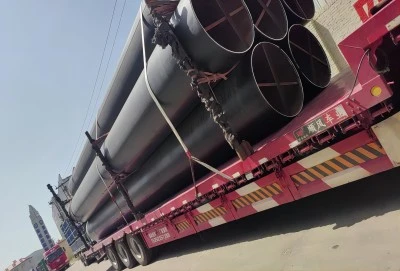
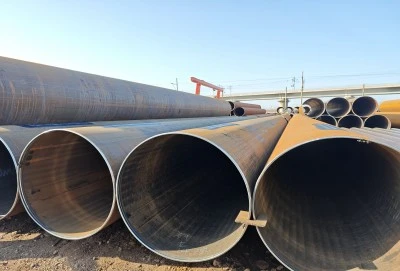
ASTM A671 CB65 pipe can be fully customised to fit your project needs, both in terms of length and how the ends are prepared. Manufacturers usually make these Electric Fusion Welded pipes in random lengths between 20 and 40 feet, but it is normal practice in the industry to cut them to exact lengths as needed. Different types of pipe end treatments are easy to find and can be used with different installation methods and system designs. These include plain ends, threaded connections, bevelled ends for welding, and grooved configurations. Customisation lets purchasing managers get the most out of the materials they have, cut down on the time it takes to make things on-site, and make sure they work with the infrastructure they already have in place, all while still following all ASTM standards.
|
|
|
Customization Possibilities for ASTM A671 CB65 EFW Pipe
Specifications for projects don't always match up exactly with normal production runs at mills. This means that custom solutions are needed to balance technical needs with practicality for businesses. Understanding the limits and scope of customisation options gives procurement teams the power to negotiate well while still meeting project deadlines.
Length Customization Parameters and Practical Constraints
EFW pipe is usually made in various lengths between 20 and 40 feet by mills to get the most out of their production and material output. Cutting to specific lengths, on the other hand, is a simple customisation that most manufacturers can do for ASTM A671 CB65 pipe without charging a lot more. Fixed-length orders, which give exact measures like 30 feet or 12 meters, make it possible to plan materials more accurately and cut down on waste in the field. This is especially helpful when shipping logistics limit the length of the order or when modular fabrication methods need standard parts.
When reducing the number of field welds is important, double random lengths that are 38 to 45 feet long or longer are helpful because they cut down on both labour costs and possible leak points. The real upper limit relies on the powers of the production equipment, the facilities for shipping, and the handling equipment at the final location. When working on offshore platform projects or remote pipeline installs, procurement managers should decide if the extra work that comes with moving and handling longer pieces of pipe is worth it.
Pipe End Preparation Options and Installation Advantages
Customising the end preparation has a direct effect on how well the installation goes and on the joint's long-term integrity. Bevelled ends that are machined to exact angles—usually 30 or 37.5 degrees with a 1/16-inch root face—make it easier for the roots to penetrate consistently during welding. This speeds up the fit-up process and lowers the amount of waste. When projects use automatic or semi-automated welding systems that need tight control over dimensions, this planning is very important.
Threading services turn plain-end pipe into parts that can be used with mechanical connection systems. This is especially helpful in situations where hot work limits don't allow field welding or where the parts will need to be taken apart in the future. Groove-end preparation makes victaulic-style mechanical couplings possible, which cut installation time by a huge amount while still maintaining the same level of pressure integrity as welded joints. Each end treatment choice has different cost and lead time effects that should be weighed against the limitations of the project.
How to Inspect and Verify Customized ASTM A671 CB65 Pipes?
Protocols for quality assurance tell the difference between trustworthy providers and dishonest ones who are only interested in making money. Setting up thorough inspection requirements during the procurement process for ASTM A671 CB65 pipes and making sure they are followed by checking the documentation protects the project's results and reduces the number of expensive failures in the field.
Mandatory Testing Requirements and Non-Destructive Examination
ASTM A671 lists different quality classes, which are shown by suffixes like Class 12, 22, or 32. These classes tell you how to heat treat the material and how closely you should inspect it. Class names are directly related to how important an application is and what will happen if it fails. Class 12 is the highest quality level and needs a normalising heat treatment and a full x-ray analysis of the longitudinal weld seam. Class 22 requires normalising and tempering heat treatment with 100% radiography. Lower classes may allow a smaller examination or just an eye check.
Radiographic study finds internal flaws that can't be seen by looking at the surface, like holes, poor fusion, slag inclusions, or partial entry that weaken the pressure integrity. The acceptance criteria are based on ASTM E709 standards, which group indications by type, size, and distribution. Instead of using standard tolerances, procurement specs should clearly state acceptance levels. This is especially important when uses involve cyclic loads, high temperatures, or dangerous fluid service.
The transverse guided-weld-bend test makes sure that the material is still flexible in the fusion zone and the heat-affected zone. This shows that the welding process has not changed the properties of the base material. When test specimens are bent around a mandrel to a certain radius, they go through severe plastic deformation without cracks that are bigger than what is acceptable. This destructive test, which is done on lengths of material from each production lot, gives confidence that the whole batch is tough enough for service conditions.
Dimensional Verification and Custom Feature Inspection
To check the length precision, you should use calibrated measure tools that can be traced back to national standards. For fixed-length orders, tolerances are usually set at 1/8 inch. The gap between the largest and smallest sizes at any cross-section is called out-of-roundness. It must stay within the limits set by ASTM A671, which is usually 1% of the nominal diameter. Too much out-of-roundness makes it harder to fit things together while they are being welded and can stop mechanical couplings or support systems from seating properly.
To check the thickness of a wall, you need ultrasonic testing equipment that has been measured against measures of known thickness. Multiple measurements should be taken around the circumference and along the length to confirm that the nominal thickness is met and that the range of acceptable deviations is within reason. Due to the plate-forming process, EFW pipe has a slightly higher thickness variation than seamless pipe. This is something that procurement managers should be aware of, and specifications should take this into account while still making sure the structure is adequate.
Specific inspection rules are needed for custom pipe end features. Angle gauges are needed to make sure that bevelled ends meet the required root face measurements and bevel angles. Ring and plug gauges are used for thread inspection to make sure that the thread form, pitch, and size limits are correct. The groove-end measurements must be compared to the coupling manufacturer's specs to make sure they are compatible and that the pressure grade is met.
Supplier Qualification and Documentation Requirements
Reputable makers keep quality management system certifications like ISO 9001, which shows that they are dedicated to following written processes, making improvements all the time, and making sure customers are happy. Industry-specific licenses like API Q1 give buyers more faith in providers that work with the oil and gas industry, where poor quality can have serious effects on safety and the environment.
Material Test Certificates (MTCs) that meet EN 10204 Type 3.1 or 3.2 standards list the chemical make-up, mechanical qualities, heat treatment conditions, and the results of a non-destructive test for each production lot. These papers allow full tracking from finished pipe all the way back to the original certifications from the steel mill where it was made. Specifications for purchases should require MTC to be provided and set standards for retention that support long-term asset management plans.
Practical Considerations for Procurement of Customized ASTM A671 CB65 EFW Pipes
Strategic sourcing methods find the best balance between technical needs, business constraints, and the dependability of the supply chain in order to maximise the value of the whole project rather than just lowering costs per unit. Professionals in the procurement field know that buying ASTM A671 CB65 pipe materials is only a small part of the total cost of installation. They also know that reliable delivery and expert help are often more valuable than small price differences.
Identifying Qualified Manufacturers and Evaluating Capabilities
There is a small but specialised group of companies around the world that make large-diameter EFW pipe. These companies have the financial tools and technical know-how to consistently meet quality standards. Longma Group has been in this market since 2003 and has become very good at making LSAW and ERW pipes that meet many foreign standards. Our 230,000-square-meter factory in Hebei province has advanced making equipment, automatic welding systems, and full testing facilities that allow us to make more than 1,000,000 tonnes of products every year.
Manufacturer evaluations should look at more than just comments about capabilities; they should also look at real performance proof. Ask for case studies that show how similar customisation needs were met successfully on similar project types. Check the manufacturer's production capacity against the schedule for your project. If they are at full capacity, they may not be able to handle custom orders without having to extend lead times. Shipping costs and the speed of communication are both affected by geography. However, time zone differences that used to make international purchasing difficult have mostly been eliminated by modern digital tools.
Inventory Strategies and Minimum Order Negotiations
Stock availability for standard setups makes it possible to move projects along quickly, but custom requirements are rarely met without planning ahead. Strategies for buying things should be able to tell the difference between long-lead structural items that need to be committed to early and commodity parts that can be bought on the spot. ASTM A671 CB65 pipe usually falls into the first group, which is why early supplier interaction and possible inventory placement are important.
Minimum order numbers are based on the economics of custom manufacturing. Setup costs, material handling costs, and quality control costs must be spread out over a large enough volume to keep unit prices fair. Depending on how complicated the specification is and the manufacturer's rules, the usual minimum is between 10 and 50 tonnes. Some ways to deal with these levels are to combine requirements from different project phases, work with other buyers who have similar needs, or agree to the manufacturer's preferred specifications as long as they don't interfere with current production schedules.
Cost Analysis and Total Value Assessment
Published price lists can help you figure out your budget, but they don't always show the final price of a transaction. This is especially true for custom orders and large volume commitments. Customising the length usually comes with small extra costs—maybe $50 to $150 per piece, based on the thickness and how hard it is to cut. Specialised end preparations cost between $100 and $500 per end, depending on how much work needs to be done and how long it takes to pay for the setup.
Transportation costs are a big part of the given price, especially for large-diameter pipes that can't be loaded as densely because of their size. Sea freight from Asian industrial hubs to the U.S. Prices at Gulf Coast ports range from $80 to $150 per tonne right now, depending on the route and the market. Moving goods to their final targets in other parts of the country adds extra costs based on the distance and how easy it is to reach infrastructure. Instead of just looking at ex-works prices, which can hide the real effects of a project, procurement research should look at the total final cost.
Payment terms, warranty terms, and technical support after the sale add value that makes up for any price disadvantages that may be apparent. Suppliers who offer longer payment terms successfully provide project finance that may be more useful than getting slightly lower prices that require payment right away. A full warranty that covers both material defects and poor workmanship cuts down on the need for contingency reserves and speeds up the resolution of disputes when they do arise.
Conclusion
Customising ASTM A671 CB65 pipe in terms of both length and end preparation is important for getting the most out of materials, making installations go more smoothly, and making sure systems work with each other in a wide range of industrial settings. Professionals in procurement can make realistic specifications that balance performance needs with what's practical from a business point of view by understanding the technical requirements, manufacturing limitations, and quality verification protocols. Systematic seller evaluation that focuses on showing capabilities, verifying certifications, and evaluating the total value of the contract protects project outcomes while keeping costs low. Strategic sourcing methods that take into account lead times for customisation, minimum order requirements, and the connection between precise specifications and efficient manufacturing produce better results than methods that only focus on price.
FAQ
1. Can ASTM A671 CB65 pipe be cut to exact lengths for modular construction?
Of course. Manufacturers usually cut pipes to exact fixed lengths that are given in feet, meters, or millimetres so that modular fabrication methods can work and cutting needs are kept to a minimum in the field. Cutting margins of ±1/8 inch are common and work with most assembly methods for ASTM A671 CB65 pipe. They also cut down on waste and installation work. If you let the production schedule know the exact length you need when you place your order, they can make sure to include cutting operations without pushing back delivery times.
2. What pipe end preparations are available beyond standard beveling?
Threading to ASME B1.20.1 standards for mechanical connections, groove-end machining compatible with victaulic-style joints, socket-weld preparation, and plain ends suited for different joining methods are all end treatments that can be used. Each way of preparing works best for a certain type of installation and system design. Talking about your connection method with manufacturers while the specification is being made makes sure that the right end preparation is chosen and that the parts will work together.
3. How does customization affect pipe delivery schedules?
Standard length cutting usually adds three to five business days to the wait time after stock is available. Specialised end preparations can add one to two weeks, based on the manufacturer's capacity and the complexity of the standard. Giving producers longer lead times when they plan their purchases helps them fit special orders into their production schedules more easily, and it usually has less of an effect on the schedule than quick requests that clash with other commitments.
Partnering with a Trusted ASTM A671 CB65 Pipe Supplier
Longma Group blends large-scale production, technical know-how, and service that focuses on the customer to provide ASTM A671 CB65 pipe options that are tailored to your project's needs. Our wide range of certificates, such as API 5L, ISO 9001:2016, and environmental management system certifications, show that we care about quality, safety, and being good to the environment. We only get our raw materials from the best steel mills in China, like Shougang, HBIS, and Bao Steel. This way, we can be sure that the chemistry and mechanical qualities of our products are always the same.
In addition to making pipes, we offer value-added services like beveling, threading, finishing application, and custom length cutting that is done according to your needs. Full sets of paperwork, like Material Test Certificates, Inspection and Test Plans, and Manufacturing Procedure Specifications, help you meet the quality standards for your project and follow the rules set by regulators. When you need a trustworthy ASTM A671 CB65 pipe manufacturer that can deliver unique solutions on time and on budget, email our expert team at info@longma-group.com to talk about your needs and get detailed quotes.








