
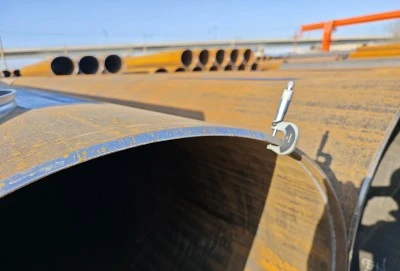
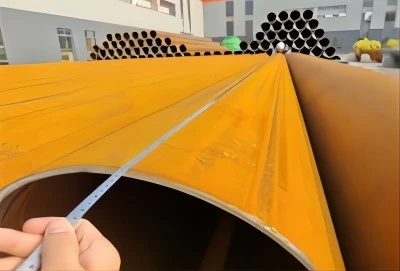
As long as it meets certain engineering standards, ASTM A671 CC65 pipe can be used in high-pressure service uses. This electric-fusion-welded pipe is made from ASTM A516 Grade 65 pressure vessel quality plate and has a minimum tensile strength of 65 ksi (450 MPa). It is also very tough and easy to weld. If you choose the right class designation—which tells you how to treat the pipe with heat and how to look at it on x-rays—ASTM A671 CC65 pipe works consistently in high-pressure settings like power production systems, petrochemical plants, and oil and gas transportation lines. It depends on the temperature at which it is used, the chance of corrosion, and how well it follows pressure design estimates that take wall thickness and width into account.
|
|
|
Understanding ASTM A671 CC65 Pipe Specifications and Properties
Understanding the material's qualities and specs is the first step in building a high-integrity pressure piping system.
Chemical Composition and Material Foundation
The base material, ASTM A516 Grade 65 fine-grain killed carbon steel, has a carefully balanced chemical makeup that makes it work better. The highest amount of carbon is kept at 0.24%, and the highest amount of manganese is kept between 0.85% and 1.20%. This mix makes it easier to weld and helps the grains get smoother during heat treatment. Having between 0.15% and 0.40% silicon in a material makes it stronger and removes oxygen. Sulphur and phosphorus levels are kept very low to make pipes less likely to crack and break when they get hot. This is especially important when pipes are subject to changing pressure loads or temperature changes.
Mechanical Properties and Strength Characteristics
How well electric-fusion-welded carbon steel pipe deals operating stresses is called its mechanical performance. The CC65 grade has a tensile strength range of 450-585 MPa (65-85 ksi), which means it can stand up to strong internal pressure forces. When there is a pressure rise, the minimum yield strength of 240 MPa (35 ksi) protects against lasting deformation. Usually, elongation values are higher than 21%, which means the material is flexible enough to be bent in the field and installed. This grade is different because of its notch toughness. Charpy V-notch impact testing at certain temperatures proves the material's ability to absorb energy and prevent brittle fracture, which is very important when moving pressurised fluids in climates that change quickly.
Manufacturing Process and Heat Treatment Options
Electric-fusion-welding (EFW) technology uses submerged arc welding to make the lengthwise seam. This makes pipes with sizes and wall thicknesses that are bigger than what seamless pipes can handle. The way the products are made lets the quality of the welds be precisely controlled by automatic processes that keep the heat input and entry depth constant. The final properties of pressure vessel quality plate pipe are greatly affected by the heat treatment process. Treatment methods are based on the pipe's class. Class 10 pipes are sent out as-welded, without any extra heat treatment, while Class 22 pipes go through stress relieving to lower leftover pressures near the weld zone. Class 32 needs to be fully normalised and tempered, which improves the structure of the grains and makes the steel tougher for the toughest uses. This gives buying managers the freedom to say exactly what level of success their projects need.
Corrosion Resistance and Service Environment Adaptability
When carbon steel is exposed to oxygen and water, it naturally turns into iron oxide. This means that it can't be used in places where corrosion is a problem without extra protection. However, ASTM A671 CC65 pipe shows good corrosion resistance in normal process and atmospheric conditions. Protective coatings like three-layer polyethylene (3LPE), fusion-bonded epoxy (FBE), or two-part polypropylene (2PP) are used on many installations to make them last longer in harsh conditions. When hydrogen sulphide or acidic compounds are present, the material needs to be tested for hydrogen-induced cracking (HIC) and sulphide stress cracking (SSC) to make sure it meets the requirements for sour service set by NACE MR0175 and ISO 15156.
Evaluating ASTM A671 CC65 Pipe for High Pressure Service Applications
It's important to look closely at a pipe grade's pressure capacity, how it's used in the business, and how well it performs compared to other grades.
Maximum Allowable Working Pressure and Design Calculations
To figure out a pressure rating, engineers use standard formulas that take into account things like pipe diameter, wall thickness, material strength, and safety factors. The highest pressure that ASTM A671 CC65 pipe can handle (MAWP) is highly influenced by these factors as well as the design code that is being used, such as ASME B31.3 for process piping, ASME B31.4 for transporting liquid petroleum, or ASME B31.8 for gas transfer systems. Standard wall thickness ASTM A671 CC65 pipes with a 12-inch diameter can handle working pressures between 1,000 and 2,500 psi. Higher pressures can be handled by pipes with stronger walls. When high temperature and pressure are present together, they need to be carefully analysed because high temperatures weaken materials. ASTM A671 CC65 pipe works best below 400°C; above this temperature, creep and strength loss mean that different alloy grades are needed.
Industry Applications and Real-World Performance
ASTM A671 CC65 electric-fusion-welded pipe is used in many businesses for important pressure service tasks. In oil and gas midstream operations, these pipes move refined products, natural gas liquids, and crude oil across continents. The economics of these operations depend on how reliable the pipes are. ASTM A671 CC65 pipe is used in petrochemical plants for process lines that move feedstocks and products while the temperature and pressure change. Offshore platforms that work in the North Sea, the Gulf of Mexico, and Southeast Asian waters use this grade for structural piping systems because it is tough at low temperatures and keeps welds from breaking in harsh marine environments. Power plants use ASTM A671 CC65 pipe in their feedwater systems, condensate return lines, and extra cooling loops because it is made of pressure vessel quality material that is safe for a long time. For hydrotreater feed lines, catalytic cracker transfer lines, and utility delivery networks that work all the time at high pressures, refineries count on this pipe grade.
Comparative Analysis with Alternative Pipe Standards
Procurement professionals can make better material choices when they know how ASTM A671 CC65 pipe compares to other specifications. ASTM A312 stainless steel pipe is better at resisting rust than carbon steel, but it costs a lot more to buy and make—usually two to four times as much as carbon steel. While ASTM A106 seamless carbon steel pipe can handle a lot of pressure, it has limits on its diameter and wall thickness because it is made in a seamless way. While API 5L pipe is often used for line pipe uses, it is made to less strict standards for pressure vessels, so it might not have the same level of notch toughness or weld zone reliability as ASTM A671 CC65 pipe. Grades of stainless steel pipes like 304L and 316L work well in corrosive environments, but they need special welding techniques and filling materials that make installation more difficult. The choice is based on a mix of factors, including mechanical properties, corrosion environment, project budget, and access through regional supply lines.
Benefits and Drawbacks of Using ASTM A671 CC65 Pipe in High Pressure Environments
There are trade-offs between performance benefits and practical limits in every material choice.
Key Advantages for Pressure Piping Systems
There are a lot of great things about ASTM A671 CC65 pipe that make it a good choice for bulk purchases. The pipe can handle both steady-state pressure loads and dynamic pressure changes without breaking too soon because it has the right amount of both strength and toughness. Excellent weldability makes field joining easier using standard carbon steel welding methods, which cuts down on installation time and labour costs compared to speciality alloys. One big benefit is that carbon steel is still much cheaper than stainless steel or chrome-moly options. This is especially important for projects that need thousands of feet of pipe. When seamless pipe sizes are too small for mainline gearbox applications, EFW manufacturing's ability to make pipes with large diameters can help. Good low-temperature properties allow the material to be used in colder climates where normal carbon steels might become brittle. This is an important factor to consider for pipelines that go through northern latitudes or high mountain passes.
These benefits can be seen and felt in the project. When engineering firms request ASTM A671 CC65 pipe, they can be sure that it will meet the design pressures and stay within their budget. The long life of pressure vessel quality material that is properly designed and fitted is something that plant equipment managers really like. ASTM A671 CC65 pipe is easy to find because it comes from many established supply chains and qualified manufacturers. This cuts down on lead times and makes sure that prices are competitive by letting suppliers compete.
Potential Limitations and Risk Mitigation Strategies
ASTM A671 CC65 pipe has some problems that need to be carefully thought through, even though it has some good points. When the temperature goes above 400°C, the material's strength starts to drop, and different chrome-moly metals like ASTM A691 types are needed. Corrosion is easy to happen in harsh chemical environments, so extra protection is needed in the form of coatings or cathodic protection systems, which raise the cost of installation. Due to the delicacy of heat treatment, incorrect stress relieving or normalisation can damage mechanical properties. This makes the quality control skills of the provider an important factor in the selection process. Even though weldability is usually good, it needs to be done correctly and by trained welders in order to make joints that are defect-free and keep the pipe's pressure integrity.
Strategies for mitigating these problems work well. Strict checking procedures, such as x-raying all longitudinal seams 100% of the time, find weld flaws before they are installed, which stops fails in the field. Under controlled conditions, hydrostatic testing at 1.5 times the design pressure makes sure that the structure is solid. When things are stored correctly on wooden dunnage with safe end caps, they don't get damaged when they are moved or handled. Installation instructions that list the minimum bend radius, support spacing, and expansion loop standards make sure that the pipe system works the way it was meant to throughout its useful life. These methods, along with detailed records like Material Test Certificates (MTC) and Inspection Test Plans (ITP), give project teams trust in the materials they choose.
Conclusion
When properly defined based on working conditions, design pressures, and environmental factors, ASTM A671 CC65 pipe works well in high pressure service. Its high-quality material for pressure vessels, electric-fusion welding production, and various heat treatment choices make it a flexible answer for oil and gas transportation, industrial processing, and power generation. Extreme temperatures and corrosive environments do put limits on what can be done, but these problems can be lessened by careful class designation, protective coatings, and strict quality control. A successful rollout relies on doing a full engineering analysis, choosing approved sources with proven quality systems, and following best practices for installation that keep the integrity of the materials throughout the life of the pipe system.
FAQ
1. Can ASTM A671 CC65 pipe handle service temperatures above 400°C?
Most of the time, ASTM A671 CC65 pipe shouldn't be used continuously above 400°C because it loses power over time and could creep at high temperatures. Chrome-molybdenum alloy grades like ASTM A691 1Cr or 2-1/4Cr perform better at high temperatures above this point because they contain alloying elements that keep their strength and don't oxidise at temperatures above 540°C.
2. How does CC65 pipe compare to API 5L pipe for oil and gas applications?
Both types of pipes are used to move oil and gas, but ASTM A671 CC65 pipe is made to higher standards for pressure vessels, which means it has stricter controls over its chemical composition and has to go through required impact tests. API 5L pipe meets the standards for line pipes that are made for long-distance gearbox, but it might not have the same amount of notch toughness or weld zone reliability. CC65 grades are often chosen over standard API 5L grades for projects that need the highest level of safety or that will be working in difficult conditions.
3. What certifications should I verify when purchasing CC65 pipe?
Some important certifications are the manufacturer's Mill Test Certificate (MTC), which shows the results of chemical analysis and mechanical tests, as well as x-ray reports that confirm the quality of the weld and hydrostatic test records that confirm the integrity of the pressure. ISO 9001 certification shows that the quality management system is being followed, and third-party inspection reports from reputable organisations show that the standards are being met.
Partner with Longma Group for Certified ASTM A671 CC65 Pipe Supply
Choosing a qualified maker has a direct effect on the success of your project and its long-term dependability. Since 2003, Longma Group has specialised in making electric-fusion-welded pipes. They have state-of-the-art factories that cover 230,000 square meters and make more than 1,000,000 tonnes of pipes every year. Our full ASTM A671 certification covers grades CC60, CC65, and CC70. It is backed up by API 5L, ISO 9001, and other foreign quality management certifications. We only get high-quality raw materials from well-known Chinese steel mills like Shagang, TISCO, and Bao Steel. This way, we can be sure that the quality of the base materials always meets the standards for pressure vessels. Our technical team can help you with engineering tasks like figuring out pressures, choosing materials, and making specifications that are specific to your needs. Every order comes with full paperwork packages that include ITP, MPS, and MTC. These meet the strictest project quality assurance programs. Services that add value, such as beveling, paint application (FBE, 3LPE, hot-dip galvanising), and third-party inspection planning, make the buying process easier. Get in touch with our knowledgeable staff at info@longma-group.com to talk about your high pressure pipe needs with a reputable ASTM A671 CC65 pipe supplier that is dedicated to quality, dependability, and fair prices.








