
The global energy sector is still expanding its infrastructure at a rate that has never been seen before. This is increasing the need for high-performance pipeline materials. For high-pressure oil and gas transmission networks spanning thousands of kilometers, API 5L X80 pipes offer premium-grade steel options. These pipes have great yield strength and great crack toughness, which makes them essential for modern energy projects that have to work under harsh conditions and high pressures.
Large X80 pipes, usually 24 inches or more in diameter, are very important for long-distance crude oil transportation, offshore deepwater sites, and gas transfer systems that go across continents. China's manufacturing sector has become a key sourcing destination for energy companies and engineering contractors looking for trusted providers that can deliver large quantities while still meeting strict quality standards.
Chinese manufacturers possess the technical capacity and advanced infrastructure to produce large-diameter specification X80 pipe that meets or exceeds international standards. Leading mills in China, including Longma Group, utilize specialized LSAW (Longitudinal Submerged Arc Welding) technology combined with Thermomechanical Controlled Processing (TMCP) to manufacture X80 grade pipes in diameters ranging from 24 inches to 72 inches. These facilities maintain PSL2 compliance, ensuring mechanical properties such as minimum yield strength of 555 MPa and superior fracture toughness. With comprehensive certifications including API 5L, ISO 9001, and rigorous quality control systems, Chinese manufacturers deliver large-diameter X80 pipes suitable for high-pressure gas transmission, offshore platforms, and critical oil and gas infrastructure projects worldwide.
|
|
|
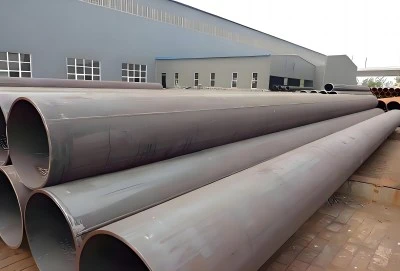
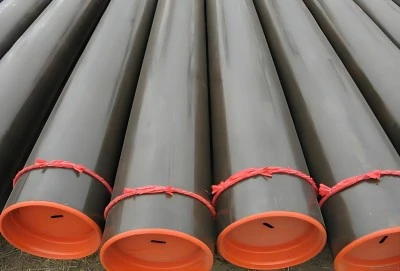
API 5L X80 Pipes Large-Diameter Specifications
Knowing the technical background of API 5L X80 grade pipes helps buying teams make smart decisions about where to get the materials they need for projects.
Technical Standards and Mechanical Requirements
According to API 5L standards, the X80 name means that these API 5L X80 pipes have strict mechanical qualities that set them apart from lower-quality options. It can yield up to 555 MPa (80,500 psi) at its weakest point, and it can stress up to 827 MPa at its strongest point. This strength profile lets you use thinner walls with the same working pressures as X70 or X65 grades. This cuts the total project weight and material costs by 10 to 15 percent.
The chemical makeup is also very important for performance traits. Controlled carbon equivalent values (usually keeping CE(IIW) below 0.43) are required by PSL2 standards to make sure that the material can be welded in the field even though it has high strength levels. Micro-alloying elements like Niobium, Vanadium, and Titanium make acicular ferrite or bainite microstructures with small grains by rolling them carefully and cooling them quickly.
Large-Diameter Manufacturing Challenges
Making pipes with diameters bigger than 24 inches is more difficult technically, setting skilled makers apart from standard facilities. For material stability across expanded pipe bodies, plate forming and welding processes need to be carefully managed. It gets harder to make sure that the heat treatment is regular as the pipe gets bigger, but it's still necessary to get the right mechanical qualities across the whole cross-section.
For large-diameter uses, the Drop-Weight Tear Test (DWTT) needs average stress area percentages of 85% or higher at the lowest design temperatures. To meet these toughness standards while keeping the dimensions within acceptable ranges, you need high-tech making tools and metalworking knowledge. Because of these things, not all pipe mills can safely make large-diameter API 5L X80 pipe specs that meet PSL2 standards.
Capabilities of Chinese Manufacturers in Producing Large-Diameter API 5L X80 Pipes
In China, the steel pipe industry has come a long way in terms of technology in the last twenty years. This has made the top mills widely competitive suppliers for demanding uses.
Advanced Manufacturing Technologies
Chinese companies that make large-diameter API 5L X80 pipes use a variety of production methods that are tailored to each project's needs. Longitudinal Submerged Arc Welded (LSAW) technology is the main way that large-diameter heavy-wall pipes are made. It involves making plates and then submerged arc welding on both sides. This method gives you better control over the quality of the weld and lets you make pipes with walls as thick as SCH160 and as wide as 72 inches.
Longma Group is a good example of this type of manufacturing because they have specialized LSAW production lines with high-tech JCO forming tools and multi-wire submerged arc welding systems. Online ultrasound testing is used in our buildings while welding is going on. This lets us find problems right away and fix them right away. By combining automated quality tracking with skilled metallurgical knowledge, API 5L PSL2 standards are met consistently across all production runs.
Thermomechanical Controlled Processing (TMCP) is the metalworking process that makes API 5L X80 grade qualities possible. This complex heat treatment method combines controlled rolling temperatures with faster cooling rates. This improves the structure of the grains and creates the exact balance of strength and hardness that makes API 5L X80 performance what it is. Chinese mills have put a lot of money into TMCP capabilities, adding specialty cooling systems and process control technologies that are similar to those in North American and European mills.
Quality Certifications and Testing Infrastructure
Credible approval proves that a company can make something and gives buyers faith in the supplier's dependability. Some of the biggest Chinese makers have a lot of different kinds of certifications, such as API 5L logo licenses, ISO 9001 Quality Management Systems, and API Spec Q1 quality program approvals. These licenses are regularly checked by a third party to make sure they continue to meet world standards.
The testing equipment at China's most advanced centers meets or beats global standards. Tensile tests, Charpy V-Notch impact tests at certain temperatures, DWTT evaluations, and hardness studies are all things that comprehensive mechanical testing labs do. Radiographic testing of pipe ends can be combined with 100% ultrasonic study of weld cracks and pipe bodies for non-destructive testing. Optical emission spectrometry is used for chemical analysis to make sure that the makeup is correct for each heat of steel. The results are written down in specific Material Test Certificates.
Longma Group has its own testing center that is equipped with hydraulic testing tools that can put pressure on large-diameter pipes to levels higher than 95% of the minimum yield strength that is required. This hydrostatic testing gives real proof of the structure's strength and leak-tightness before it is shipped, giving buying teams extra confidence on top of standard paperwork.
Demonstrated Project Success
Chinese companies that make API 5L X80 pipes have a good image because they have done well in difficult global projects. Large-diameter API 5L X80 pipes made in China have been used successfully in Central Asian gas transport systems, offshore sites in Southeast Asia, and oil infrastructure in the Middle East. The MOBIL OIL AUSTRALIA project is a well-known example of how Chinese companies supplied large amounts of high-strength pipes with tight delivery dates and rigorous requirements.
This track record shows that the company is not only good at making things technically, but also good at managing complicated foreign supply lines. Chinese makers often arrange for multiple modes of shipping, handle customs rules in many different countries, and provide detailed documentation packages that meet the needs of engineering contractors for quality control and tracking.
Procurement Considerations When Sourcing Large-Diameter API 5L X80 Pipes from China
To do procurement right, you need to carefully consider all the economic and logistical details and carefully evaluate possible providers.
Supplier Evaluation Criteria
Verification of manufacturing qualifications is the first step in evaluating a seller. Teams in charge of buying things should ask for up-to-date API 5L certificates, make sure that ISO certifications are still valid, and look over recent audit reports from a third party. Site visits to production sites give you more information than just documents about how things are made, how quality is controlled, and how well the organization works.
An evaluation of production ability helps make sure that providers can meet the volume needs of the project within the time limits that have been set. Realistic delivery plan goals can be set by knowing a manufacturer's current order backlog, availability of production lines, and relationships with suppliers of raw materials. Longma Group can produce more than 1,000,000 tons of goods every year, which means we can meet the needs of large projects while keeping quality high for large orders of API 5L X80 pipes.
Checking references with past customers, especially ones who had similar pipe specs and project sizes, can help you figure out how reliable a supplier is, how quickly they respond to technical questions, and how well they can solve problems when they come up. Manufacturers with a good reputation are happy to give you customer examples and project case studies that show they have experience with large-diameter API 5L X80 uses.
Commercial Terms and Pricing Transparency
Understanding how prices work and getting good business terms have a direct effect on the economy of a project. Chinese makers usually give you three price options: FOB, CFR, and CIF. Each one has its own effects on how costs are split and risk is managed. To get accurate total landing cost estimates, it's important to know who is responsible for interior transportation, port handling, ocean freight, and insurance.
When you make a bigger pledge, the price per ton goes down because of volume-based pricing. This price structure can save procurement managers a lot of money when they are in charge of organizing multiple project stages or bringing together needs from different applications. When negotiating payment terms, the buyer and the supplier should talk about working capital and cash flow needs. For foreign deals, letters of credit or staged payments are popular.
When you ask for extra paperwork, special testing, or fast shipping, there may be hidden costs. Asking for detailed quotes that list all costs, such as mill test reports, third-party inspection fees, coating application, beveling or threading of pipe ends, and safe packing, helps keep project costs from going over budget.
Logistics and Delivery Planning
Shipping big diameter pipes across international borders is tricky because of the logistics involved. It needs careful planning and teamwork. Most large-diameter uses can't be shipped in containers, so break-bulk or specific heavy-lift vessel plans are needed. Knowing what ports can do at both the start and destination makes sure that the shipping methods chosen work with the handling tools and berth requirements that are available.
When planning the lead time, you should think about how long it takes to make the goods, ship them to Chinese ports, go through customs, and bring them to the project sites. For routine orders, the total time from buy order to on-site access is usually between 60 and 90 days. For critical path items, faster choices are possible at extra cost.
Different countries have different rules about what paperwork is needed to get goods through customs, but in general, business invoices, packing lists, bills of lading, certificates of origin, and quality licenses for each product are needed. Chinese manufacturers with experience in foreign trade offer complete documentation packages that are made to meet the needs of the target country. This cuts down on clearance delays and demurrage risks.
Conclusion
Chinese makers have unmistakably proven their ability to make large-diameter API 5L X80 pipes that meet the strict international standards needed for oil and gas infrastructure. Top Chinese mills are reliable alternatives to traditional Western providers thanks to their advanced LSAW production technologies, thorough quality management systems, and track records of completed projects. When purchasing managers are looking at their choices, they can safely look at Chinese manufacturers, especially those with API certifications, ISO compliance, and a history of working with PSL2 specifications. In China, the pipe making industry is becoming a more important place to get large-diameter API 5L X80 pipes for energy and building projects around the world because of its low prices, large production capacity, and rising quality standards.
FAQ
Can Chinese manufacturers meet API 5L X80 PSL2 standards for large diameters?
Yes, major Chinese companies like Longma Group keep their API 5L certifications and make large-diameter API 5L X80 pipes that meet all PSL2 standards. These places use TMCP technology, do a lot of chemical and mechanical tests, and get the DWTT shear area percentages and CVN impact values that are needed at certain levels. Inspection services run by third parties make sure that foreign standards are being followed.
What are typical lead times for large-diameter X80 pipe from China?
Depending on the size and complexity of the order, standard wait times are 30 to 60 days from the time the purchase order is placed until the goods are shipped. For pressing needs, expedited production lets you get your order in as little as 7 days. The total time it takes to get materials to project sites includes shipping by sea (15–45 days on average, based on location) and clearing customs.
How does corrosion resistance of Chinese X80 pipes compare to alternatives?
When coated with the right systems, like 3LPE or FBE, and put on in a factory-controlled environment, Chinese API 5L X80 pipes show rust resistance that is on par with more expensive materials like stainless steel. Getting raw materials from reputable local mills makes sure that the chemistry is always the same and that clean steel practices are used to reduce the chance of rusting.
Contact Longma Group for Your Large-Diameter API 5L X80 Pipe Requirements
With large-diameter API 5L X80 pipe made to strict international standards, Longma Group is prepared to support your upcoming significant infrastructure or pipeline project. Our LSAW production plants make tubes with sizes from 1/2" to 72" and wall thicknesses up to SCH160. They are fully certified by API 5L, ISO 9001, and API Spec Q1. We get our high-quality raw materials from the best local mills, like Shagang and Bao Steel. This way, we can be sure that the mechanical features will stay the same and the product will work well in tough situations. Throughout the lifecycle of your project, our experienced technical team gives you thorough product specs, welding methods, and application engineering support. Email us at info@longma-group.com right now to talk about your unique needs, get detailed quotes, or set up plant visits. Learn why Longma Group is the chosen API 5L X80 pipe source for engineering contractors and purchasing managers around the world.








