
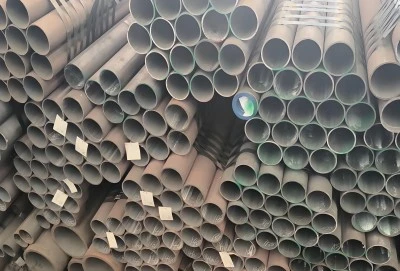
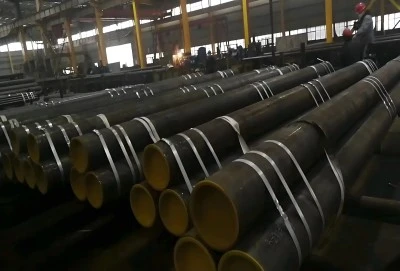
EN10219-1 S355J2H pipe is hot dip galvanised, yes. This cold formed welded structural hollow section is available with a minimum yield strength of 355 MPa and Charpy V-notch impact requirements at -20°C. It is a favoured choice for offshore platforms, wind energy foundations and arctic infrastructure. The carbon equivalent and silicon content of the steel are adjusted within the limitations of EN 10219-1 , hence zinc adhesion during hot dip galvanising is usually dependable . The low-temperature toughness of the pipe after coating should be protected by pre-treatment and bath temperature control.
|
|
|
Understanding EN10219-1 S355J2H Pipe: Specifications and Properties
What the Grade Designation Means?
And that’s how the title gets broken down. With a minimum yield strength of 355 MPa, “S355” has a tensile strength range of 510-680 MPa."J2" denotes the steel is Charpy V-notch impact tested at -20°C with a minimum absorbed energy of 27 Joules. That is, it is clearly different from S355J0H which only passes the impact test at 0°C. "H" signifies that the item is a hollow section complying with EN 10219.
Chemical Composition and Weldability
The standard limits carbon to a maximum of 0.22%, manganese to a maximum of 1.60% and silicon to a maximum of 0.55%. The limitations produce a low carbon equivalent value (CEV) which allows straightforward welding by MIG, TIG or submerged arc procedures without the need for elaborate preheat regimens. Phosphorus and sulphur caps reduce further the chance of lamellar layer tearing in the thick-wall sections utilised in large structural joints.
Dimensional Control and Manufacturing Process
Cold forming provides you with tighter dimensional restrictions than hot forming. EN 10219-2 normally allows a wall thickness tolerance of ±10%, however leading manufacturers often use higher tolerances to ensure high quality fabrication. Straight fit-up during assembly is achievable because to high out-of-roundness values and a constant outside diameter, which reduces field repair time. Before the pipe exits the production line the weld seam is inspected with ultrasonic waves or eddy currents to make sure it is solid on the inside.
Can EN10219-1 S355J2H Pipe Be Galvanized? Technical and Practical Analysis
How Hot-Dip Galvanizing Works on Structural Steel?
Hot-dip galvanising involves immersing cleansed steel in liquid zinc at a temperature of around 450° C. The zinc reacts with the iron surface to generate intermetallic layers and a pure zinc coat is then applied over this. You can’t just put this bond on the surface, it’s in the steel itself.” In the case of hollow components, holes are drilled before dipping so that the zinc can flow through and provide internal protection against rust.
Key Compatibility Factors for S355J2H
The quality of a coating is determined mostly by the amount of silicon it contains. The Sandelin effect can occur in steel with silicon content from 0.04% to 0.14% or over 0.25%. This can cause coatings that are thick, drab and brittle. Because EN 10219-1 restricts silicon to 0.55%, mills rolling EN10219-1 S355J2H pipe for galvanising normally target silicon levels below 0.14% or consult the galvaniser beforehand to ensure they are on track. The zinc coating on S355J2H has been tested and confirmed to meet the thickness requirements of EN ISO 1461 and to be free of surface imperfections.
Managing Hydrogen Embrittlement Risk
The cleaning procedure before to galvanising, acid pickling, is a difficulty due to hydrogen embrittlement. The risk is substantially lower for S355J2H with a yield strength of 355 MPa than for high strength steels beyond 700 MPa. Standard pickling at room temperature and controlled immersion time provide a safe level of absorbed hydrogen. The zinc layer prevents the entry of hydrogen during the use of the metal after galvanising. The galvanising plant has a third party testing the thickness of the coating and the surface quality before the pieces go out.
Comparing EN10219-1 S355J2H Pipes with Alternative Structural Pipes Regarding Corrosion Protection
S355J2H vs. EN10210 Hot-Formed Sections
EN 10210 deals with hot formed hollow parts. Hot-rolled steel has more leftover silicon from the rolling process, therefore it is difficult for the zinc to attach. If provided at time of order, the silicon concentration of the cold formed EN10219-1 S355J2H coatings is more predictable. Both standards are galvanizable, but pipe buyers for use in temperatures below -20° C should always request J2 impact certification, regardless of the forming method utilised.
S355J2H vs. ASTM A500 and A106
ASTM A500 Grade C is a common choice for structural hollow sections in North America, however it is not required to meet any low temperature impact standards. The ASTM A106 Grade B specification covers seamless carbon steel pipe that is intended primarily for use in pressure service rather than structural hollow sections. Both grades are less demanding than S355J2H at -20°C, as promised by the manufacturer. For work in Alaska, offshore Norway or northern Canada where brittle fracture prevention by contract is necessary, S355J2H certified by EN 10219-1 is the obvious choice.
Cost and Lifecycle Considerations
Galvanising is additional; depending on the weight of the section and the availability of the zinc bath, it can add 8 to 15% to the cost of the base pipe. Data supplied by the International Zinc Association shows that a galvanised S355J2H hollow section exposed to the sea or arctic temperature can endure 50-70 years with very little maintenance. In the comparison of the lifespan value only the purchase price for galvanising should be taken into consideration. “Coating intervals and structural downtime should be considered as well.
Procurement Insights: Sourcing Galvanized EN10219-1 S355J2H Pipes for Global B2B Clients
Certification Requirements That Protect Your Project
The purchaser shall request EN 10204 Type 3.1 or 3.2 material test certifications showing the relation between the chemical composition and the mechanical results for each heat number. According to the Construction Products Regulation, products marked with the CE mark are safe for use in buildings in Europe and many other countries. The owner has a separate record from the other records, with third party witness inspections at both the rolling mill and the galvanising factory by DNV, Bureau Veritas or SGS.
Before making an order, buying teams should make sure of the following documents:
- Material Test Certificate (MTC): Verifies chemical composition, yield strength, tensile strength, and Charpy impact results at -20°C with ≥27 J.
- Ultrasonic Weld Inspection Report: Confirms weld seam integrity per EN 10160 or equivalent NDT standard.
- Galvanizing Certificate: States average and minimum zinc coating thickness per EN ISO 1461, with batch traceability.
- Third-Party Inspection Report: Issued by DNV, BV, or SGS after independent dimensional and mechanical verification.
These papers make up the compliance package that project engineers and owner engineers will look over when they are pre-qualifying suppliers. Before signing a buy order, making sure they are available protects both the plan and the budget.
Lead Times and Supply Chain Planning
Once you confirm your purchase, you should expect 8 to 16 weeks till you get your big diameter or thick walled galvanised EN10219-1 S355J2H pipe hollow parts. This window covers receiving raw materials from recognised mills, cold forming and welding, NDT, galvanising, inspecting and packing for shipment. For installations in the arctic or offshore where the zinc coating needs to be protected during maritime freight, polyethylene end covers and stronger wood crating are often necessary. Incorporating this lead time in project plans eliminates the need for last-minute replacement of pipe that does not satisfy the criteria.
Best Practices and Recommendations for Using Galvanized EN10219-1 S355J2H Pipes
Post-Galvanizing Inspection Protocol
Measure the coating thickness at five places along each length of pipe using a calibrated magnetic thickness gauge according to EN ISO 2178. As per ISO 1461, steel with wall thickness above 6 mm shall have minimum average width of 85 μm. Discard any piece that has bare patches, flux inclusions, or zinc drips so it will not assemble properly. Each heat number has a review record associated with it to follow the project throughout its life cycle.
Handling, Storage, and Installation Guidelines
Do not store galvanised pipes on the ground but on padded wooden platforms to avoid wear of the zinc surface. Do not allow dissimilar metals to contact each other in storage, to prevent galvanic rust. "When installing, the cut ends must be treated with cold galvanising compound or zinc-rich paint within 24 hours to prevent the steel from rusting again." Good air flow and correct filler metals are crucial when welding galvanised pieces to keep a good quality weld close to the joint.
Maintenance Schedule for Harsh Environments
Zinc Coating Check annually in splash zones (near ocean or in the arctic) for the first five years, then every three years. Any increase of white rust or red rust is monitored using pictures. Use a zinc-rich sealing system for immediate repair of damaged areas rather of waiting for the normal maintenance process. This proactive approach also prolongs the time period between services and reduces the chances of needing to undertake repairs to the structure that are unplanned.
Conclusion
It is technically correct and possible to galvanise EN10219-1 S355J2H pipe provided that the silicon content is well controlled, the pre-treatment complies with the regulations in the EN ISO 14713-2 and the coating is tested by a third party to ensure that it fits all the requirements. The low carbon equivalent guarantees the integrity of the weld before and after galvanising and the -20°C impact certification decreases the risk of brittle fracture in cold weather structural applications. Procurement teams who specify composition requirements, request comprehensive documentation and verify coating quality at the supplier will receive galvanised S355J2H hollow sections that perform reliably throughout the entire project lifespan.
FAQ
Does galvanizing affect the mechanical properties of S355J2H?
At normal wall widths, hot-dip galvanizing at 450°C doesn't change the yield strength, tensile strength, or low-temperature impact toughness of S355J2H much. When the steel is cold shaped and normalized, its properties are set. Charpy tests done after galvanizing on representative samples show that impact values at -20°C stay at or above 27 J when bath time and temperature are kept constant.
Is pre-galvanized pipe better than on-site galvanizing for S355J2H?
When hot-dip galvanizing is done in a factory under controlled conditions, the layer thickness is more even than when zinc paints are applied in the field. The cold galvanizing compound that can be used on-site should only be used to fix small problems like cut ends. For important structural uses, the best way to buy things is to specify full hot-dip galvanizing according to EN ISO 1461 before delivery.
What silicon content should I specify when ordering S355J2H for galvanizing?
Ask for silicon content below 0.14% or between 0.15% and 0.25% to stay away from the reactive silicon range that makes zinc coats thick and rigid. Include this requirement in your material request, and make sure it's met on the MTC before you accept delivery.
Can galvanized S355J2H pipe be used in offshore wind foundations?
Yes. Many European companies that are building offshore wind farms have used galvanized cold-formed structural sections for access platforms, J-tube supports, and secondary steelwork. The mix of zinc corrosion protection and J2 low-temperature toughness works well for offshore areas that are exposed to sea air.
Partner with Longma Group for Certified Galvanized S355J2H Structural Pipe
Since 2003, Longma Group has been making ERW and LSAW steel pipes that meet EN10219 standards. They have provided approved EN10219-1 S355J2H pipe supplier options to over 90 countries. We offer hot-dip galvanizing, FBE, and 3LPE coatings as in-house anti-corrosion services. These are all backed by ISO 9001, API 5L, CE, and third-party inspection support from DNV and Bureau Veritas. To get a price for your job right away, email our technical team at info@longma-group.com or go to longma-group.com.