
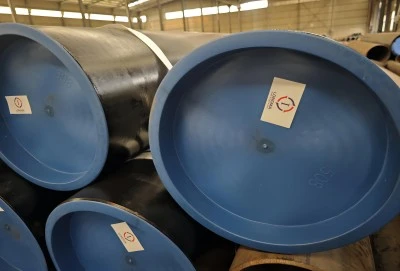
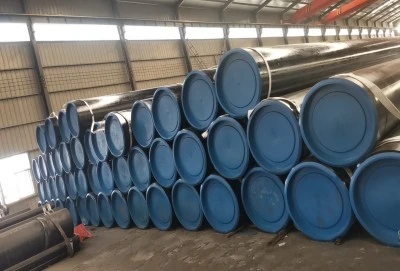
When planning large-scale pipeline infrastructure, procurement managers and engineers often face a critical question: can manufacturers deliver API 5L X52 pipes tailored to exact project specifications? The straightforward answer is yes—a qualified API 5L X52 pipe supplier possesses the technical capability and manufacturing flexibility to customize outer diameter, wall thickness, and length according to project-specific requirements. Modern steel pipe manufacturers leverage advanced ERW, LSAW, and DSAW welding technologies to produce X52 grade pipes ranging from 1/2" to 80" in diameter, with wall thicknesses from SCH10 to SCH160, and cut to precise lengths between 6 and 18 meters. This customization capability proves invaluable for projects demanding integration with existing infrastructure or operating under unique environmental and pressure conditions.
|
|
|
Understanding Customization Needs for API 5L X52 Pipes
Pipeline projects don't usually follow one-size-fits-all plans. How well a transmission system works rests a lot on how well the pipe specifications match up with operating needs, geographical issues, and government rules.
Why Standard Specifications Don't Always Fit
API 5L sets the basic requirements for line pipes that are used to move oil and natural gas. Even though these standards are important for safety and performance, the real world brings in variables that mean they need to be customized. A coastal offshore platform that works in salty environments that are harmful needs different wall thickness considerations than a pipeline in the desert that has to deal with huge changes in temperature. In the same way, integrating with existing infrastructure often requires matching specific outer diameters that might not match readily available stock sizes.
The Three Pillars of Pipe Customization
The outside width influences its flow capacity and compatibility with existing systems. Projects must match OD diameters to link to distribution networks or factories properly. Wall thickness affects pressure rating and durability. Higher internal pressures and corrosion resistance are possible with thicker walls. Length optimisation reduces installation field welding. This cuts labour costs, reduces project risk, and speeds up work.
Understanding these dimensional linkages helps procurement teams design efficient, safe, and cost-effective standards. X52 provides the mechanical qualities for medium- to high-pressure applications without the difficult welding techniques of higher-grade alloys. Its minimum yield strength is 52,000 psi.
Can Suppliers Customize OD, WT, and Length for X52 Pipeline Projects?
Manufacturing techniques have changed a lot in the last twenty years. The biggest companies that make steel pipes now use high-tech production lines that can keep exact measurements across a wide range of specifications.
Manufacturing Techniques Enabling Customization
Varied welding processes provide varied flexibility for an API 5L X52 pipe supplier. For precise readings on small to medium-diameter lines, ERW and HFW are ideal. These inexpensive approaches work for projects up to 24 inches in diameter. LSAW and DSAW can handle 16–80-inch widths, making them ideal for large gearbox trunk lines. Large-diameter works that need a spiral seam orientation for structural reasons may be done cheaply using SSAW.
Modern rolling machines with computer-controlled width adjustment can manufacture walls from 6.35 mm to 59.54 mm thick with 0.5 mm precision. Automation ensures accurate lengths and can manage random double lengths or precise modular building measures.
Practical Constraints and Considerations
You can only customise so much. Large diameters with thin walls may make manufacturing difficult or weaken the construction. Because tool modifications and quality control methods take time, non-standard specs increase manufacturing lead times. Depending on complexity and factory capacity, special orders might take three to six weeks, while basic orders can be sent in seven days.
Custom pipes need higher quality control. To maintain mechanical quality, testing variables must be recalibrated for each dimension change. Ultrasonic inspections, hydrostatic testing pressures, and radiographic examination procedures must be adjusted for wall thickness and diameter.
Key Considerations When Selecting a Custom API 5L X52 pipe supplier
Picking the right factory partner has a big effect on the success of a project. Besides just making sure the product is available, there are a few important things that set capable sellers apart from just decent ones.
Certification and Quality Management Systems
Reputable manufacturers have extensive certification portfolios. API 5L and ISO 9001 certifications indicate that the product fulfils American Petroleum Institute requirements and implements organised quality management. ISO 14001 and OHSAS 18001 certifications demonstrate your commitment to environmental and worker safety, which are increasingly vital for worldwide corporate social responsibility. Factory Production Control (FPC) certifications prove manufacturing is consistent.
Purchasing teams should request third-party inspections and certification status. Expired or pending renewals may indicate operational or financial issues. Checking raw material sources improves quality. High-quality steel mill products like Bao Steel, HBIS, and Shougang offer more consistent chemical and mechanical properties than secondary or recycled pipes.
Cost Structure and Transparency
Custom dimensions change prices in a number of ways. Base costs are directly affected by the amount of material used for walls that are thicker. Making things more complicated costs more in labor and machine time. When production runs are smaller, fixed setup costs are spread out over fewer units, which drives up the price per piece. A trustworthy seller gives thorough quotes that break down the costs of materials, processing, testing, and shipping. This helps buyers understand what factors affect costs and negotiate more effectively.
Normalizing specs and shipping terms is needed to compare quotes. FOB prices are very different from CIF prices, and payment terms affect how much operating capital you need. It's important to be able to change the minimum order quantity for projects that need to be implemented in stages or that need small specialty batches along with regular orders.
Service Capabilities Beyond Manufacturing
Comprehensive suppliers offer services that add value and make it easier to complete a project. Fabrication skills like beveling, drilling, or slot preparation cut down on the amount of work that needs to be done on-site. Anticorrosion treatments like hot-dip galvanizing, FBE (Fusion Bonded Epoxy), 2PP, or 3LPE are applied at the factory to make sure uniform quality and get rid of the need for different coating subcontractors. Support for documentation is just as useful—engineering firms need full paper trails with Material Test Certificates, Inspection and Test Plans, and Manufacturing Procedure Specifications to make sure they're following the rules and checking the quality.
Technical and Application Insights for Customized API 5L X52 Pipes
Changes to dimensions have technical effects that go beyond simple changes in measurements. Knowing these connections helps buying teams set the right boundaries without over-engineering, which drives up costs needlessly.
How Wall Thickness Affects Performance
Wall thickness increases pressure rating, according to the Barlow formula, which calculates hoop stress from diameter, wall thickness, and internal pressure. A 24-inch pipe with 12.7 mm walls can bear higher pressure than a 19.05-mm pipe. Thicker walls resist corrosion and enable greater corrosion. This added material buffer permits modest metal loss throughout the pipeline's lifespan without compromising structural integrity.
Too much thickness causes issues. Welding thicker walls requires more steps, higher preheat temperatures, and several weld passes, which raises installation costs and delays the construction timeline for an API 5L X52 pipe supplier. In larger pipes, the heat-affected zone requires careful metallurgical management to prevent hardness changes that might induce stress collection.
Testing and Quality Verification for Non-Standard Dimensions
Customised pipes undergo rigorous testing to match their specific characteristics. Chemical composition analysis ensures that carbon equivalent levels remain within service environment limits. Mechanical parameters including tensile strength, yield strength, and elongation measurements demonstrate that the material fulfils X52 grade norms with a minimum yield strength of 360 MPa and a tensile strength of 460–760 MPa.
Customised specs require more non-destructive testing. Service failures may result from ultrasonic investigation of internal fractures like laminations or inclusions. An X-ray may reveal weld seam gaps, slag inclusions, or fusion issues. Hydrostatic testing subjected each pipe to 100% of the minimum yield strength for 5–10 seconds. This prevents stress-related pipe leaks.
Documentation and Traceability Requirements
A lot of paperwork backs up guarantee claims and long-term upkeep. Permanent markings should be put on each pipe to show its heat number, standard, grade, and size information. Material Test Certificates show the chemistry make-up and mechanical properties of a certain production lot. The manufacturing records show how the pipe was made, from the raw coil or plate through shaping, welding, heat treatment, and final inspection. This creates an audit trail that makes it easier to find the root cause of problems in the field.
How to Effectively Procure Customized API 5L X52 Pipes for Your Pipeline Project
A good buying process plans ahead and works with suppliers to make sure that technical needs, price limits, and schedule demands are all met.
Defining Comprehensive Specifications
Clear requirements prevent miscommunications that delay delivery or lower quality. In addition to OD, WT, and length, specifications should specify threading, connection, and end preparation requirements such as plain or bevelled ends for welding. Dimensions are maintained via roundness, straightness, and wall thickness tolerances. The material grade must be PSL1 or PSL2, since PSL2 has higher chemical composition limitations and needs Charpy impact testing for toughness.
Service setting affects material choice. For hydrogen sulphide sour service, use X52MS or X52QS to avoid Hydrogen Induced Cracking and Sulphide Stress Cracking. To ensure cold-weather bendability, impact testing at the lowest projected operating temperature is needed.
Evaluating Supplier Capabilities
Ads alone cannot determine industrial capacity. Third-party site inspections or audits reveal the company's production, quality control, and stability. Manufacturing volume is important. Suppliers that produce over 1,000,000 tonnes have stronger raw material purchasing power, financial stability, and process control than smaller enterprises. The age and maintenance status of industrial equipment show its reliability and measurement accuracy.
A sample review indicates quality. Before ordering full quantities, request samples that fulfil project requirements to test mechanical qualities, measurement accuracy, and surface polish. ISO/IEC 17025-certified testing labs may validate vendor claims.
Negotiating Terms and Managing Logistics
Negotiating well goes beyond unit price. Payment terms impact project cash flow. Letters of credit give security but incur bank fees, while open account conditions need solid supplier contacts and a credit check. Delivery arrangements must match development stages to avoid delays and excessive storage expenses. Partial shipping flexibility is useful for regular delivery projects.
Logistics coordination is difficult for large-diameter or heavy-wall pipes. Container transportation is ideal for smaller pipes, whereas break-bulk ships are cheaper for bigger pipes. Inland transit from the port to the project site may need licenses for load measurement. A reputable provider uses their shipping connections to achieve the greatest prices and delivery dates for logistics planning.
Conclusion
Customizing the length, wall thickness, and outer diameter of API 5L X52 pipes is common practice among qualified makers who use current production tools. To make procurement work, you need to be clear about what the project needs, look at a supplier's skills in more depth than just price, and keep talking to them while the project is being made and delivered. Customizing the dimensions of a pipeline gives you the freedom to get the best performance, lower building costs, and long-term dependability in a wide range of working conditions. Customization can be a challenge when buying things, but it can be a competitive advantage when you work with an experienced API 5L X52 pipe supplier for sale that has strong technical knowledge, strict quality control systems, and full service support.
FAQ
1. Can suppliers provide small batch orders for non-standard X52 pipe sizes?
Small batch orders can be met by manufacturers who are able to do so, but the minimum order quantities depend on how complicated the dimensions are. Custom sizes usually need setup changes and specific production runs, which makes it hard to afford very small orders (less than 10 tons). Talking to suppliers early on about your specific volume needs lets them come up with workable solutions. For example, they might be able to combine your order with orders from other customers with similar specifications to make production more efficient while still meeting your deadline.
2. How does wall thickness customization impact pipe durability and project costs?
More wall thickness improves resistance to corrosion and pressure, which extends the service life in harsh environments. The link is based on engineering formulas: doubling the thickness of the wall nearly doubles the pressure rating, but it also raises the cost of materials and makes welding more difficult. The best width is found by weighing the needs of operations against the total cost of installation, which includes the cost of materials, shipping, and labor. Engineers from experienced providers can help you find the most cost-effective standard that meets your performance requirements.
3. What quality certifications should procurement teams look for when sourcing customized API 5L X52 pipes?
Some important certificates are Material Test Certificates for each production lot, ISO 9001 quality management system registration, and API 5L product approval. For projects in regulated industries, you might need extra paperwork like NACE MR0175 compliance for sour service, PED certification for European installations, or specific mill test reports that list the chemical make-up and mechanical properties of the material. To make sure you're in full compliance, make sure the certification's validity and topic coverage match the needs of your project.
Partner with Longma Group for Your Custom X52 Pipeline Solutions
For more than 20 years, Longma Group has been making customized API 5L X52 pipes for difficult projects around the world. With more than 1,000,000 tons of production capacity yearly and modern ERW and LSAW welding lines, we can meet exact size requirements from 1/2" to 80" in diameter and wall thickness from 6.35mm to 59.54mm. We hold a lot of licenses, like API 5L, ISO 9001, and Factory Production Control certificates. To back this up, we only use base materials from top mills like Bao Steel and HBIS. In addition to manufacturing, we offer full fabrication and coating services, thorough documentation support, and variable delivery plans. For example, normal specs ship within seven days. Get a full quote from a reliable API 5L X52 pipe supplier and maker by emailing our technical team at info@longma-group.com to talk about your project needs.