
The form you choose for ASTM A500 structural tube can make or break your project's success. There are pros and cons to each type of profile—circular, square, and rectangular—when it comes to load distribution, ease of production, and cost-effectiveness. Engineers can improve the performance of structures while still meeting tight schedules and financial limits if they know about these discrepancies.
|
|
|
Why Shape Selection Matters in Structural Applications?
The way steel tube is shaped directly affects how buildings react to different loads. People who work with complicated industrial systems know that choosing the right design influences not only how well the equipment works right away, but also how much care it needs and how long it will last.
Different cross-sectional patterns spread stress in different ways. Square and rectangular sections work best when you need the same strength along more than one axis. Circular profiles, on the other hand, are better at withstanding internal pressure and twisting forces. When building systems that have to deal with changing loads or harsh weather, these traits become even more critical.
The efficiency of fabrication typically affects project deadlines. Some forms are better for welding and assembly than others. Rectangular tubing has flat surfaces that make it easier to connect things, whereas circular parts may need specific connections but work best for pipes since they let water flow through them. Engineering teams may make choices that improve both performance and buildability by knowing these trade-offs.
Selection Criteria for Optimal Performance
Load Requirements and Structural EfficiencyWhen considering tubular steel forms, the most important thing to think about is how the cross-sectional characteristics will work with the expected loading circumstances. Circular hollow structural sections are very good at withstanding uniform external pressure and torsional stresses. Their symmetrical shape makes sure that they work the same way no matter which way the load is directed, which makes them perfect for situations where loading patterns may change or rotate.
Square tubing has balanced strength properties along both of its main axes and flat surfaces that make it easier to build connections. Because of their regular shape, these sections are great for columns that may have loads coming from more than one direction. They employ materials in a way that makes them very strong for their weight, which is good for both the structure and the project's budget.
Fabrication and Installation Considerations
When working with tight deadlines and complicated shapes, manufacturing efficiency is very important for the success of a project. Rectangular sections are better for welding because they have flat surfaces that are easy to reach and heat distribution patterns that are easy to anticipate. These traits cut down on the time it takes to make something and make the quality of the welds more consistent.
ASTM standards set dimensional limits that make sure that standard connection hardware and fabrication equipment will work with them. Cold-formed steel tube keeps its dimensions very precisely, which makes assembly work easier and faster. When managing several work crews and making sure that quality standards are met throughout huge projects, project managers appreciate these benefits of consistency.
Material Properties and Environmental Compatibility
The composition of carbon steel has an effect on both its mechanical capabilities and its ability to resist corrosion. The ASTM A500 structural tubing standard has many grades that give different degrees of strength to meet the needs of different applications. Compared to Grade A, Grade B material has a higher yield strength while still being easy to weld and shape.
When choosing materials, the environment has a big role, especially in maritime or industrial settings where corrosion resistance is quite important. Galvanized tubing lasts longer in tough circumstances while still having the structural qualities needed for load-bearing uses. The protective coating works well with many architectural finishes and lasts a long time.
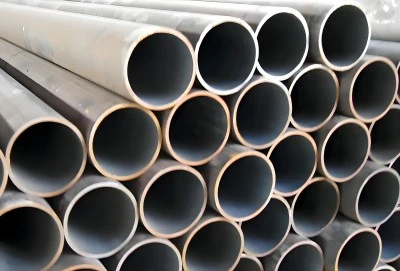
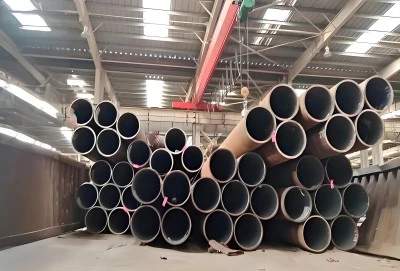
Circular ASTM A500 Structural Tubing
Superior Pressure Resistance and Flow CharacteristicsCircular hollow structural parts are great for uses that need to be able to handle pressure loads from the inside or outside. The continuous curving shape spreads stress evenly across the perimeter, which preventing stress concentrations from forming at corners or sudden transitions. This is why circular tubing is the best choice for pressure vessels and pipe systems that have high internal pressures.
In fluid transport applications, the smooth inside of circular portions makes it easier for fluids to move. Oil and gas transportation systems work better when they use less energy to pump and flow more smoothly. Without interior corners, there are no dead zones where trash or corrosive materials may build up. This makes the system last longer and need less maintenance.
Optimal Torsional Strength
Compared to other shapes, circular cross-sections are better at resisting twisting pressures. This benefit is especially relevant for things like drive shafts, support columns that have to deal with wind loads, or structural sections that have to deal with more than one type of load at the same time. The polar moment of inertia is highest when the material is evenly spread around the circle for a given amount of steel.
Structures in marine and offshore settings often have to deal with complicated loading patterns that involve a lot of torsion. When cyclic loading is applied, circular tubing behaves in a predictable way and keeps its shape. The lack of sharp edges lowers stress concentration variables that might cause fatigue failures in tough service situations.
Installation and Connection Advantages
You might need specific connecting gear for circular pieces, although they can be quite useful in some installation situations. When putting things together, the ability to rotate connections gives you more options for lining up complicated pipe or structural systems. This feature is especially useful when connecting to existing infrastructure where getting the perfect alignment may be hard.
The symmetrical cross-section makes it easier to analyze and design, which saves time and cuts down on mistakes. Structural analysis software works well with circular sections, which makes it easy to quickly optimize the sizes of members and the details of connections. These efficiency advantages are quite important when working on big projects with a lot of things that need to be done over and over.
Square ASTM A500 Structural Tubing
Balanced Strength and Versatile ApplicationsSquare hollow structural sections have the same strength along both of their primary axes. This makes them perfect for situations where the direction of the load may change or is unknown. This balanced approach makes design calculations easier and makes sure there is enough capacity for unforeseen loading situations. This even distribution of strength is especially helpful for column applications.
Using materials in square sections effectively leads to good strength-to-weight ratios, which help both the structure's performance and the project's bottom line. Hollow structural sections use less material than solid sections with the same load capacity, yet they still provide the strength properties that are needed. This efficiency means that both the original building and the continuing maintenance will cost less.
Construction and Fabrication Benefits
Square tubing is very useful for construction work since its smooth surfaces and predictable shape make it easy to work with. Welding works better with square pieces because they are easier to get to and the heat spreads out evenly. The flat surfaces give sturdy support during manufacturing, which means you don't need as many specialist fixtures and positioning tools.
Square parts make connection design easier since they have level mounting surfaces. Standard connection hardware usually fits right in without the need for extra adapters or fittings. This compatibility lowers the cost of materials and installation time while making connections more reliable and consistent.
Architectural and Aesthetic Considerations
Square ASTM A500 structural tubing is popular for structural uses where looks matter because it has clean lines and a geometric look. Square parts look good and may be used in building frames, exhibition structures, and ornamental features. The regular geometry fits in well with current architectural styles and gives the structure the strength it needs.
Square pieces make surface finishing activities go more smoothly since their flat surfaces are easy to reach. Galvanizing, painting, and other protective coatings go on evenly and dry in a predictable way. Not having complicated curving surfaces lowers finishing expenses while keeping the whole structure looking and protecting the same way.
Rectangular ASTM A500 Structural Tubing
Directional Strength OptimizationRectangular hollow structural sections allow engineers to optimize strength characteristics for specific loading patterns. By varying the depth-to-width ratio, designers can match section properties precisely to anticipated bending moments and loading directions. This optimization capability reduces material requirements while ensuring adequate structural capacity.
Beam applications particularly benefit from rectangular tubing where the major axis can be oriented to resist primary bending loads effectively. The efficient distribution of material away from the neutral axis maximizes moment resistance for a given amount of steel. This efficiency becomes especially valuable in long-span applications where weight considerations are critical.
Superior Fabrication Access
The elongated geometry of rectangular sections provides excellent access for welding and assembly operations. Internal welds become possible in larger rectangular sections, enabling more complex connection configurations. The flat surfaces accommodate standard welding equipment and techniques while ensuring consistent weld quality throughout the assembly process.
Quality control operations benefit from the accessible geometry of rectangular tubing. Inspection equipment fits easily within larger rectangular sections, enabling thorough examination of internal welds and connection details. This accessibility improves overall quality assurance while reducing inspection time and costs.
Versatile Connection Options
Rectangular tubing accommodates a wide range of connection methods due to its multiple flat surfaces and varying dimensions. Standard bolted connections, welded joints, and specialized mechanical fasteners all work effectively with rectangular sections. The flexibility in connection design enables engineers to optimize joint details for specific loading and installation requirements.
The varying wall thicknesses available in rectangular tubing allow for connection optimization where different strength requirements exist along the member length. Heavier sections can be specified at connection points while lighter sections handle span loads efficiently. This optimization capability reduces overall material requirements while maintaining necessary performance characteristics.
Global Market Characteristics and Regulatory Considerations
International Standards ComplianceThe global nature of modern construction projects requires materials that meet multiple international standards simultaneously. ASTM A500 structural tubing specifications align closely with international standards such as EN10219 and AS/NZS 1163, facilitating acceptance in various markets worldwide. This compatibility reduces certification requirements and simplifies project approval processes.
Different regions emphasize varying aspects of material performance and testing requirements. Middle Eastern markets often prioritize corrosion resistance due to harsh environmental conditions, while Australian projects may focus on seismic performance characteristics. Understanding these regional preferences helps project managers select appropriate material specifications and testing protocols.
Cultural and Regional Preferences
Construction practices vary significantly across global markets, influencing shape selection preferences. Asian markets often favor rectangular sections due to their compatibility with modular construction techniques, while European applications frequently specify circular sections for their architectural appeal and structural efficiency.
Local fabrication capabilities also influence shape selection decisions. Regions with advanced manufacturing infrastructure can handle complex geometries efficiently, while developing markets may prefer simpler shapes that require less specialized equipment. These considerations affect both material costs and project schedules across different geographic regions.
Supply Chain and Availability Factors
Material availability varies significantly across global markets, affecting both cost and delivery schedules. Regions with established steel production infrastructure typically offer better availability and competitive pricing for standard shapes. Remote locations may experience extended lead times and higher transportation costs that influence material selection decisions.
Quality assurance requirements differ among various markets, with some regions requiring extensive third-party testing and certification. Understanding these requirements early in the project planning process prevents delays and ensures compliance with local regulations. Proper documentation becomes essential when working across international boundaries.
Purchasing Recommendations and Considerations
Performance vs. Cost AnalysisWhen evaluating different shape options, consider both initial material costs and lifecycle expenses. While circular sections may command premium pricing due to manufacturing complexity, their superior durability in certain applications can result in lower total ownership costs. Square and rectangular sections often provide cost advantages in fabrication-intensive projects where labor efficiency matters significantly.
Quantity requirements affect pricing structures across all shape categories. Large-volume orders typically receive better pricing, but storage and handling costs must be considered when planning material deliveries. Coordinate with suppliers early to understand volume breaks and delivery scheduling options that optimize project economics.
Quality Assurance and Testing
Specify appropriate testing requirements based on application criticality and local regulations. Standard mill test certificates provide basic material properties confirmation, while third-party testing offers additional assurance for critical applications. Balance testing costs against risk mitigation benefits when establishing quality requirements.
Dimensional tolerances become particularly important when coordinating with other system components. Verify that specified tolerances are achievable and appropriate for your application requirements. Tighter tolerances increase costs but may be necessary for proper fit and function in precision assemblies.
Supplier Selection Criteria
Choose ASTM A500 structural tubing suppliers with demonstrated experience in your specific application area and geographic region. Established suppliers understand local requirements and can provide valuable guidance during material selection and specification development. Their experience helps avoid common pitfalls that could affect project success.
Evaluate supplier capabilities in terms of size range availability, processing capabilities, and delivery reliability. Some suppliers specialize in specific shapes or size ranges, while others offer comprehensive product lines. Match supplier capabilities to your specific project requirements to ensure optimal service and support.
Industry Trends and Summary
The structural tubing market continues evolving toward higher strength materials and more efficient manufacturing processes. Advanced steel grades provide enhanced performance characteristics while maintaining compatibility with existing fabrication techniques. Sustainability considerations drive increased use of recycled content and more efficient material utilization.
Automation in manufacturing improves dimensional consistency and quality control while reducing production costs. These improvements benefit end users through better material availability and more competitive pricing. Digital documentation and traceability systems enhance quality assurance and simplify compliance with international standards.
Partner with Longma Group for Your ASTM A500 Structural Tubing Requirements
Longma Group stands as your trusted ASTM A500 structural tubing manufacturer with over two decades of experience serving global engineering contractors and project managers. Our comprehensive inventory of circular, square, and rectangular sections ensures rapid delivery to meet your critical project deadlines. With production capacity exceeding one million tons annually and extensive certifications including API 5L and ISO 9001, we deliver consistent quality that meets the demanding requirements of oil and gas, infrastructure, and industrial applications. Contact our experienced team at info@longma-group.com to discuss your specific requirements and discover how our expertise can contribute to your project success.
Contact Longma
Selecting the appropriate shape for ASTM A500 structural tubing requires careful consideration of loading conditions, fabrication requirements, and project-specific constraints. Circular sections excel in pressure applications and provide superior torsional resistance, while square sections offer balanced strength characteristics ideal for column applications. Rectangular tubing enables directional strength optimization and provides excellent fabrication access.
Understanding global market characteristics and regional preferences helps optimize material selection for international projects. Quality suppliers with demonstrated experience in your application area provide valuable support throughout the specification and procurement process. Proper attention to these factors ensures optimal performance, cost-effectiveness, and project success across diverse engineering applications.
FAQs
Which ASTM A500 grade provides the best performance for structural applications?Grade B offers the optimal balance of strength, weldability, and cost-effectiveness for most structural applications. With a yield strength of 310 MPa and proven performance in demanding environments, Grade B provides reliable performance across a wide range of loading conditions. Grade A offers slightly lower strength but improved formability for complex shapes, while Grade C provides specific advantages in certain welding applications.
How do dimensional tolerances affect fabrication and installation?
Standard ASTM A500 tolerances ensure compatibility with common fabrication equipment and connection hardware. Tighter tolerances may be necessary for precision assemblies but increase material costs. Most structural applications perform well with standard tolerances, while mechanical systems requiring precise fits may justify premium tolerance specifications.
What factors determine the appropriate wall thickness selection?
Wall thickness selection depends on loading requirements, span lengths, and connection details. Thicker walls provide higher load capacity but increase material costs and weight. Structural analysis determines minimum thickness requirements, while practical considerations such as connection design and corrosion allowances may require additional thickness. Balance performance requirements against cost considerations when specifying wall thickness.