
ASTM A500 structural tubing is a complete standard for carbon steel hollow structural sections that are welded and cold-formed. This specification is for round, square, and rectangular tubes in particular. These forms are very important for structural uses in building, industrial production, and infrastructure projects. Engineers also benefit from knowing the varied grades, dimensional tolerances, and mechanical qualities. As a result, procurement managers may choose the best steel tube for tough jobs. These can include everything from moving oil and gas to building structures and offshore platforms. Also, knowing how this is different from other standards, like ASTM A252 steel pipe, makes it easier to see whether to employ structural vs piling applications.
|
|
|
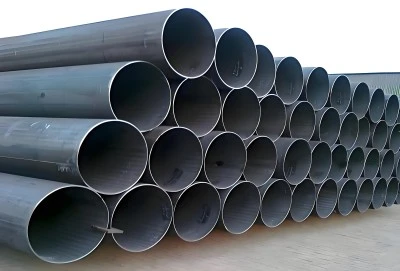
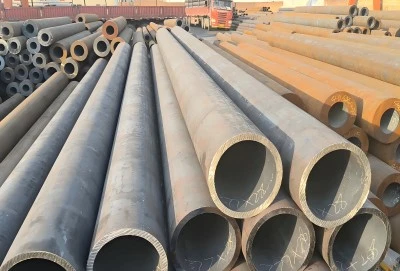
Understanding ASTM A500 Standard Specifications
The ASTM A500 specification sets tight standards for carbon steel hollow structural sections that are welded or produced in the cold. This standard mainly makes sure that quality and performance are the same throughout diverse production methods. So, engineers use this specification when they build new buildings. These projects need a load-bearing capability that can be counted on and exact measurements. ASTM A500 structural tubing, on the other hand, focuses more on the structural skeleton above ground than ASTM A252 steel pipe, which focuses more on piling and foundation loads.
This standard requires that cold-formed steel tube be made in a certain way. These steps make the structure more stronger. First, flat steel strips go through shaping rollers at room temperature. Then, the welding methods make robust seams. The strength of the tube stays the same over its whole length thanks to these couplings. Because of this, these hollow structural parts have great strength-to-weight ratios. Because they are so efficient, they are great for big building projects where cutting down on weight is very important.
The standard includes both welded and seamless ways of making things. This adaptability lets manufacturers be flexible while still meeting quality standards. For some uses, seamless tubes can handle more pressure than other types of tubes. On the other hand, welded versions are cheaper and better for general structural uses. Both kinds fulfill strict standards for mechanical properties. These qualities are necessary for important infrastructure projects, which is different from what is usually required in ASTM A252 steel pipe criteria.
ASTM A500 Steel Grades: A, B, C, and D Comparison
ASTM A500 structural tubing encompasses multiple strength grades. Each grade is engineered for specific performance requirements. Initially, Grade A provides a tensile strength of 400 MPa along with a yield strength of 290 MPa. This specific grade is suitable for general structural applications. Thus, it offers reliable performance in building frameworks and situations requiring moderate load-bearing capabilities.
Next, Grade B delivers an enhanced yield strength of 310 MPa. However, it maintains the same 400 MPa tensile strength. Currently, this grade represents the most commonly specified option for structural steel projects in North America. Engineers prefer Grade B for applications that require superior load resistance. Additionally, it offers excellent deformation control under stress. This makes it more structurally versatile than standard ASTM A252 steel pipe grades used in deep foundations.
Furthermore, Grade C maintains the 400 MPa tensile strength. Yet, it reduces yield strength to 260 MPa. This provides different performance characteristics for specialized needs. Meanwhile, Grade D offers a 230 MPa yield strength. This creates options for applications where specific mechanical properties must align with unique design requirements. Ultimately, each grade serves distinct engineering needs across various industrial applications.
The carbon content varies between these grades. Consequently, this variation affects weldability and mechanical properties. Generally, lower carbon content improves welding characteristics. On the other hand, higher carbon levels can enhance strength properties. Therefore, understanding these relationships helps engineers select appropriate grades. They can then match the grade to specific project requirements, ensuring safety and longevity.
Dimensional Tolerances and Size Specifications
Dimensional accuracy plays a crucial role in structural steel applications. Accordingly, ASTM A500 structural tubing establishes precise tolerance requirements. These cover outside diameter, wall thickness, and length specifications. These tolerances ensure proper fit-up during construction. Moreover, they maintain structural integrity throughout the service life of the project. This precision is often stricter than the tolerances found in ASTM A252 steel pipe, which allows for greater variation due to its use in soil piling.
Outside diameter tolerances vary based on nominal size. They also depend on the manufacturing method used. Typically, smaller diameter tubes maintain tighter tolerances. Conversely, larger sections may have slightly increased allowable variations. However, engineers must pay close attention to wall thickness tolerances. These directly impact load-bearing calculations. Therefore, the physical dimensions must align perfectly with engineering specifications to prevent structural failure.
Length tolerances accommodate practical manufacturing limitations. Yet, they still meet rigorous construction requirements. Standard lengths range from 3 to 12.5 meters. This range provides flexibility for various project needs. Additionally, manufacturers can often produce custom lengths. This meets specific project requirements, though it may affect delivery schedules and pricing. Comparatively, ASTM A252 steel pipe is often supplied in varying lengths for splicing into deep ground, whereas A500 requires precise lengths for framing.
Weight tolerances ensure accurate material calculations for structural designs. Engineers heavily rely on these specifications. They use them for precise load calculations and material ordering. Furthermore, understanding tolerance ranges helps prevent costly ordering errors. It ensures adequate material quantities for project completion. This level of detail ensures the final structure performs exactly as the model predicts.
Key Applications in Industrial Construction
Structural steel tubing finds extensive use in oil and gas transportation infrastructure. Specifically, pipeline support structures require robust materials. These materials must withstand environmental stresses while maintaining dimensional stability. The hollow structural sections provide excellent resistance to wind loads. Furthermore, they resist seismic forces common in these applications. While ASTM A252 steel pipe might support the ground beneath a compressor station, ASTM A500 structural tubing creates the framework holding the machinery.
Water supply systems also benefit from these materials. They utilize the corrosion resistance and strength properties of properly treated structural tubing. These systems demand materials that maintain integrity under pressure. Simultaneously, they must resist environmental degradation. The uniform strength characteristics make hollow sections ideal for water treatment facility frameworks. Here, reliability is paramount to preventing contamination or service interruption.
Bridge construction utilizes rectangular and square tubing effectively. Engineers use these shapes for various structural elements. These shapes provide efficient load distribution. Additionally, they offer resistance to multiple-axis loading conditions. The flat surfaces ease connection details significantly. This feature simplifies construction procedures. Consequently, this reduces overall project costs and timelines. In many bridge designs, ASTM A252 steel pipe serves as the driven pile foundation, while ASTM A500 forms the trusses and guardrails above.
Offshore platform construction demands durable materials. These must withstand harsh marine environments. The excellent torsional resistance of circular and square sections makes them suitable for platform support structures. Moreover, proper corrosion protection enhances service life. This is critical in challenging saltwater conditions where maintenance is difficult.
Manufacturing Quality and Testing Standards
Quality control processes ensure consistent mechanical properties. Manufacturers apply these controls throughout production runs. For example, heat treatment procedures optimize material characteristics. They also relieve manufacturing stresses induced during forming. Consequently, these controlled processes create uniform grain structures. This uniformity enhances overall performance and reliability in the field.
Non-destructive testing methods verify material integrity. Crucially, these methods do so without compromising structural properties. Ultrasonic inspection detects internal discontinuities. These flaws could otherwise affect performance under load. Additionally, visual inspection confirms surface quality. It checks dimensional accuracy according to specification requirements. This rigorous testing sets structural tubing apart from general-purpose pipes or lower-grade ASTM A252 steel pipe where visual standards might be less critical.
Chemical composition testing validates carbon content. It also checks alloying element percentages. These analyses ensure compliance with grade requirements. Furthermore, they help predict welding behavior during fabrication. Proper chemical balance contributes to consistent mechanical properties. It also ensures manufacturing reliability across different batches.
Mechanical testing verifies several key properties. These include tensile strength, yield strength, and elongation properties. These tests confirm material performance under actual loading conditions. Additionally, statistical process control maintains quality consistency. This occurs across production batches, ensuring reliable material properties for every shipment.
Global Supply Chain and Regional Considerations
International projects require adaptable materials. These materials must meet multiple standard requirements simultaneously. Fortunately, ASTM A500 structural tubing specifications often align with other international standards. This alignment simplifies global procurement processes significantly. Therefore, understanding equivalent standards helps engineers. They can then specify appropriate materials for multinational projects with confidence.
Regional availability affects project timelines. It also impacts material costs. Consequently, establishing relationships with qualified suppliers is vital. This reduces procurement risks and ensures timely delivery. Furthermore, local suppliers may offer advantages. For instance, they often provide lower transportation costs and better technical support for regional projects.
Quality certification requirements vary between regions. They also differ based on project types. For example, API certification may be required for oil and gas applications. Conversely, other industries may have specific quality documentation needs. Complete material traceability supports quality assurance. It also aids in regulatory compliance requirements. This traceability is as important for ASTM A500 as it is for critical ASTM A252 steel pipe piling projects.
Logistics considerations impact material delivery schedules. They also influence project planning. Container shipping limitations may affect maximum length specifications. This is particularly true for international shipments. Therefore, coordinating delivery schedules with construction timelines is essential. This optimizes project efficiency and reduces storage requirements on site.
Corrosion Protection and Surface Treatments
Environmental exposure demands appropriate corrosion protection strategies. Specifically, hot-dip galvanizing provides excellent long-term protection. This is widely used for structural applications in aggressive environments. The coating method creates a metallurgical bond. This bond effectively resists mechanical damage during handling and installation. While ASTM A252 steel pipe is often filled with concrete to mitigate corrosion, ASTM A500 structural tubing relies heavily on these surface treatments.
Fusion bonded epoxy coatings offer superior chemical resistance. These are ideal for specialized applications. Furthermore, these coatings work particularly well in underground installations. They are also suitable for submerged installations where galvanizing may be insufficient. The coating thickness affects overall performance. Likewise, the application process determines the service life of the protective layer.
Three-layer polyethylene systems provide comprehensive protection. These are often used for buried applications. These multi-layer systems combine adhesion with mechanical protection. Additionally, they provide excellent chemical resistance. However, proper surface preparation is mandatory. It ensures optimal coating adhesion and long-term performance.
Paint systems offer cost-effective protection. These are suitable for indoor or mild environmental conditions. Surface preparation requirements vary based on exposure conditions. They also depend on the expected service life of the structure. Finally, regular maintenance schedules help extend coating performance. This ultimately extends the structural service life of the tubing.
Choose Longma Group as Your Trusted ASTM A500 Structural Tubing Manufacturer
Longma Group delivers exceptional ASTM A500 structural tubing. We provide products with proven quality and reliability for demanding industrial projects. In addition, we can supply related products like ASTM A252 steel pipe for your foundation needs. Our advanced manufacturing capabilities ensure precision. Furthermore, comprehensive testing ensures your materials meet exact specifications every time. Contact us at info@longma-group.com to discuss your structural steel requirements. Discover how our expertise can support your next project's success.
Conclusion
ASTM A500 structural tubing provides essential materials for modern construction. It is also vital for industrial applications. Understanding the different grades, tolerances, and applications enables better material selection. Consequently, this leads to project success. The consistent quality standards ensure reliable performance. This reliability holds true across diverse environmental conditions and loading scenarios.
Proper specification of these materials contributes significantly to project quality. It also enhances the longevity of the structure. Therefore, working with experienced suppliers is crucial. Suppliers who understand international standards and regional requirements streamline the procurement process. This partnership effectively reduces project risks. Whether you require structural sections or foundation solutions like ASTM A252 steel pipe, choosing the right standard is the first step toward a safe and durable build.