
Procurement managers have to make a big choice when they're looking for X42 pipe for large building projects or oil and gas transportation: how to make sure that the pipe they're buying meets strict industry standards. The right API 5L X42 pipe supplier doesn't just send you steel; they also provide traceability, testing paperwork, and production openness that keeps your project from having expensive failures in the field. Knowing exactly what to check before buying protects engineering teams from the structure risks, price overruns, and project delays that come with materials that haven't been checked out properly.
|
|
|
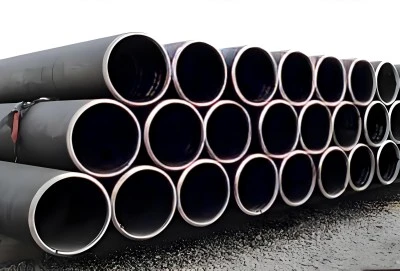
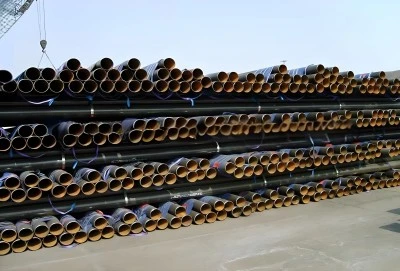
Critical Quality Parameters to Verify Before Purchase
Procurement teams need to set up ways to check that go beyond what suppliers say on the surface. Your pipeline system's integrity relies on meeting certain quality standards that can predict how it will work in the long run.
Certifications: API and ISO Compliance
Any reliable API 5l X42 pipe supplier has API 5L certification, which shows that they follow the rules for tests, material specs, and size tolerances. Don't just check that the certificate exists; make sure it's valid by checking API's online register and making sure it covers the pipe types and PSL levels you're buying.
Having ISO 9001 certification means that the provider has a Quality Management System in place that keeps track of production from the time the raw materials are received until the final review. Extra licenses, such as ISO 14001 and OHSAS 18001, show that a company cares about the environment and safety, which helps keep the supply chain running smoothly.
Essential Inspection and Testing Procedures
The most common way to make sure something is safe is to put it through hydrostatic testing, which means that each length of API 5l X42 pipe has to be able to handle internal pressures higher than the minimum yield strength for a set amount of time without leaking or permanently changing shape.
Non-Destructive Testing (NDT) methods find flaws that can't be seen with the naked eye. Ultrasonic Testing (UT) looks at the weld joint on ERW and LSAW pipes to see if there are any laminations or lack of fusion that could cause cracks.
Radiographic Testing (X-ray) gives a 3D picture of the quality of the weld, which is especially important for pipes that will be used on remote sites or in sour service settings.
Dimensional proof shows that the outer diameter, wall thickness, and ovality are all within the API 5L tolerances, which are usually +19.5% for the outer diameter and -8% for the wall thickness on bigger diameters.
Spectrometric study of the chemicals shows that the levels of carbon, manganese, and trace elements are within the acceptable range. This has a direct effect on the weldability and hardness of the material.
Manufacturing Process Impact on Pipe Integrity
The soldering method has a big impact on how well the API 5l X42 pipe works. ERW (Electric Resistance Welded) pipes are first welded with high frequency and then treated with in-line heat to make the weld zone normal. This makes them ideal for normal coastal uses. Longitudinally Submerged Arc Welded (LSAW) pipes have submerged arc welding on both sides, which makes the weld quality better for high-pressure or thick-wall uses. Spirally Submerged Arc Welded (SSAW) pipes let you match diameter-to-thickness ratios, but the spiral weld seam needs to be carefully looked over. Seamless lines don't have any problems with welds, but they cost more and should only be used when the project requirements specifically say that welding is not allowed.
Selecting a Trusted API 5L X42 Pipe Supplier: What to Look For
The relationship with the seller goes far beyond the first order. During the assembly phase, the partner you choose affects project timelines, quality consistency, and the ability to solve technical problems.
Evaluating Supplier Credentials and Global Reputation
Check that possible API 5l X42 pipe suppliers have current API 5L licenses by looking them up on the API Composite List and making sure that their mills have passed recent checks. It's important to look for providers whose yearly production exceeds 500,000 tons. This shows that they have the infrastructure to handle big project numbers without affecting delivery dates. References to global projects show how well something works in the real world. Ask for case studies of projects that were similar to yours in size and location, especially if you'll be working in difficult places like desert pipeline building or offshore platforms. Established suppliers that work with big oil companies like Mobil Oil Australia or big building projects in the Middle East have a track record of being able to handle complicated requirements and foreign shipping.
Supply Chain Factors: Product Variety and Lead Times
A wide range of products shows that the company can make a variety of things. Look for API 5l X42 pipe suppliers that offer a wide range of diameters and welding types, such as ERW, LSAW, and SSAW, with wall thicknesses from Schedule 10 to Schedule 160 and ODs from 1/2" to 80". With this type, you can make all of your purchases from one source, which makes logistics and quality control easier. Standard standards usually ship within seven to fourteen days from well-known companies that keep popular sizes in stock. Lead times can be up to eight weeks if you need custom specs like walls that aren't the standard thickness or special finishes like 3LPE. Minimum Order Quantities (MOQ) are different for each maker and specification. Standard sizes may only need a few tons, but 20-ton minimums are common for special orders to make sure the mill can schedule them.
After-Sales Support and Technical Assistance
Superior suppliers offer complete documentation packages that include Material Test Certificates (MTC) that list the chemical makeup and mechanical test results, Inspection and Test Plans (ITP) that show how the quality will be checked, and Manufacturing Procedure Specifications (MPS) that list the parameters for production. This ability to be tracked is very important for engineering workers who are being audited by a third party or who need to show project owners that they are following the specifications. The ability to provide technical help sets special sellers apart from commodity vendors. It is very helpful to be able to talk to metallurgical experts who can help you choose the right materials for bad service or low-temperature uses. Installing instructions that include how to weld, what needs to be done during heat treatment, and inspection acceptance standards help building teams avoid mistakes that cost a lot of money.
Practical Buying Guide: Streamlining Your Procurement Process
Efficient buying strikes a balance between technical accuracy and business sense, making sure that specs meet both the needs of the project and the limits of the budget.
Defining Technical and Commercial Requirements
Efficient buying strikes a balance between technical accuracy and business sense, making sure that specs meet both the needs of the project and the limits of the budget. Setting out the technical and business needs: Start with a complete specification sheet that lists the grade (X42 PSL1 or PSL2), the way the metal is made (ERW, LSAW, or seamless), the measurements (OD, wall thickness, length), and the end treatment (beveled or plain ends). Make sure you know what testing is needed in addition to the normal API 5L requirements. For example, projects in seismic zones may need Charpy V-Notch impact testing at certain temperatures, and sour service uses need to follow NACE MR0175/ISO 15156, which includes HIC testing.
Requesting Detailed Quotes and Assessing Total Cost
It is important to be clear about the type of coating (3LPE, FBE, or Coal Tar Enamel), its thickness, and how it should be used. Know whether the quote you get is FOB mill, CIF target port, or shipped to the building site. Delivery terms have a big effect on the total cost of the project. Complete RFQs (Requests for Quotation) should ask for prices that include the base material, the application of the finish, inspection fees, and bags of paperwork. Instead of just looking at per-ton prices, you should also look at the overall cost of ownership. Most of the time, a provider with slightly higher unit costs but free storage, flexible payment terms, and full technical support is a better deal than the lowest price. Different suppliers may offer different ways to pay. Suppliers that have been working with you for a while may offer 30-day terms or progress payments based on output goals. On the other hand, new suppliers usually need letters of credit or advance deposits. Talk to the provider about terms that meet both of your needs for cash flow and their needs for risk management.
International Logistics and Compliance Documentation
When you buy pipes across international borders, the paperwork can get complicated, which can slow down projects if it's not handled properly. Make sure that your supplier can give you business invoices, packing lists, certificates of origin, and mill test certificates in a style that the customs officials in your country will accept. In order to meet local standards, you may need to do more tests or get certified. For example, Australian projects usually need to be checked for AS/NZS compliance, while European projects use EN standards. When sending abroad, managing lead times becomes very important. Large-diameter pipe shipped by ocean from Asian mills to Middle Eastern destinations usually takes four to six weeks. However, traffic at the target ports can make delivery times longer by several weeks. Include extra time in your project schedule and set up clear ways for people to talk to each other so you can keep track of goods as they move through the transportation chain.
Conclusion
By checking important factors before buying API 5L X42 pipe, you can keep your project safe and avoid quality problems that cost more and put safety at risk. We looked at how the chemical make-up, mechanical qualities, and production processes affect long-term performance. We also looked at the testing methods that make sure pipes are solid and compared X42 to other grades to help with strategic material choice. Evaluations of suppliers look at more than just price. They also look at certifications, professional help, and the reliability of the supply chain. If procurement managers learn these testing principles, they can make sure that materials meet specifications while also keeping project costs and schedules as low as possible. This will lead to pipeline infrastructure that works reliably for as long as it was designed to.
FAQs
What distinguishes API 5L X42 PSL1 from PSL2 specifications?
PSL2 has tighter rules than PSL1. For example, Charpy V-Notch impact testing is needed to check how tough something is to break at low temperatures, usually 0°C. To keep things from being too hard, PSL2 limits the highest yield strength and tightens rules on the amount of carbon, phosphorus, and sulfur in the material to make it easier to weld. PSL2 is usually used for projects that need to be able to handle sour service or work in cold areas to make sure they have enough hardness and resistance to hydrogen-induced cracking.
Can X42 pipe be used in sour service environments containing H2S?
It's not always possible for standard X42 pipe to be used for sour service. You must order materials that are in line with NACE MR0175/ISO 15156 or ask for compliance with Annex H when you are buying them. This makes sure that the steel is made with a limited amount of sulfur and other materials that can't crack when hydrogen is present, which is known as Hydrogen Induced Cracking (HIC) or Sulfide Stress Cracking (SSC).
How do welding methods affect X42 pipe performance?
ERW pipes use high-frequency welding that works well for normal pressure situations, and an in-line heat treatment process evens out the joint seam. LSAW pipes are better for high-pressure or thick-wall requirements because they have better weld quality thanks to double-sided submerged arc welding. When making things with big sizes, SSAW pipes are flexible, but the spiral weld seam needs to be carefully checked to make sure the quality is always the same.
Partner with a Leading API 5L X42 Pipe Supplier for Your Next Project
The Longma Group has been making high-quality API 5l X42 pipes for over 20 years and makes more than a million tons of LSAW and ERW pipe every year in our 230,000-square-meter plant. We have current API 5L and ISO 9001 licenses, and we only buy raw materials from Bao Steel, HBIS, and Shougang, three of China's best steel mills, to make sure that the quality of our metals is always the same. Our wide range of testing services, including chemical analysis, checking mechanical properties, ultrasonic inspection, and hydrostatic testing, give engineering workers the paperwork tracking they need. We can meet the needs of project plans in 90 countries with delivery times as short as seven days for standard X42 specs from 1/2" to 80" OD and wall thicknesses up to Schedule 160. Email our team at info@longma-group.com to talk about your specific needs and get thorough technical help from our metallurgical engineers who know how to handle the unique problems that come up with pipeline projects in the Middle East, Southeast Asia, and Australia.