
It is very important to know the difference between API 5L GR B and A106 GR B grades when buying carbon steel pipes for big industry projects. Both standards have chemical makes-ups and mechanical qualities that are similar, but they are used for very different things. Api 5l gr b pipe is designed to be used in pipeline transportation systems that move oil, gas, and water over long distances. It can be manufactured in a number of different ways, including seamless or soldered. On the other hand, A106 GR B is a seamless carbon steel pipe designed for use in power plants, factories, and industrial process systems where it needs to be heated to high temperatures. Knowing these functional differences helps procurement managers and pipeline engineers make smart choices that balance the need for performance, safety, and cost-effectiveness in their unique project settings.
|
|
|
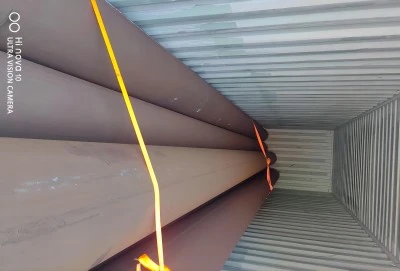
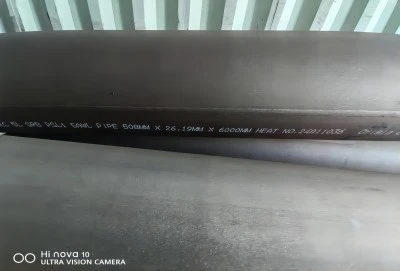
API 5L GR B and A106 GR B Pipes
Both api 5l gr b pipe and A106 GR B pipes are important parts of industrial infrastructure, but they were designed with different goals in mind. Pipeline projects that go for hundreds of kilometers need materials that are easy to weld, have regular size limits, and behave mechanically in a predictable way when temperatures change. This is where the API 5L standards really shine.
API 5L GR B, which is also known as L245 in ISO 3183 standards, is a standard-grade carbon steel line pipe used all over the world to move water and fuels. Its modest yield strength of 245 MPa (35,500 psi) and good field weldability make it a cost-effective choice for pipeline networks that run across multiple states. The specification allows for both seamless and welded production methods, such as ERW (Electric Resistance Welded), LSAW (Longitudinal Submerged Arc Welded), and SSAW (Spiral Submerged Arc Welded). This lets procurement teams choose the type of production based on the required diameter, the pressure rating, and the budget.
ASTM A106 GR B pipes, on the other hand, solve a different problem in industry. Processing equipment in refineries, petroleum plants, and thermal power plants is kept at high temperatures for long periods of time, sometimes reaching 400°C (750°F). The A106 GR B seamless pipes are made to keep their structural integrity and ability to control pressure in these harsh thermal conditions. The seamless construction gets rid of lengthwise weld gaps, which means there are fewer places where the material could become weak when exposed to changing temperatures and corrosive process fluids.
By knowing these basic differences, project procurement managers can make sure that material specs are in line with operational needs. This way, expensive mistakes that could risk safety or shorten repair cycles can be avoided.
Chemical Composition and Mechanical Properties
Chemical Composition Analysis
Both grades stay within the same ranges of carbon content to make sure they can be welded and are strong enough. API 5l gr b pipe usually says that the highest amount of carbon in smooth pipes is 0.28% and a little less in welded pipes. The highest amount of manganese allowed is 1.20%. To keep the material from becoming too rigid and easy to crack from hydrogen in sour service conditions, phosphorus and sulfur impurities are limited to a maximum of 0.030% each.
A106 GR B has the same limits on elements, but because it is made with uniform production, it has even tighter controls over its makeup. When you hot-work something that isn't bonded, the microstructures are more uniform. This makes the mechanical behavior more predictable when the temperature changes.
These controlled chemicals have a direct effect on activities that involve field welding. Lower carbon equivalent values make preheating easier and lower the risk of cold cracking during building welding. This is especially important when installing pipeline systems in rural areas where heat treatment options are limited.
Mechanical Performance Metrics
The minimum yield strength for both grades is 245 MPa, which is the stress level at which the material starts to deform permanently. This means that it can handle practical pressure spikes and external loads. Tensile strength standards must be at least 415 MPa (60,200 psi), which provides large safety gaps against catastrophic failure modes.
Good ductility is shown by elongation rates that are usually higher than 20% for both standards. This quality is very important for bending pipes because it lets the material take impact energy without breaking easily. This is especially helpful in places where there are a lot of earthquakes or where the ground moves.
Performance at different temperatures is a key difference. At normal working temperatures for transmission pipes, which are usually below 120°C, API 5L GR B keeps its strength. However, A106 GR B has better creep resistance and keeps its pressure containment integrity at temperatures close to 400°C. It can handle high temperatures because it has a smooth architecture and the grains are fine-tuned under controlled conditions during production.
Corrosion Resistance Considerations
Both types of carbon steel have about the same level of rust protection when they are not protected. To stop soil-side corrosion in underground uses, pipeline owners usually use three-layer polyethylene (3LPE), fusion-bonded epoxy (FBE), or coal tar enamel as surface coatings. Chemical inhibitors, internal linings, or cathodic protection systems may be used to stop internal rust, based on the type of fluid and how fast it flows.
Because A106 GR B is flawless, there are no worries about preferential weld-line corrosion. This is helpful in highly corrosive process environments where even small metallurgical flaws can speed up degradation.
Production Standards and Manufacturing Processes
The manufacturing methods and quality assurance systems that make these specifications different represent the service environments they are meant for and the rules that guide their use.
API 5L Manufacturing Standards
API 5L sets up two Product Specification Levels, PSL1 and PSL2, which set quality standards that get stricter over time. PSL1 is the normal level that can be used for most pipeline uses that need simple mechanical, dimensional, and hydrostatic tests. PSL2 requires stricter quality control measures, such as Charpy V-notch impact tests to make sure the material is tough at low temperatures, tighter chemical composition standards with lower sulfur and phosphorus limits, and a full non-destructive examination of all weld seams.
Api 5l gr b pipe is made in both seamless and soldered forms at Longma Group's production facilities. For seamless production to start, solid round billets are heated to forging temperature. They are then cut and rolled to get them to the right size. This method works great for uses with high pressure and smaller sizes. We use LSAW technology to make straight-seam pipes up to 48 inches in diameter and wall thicknesses up to XXS schedules. This is common for trunk transmission lines, which need pipes with a big diameter. Steel plates are precisely made and joined through submerged arc welding.
For moderate-diameter jobs, ERW manufacturing is cheaper because it uses continuous forming and high-frequency induction welding to make uniform quality at low costs. Each way of making something goes through strict quality control procedures.
Quality Control Protocols
Line pipe buyers put a high value on thorough inspections to ensure working safety and regulatory compliance. Before being shipped, each length is put through hydraulic testing, which is usually done under pressure equal to 60% of the minimum yield strength. This makes sure that there are no leaks. Ultrasonic examination and radiography inspection are two non-destructive testing methods that can find cracks below the surface in weld zones that could spread when the load is applied and removed repeatedly.
Dimensional verification checks the consistency of wall thickness, outside diameter tolerances, and out-of-roundness factors that are needed for a good fit-up during field welding operations. Chemical testing on heat samples and mechanical tests like tension, flattening, and bend tests show that the product meets API 5L requirements.
ASTM A106 Manufacturing Standards
ASTM International standards say that A106 pipes can only be made through seamless hot-finishing methods. The standard puts a lot of emphasis on being able to handle high temperatures, which means that the manufacturing methods must create fine-grained microstructures with consistent mechanical properties across the entire length of the pipe wall.
Procedures for heat treatment are very important for getting certain material qualities. Normalizing heat processes smooth out the structure of the grains and release any leftover stresses from hot working. This makes the dimensions more stable during thermal cycles in service.
Application Scenarios and Performance Considerations
Long-term asset performance and lifecycle costs depend on how well pipe specs match operational needs. Material choices are based on things like the working pressure, temperature range, fluid properties, and the conditions of the surroundings that are specific to the project.
API 5L GR B Pipeline Applications
The main use for API 5L grade pipes is in transmission pipeline networks that move crude oil, natural gas, and finished petroleum products across huge distances. These systems work at pressures between 600 and 1,440 psi (4.1 to 9.9 MPa), which is well within the range of what Grade B materials can handle. The specification's design freedom, which allows for both seamless and welded production, lets diameter optimization happen. For example, smaller gathering lines can use seamless construction for higher pressure ratings, while large-diameter trunk lines can use welded construction to save money.
Another important application area is water transmission facilities for local supply systems and process water in industry. When compared to higher-grade options, the middling strength is sufficient for normal water distribution forces while still being cost-effective. Coatings on the outside of structures protect them from earth rust and can last longer than 50 years if they are well taken care of.
The ability to weld api 5l gr b pipe in the field is useful for onshore gathering systems that collect fuels from various wellheads. Standard welding methods make it easy for construction workers to do tie-ins and modifications quickly and without having to follow complicated pre-weld or post-weld heat treatment steps. This speeds up installation times in remote areas.
A106 GR B High-Temperature Applications
For refinery process pipe systems that handle hot crude parts, catalytic reforming streams, and thermal cracking unit transfers, you need materials that can keep their strength and stability under pressure at high temperatures for a long time. These needs are met by A106 GR B seamless pipes, which can handle temperatures up to 400°C, keep process pressures in check, and avoid thermal damage from repeated use.
Power plants and factories use A106 GR B for superheated steam service in their steam production and delivery networks. The seamless design means that you don't have to worry about the stability of the lengthwise weld when the temperature changes over and over again. Also, the material's creep resistance stops it from slowly deforming under long-term pressure and temperature loads.
A106 GR B is used in high-temperature fluid transfer systems in steel mills, chemical processing plants, and pulp and paper mills, among other heavy manufacturing facilities. The specification has a history of reliable performance in harsh industrial settings, which helps with risk estimates and plans for upkeep.
Performance Parameter Evaluation
When choosing between specs, procurement teams should look at a number of practical factors. To figure out the maximum working pressure, you need to use established code formulas from ASME B31.3, B31.4, or B31.8, based on the service classification. These formulas take into account design factors, pipe diameter, wall thickness, and material yield strength.
Temperature plays a big role—projects that will be operating at temperatures above 120°C for a long time should choose A106 GR B, even though it costs more because it performs better at high temperatures and requires less upkeep over time, which means fewer problems and higher costs. On the other hand, API 5L GR B is cost-effective for uses that work in mild or ambient temperatures without losing safety.
The corrosivity, abrasiveness, and hydrogen sulfide level of a fluid affect the usefulness of a material. Sour service settings with H2S need more material testing according to NACE MR0175/ISO 15156 standards. This could mean that the design needs to be changed to PSL2, which includes required impact testing and hydrogen-induced cracking resistance verification.
Conclusion
When choosing between API 5L GR B and A106 GR B pipes, it's important to make sure that the properties of the materials match the needs of the process. API 5L GR B works great for pipeline movement because it is cost-effective, easy to make, and can be welded in the field. A106 GR B is for high-temperature process pipes that need to be built without joints and have excellent thermal performance, which is why it costs more. When selecting materials, people who work in procurement should look at things that are relevant to the project, like the operating pressure, temperature range, fluid properties, and lifecycle costs. Working with certified makers who provide full quality documentation, expert support, and reliable shipping performance is the best way to make sure that projects around the world succeed in a wide range of industry settings.
FAQs
What represents the primary functional difference between API 5L GR B and A106 GR B pipes?
API 5L GR B is used in pipelines to move oil, gas, and water. It comes in both seamless and welded types and is best for long-distance movement because it welds easily. A106 GR B covers high-temperature process pipes in power plants and factories. These pipes are only made as seamless pipes and are made to withstand temperatures up to 400°C for a long time.
Can these specifications substitute for each other in project applications?
There are similarities in the chemical makeup, but functional replacement relies on the conditions under which it is used. A106 GR B can be used instead of API 5L GR B in most situations because it is smooth and can handle a wider range of temperatures, but it costs more to make. Putting API 5L GR B through high temperatures that are higher than what it can handle can cause it to fail early and is against the rules for design.
How do PSL1 and PSL2 designations affect API 5L GR B procurement decisions?
What do the PSL1 and PSL2 labels mean for choices about buying API 5L GR B? PSL2 has tougher quality standards, such as requiring impact tests, lower chemical limits, and full non-destructive examination. Low-temperature settings, sour service conditions, or places with strict regulatory control usually call for PSL2 materials, even though they cost 10-15% more than PSL1 materials.
Partner with Longma Group for Reliable API 5L GR B Pipe Supply
If you need approved API 5L and ASTM A106 materials made to exact international standards, Hebei Longma Group is ready to meet your pipeline and process plumbing needs. Our 230,000-square-meter production plants use modern ERW and LSAW technologies to make more than a million tons of steel every year. They are certified by API 5L, ISO 9001, ISO 14001, and OHSAS 18001, among others. Premium fuel comes from trusted mills like Shagang, TISCO, and HBIS. This way, we can be sure that the quality of all of our goods, from the raw materials to the finished ones, is always the same. As an experienced api 5l gr b pipe manufacturer, we offer full fabrication services, such as beveling and coating application with 3LPE and FBE systems, as well as full documentation packages that include mill test certificates, inspection test plans, and material traceability records that are necessary for engineering contractors and procurement managers. Email our expert team at info@longma-group.com to talk about the details of your project and get personalized quotes with low prices for large orders. You can look at our whole line of products at longma-group.com and ask for examples along with full technical datasheets to help you evaluate the materials.