
The fundamental difference between EN 10219 S235J0H and S235J2H lies in their impact toughness ratings at varying temperatures. EN10219-1 S235J0H pipe requires a minimum impact energy of 27 Joules at 0°C, while S235J2H demands the same impact resistance at -20°C, making it more suitable for extreme cold environments. Both are cold-formed structural hollow sections sharing identical yield strength of 235 MPa, but the J2H grade offers superior low-temperature performance, critical for offshore platforms, arctic infrastructure, and equipment exposed to harsh winter conditions.
|
|
|
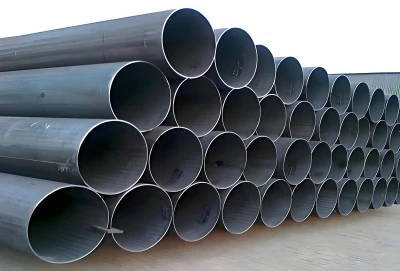
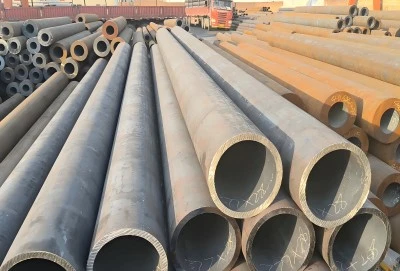
Understanding EN 10219-1 Steel Grades: S235J0H vs. S235J2H
The EN 10219-1 standard sets out all the technical requirements for structural hollow sections that are cold-formed and bonded and are made from fine-grain and non-alloy steels. This European standard tells manufacturers what limits they can have on chemical composition, mechanical properties, and size differences in their products so that the quality of their goods is the same all over the world.
Chemical Composition Framework
Chemical boundaries that prioritize weldability and structural integrity are the same for both S235J0H and S235J2H. The carbon percentage is usually between 0.17% and 0.20%, and the manganese amount stays at or below 1.40% to make the steel stronger without making it less flexible. The highest amounts of phosphorus and sulfur are limited to 0.035% and 0.040%, respectively. This makes sure that the material will last for a long time and work with galvanizing processes. The controlled chemistry in the EN10219-1 S235J0H pipe makes it possible to weld very well using standard manufacturing methods. This lowers the cost of production and speeds up assembly on building sites.
Impact Toughness Specifications
The last part of the designation, J0 or J2, tells you the temperature at which the Charpy V-notch impact test takes place. Impact tests are done on S235J0H at 0°C (32°F), which guarantees that it will absorb at least 27 Joules of energy. It's perfect for places with mild winters, like most of the Middle East, Southeast Asia, and southern Australia, because of this specification. On the other hand, S235J2H needs to perform the same way when hit at -20°C (-4°F), which gives structures in colder climates an extra safety margin. This improved low-temperature toughness stops brittle cracking under dynamic loads, which is very important for building bridges, offshore platforms, and industry facilities that work in high-altitude or northern latitude areas.
Heat Treatment and Manufacturing Process
The "H" at the end of the name means that the part is hollow and was made by cold-forming and then heating it in a certain way. During the production process, steel strip is repeatedly shaped into tubes and joined along the length using high-frequency resistance welding or submerged arc welding. Post-weld heat treatment levels out the weld area, removing any remaining stresses and making the cross-section's mechanical qualities the same all the way through. This controlled heat processing makes sure that the base material and the weld seam meet the strict impact toughness standards. This is a very important factor that purchasing managers should check with EN 10204 Type 3.1 or 3.2 inspection certificates.
Key Technical Differences and Material Performance Comparison
Mechanical Property Analysis
These two structure types have a minimum yield strength of 235 MPa and a tensile strength range of 360 to 510 MPa when put next to each other. For theoretical wall thicknesses up to 16 mm, the elongation at fracture usually exceeds 26%. This makes the material flexible enough for bending, shaping, and field changes. But the temperature at which impact hardness is assured is still the most important difference. When engineers are making equipment support structures or port facilities in mild climates, they can confidently choose S235J0H because its 0°C impact rating gives them enough safety margins. The -20°C toughness guarantee that S235J2H offers is needed for projects that will be exposed to tougher environments, like oil rigs in the North Sea or pipeline infrastructure in Canada.
Weldability and Fabrication Characteristics
Because their carbon equivalent (CEV) values are usually less than 0.40%, both types are very easy to bond. This means that metal inert gas (MIG), tungsten inert gas (TIG), and shielded metal arc welding (SMAW) methods can be used to join the pieces without having to first heat up the thinner wall parts. The fixed amounts of phosphorus and sulfur make it less likely that the metal will crack when it's being welded. Fabricators can quickly and easily cut, drill, and bend these hollow sections using common workshop tools. This makes it possible to finish projects quickly. Because these products are cold-formed, they have tight tolerances on their sizes—usually within ±1% for outside diameter and ±10% for wall thickness. This makes it possible for exact fit-up during robotic welding operations and cuts down on the need for expensive repairs.
Dimensional Consistency and Weight Calculations
EN 10219-2 says what kinds of changes can be made to the sizes and qualities of these structural hollow parts. Tolerances for out-of-roundness, standards for straightness, and uniform wall thickness all have a direct effect on structural formulas and material figures. These standard specifications are used by procurement teams to figure out the total weight of a project for shipping logistics and foundation loading assessments. The consistent density of 7,850 kg/m³ of the material makes it possible to accurately predict costs based on theoretical weights. However, actual weights may vary within the range allowed by the standard. This ability to predict the future is very helpful when managing large-scale purchases for infrastructure projects, where budget overruns can make the project impossible to complete.
Practical Applications & Selection Criteria for B2B Clients
Industrial Application Scenarios
When structural engineers choose between these grades, they have to think about how the material will be used, how hot it will be, and how it will be loaded and unloaded. The EN10219-1 S235J0H pipe is commonly used in architectural steel lattices and trusses. Its high strength-to-weight ratio and smooth surface finish make it perfect for airports, arenas, and business buildings that need to have obvious structural frameworks. Its impact temperature of 0°C makes it suitable for most indoor uses and moderate outdoor conditions in the Middle East, Southeast Asia, and along the coast of Australia. This type is used for equipment support structures in places like the MOBIL OIL AUSTRALIA sites where the temperature rarely gets below freezing but the structure's dependability is still very important.
Comparative Analysis with Alternative Grades
Procurement professionals often compare these S235 grades to stronger options like S275J0H and S355J0H, or they look at international standards like ASTM A500 and AS/NZS 1163 during the selection process. The S235 designation means that the steel is the least expensive option that still meets modern building codes. This makes it a good choice for projects that need to be strong but not too strong. Higher grades have higher yield strengths (275 MPa and 355 MPa, respectively), which means they can support heavier structures or more weight, but they cost more. There are some similarities and some differences between European EN 10219 standards and American ASTM A500 grades. The strength of ASTM A500 Grade B is similar to that of S235, but the testing methods and chemical standards are a little different. In the same way, performance characteristics are similar for Australian standard AS/NZS 1163 Grade C250.
Procurement Considerations for EN 10219-1 S235J0H and S235J2H Pipes
Quality Verification and Compliance Documentation
A successful procurement process starts with strict quality control protocols that make sure the product is real and follows all the rules. Buyers should demand full non-destructive testing (NDT) of the lengthwise weld seam, preferably ultrasonic testing (UT) or eddy current examination to find hidden flaws that might affect the structure's performance. Tensile and yield strength tests, along with the required Charpy V-notch impact test at the given temperature (0°C for J0H and -20°C for J2H), prove that the material really does meet its grade designation. Dimensional metrology is very important for current building; inspection records should show that strict adherence to EN 10219-2 standards for out-of-roundness, straightness, and uniform wall thickness is met.
Supplier Selection and Certification Requirements
To find trusted suppliers, you need to look at their manufacturing skills, quality control systems, and past delivery records. When a product has the CE marking, it means that it meets European standards for health, safety, and the environment. However, buyers should check the credentials of the notified body. Our ISO 9001:2016 certification, API 5L license, and Factory Production Control certification all show that Longma Group fully meets foreign quality standards. We get our raw materials from reputable mills like Shagang, Shangang, and Bao Steel, and then use modern heat treatment methods and do a thorough final check to track the process from steel coil to finished hollow section, including EN10219-1 S235J0H pipe production.
Logistics and Cost Management Strategies
Managing procurement costs includes transportation costs, the cost of keeping goods, and making sure that delivery dates are kept. When buyers buy in bulk of standard sizes, they can save a lot on the cost per unit, but they have to weigh these savings against the costs of storage. When procurement managers know about typical lead times—which range from 4 to 6 weeks for stock sizes to 8 to 12 weeks for custom sizes—they can plan material deliveries to fit building schedules. International sourcing involves landed cost estimates that account for shipping costs, clearing taxes, and changes in the value of the currency to speed up the customs process.
Conclusion
The main difference between EN 10219 S235J0H and S235J2H is their certified impact toughness at different operating temperatures. The J2H grade works better in very cold situations. Both grades offer reliable structural performance, easy welding, and low cost for a wide range of projects, including oil and gas infrastructure, water supply systems, and industrial manufacturing facilities. When choosing between these structure hollow parts, people who work in procurement must carefully look at the environment, government rules, and the total cost. In today's tough global building market, projects are more likely to succeed when they work with certified makers who provide detailed testing records, accurate measurements, and reliable delivery schedules.
FAQ
What is the primary difference between S235J0H and S235J2H for structural projects?
The main difference is the guaranteed impact toughness temperature. For S235J0H to work at 0°C, an impact must have at least 27 Joules of energy, but for S235J2H, it must work at -20°C. This makes S235J2H a better choice for structures that will be used in very cold places or offshore, where temperatures are often lower.
Can EN10219-1 S235J0H pipe be used in cold climate applications?
The EN10219-1 S235J0H pipe works effectively in moderately cold places down to about 0°C, which means it can be used for most projects in Australia, Southeast Asia, and the Middle East. But buildings that are often exposed to temperatures below freezing should use S235J2H to make sure there are enough safety gaps against brittle fracture.
How do I verify supplier credibility when purchasing EN 10219 structural hollow sections?
Ask for EN 10204 Type 3.1 or 3.2 certificates that confirm the chemical make-up and mechanical properties, check the authenticity of the CE marking, and make sure the product is ISO 9001 certified. Check out the supplier's producing skills, quality control methods, and past work on projects like yours. Ask for sample test results and, if you can, have a third party check them out before they are shipped.
Partner with Longma Group for Certified EN10219-1 S235J0H Pipe Supply
Since 2003, Longma Group has been making high-quality EN10219-1 S235J0H pipe supplier solutions, so you can trust them to give you what you need. Our 230,000-square-meter factory makes more than 1,000,000 tons of certified structural hollow sections every year that meet EN 10219, ASTM A500, and AS/NZS 1163 standards. We only buy high-quality raw materials from the best mills. Our full manufacturing services, which include cutting, welding, and anti-corrosion processes like hot-dip galvanizing and 3PE coating, give you complete solutions that are made to fit the needs of your project. Email our skilled staff at info@longma-group.com to get personalized quotes and thorough inspection records.








