
When purchasing large-diameter welded pipes for moving industrial fluids, procurement managers have to make a tough choice: which material is best in terms of cost, performance, and compliance? As a cheap, factory-direct option, ASTM A671 CA55 pipe stands out as a great choice for low to moderate pressure applications in power generation, municipal water systems, and environments with normal temperatures. Electric fusion welding (EFW) is used to make this pipe grade from ASTM A285 Grade C carbon steel plates. It offers reliable structural integrity and consistent dimensions while keeping material costs low. This makes it a smart choice for large-scale infrastructure projects around the world.
|
|
|
Strategic Procurement Guide for Direct Factory Supply
To get things done in procurement, you need to know how prices change, how to find things, and how the supply chain works. Direct factory sourcing gets rid of markups on goods that go through middlemen and makes sure that the products are real and can be customised.
Pricing Determinants and Cost Structures
Unit price is affected by a number of factors. Pipe width and wall thickness have a direct effect on the amount of material used; bigger sizes need heavy plate stock and more welding supplies. Length specifications affect how easy it is to transport and handle. Order volume leads to economies of scale; purchases in bulk that are more than 100 tonnes usually qualify for discounts that go up as the quantity purchased does. Steel plate prices change on the market because of the cost of raw materials and changes in supply and demand across regions. Smart buyers keep an eye on price changes by negotiating contracts every three months instead of buying steel plates on the spot.
Minimum Order Quantities and Lead Time Planning
Most ASTM A671 CA55 pipe manufacturers have minimum order sizes of 20 to 30 tonnes so they can afford to set up production and check the quality of the goods. When customers ask for custom sizes, the minimums may go up because they need special tools and measurements to be checked. Standard wait times are 30 to 45 days for stock sizes and 60 to 75 days for custom specs that need unique mixtures of diameter and thickness or special testing needs. Purchasing managers should make sure that ordering times work with project deadlines, taking into account the time it takes for foreign shipping to get to its destination (usually 20 to 35 days, based on the port) and the steps needed to clear customs.
Advantages of Direct Factory Sourcing
Getting directly involved with manufacturers has many strategic benefits. Because there are no distributor margins when prices are clear, total costs often go down by 15 to 25 percent. Technical information is sent directly from engineering teams to production specialists, which makes sure that specifications are followed correctly and lowers the chance of misunderstandings. Customisation options get a lot better because factories can make things in non-standard lengths, with bevelled ends, special coatings, and testing methods that wholesalers rarely offer. Buyers can get better quality control when they check out manufacturing facilities, look at certifications for raw materials from mills like Shagang and HBIS, and double-check compliance paperwork.
Managing International Logistics
When you buy something from another country, it's more complicated and needs to be carefully managed. The choice of Incoterms (FOB, CFR, or CIF) determines who is responsible for costs and where risks are transferred. Getting goods through customs is easy if you have the right paperwork, like commercial invoices, packing lists, mill test certificates (MTC), and certificates of origin. Manufacturers with a lot of experience can combine shipping plans, supervise the loading of containers, and handle cargo insurance, which makes operations easier for people who buy from other countries.
This procurement information helps project managers and engineering contractors get the best prices while making sure quality and on-time deliveries are maintained across global supply lines.
Manufacturing Process and Rigorous Quality Assurance
Being open about how the goods are made gives buyers more trust and makes it clear what quality standards are expected. Knowing how raw materials are turned into finished pipe shows the technical know-how and strict quality control that make the product reliable.
Production Methodology from Plate to Pipe
The first step in the manufacturing process is choosing the raw materials. Premium carbon steel plates from approved local mills are chemically and mechanically tested to make sure they meet the requirements of ASTM A285 Grade C. Plates are cut to exact sizes based on calculations of the pipe diameter, taking into account the space needed for forming and welding. Multi-pass roll bending is used in the making process to gradually turn a flat plate into a cylinder shape, reducing the amount of stress that remains.
Using submerged arc welding (SAW) and constant filler metal addition, electric fusion welding joins the edges of plates. Controlling the welding parameters (current, voltage, and travel speed) is done with pre-qualified welding procedure specifications (WPS), which make sure that the heat input and penetration depth are always the same. This method makes a longitudinal weld seam whose mechanical properties are the same as or better than those of the base material.
Custom Sizing Capabilities
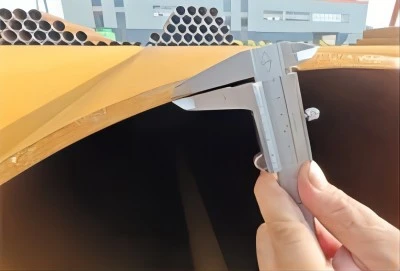
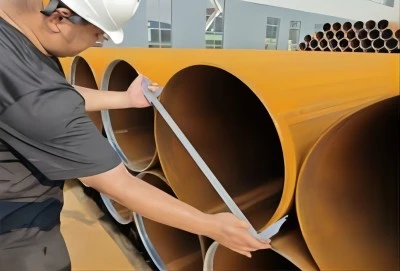
Modern production sites can meet a wide range of size needs. The diameter ranges of ASTM A671 CA55 pipe from 16 inches to 100 inches, and the wall thickness can be anywhere from 6 mm to 40 mm, based on the pressure rating requirements. Lengths can be changed from normal 6-meter or 12-meter pieces to custom lengths that fit the needs of the installation. This cuts down on the time needed for welding and putting together in the field. During production, beveling, threading, and slot machining for coupling links can be done at the same time, making the parts ready for installation.
Quality Control and Testing Protocols
At several steps of production, strict inspection processes make sure that the integrity of the product. Radiographic examination (RT) of the whole weld seam for Class 30 pipe is part of non-destructive testing (NDT). It shows any interior cracks, holes, or slag spots that can't be seen with the naked eye. Ultrasonic testing (UT) is another way to check the quality of the weld melting and the consistency of the wall thickness.
As part of mechanical testing, transverse tensile specimens are taken from weld zones to make sure that the minimum values for strength and elongation are met. Guided bend tests check the ductility and quality of the fusion by severely deforming specimens without cracking them. Each piece of pipe is put under 1.5 times its design pressure during hydrostatic pressure testing. This finds any leaks or structural flaws before the pipe is shipped.
Spectroscopic chemical analysis checks the elements' make-up and makes sure that the levels of carbon, manganese, phosphorus, and sulphur stay within the acceptable ranges. This thorough testing process, which is recorded in Material Test Certificates (MTC) that meet EN 10204 3.1 standards, gives engineering companies the quality guarantee and traceability they need.
These ways of making things and checking for quality show that the company has the technical know-how and process control to make sure that the pipes they sell are reliable and work as planned for their whole time.
Typical Applications in Industrial Infrastructure
Applications in the real world show how this material can be used to solve engineering problems in a wide range of fields. Knowing about these use cases helps people who work in procurement find times when ASTM A671 CA55 pipe is the best value.
Power Generation Facilities
Large-diameter pipes are used in thermal power plants for cooling water systems that get rid of waste heat from condensers. When these circuits are used, they should be at room temperature and air pressure, which are ideal settings for the CA55 to work well. When thousands of meters of large-bore pipe are needed, this material's cost-effectiveness becomes clear. It lowers capital costs without affecting operational reliability. As for other uses in power plants, low-pressure steam headers and condensate return lines are examples of places where materials can handle low pressures and temperatures.
Municipal Water Infrastructure
Large-diameter transmission mains are needed to connect treatment plants to distribution zones in urban water supply networks. In these atmospheric pressure situations, CA55 pipe works well because it protects against corrosion on the outside with coatings like 3PE and has a cement mortar lining on the inside. Because the material is flexible, it can handle ground settlement and seismic movement that can happen with underground systems. Because lower-grade materials are cheaper than higher-grade ones, cities and towns can expand their infrastructure networks even when their public utility budgets are tight.
Industrial Process Systems
ASTM A671 CA55 pipe is used in cooling water loops, process water supply lines, and low-pressure ventilation ducts in chemical plants, refineries, and factories. Managing high-temperature flue gas in combustion systems is another use where the material's maximum temperature and pressure rating are sufficient. For areas with high pressure or corrosion, premium materials should be used. This economical pipe grade is used for storage tank nozzle connections and fill lines that work with gravity flow.
In all of these situations, the diameter needs to be big, the pressure needs to be low to moderate, and the temperature needs to be within the material's performance envelope. Knowing these limits of use lets you choose materials in a smart way that saves money on projects while still meeting safety and dependability standards.
Conclusion
Welded ASTM A671 CA55 pipe is a cheap and reliable way to build large-diameter, low-pressure industrial pipes for use in the process, power generation, and municipal infrastructure industries. It is made from ASTM A285 Grade C plate using electric fusion welding, which gives it good mechanical properties and consistent dimensions for use in temperatures ranging from 0°C to 343°C. The material works best in conditions that are within its design envelope, but it can't be used in cryogenic, high-pressure, or highly corrosive environments because of performance issues. Direct factory sourcing increases value by offering low prices, letting you make changes, and providing detailed quality records. When procurement professionals know about the properties of materials, how they are made, and the limits of their uses, they can make decisions that balance performance needs with budget realities.
FAQs
What distinguishes CA55 from CC65 grade in the A671 specification?
The base plate for ASTM A671 CA55 pipe is ASTM A285 Grade C, which has a minimum tensile strength of 55 ksi. The base plate for CC65 is ASTM A516 Grade 65, which has a minimum tensile strength of 65 ksi and better low-temperature toughness. CA55 is the most cost-effective choice for service at room temperature, while CC65 is best for uses that need better impact protection or colder situations.
Can this pipe grade accommodate custom dimensions?
Custom diameters, wall thicknesses, and lengths are often made by manufacturers to meet the needs of specific projects. For non-standard sizes, the minimum order quantity may need to be changed, and lead times may need to be extended (usually 60 to 75 days) to allow for special tools and procedures for verifying the sizes.
What testing documentation accompanies material shipments?
As standard, deliveries come with Material Test Certificates (MTC) that show the results of chemical analysis, mechanical tests, hydrostatic pressure tests, and dimensional checks. On request, you can get better documentation packages that include Inspection and Test Plans (ITP), Manufacturing Procedure Specifications (MPS), and third-party inspection reports. These are especially useful for engineering contractors who need to be able to track quality all the way back to the source.
Partner With Longma Group for Reliable ASTM A671 CA55 Pipe Supply
Longma Group has been a reliable ASTM A671 CA55 pipe manufacturer for business-to-business markets around the world since 2003. Their 230,000 square meters of advanced manufacturing facilities can make more than 1,000,000 tonnes of pipes every year. We get high-quality raw materials from well-known mills like Shagang, HBIS, and Bao Steel. This way, we can be sure that the quality will be the same from the plate to the finished pipe. Our production processes are ISO 9001-certified and include full radiographic testing, hydraulic pressure verification, and full mechanical testing. This makes sure that the goods we make meet strict international standards. Custom sizes, anti-corrosion coating services (FBE, 3PE, 3LPE), and fabrication options (beveling, threading, and perforating) let you get complete solutions that fit the needs of your project. During the procurement and installation phases, engineering support teams help with choosing materials, writing specifications, and giving advice on how to use them. Get in touch with our experts at info@longma-group.com to talk about your unique needs and get cheap quotes backed by technical knowledge and reliable delivery performance.