
When building transmission towers that need to stand firm against wind, weather, and electrical loads, choosing the right structural material is critical. EN10219-1 S235JRH pipe has become a go-to solution for many engineers and procurement managers involved in power infrastructure projects. This cold-formed welded structural hollow section, manufactured to European standard EN 10219, combines reliable mechanical strength with outstanding workability and economic value, making it a practical choice for tower fabrication worldwide.
|
|
|
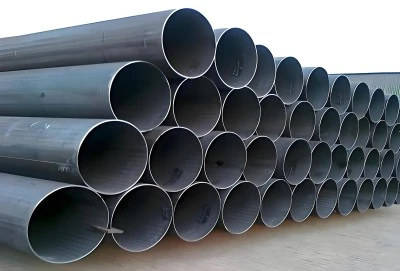
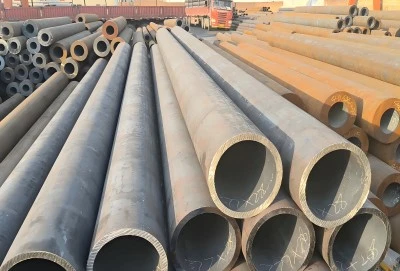
Understanding EN 10219-1 S235JRH Pipe Specifications and Standards
Core Mechanical Properties and Chemical Composition
The EN10219-1 S235JRH pipe standard spells out specific rules for cold-formed welding structural hollow parts that are used in a wide range of building projects. The fact that this material is called EN10219-1 S235JRH pipe tells us a lot of useful things. The "S235" number means that the minimum yield strength is 235 megapascals, which is enough load-bearing ability for most transmission tower designs without needing parts that are too heavy. This balanced strength-to-weight ratio saves money on both buying the materials and putting them together.
These hollow sections work very differently in real life depending on the chemicals they are made of. Carbon content is kept low on purpose—usually no more than 0.17% at most—which directly improves weldability and lowers the risk of brittle cracks during manufacturing or service. The amount of manganese in steel is usually between 0.50% and 1.50%. Manganese makes steel stronger while keeping it flexible. Controlled amounts of phosphorus and sulfur make sure that the material doesn't have any dangerous impurities that could weaken its structure.
Manufacturing Process and Structural Integrity
These hollow sections are made through a carefully controlled process that combines cold forming with welding. Continuously shaping steel strip into a tube-like shape, it is then lengthwise joined using high-frequency resistance or buried arc methods. At Longma Group, we use advanced heat treatment methods right after welding to even out the mechanical properties of the section and normalize the heat-affected area. This careful attention to the making process means that every meter of pipe, no matter how many tons you order, is of the same high quality.
Welding Guidelines for Optimal Joint Quality
Due to its low carbon equivalent, EN10219-1 S235JRH pipe is very easy to weld using normal methods. For widths up to 12 mm, most jobs can go ahead with MIG, TIG, or submerged arc welding without the need for preheating. If the wall thickness is above this range, a small heat up to 100–150°C can help keep hydrogen cracks from happening in colder places. When you prepare the joint correctly, choose a filler material that matches the qualities of the base metal, and control the amount of heat that goes into it, you can make sure that the connections last and meet or exceed the design requirements.
Why EN 10219 S235JRH Pipes Are Ideal for Transmission Towers?
Structural Performance in Demanding Environments
There are special problems that transmission towers have to deal with that test the durability of materials over many years of use. They have to stand up to steady wind loads, hold up heavy conductor cables, lightning strikes, and weather changes from very hot in the summer to very cold in the winter. Structural hollow sections made to EN10219-1 S235JRH pipe have accurate measurements that make putting together towers easier and give the structure a consistent response across all members.
When it comes to torsional stiffness, the closed hollow shape is better than open parts like angles or channels. This means that towers can better handle bending forces. This is especially important in places where the wind is blowing fast or where the ice load isn't balanced. Furthermore, the smooth outside surface lowers wind resistance and makes it easier to apply protection coats when painting or galvanizing is required.
Benefits of S235JRH Grade Selection
EN10219-1 S235JRH pipe is a great material for transmitting towers for a number of reasons. The modest yield strength is strong enough to handle normal design loads without costing too much in materials. It might look good to use higher strength grades like S355JRH, but they aren't always needed for most tower shapes and can make welding more difficult. The JR impact grade number means that the minimum impact energy is 27 joules at +20°C. This means that it can be used in sites that are in mild to warm areas and don't need to be very tough in cold weather.
Cost-effectiveness goes beyond just buying the materials. Your workshop will spend less time cutting, drilling, and putting together tower parts if they are easy to make. Simple welding cuts down on the time and money needed for supplies. There is a big financial benefit when you add up all of these savings over a whole transmission line project with hundreds of towers.
Comparative Analysis with Alternative Grades
There are important differences between EN10219-1 S235JRH pipe, S275JRH, and S355JRH. With yield strengths of 275 MPa and 355 MPa, respectively, S275JRH and S355JRH are stronger steels, but they cost more and may need more careful welding control. S355JRH often needs to be heated up before and after it is welded, which makes the schedule for making it more complicated. ASTM A500 Grade B has similar strength characteristics when talking about North American standards, but it is tested using different methods and chemical composition ranges, which can change how it is welded and what consumables are chosen.
Selecting the Right Pipe Grade: EN 10219-1 S235JRH vs Competitors
Detailed Grade Comparison for Informed Decisions
Procurement managers need clear data to show project stakeholders why they chose the materials they did. Knowing how the different grades compare helps you find the best mix between technical needs, price, and delivery dates. For pieces with walls up to 40 mm thick, EN10219-1 S235JRH pipe usually has a tensile strength between 360 and 510 MPa and a minimum stretch of 26%. This ductility makes sure that the material can handle some stress or pressure without breaking right away.
If you choose S275JRH instead, the yield strength is about 17% higher, but the cost of the material is about 8–12% higher, depending on the market. When compared to EN10219-1 S235JRH pipe, S355JRH increases yield strength by 51%. However, it may cost 15-20% more and requires more complex manufacturing skills. The yield strength of ASTM A500 Grade B is 315 MPa for rectangular hollow sections. This puts it in the performance range between EN10219-1 S235JRH pipe and S275JRH, though the requirements for certification and testing are very different.
Procurement Considerations and Lifecycle Cost Analysis
The total lifecycle costs are looked at in smart buying, not just the unit price per meter. Lead times are affected by the supply of materials, especially when large amounts or unusual sizes are needed for a job. EN10219-1 S235JRH pipe is widely produced in Asia and Europe, which means faster lead times and lower prices thanks to healthy competition between suppliers. Different markets have different compliance paperwork needs. For example, CE marking is necessary for sites in Europe, but other places may value ISO certifications or third-party inspection reports more.
Real-World Performance Case Studies
A new transmission line project in Southeast Asia that connects renewable energy facilities called for hollow sections to be used for building lattice towers. At first, engineering teams thought about using S355JRH to keep section sizes as small as possible, but a closer look showed that EN10219-1 S235JRH pipe, which had slightly larger dimensions, was a better overall value. Over 180 towers, 2,400 tons of square and rectangular hollow pieces were used for the job. By choosing EN10219-1 S235JRH pipe, the contractor cut the cost of materials by about 11% and cut the time it took to build by almost three weeks because the welding requirements were made easier. This saved time was very important for meeting construction goals before the monsoon season.
In a different case, existing transmission infrastructure was being upgraded in a mild climate zone, so effect testing at temperatures below zero wasn't needed. By choosing EN10219-1 S235JRH pipe over S355J2H, you got rid of the need for extra toughness and the costs that came with it. The structure also worked perfectly, as shown by design calculations and regular load tests while it was in use.
Conclusion
Choosing EN10219-1 S235JRH pipe for building transmission towers gives you a good balance of performance, cost-effectiveness, and ease of fabrication, all of which are things that procurement managers and structural engineers value. Its moderate strength makes it good at handling normal design loads, and its excellent weldability makes tower assembly go more quickly. When properly defined for the right climate zones, EN10219-1 S235JRH pipe often offers better project economics than higher-grade options without sacrificing structural soundness or service life. If you know the specifications of the materials, carefully evaluate the suppliers, and work with seasoned makers, you can be sure that the structural hollow sections you use for your transmission infrastructure projects will be reliable and come with full quality assurance and expert support.
FAQ
How does S235JRH differ from S355J2H for tower applications?
When tested for impact at room temperature (+20°C), EN10219-1 S235JRH pipe has a minimum yield strength of 235 MPa. On the other hand, S355J2H has a minimum yield strength of 355 MPa when tested for impact at -20°C. This means that S355J2H is better for applications in cold climates that need higher strength and toughness at sub-zero temperatures. On the other hand, EN10219-1 S235JRH pipe is a better choice for applications in mild climates where extreme cold performance isn't needed. The difference in price of about 15 to 20 percent makes EN10219-1 S235JRH pipe more appealing when the design loads allow it.
Can these hollow sections be hot-dip galvanized?
Yes, hot-dip galvanizing works very well with EN10219-1 S235JRH pipe. The managed chemistry, especially the low silicon content, makes sure that a smooth galvanized covering forms without using too much zinc or having uneven coatings. Galvanizing is a great way to protect outdoor transmission towers from rust over the long run. In most climates, it can extend the maintenance-free life to 40 to 50 years. Before galvanizing, the fabrication should be finished, and in closed assemblies, the right vent and drain holes should be made.
What does the 'H' designation specifically indicate?
The letter "H" shows that the material was made and tested as hollow pieces instead of plates, strips, or long goods. This name makes sure that test specimens are taken from real hollow sections after they have been formed and welded, not from flat plates before they are formed, so that the mechanical properties can be found. This difference is important because cold forming can change properties, and the "H" specification makes sure that what you get matches the performance values that have been tested.
Are special welding precautions necessary?
Because it has a low carbon equivalent (usually between 0.35% and 0.40%), EN10219-1 S235JRH pipe is easy to weld using normal metal-arc methods without preheating for most wall thicknesses used in tower building. Welding methods like MIG, TIG, and buried arc work well. In cold weather, sections with walls thicker than 12 mm may benefit from a small amount of heating to 100–150°C. Filler materials should be as strong as the base metal. For hand welding, AWS E7018 electrodes or something similar are usually used, and for semi-automatic processes, ER70S-6 wire is used.
Does this material qualify for CE marking?
When EN10219-1 S235JRH pipe is made under certified Factory Production Control that meets EN 1090 standards, it can get the CE marking that is required for permanent structures in the European Economic Area. The CE mark shows that the product meets important standards for health, safety, and the environment. To keep their CE marking authorization, manufacturers must keep a lot of quality records and have them checked by a third party on a regular basis. We keep our FPC approval up to date so that goods going to European markets can be marked with the CE mark.
Partner with a Trusted EN10219-1 S235JRH Pipe Manufacturer
Longma Group is ready to help you with your transmission tower projects by making approved structural hollow parts that meet the strict EN 10219-1 standards. Since 2003, we've sent more than 1,000,000 tons to engineering firms and utilities in more than 90 countries every year. This has helped us become experts in the exact specifications and paperwork that power infrastructure needs. Our rigorous testing procedures, ISO 9001-certified production processes, and API 5L certification all show that we are committed to quality, which protects the image of your project. Whether you need 50 tons or 500 tons of square, rectangular, or circular hollow sections, our team can help you with pricing, delivery times, and technical issues that come up during the buying and installation process. For EN10219-1 S235JRH pipe for sale with full traceability and certification, please email our experts at info@longma-group.com to talk about your needs, ask for detailed product paperwork, or get a quote that is tailored to your project.