
When engineering teams face sub-zero operating conditions, material failure is not a risk—it is a liability. The EN10219-1 S355J2H pipe addresses that liability directly. This cold-formed welded structural hollow section delivers a minimum yield strength of 355 MPa, tensile strength between 510–680 MPa, and verified Charpy V-notch impact toughness of ≥27 J at -20°C. The designation "J2" specifically certifies this low-temperature resilience. For procurement professionals sourcing structural steel for offshore platforms, wind energy foundations, or arctic infrastructure, understanding this grade's technical profile is the foundation of a sound material decision.
|
|
|
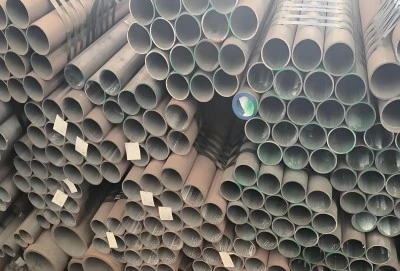
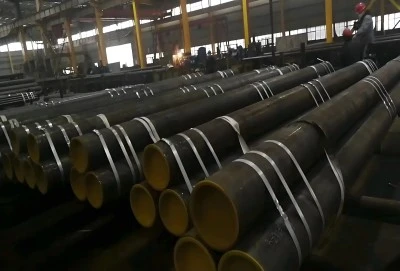
Overview of EN 10219-1 S355J2H Pipe Standard and Specifications
This is the European standard for cold-forming hollow structural parts. It is called EN 10219. It has two parts: EN 10219-1 talks about technical delivery conditions, and EN 10219-2 talks about the qualities of sections and the ranges of limits for sizes. The EN 10219 family member that works the best is EN10219-1 S355J2H pipe. It is strong in structural situations and can be counted on in cold places.
Chemical Composition
The chemicals that go into EN10219-1 S355J2H pipe are meant to make it strong and simple to weld. Carbon can only be 0.22%, manganese can only be 1.60%, and silicon can only be 0.55%. 0.040 percent of phosphorus and 0.030 percent of sulfur are the most that can be added. Because of the controlled carbon equivalent (CEV), the material can be welded using common methods such as MIG, TIG, and submerged arc welding without having to go through a lot of complicated steps to get ready. This is true for normal wall thicknesses.
Mechanical Properties at a Glance
Because of its mechanical features, EN10219-1 S355J2H pipe is one of the most popular hollow parts used in building structures for cold weather:
- Minimum yield strength: 355 MPa for walls less than 16 mm thick, as shown in EN 10219-1 Table 4. As the thickness goes up, the minimum yield strength goes down.
- Tensile strength: 510–680 MPa, based on width of wall.
- Minimum elongation: horizontal extension needs to be less than 22% horizontally extended.
- Charpy impact toughness: strength against impact is ≥27 J at -20°C (average of three samples).
Instead of being claims made by the company, these numbers are required certification levels that can be checked with EN 10204 Type 3.1 or 3.2 material test certificates that are linked to the heat number.
Comparative Analysis: S355J2H Against Alternative Steel Grades
To pick the right hollow section grade, you need to do more than just match a yield strength number. It's based on the working temperature, how complicated the weld is, and the rules and regulations in place.
S355J2H vs. S355J0H and S355JRH
How hot or cold the impact test is the main difference. We try the S355JRH at 20°C, the S355J0H at 0°C, and the EN10219-1 S355J2H pipe at -20°C. When engineers work on Norwegian offshore jackets or Alaskan pipeline supports, they use EN10219-1 S355J2H pipe instead of J0H or JRH because they can't be sure that the steel will stay flexible when it freezes and thaws. The "2" at the end of the name is not a small thing; it refers to a different level of resistance to brittle fracture.
S355J2H vs. ASTM A500 Grade C
Buy teams in the United States often use ASTM A500 Grade C. It needs to have a minimum yield strength of 345 MPa, but it doesn't normally need to be impact-tested at low temperatures. That's why EN10219-1 S355J2H pipe is often used in offshore energy projects that need approval from DNV or Bureau Veritas. It provides an approved, auditable paper record that ASTM A500 can't usually match without extra testing. In the end, EN10219-1 S355J2H pipe is the only technical choice that can be made when a project needs sub-zero toughness with full tracking.
Manufacturing Process and Quality Assurance
How well an EN10219-1 S355J2H pipe is made is very important. When cold-forming, residual forces are made that can make the weld zone less strong if they are not managed. A good company will get its supplies from approved steel plants and use controlled post-weld heat treatment when it's needed.
Welding and NDT Requirements
No changes can be made to the quality of the weld line for this grade. Controlling quality in a way that meets production standards means:
- Ultrasonic Testing (UT) of the long weld seam using ultrasonic waves to find breaks below the surface.
- Eddy current testing as an alternative for production lines that don't stop, instead of in-line checks.
- Hydrostatic pressure testing of the water pressure when the order says to.
And each of these ways is meant to deal with a different kind of failure. We can find flaws in the lamina with ultrasound, and we can find flaws in the surface with eddy current. They work together to give a two-level check that meets the needs of marine owners and is in line with rules such as DNV-ST-F101.
Certifications That Matter in Global Procurement
If you want to buy EN10219-1 S355J2H pipe from a reputable company, they will have EN 10204 Type 3.1 or 3.2 mill certificates, CE marking under the Construction Products Regulation (CPR), and third-party approval from organizations such as DNV, Bureau Veritas, for example. There is a quality management system called ISO 9001 that makes sure the whole production system meets quality standards, not just some batches.
Procurement Considerations for EN 10219-1 S355J2H Pipes
When you buy a lot of building hollow parts, you have to think about more than just the price per metric ton. The total cost of the project depends on the range of sizes, the type of coating that is needed, how easy it is for a third party to inspect, and how the materials will be delivered. When experienced global buyers look over a contract before signing it, these are the most important things they look for in an EN10219-1 S355J2H pipe agreement:
- Dimensional compliance: Check that the EN 10219-2 limits for outside width, wall thickness, and being out of round are all met. Most companies let the wall width vary by ±10%, but high-end companies can set even stricter boundaries.
- Anti-corrosion coating: If you want to use an anticorrosion covering in the cold or offshore, you should include FBE, 3LPE, or epoxy coats in the RFQ, not as an add-on.
- Third-party inspection: The goods should be inspected by a third party, such as SGS, Bureau Veritas, or Intertek, while they are being made and before they are shipped.
- NDA and project confidentiality: If the infrastructure is for secret defense or energy, make sure the provider signs an NDA before giving out information about the project.
- Lead time: From the time an order is approved until it gets to the port of loading, it usually takes 8–16 weeks for a lot of things.
As a whole, these steps make it less likely that there will be differences between batches, coating failures, and gaps in paperwork that lead to costly delays during owner audits.
Practical Applications and Industry Usage
There are a lot of tricky structural situations where hollow EN10219-1 S355J2H pipe parts can be found. Because it is tough at low temperatures and has a high yield strength, this grade is very useful when cooling and heating and loading happen at the same time.
When used for offshore jacket supports and wind turbine monopile transition pieces, this grade needs to be able to handle repeated wave and wind loads without cracks appearing at the weld toes. With the -20°C impact certification, planners can be sure that Arctic infrastructure like bridges in northern Canada and modular buildings in Siberia will last. This is something they can't get with heat-related grades.
EN10219-1 S355J2H pipe is also needed in heavy industrial buildings when the weather gets cold, like those that house big port cranes and conveyor system frames. Since this grade can be riveted, it can be made on-site without the need for processes that heat the steel up, which are needed for higher-carbon steels. The cost of building work goes down right away because of this.
Conclusion
EN10219-1 S355J2H pipe hollow structure parts are really useful for engineers because they meet a certain and important need. For building in cold places, this type is the standard because it is strong at low temperatures, has a high yield-to-weight ratio, and is approved to work with many other materials. When buying teams understand the technical differences, such as impact test temperature, CEV limits, and NDT standards, they can better compare suppliers, talk about terms, and meet project deadlines. Choose a material at this level is not a matter of personal taste; it is an engineering choice that will have effects that last for a long time.
FAQ
What is the difference between S355J2H and S355J0H?
The biggest change is the water temperature used for the Charpy impact test. S355J0H is checked out at -20°C and EN10219-1 S355J2H pipe is checked out at 0°C. Both need an average impact energy of at least 27 J. EN10219-1 S355J2H pipe is the best choice for buildings that will be used in temperatures below zero and need to be strong enough not to break easily.
Can S355J2H pipes be hot-dip galvanized?
As long as the amount of silicon and phosphorus in the steel is controlled during production to avoid the Sandelin effect, yes. Hot-dip galvanizing does make a smooth zinc layer that sticks to the steel. Buyers should look at the steel chemistry report on structural hollow sections before asking for them to be galvanized.
What certifications should a qualified S355J2H supplier hold?
The mill needs to have at least an ISO 9001 quality management certificate, a CE mark under CPR, and an EN 10204 Type 3.1 certificate. If you want to make sure that apps used abroad are safe, you can get third-party approval from DNV, Bureau Veritas, or other similar classification societies.
Is S355J2H suitable for dynamic loading?
The J2 impact grade shows that the material can take in energy when it is loaded quickly or in cycles. For this reason, the grade can be used for equipment frames, crane booms, and structural nodes that are far away. These parts will be subject to loads that cause shock or vibration.
Partner with Longma Group for Certified EN10219-1 S355J2H Pipe Supply
Longma Group has been making structural steel pipe for projects in more than 90 countries since 2003. They make more than a million tons of steel pipe every year. We are a confirmed supplier of EN10219-1 S355J2H pipe and also provide EN 10204 Type 3.1 mill certificates, DNV/BV third-party inspection access, NDA execution, and full anti-corrosion coating services, including FBE and 3LPE. Send our team an email at info@longma-group.com or visit longma-group.com to get a quote that fits your needs.








