
When procuring cold-formed welded structural hollow sections for demanding environments, the distinction between S355J2H and S355JRH is not merely academic — it directly affects structural safety. The EN10219-1 S355J2H pipe is engineered to withstand Charpy V-notch impact testing at -20°C with a minimum energy absorption of 27 Joules, making it the material of choice for offshore platforms, arctic infrastructure, and wind energy foundations. S355JRH, by contrast, meets impact requirements only at room temperature. Selecting the wrong grade in a sub-zero operating environment can lead to catastrophic brittle fracture — a risk no project owner can afford.
|
|
|
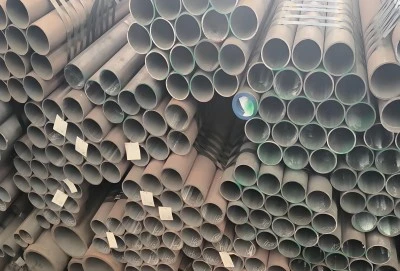
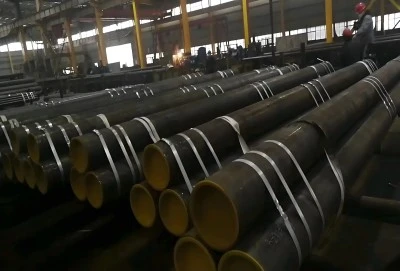
EN 10219 and Steel Grade Nomenclature
The technical delivery conditions for cold-formed welded structural hollow sections are set by EN10219-1. These sections are made without being heated afterward, and they are used in many construction, offshore energy, and civil infrastructure projects around the world.
Decoding the Suffix: What "J2H" and "JRH" Actually Mean
The ending letter in each grade name has a specific technical meaning. "S355" means that the minimum yield strength is 355 MPa. After that, the impact sub-designation changes:
- J2H — Charpy V-notch impact test done at -20°C, absorbing at least 27 Joules of energy; "H" confirms hollow section form.
- JRH — Charpy V-notch impact test done at room temperature (20°C); there was no need for toughness below zero.
This one letter difference — "J2" vs. "JR" — distinguishes between a pipe that can be used in the Arctic and one that might break easily in the winter. Before they write a purchase order, engineers who are looking for materials for projects in high latitudes or offshore must know the difference between these two types.
Technical Comparison: S355J2H vs S355JRH Pipes
Standard EN10219-1 says that both grades have a yield strength floor of 355 MPa and a tensile strength range of 470–630 MPa. But when they are put under temperature stress, their behavior is very different.
The main mechanical differences are shown in the table below:
| Property | S355J2H | S355JRH |
|---|---|---|
| Minimum Yield Strength | 355 MPa | 355 MPa |
| Tensile Strength | 470–630 MPa | 470–630 MPa |
| Charpy Impact Test Temp. | -20°C | +20°C (room temp.) |
| Min. Impact Energy | 27 J | 27 J |
| Typical Application | Arctic, offshore, wind foundations | Ambient-temp. structures |
Chemical Composition and Weldability
Carbon equivalent (CEV) controls are stricter on EN10219-1 S355J2H pipe, which makes it easier to weld using normal MIG, TIG, and submerged arc welding methods. The highest amount of carbon is 0.22%, the highest amount of manganese is 1.60%, and the highest amount of silicon is 0.55%. The chemistry of S355JRH and J2 sub-grade is pretty much the same, but the J2 sub-grade is much more reliable in multi-pass welding operations that are common in offshore fabrication yards.
Dimensional Tolerances Under EN 10219-2
Both grades meet the tolerances for dimensions set by EN10219-2. Most of the time, the deviation in wall thickness is within 10% of the nominal value. However, trustworthy makers keep tighter limits for precise structural uses. The two grades have the same outside diameter tolerances and out-of-roundness requirements, which means that they can be used interchangeably in terms of dimensions. The only difference in performance is how tough they are when they're cold.
Application-Specific Performance and Suitability
The working temperature range and structural effect class of the project will determine which of these two grades to use.
S355JRH works well in temperate areas for business buildings, warehouses, and transportation systems as long as the temperature doesn't drop below 0°C. When sub-zero toughness is not required by the specification, it saves money.
The EN10219-1 S355J2H pipe, on the other hand, is made for places where heat embrittlement is a real risk. The main areas of use where J2H shows its engineering value are listed below:
- Offshore oil and gas jacket foundations — Cyclic wave loads and cold water temperatures in the North Sea or Barents Sea require impact toughness that has been tested at -20°C and backed up by reports from third-party inspection groups like DNV or Bureau Veritas.
- Wind energy monopile and transition piece structures — Onshore and offshore wind foundations in northern Europe, Canada, and Alaska use J2H as the base material to stop cracks from spreading faster during cold weather because of stress.
- Arctic and high-latitude bridge infrastructure — Bridge parts in Siberia, northern Canada, and Scandinavia need materials that can absorb impact energy while being loaded and unloaded quickly and at very high temperatures without becoming stiff.
- Heavy industrial cranes and conveyor frames in cold-storage or mining environments — The verified toughness margin that J2H offers is useful for equipment that works in subzero temperatures, whether it's inside or outside.
Compared with ASTM A500 Grade C, which doesn't require any sub-zero impact testing, S355J2H provides a standardized guaranty of its toughness that can be checked by anyone in the world. S275J2H has a smaller yield band (275 MPa minimum) and works better for lighter structures, while the old name S355J2G3 has been replaced by S355J2H in current EN standards.
These contrasting application profiles confirm that the choice between the two grades is ultimately a risk management decision, not merely a materials science one.
Procurement Insights for EN 10219 S355J2H Pipe
To get this type of pipe from a qualified EN10219-1 S355J2H pipe provider, you need to be careful in a number of ways.
Documentation for certification is a must. Buyers should ask for material test certificates that are EN 10204 Type 3.1 or 3.2, CE marking under the Construction Products Regulation, and inspection reports from a third party that include Charpy impact tests at -20°C. It is common for DNV or Bureau Veritas to be involved at the mill level in ocean projects.
The price depends on the thickness of the wall, the outside diameter, the order number, and the anticorrosion coating method that is chosen. The lead times and costs for FBE, 3LPE, and epoxy coating systems are all different. When providers get bulk orders with set arrival times, they can plan their production runs more efficiently, which usually leads to lower unit costs. For big orders, the whole buying process usually takes between 8 and 16 weeks, from getting technical information to factory audits, sample testing, and production tracking.
Before exchanging technical data, buyers who have to keep project details secret should make sure that their supplier is willing to sign a non-disclosure agreement.
Why Choose EN10219 S355J2H Pipes? Value and Advantages
The design case for S355J2H is based on tested performance data, not on how it will fit in the market. Charpy impact certification at -20°C is required and gives project owners and certification bodies a standard for how tough an item is that can be checked at any point in its existence. This quality chain that can be tracked lowers both project risk and insurance liability for buildings with a lot of consequences.
Longma Group has been making structure hollow parts that meet EN 10219 standards since 2003. Each year, they make more than a million tons. Only approved domestic steel mills, like Baosteel, HBIS, Shagang, and others, supply the raw materials. This keeps the chemistry consistent across all production heats. The company has certificates for API 5L, ISO 9001, and FPC. At every stage of production, DNV, Bureau Veritas, and other similar groups can check the work.
Full paperwork packages, including an Inspection and Test Plan (ITP), a Manufacturing Procedure Specification (MPS), and heat-traceable Material Test Certificates (MTC), can be used to back up projects that ask for this grade. Anti-corrosion protection services like FBE, 3PE, and hot-dip galvanizing are available in-house, which makes the supply chain easier for international contractors.
Conclusion
There is a clear and important difference between S355J2H and S355JRH. Both grades meet the size and strength requirements of EN10219-1, but only EN10219-1 S355J2H pipe has a verified -20°C impact toughness guarantee, which is the standard for structures that will be used in sub-zero temperatures. Choosing S355J2H is both a material choice and a way for procurement teams in charge of offshore, arctic, or wind energy projects to lower their risks. Working with a maker who can provide approved test data, third-party inspection support, and full traceability documents turns that standard into a result that can be trusted and checked.
FAQ
What is the primary difference between S355J2H and S355JRH?
The temperature used for impact tests tells them apart. S355J2H is tested for impact at -20°C and a minimum of 27 J, but S355JRH is only tested at room temperature. When temperatures drop below zero, JRH materials can break easily, but J2H is made to keep this from happening.
Can S355J2H pipe be welded without preheating?
For most common wall thickness ranges, the answer is yes. Because S355J2H has a controlled carbon equivalent, it can be welded with MIG, TIG, and SAW processes without having to be heated first. However, the project welding procedure specifications should always be looked at.
How do I verify a supplier's J2 impact compliance?
Request an EN 10204 Type 3.1 or 3.2 material test certificate showing Charpy V-notch results at -20°C. Third-party witness inspections at the mill by a recognized organization like DNV or Bureau Veritas add another level of assurance.
Is S355J2H equivalent to ASTM A500 Grade C?
The range of yield strengths is about the same, but ASTM A500 Grade C does not require sub-zero impact testing by default. S355J2H makes it easier to follow the rules for projects that need to meet European or foreign overseas standards.
What anti-corrosion coatings are compatible with S355J2H hollow sections?
For galvanizing purposes, silicon and phosphorus levels must be kept under control in FBE, 3LPE, 3PE, epoxy, and hot-dip galvanizing systems.
Get a Certified S355J2H Pipe Quote from Longma Group
Longma Group offers EN10219-1 S355J2H pipe that has been fully certified by a third party, has heat-traceable MTCs, and has an anti-corrosion coating that is made in-house. They have been making these pipes for over 20 years and can produce more than one million tons of them every year. Our team is ready to help you with your project, whether it needs a large quantity of supplies delivered quickly or expert help under the protection of an NDA. To get a technical consultation and competitive quote, email us at info@longma-group.com or visit longma-group.com.








