
If you are sourcing cold-formed welded hollow sections for a structural project, understanding the EN10219-1 S235JRH pipe specifications is the first step toward getting procurement right. This guide covers the key dimensions, weight calculation methods, chemical and mechanical properties, grade comparisons, and procurement factors that matter most to engineers and buyers. Whether you are estimating transport loads, preparing CE compliance documentation, or evaluating suppliers, the data here gives you a clear, practical foundation to work from.
|
|
|
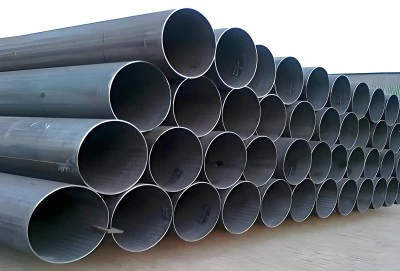
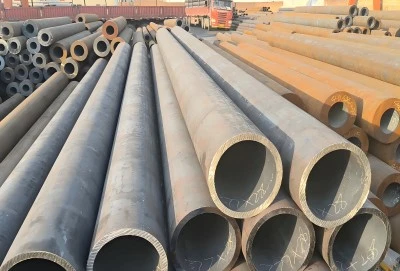
Understanding EN10219-1 S235JRH Pipe Dimensions and Weight
Standard Dimensional Range
EN 10219-2 specifies dimensional tolerances and sectional characteristics of cold formed welded hollow sections. Square hollow sections (SHS) are normally from 40×40 mm to 400×400 mm, rectangular hollow sections (RHS) from 50×30 mm to 500×300 mm and circular hollow sections (CHS) from 21.3 mm to 508 mm outer diameter. Wall thickness is usually between 2.0 mm and 20 mm depending on the kind and size of the section.
Weight Per Meter Calculation
The theoretical weight per meter for a circular hollow section follows this formula:
W (kg/m) = 0.02466 × t × (D − t)
Where D is the outside diameter in mm and t is the wall thickness in mm. For example, a 139.7 mm × 5.0 mm CHS gives: 0.02466 × 5.0 × (139.7 − 5.0) = 16.6 kg/m. For square and rectangular sections, weight tables published in EN 10219-2 serve as the most reliable reference for procurement calculations.
Dimensional Tolerances and Practical Impact
EN 10219-2 specifies a tolerance of ±1% (minimum ±0.5 mm) for the outer diameter and a tolerance of -10% for the wall thickness for CHS. These tolerances directly impact the accuracy of the theoretical weight. Procurement teams that purchase nominal numbers without the use of tolerance bands may underestimate the weight of the material by as much as 5-8%. This has substantial implications for budgeting goods and verifying structural loads.
Chemical Composition and Mechanical Properties
Chemical Composition
The composition of the S235JRH grade is extremely closely controlled. The maximum quantity of carbon 0.17% is in section smaller than 16 mm thick. For thicker parts the quantity increases to 0.20%. Manganese can be no more than 1.40%, while phosphorus and sulphur may be no more than 0.040% and 0.040% correspondingly. This EN10219-1 S235JRH pipe grade is simple to weld on-site with regular MIG, TIG or SAW procedures with no preheat required for most common thickness ranges because to it's low carbon equivalency.
Mechanical Properties
This grade has a minimum yield strength of 235 MPa. The tensile strength range is 360–510 MPa and minimal longitudinal elongation is 24 %. The marking “JR” signifies that the Charpy V-notch impact energy is minimum 27 J at +20°C, so the pipe may be utilised in normal temperature conditions. These figures are maintained throughout the cold-forming process, provided that the forming strain does not go above the limitations given in the standard EN 10219-1.
How Properties Influence Size Selection
The impact of cold-forming strain on the end cross-section is smaller for a wall of greater thickness. This helps to preserve the yield strength in larger parts. In the design of structures using Eurocode 3, engineers often take into account the whole stress-strain curve, not simply the lowest yield value. But by matching the wall thickness to the design need instead of employing the biggest piece available, material costs may be reduced without compromising the safety of the construction.
Comparing S235JRH with Other Grades and Standards
S235JRH vs. S355J2H
S355J2H has a minimum yield strength of 355 MPa and has been tested for impact at -20°C. This is the reason why this is the ideal option for buildings in cold regions, or for heavily loaded connections. S235JRH is best suited for general purpose frames, structures and support for equipment when the design consideration of severe cold durability is not present. When tested at +20°C Most S355J2H sections have the same weight per metre although they may have thinner walls that can carry the same weight. This saves materials in high stress circumstances.
S235JRH vs. ASTM A500 Grade B
The closest in North America is ASTM A500 Grade B. Minimum yield is 317 MPa for round sections and 290 MPa for curved sections. The tolerances for the dimensions in ASTM A500 are different from those in EN 10219-2 and the direct replacement is not permitted in a construction with CE certification. For a project that requires to fulfil the Construction goods Regulation (CPR) standards, only goods that are EN 10219 certified are allowed.
EN 10219 vs. EN 10210
EN 10210 is for hot-finished structural hollow sections, whereas EN 10219 is for cold-formed welded sections. Hot-finished parts provide superior residual stress profiles and somewhat tighter tolerances on extremely heavy walls, but they are more expensive and not always in stock. For most conventional structural applications, the same level of serviceability may be achieved for a lesser cost and shorter lead times using EN 10219-1 S235JRH cold-formed sections.
Procurement Considerations
Certification and Documentation Requirements
The Construction Products Regulation requires CE marking of stationary construction works in the European Economic Area. Suppliers must obtain a legitimate Factory Production Control (FPC) licence from a recognised organization to back up CE marking. An EN 10204 3.1 Mill Test Certificate (MTC) should be supplied with each delivery lot, showing chemicals used, results of any mechanical tests performed, and traceable heat number. Without these documents, the building authority cannot assess completed buildings.
These are the main papers that a provider that is following the rules must give:
- EN 10204 3.1 MTC — confirms chemistry and mechanical results tied to specific heat/batch numbers
- FPC Certificate — issued by a notified body, mandatory for CE marking under EN 10219
- NDT Report — weld seam testing via eddy current or ultrasonic method per EN 10246
- Dimensional Inspection Record — confirming OD, wall thickness, and straightness per EN 10219-2
- ISO 9001 Certificate — demonstrates a functioning quality management system
The paper trail that your structural engineer and building authority will ask for at handover is made up of these records. The safest way to buy something is to ask for them before you place your order, not after.
Pricing Drivers and Lead Times
The key factor influencing pricing is the weight of the EN10219-1 S235JRH pipe per metre. Manufacturing and welding objects with thicker walls and larger dimensions requires more raw materials and energy. The mill normally stocks standard sizes in the popular SHS, RHS and CHS forms. For big orders, the duration from the mill to the client is 15 to 30 days. If you want a size or length that is not the standard 6 m or 12 m mill cut then there may be a minimum order quantity and a longer lead time.
Supplier Qualification Checklist
Procurement teams should check the following before giving out their first order:
- S235JRH according to EN 10219-1 Active scope of FPC certificates
- Material from traceable steel factories with traceable coil quality records
- 100% examination of weld seam by in-house NDT
- Experience of shipping to the target market includes understanding of customs and anti-dumping duty
Practical Applications and Structural Advantages
Hollow sections made from S235JRH are used in many construction projects. In steel factories and other industrial structures, RHS and SHS sections are employed as columns and purlins. CHS sections are used for bridge parapets and pathways for pedestrians , since they do not bend easily and have a clean appearance . Solar mounting frames, wind turbine maintenance platforms . The grade may be galvanised to provide corrosion protection over time in tough environments .
This grade has an excellent strength-to-weight ratio and is a viable option for long spans and large loads where S355 would be too heavy. If S235JRH is used instead of S355 for secondary members of the frame in a 10,000 m2 warehouse building, 15-20% of steel bulk prices may be saved without sacrificing structural performance. In Eurocode 3 load calculations we are using the actual weight per metre values, so the design team has figures to work with, not imprecise guesswork.
Conclusion
The quality of weight and dimension information for EN 10219-1 S235JRH cold-formed hollow sections directly affects the project’s schedule, cost and compliance. EN10219-1 S235JRH pipe norms for chemical and mechanical qualities, EN 10219-2 tolerances for sizes and the documentation needed under the Construction Products Regulation, all connected to create one purchase option. Buyers are aware of these linkages and prefer suppliers that can provide certified products with complete paper trails, not simply inexpensive units.
FAQ
How do I calculate the weight per meter of a CHS S235JRH section?
W (kg/m) = 0.02466 × t × (D - t) Where D is the outer diameter and t is the wall thickness, both in millimetres. Note that the formula is simply a theoretical value and the weight may be somewhat different, therefore always check the formula with the published weight tables in EN 10219-2.
Does S235JRH meet CE marking requirements?
Yes, if the pipe is manufactured under an authorised Factory Production Control system and is accompanied by an EN 10204 3.1 MTC. Structural hollow sections intended for permanent construction inside the European Economic Area must be CE marked in accordance with the Construction Products Regulation (EU) No 305/2011.
Can S235JRH sections be hot-dip galvanized?
Yes. S235JRH can be hot-dip galvanised according to ISO 1461 because to its low carbon and silicon content. For this reason it is the highest grade for outside buildings that are exposed, such as solar frames, pedestrian bridges and fence posts.
What is the difference between EN 10219 and EN 10210?
EN 10210 applies to hot finished hollow parts. EN 10219 applies to cold formed and soldered hollow sections. Cold formed sections to EN 10219 are the easiest to source and cheapest for regular structural work. Hot finished sections offer lower residual stresses and are preferable for extremely heavy walls.
How does custom sizing affect lead time and price?
If the wall thickness is not standard or the length is more than 6m or 12m, you’ll normally have to wait another 2–4 weeks and it may cost extra since the mill needs to arrange them individually. If you can, make sure your design fits typical stock sizes! This might assist you keep the expenses low and delivery on schedule.
Get Certified EN10219-1 S235JRH Pipe from Longma Group
Longma Group has been manufacturing ERW and LSAW steel pipes since 2003, with exports to over 90 countries. All goods are completely documented and CE standards. As a current FPC certificate, ISO 9001 and EN 10204 3.1 MTC supplier we are able to support all our work with an EN10219-1 S235JRH pipe. The raw materials are from traceable mills such as Shagang, HBIS and Bao Steel. Contact our experienced staff at info@longma-group.com or visit our website longma-group.com for pricing, stock availability or product datasheets.