
A guide for installing and maintaining epoxy coated steel gas pipe consists of four steps. Check the standards for the steel and coating, handle the pipe with padded tools, fix any cuts or damage with a system that works with the pipe, and test the coating before putting sod back in. It is recommended that people who are in charge of building gas lines that will last for many years read this guide. Longma Group product data and well-known test methods like ASTM G8 and ASTM D4541 will be used in what I say below to talk about specs, installation, inspection, common mistakes, and supplier checks.
|
|
|
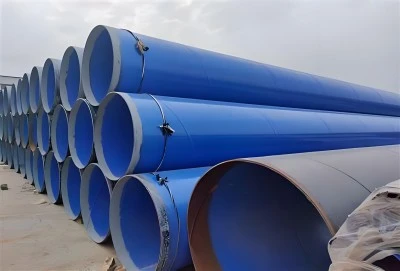
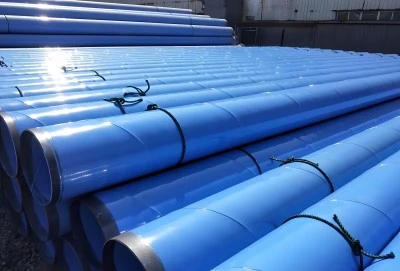
What Is Epoxy Coated Steel Gas Pipe?
Definition and Structure
Epoxy coated steel gas pipe is steel gas pipe with an epoxy layer on the exterior, interior, or both sides. It is made up of the steel substrate, the surface that has been blast-cleaned, the epoxy film, and the weld or end areas that need to be field-coated. FBE is a heat-cured resin that sticks to clean steel chemically and is used in many designs. They sell it under the grades API 5L, ASTM A53, EN10210, and AS/NZS 1163.
How the Coating Protects the Steel?
Air, salts, chlorides, and water in the soil can't get to the steel because of the epoxy film. It starts to rust when bare metal comes into contact with an electrolyte, but a continuous film stops that. Performance depends on four things: how well it sticks, how long it lasts, how well it handles impacts, and how well it stops cathodic disbondment. Finally, it is important to keep buried lines safe from rust (CP). CP only has to protect a smaller area because of the coating, and it fixes any small flaws that the coating doesn't find.
Typical Gas Service Uses
Fuel gasses like natural gas, coal gas, and others are sent through these pipes. It is often used for municipal distribution networks, cross-country transmission lines, and horizontal directional drilling (HDD) crossings. Stray current corrosion from nearby grounded electrical systems is less likely to happen in cities because of the coating. Steel on long lines in swamps, deserts, and salty coastal soils stays safe with this. It is important to make sure that the coating meets the local code, temperature, pressure, gas composition, and pressure before you place your order.
Why Use Epoxy Coated Steel Gas Pipe?
Corrosion Protection and Service Life
Soil that is wet, salty, or acidic will always destroy steel that is buried. If the CP pipe is made and put in the right way, it can last more than 50 years. Without bitumen or when it's bare, steel doesn't hold that record in tough soils. Between -30°C and 80°C, standard FBE formulations don't soften or crack, so they can be used in most buried gas lines. Before you confirm the coating, look at the project's design temperature.
Mechanical Strength in the Trench
If the Shore D hardness of FBE is above 80, it doesn't get worn down or gouged when it's being worked on or filled in. It's important for HDD jobs that the pipe is hard because it has to be pulled through holes that are full of rocks. There are pull-off tests that show the film usually stays together better than 3,000 psi. This means it can handle soil stress and delamination. Hard coatings can still chip if you hit them hard, so you still need to use pads when you work with them.
Limits and Comparison with Other Options
If you need good pipe design, the right wall thickness, approved welding, or CP, epoxy is not the answer. It is important to cover or paint over pipe that will be left outside for more than six months so that it doesn't react with UV light and turns white in direct sunlight. 3LPE is more expensive and doesn't hold up as well in hot weather than FBE. 3LPE, on the other hand, has an extra layer of polyethylene for rugged surfaces. You can get more than one quote and look at the different choices from Longma Group. They also do hot-dip galvanizing, 3LPE, 3PE, and 2PP.
How to Select Epoxy Coated Steel Gas Pipe Specifications?
Pipe Standards and Dimensions
Start with the metal. The outer diameters of Longma Group's epoxy coated steel gas pipe range from 60.3 mm to 1422 mm, and the wall thicknesses range from 6.02 mm to 50.8 mm. These pipes are made in line with API 5L, ASTM A53, EN10210, and AS/NZS 1163. In PSL1 and PSL2, you can choose from API 5L Grade B to X80. To make sure it meets the requirements, check the grade, length, end preparation, welded construction, and tolerances. For gas work in the US, you can also look at ASME B31.8 and 49 CFR Part 192.
Coating Standards and Thickness
Coating standards tell people how to put the film on and test it. When it comes to coatings, we use CSA Z245.20, EN10339, ISO21809-1, AWWA C210, and C213. Different types of rough soil have different FBE thicknesses, but most are between 300 and 500 microns (12 and 20 mils). In the order, you should say how thick the coating needs to be and whether it should go on the inside, the outside, or both.
Documents to Review Before Purchase
Before you sign, make sure you see it. This company, Longma Group, gives out Material Test Certificates (MTC), Inspection and Test Plans (ITP), and Manufacturing Procedure Specifications (MPS). We have certificates for API 5L, ISO 9001, ISO 14001, and 18001, among others. Each certificate should have the product, the plant, and the date it is still valid written on it. There are mills like Baosteel, HBIS, and TISCO that give us their raw steel. We keep track of every pipe from the time it is made until it is sold.
Epoxy Coated Steel Gas Pipe Installation Procedure
Receiving and Handling
Check the heat number, grade, size, and coating records against the packing list when the pipes arrive. Before you load the film, look for rough spots and cracks. Instead of using plain steel chains or hooks, use wide belts or padded slings. For a long time, keep the pipe away from sharp things and direct sunlight by putting it on padded skids. Before the pipe is put into the trench, the broken parts should be marked so that they can be fixed.
Trench Preparation and Lowering-In
A good trench keeps the coating safe before the pipe comes. Remove any sharp objects or rocks and dig to the planned depth. Then, put down a stable layer of sand or screened soil. Stray current is less likely to happen if you keep utilities away from each other. Slide the pipe down with side-boom tools and padded slings. It should never be dragged along the trench wall. When you walk through the holiday detector before lowering it, you can find damage early.
Welding and Field Joint Coating
The factory leaves the pipes' ends open so that they can be joined together. The joint is blasted clean and then a system that works with it is used. This could be a Heat Shrinkable Sleeve or a liquid epoxy kit that sticks to the factory epoxy. The product data sheet has information about the thickness, surface temperature, and cure time. Make sure that the new film goes over the old one. Make sure the joint is done with a holiday detector before you fill it in.
Epoxy Coated Steel Gas Pipe Inspection and Quality Control
Surface Preparation Checks
After the coating is put on, the epoxy doesn't always stick well. Checkers should look at things like cleanliness, salts, moisture, temperature, humidity, and dew point. Many times, the blast anchor pattern for FBE is between 40 and 100 microns wide. This makes a shape for the film to stick to. A lot of things stick to steel that is oily, wet, or too smooth. Each fixed joint in the field has a number that you should write down.
Thickness and Holiday Detection
Use a magnetic gage to find out how thick something is, as shown in SSPC-PA2. FBE readings should be between 300 and 500 microns, so any readings outside of that range need to be fixed. A high-voltage DC detector checks the whole surface for holes and bare spots that can cause corrosion. This is called holiday detection. Every holiday, fix it and test it again. When it comes from the factory and when it is put on in the field, make sure to check the coating again.
Adhesion, Cathodic Disbondment, and Impact Tests
A lab test is the best way to find out if a coating is good. The ASTM D4541 pull-off test measures how strong the bond is; the target level is usually over 3,000 psi. It checks how much the coating lifts around a drilled hole when electrical stress is put on it. The test is based on ASTM G8 or CSA Z245.20. In this test, the system is used to see how it will work in the real world. ASTM G14 checks how resistant something is to impact. For each batch of coating, get a report from a third party and compare it to the lot numbers on your pipe.
Common Installation Problems and How to Avoid Them
Coating Damage During Transport and Lifting
Steel slings, forklift forks, rough stacking, and sudden drops are the things that hurt coatings the most. It gets bumpy and wet when you ship things by sea, so use padded dividers, tie down the bundles, and cover the ends of the pipes. Before you unload the truck, check it over when you get there and take pictures of any damage for the repair record. Small flaws can be fixed with repair kits that work with the item, but large damaged areas may need to be recoated in a certain way.
Poor Adhesion at Field Joints
Dust, oil, salt, water, or a surface profile that isn't strong enough can cause field joints to come apart. If you use the wrong repair product on factory epoxy, the same thing will happen. Repair materials that are safe for your coating should be used. Give it enough time to dry, and keep an eye on the weather. To keep warm or dry when it's cold or rainy outside, follow the directions on the heaters or shelters. Check every area that was fixed again with a holiday detector.
Pre-Backfill Checklist
Before you backfill, I think you should make a simple hold-point checklist. Look over the thickness readings, check the pipe markings and certificates, and make sure that every joint and holiday is fixed and approved. Then, finish the pressure test and sign off on the as-built record. As a safety measure, you should add padding or screened backfill and then carefully pack the film down. Recorded sign-offs stop flaws that aren't seen and costly re-excavations.
How to Choose an Epoxy Coated Steel Gas Pipe Supplier?
Manufacturing Capability
Check to see if the supplier makes its own pipes and coatings. It has been making ERW and LSAW steel pipe since 2003. The factory is 230,000 square meters big, and by the end of 2023, it will have made more than 1,000,000 tons of steel every year. We have customers from over 90 countries. Feel free to ask any supplier how much space they have for packing, curing, blasting, and lab work. If your buying process allows it, you can even visit the plant.
Integrated Pipe and Coating Supply
It's harder to keep track of everything when you get steel from one company and coating from another. It's also harder to figure out who is responsible when something goes wrong. Longma Group is in charge of the pipe and anti-corrosion services. Hot-dip galvanizing, FBE, 2PP, 3LPE, and 3PE are some of these. We can also heat-weld, drill holes in, expand, and do other things with the ends of mating connections. With one contract and one document package, test records and due dates stay in sync.
Comparing Quotations
Look at the quotes side by side. Use the same grade, size, coating thickness, inspection scope, packaging, Incoterms, and delivery location. The total cost of delivery should include freight, duties, inspection, repair materials, and upkeep. Also, how quickly they answer and how clear their sample test reports are can tell you a lot about how they will handle your project. This company works with engineers, stockists, and import traders.
Conclusion
Epoxy coated steel gas pipe protects buried gas lines when the steel, coating, installation, and inspection all meet the needs of the project. FBE makes a strong barrier that sticks to the ground and stops soil corrosion, but it still needs to be carefully planned, welded, and cathode protected. The choice is based on how well the service fits the pipe standard, size, coating standard, and thickness. Most installation damage is caused by rough handling, not preparing the surface properly, and repairs that don't work with the rest of the system. Because of this, it's important to use padded tools, put on the right joint coating, and check hold points for holiday. It is possible to measure quality proof based on data on thickness, adhesion, and cathodic disbondment. If the supplier keeps records on both the pipe and the coating, it is easier to check this proof.
FAQ
How long does an epoxy coated steel gas pipe last underground?
If it is made, installed, and cathode protected correctly, it can last more than 50 years. The soil, the coating, and the work done to join the joints in the field all play a role.
How do I protect welded joints in the field?
In order to weld, the factory finish has to be taken off. Then, use Heat Shrinkable Sleeves or a liquid epoxy kit that sticks to the epoxy that was used in the factory. Check the joint with a holiday detector before you fill it in.
Can I use epoxy coated steel gas pipe above ground?
Yes, but UV light is bad for FBE. When the paint is in direct sunlight, it usually needs a topcoat that can stand up to the weather, like polyurethane. It's mostly made for service that is buried or underwater.
How does FBE differ from 3LPE?
FBE is a single hard layer that sticks well to steel and doesn't come off easily. 3LPE protects it even more on rough ground by adding an adhesive and a polyethylene layer on the outside.
Request an Epoxy Coated Steel Gas Pipe Quotation from Longma Group
Longma Group is an epoxy coated steel gas pipe supplier. They have their own coating services, more than 20 years of production experience, and ITP, MPS, and MTC documents. Our team will make a quote that fits your needs if you send your pipe grade, diameter, wall thickness, coating standard, quantity, and where you want it sent to info@longma-group.com. Check out what we have to offer at longma-group.com.