
Through controlled heating, shaping, welding, and heat treatment steps, the Electric Resistance Welding (ERW) method for ISO 3183 L450 pipe turns high-quality steel coils into precisely engineered line pipes. This way of making pipes gives them a minimum yield strength of 450 MPa and a minimum tensile strength of 570 MPa. These specs are very strict and meet the mechanical needs for coastal gas transfer, oil gathering systems and medium-pressure crude oil transport. Because it is cost-effective, consistent in weld quality, and accurate in size, ERW technology is the best way to make pipelines that need to work reliably at a price that is competitive across global oil and gas infrastructure developments.
|
|
|
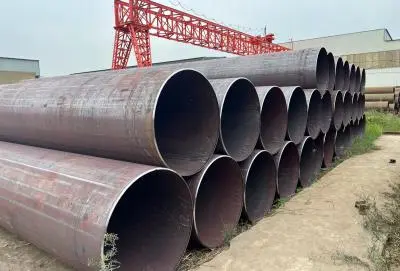
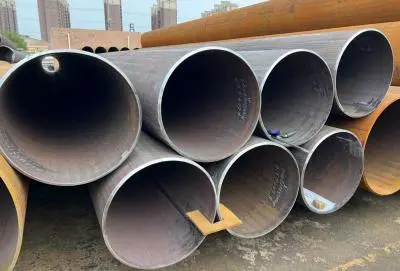
ISO 3183 L450 Pipe: Specifications and Standards
ISO 3183 L450 pipe is a type of high-strength carbon steel line pipe that was made especially for systems that move oil and natural gas. The name "L450" means that the minimum yield strength is 450 MPa, which is about 65,300 psi. This grade is therefore officially the same as API 5L X65. This specification solves some of the most important problems facing the industry right now. These include high-pressure containment with the right wall thickness, maintaining structural integrity across long-distance, cross-border energy projects, and harmonised global technical requirements that make it easier to buy things across borders and make sure they are safe.
Chemical Composition Requirements
The chemicals that make up ISO 3183 L450 pipe grade steel are carefully chosen to make it strong, easy to weld, and tough. Manganese levels can reach up to 1.60% to improve strength and hardenability, while carbon content should stay below 0.22% to keep field weldability high. Low-carbon Nb/V/Ti microalloyed steels have small amounts of niobium, vanadium, or titanium added to them to improve the grain structure and make the precipitation stronger. Sulphur and phosphorus particles are tightly limited to keep the steel from shortening when hot and breaking when cold. This keeps the steel flexible even when it's under a lot of stress. The Carbon Equivalent Value (CEV) is kept below 0.43% to lower the risk of cold cracking during field welding operations. This cuts down on the need for lengthy pre-heating steps that add time to project schedules.
Mechanical Performance Standards
ISO 3183 L450 pipes have a minimum yield strength of 450 MPa and a tensile strength of between 535 and 760 MPa. This means they can withstand both internal and external loads with ease. Minimum elongation standards are usually higher than 21%. This shows that the pipes are very flexible and can handle ground movement and fitting stresses without breaking. This mix of strength and flexibility is very important for pipelines that go through areas that are prone to earthquakes or where the ground is sinking.
L450 pipes are split into two quality levels by the Product Specification Level (PSL) system. The PSL1 quality level is normal and can be used in most situations. The PSL2 level requires Charpy V-notch impact tests at certain temperatures, strict chemical composition tolerances, and full paperwork for tracking. PSL2 pipes are tested for performance in low-temperature environments by being hit. They have higher safety margins against brittle fractures than lower grades. Drop Weight Tear Testing (DWTT) at temperatures ranging from room temperature to -40°C confirms the ability to stop cracks. This meets the requirements for installing pipelines in most terrestrial permafrost regions.
ERW Production Process of ISO 3183 L450 Pipes
Electric resistance welding technology has clear advantages over submerged arc welding (SAW) and seamless pipe manufacturing. When compared to seamless pipes, ISO 3183 L450 pipes have better size consistency, tighter diameter tolerances, and a more even distribution of wall thickness. The continuous production process is very cost-effective and keeps weld quality at a level that is on par with or better than other methods used for standard pressure applications.
When procurement professionals understand the step-by-step process of manufacturing, they can better understand the quality control measures that are built into the whole process. Each step has its own inspection points and process factors that have a direct effect on how well the pipe works in the end.
Coil Preparation and Uncoiling
Before the production process starts, hot-rolled steel sheets from reputable mills like Shagang, Shangang, TISCO, BX Steel, Shougang, HBIS, and Bao Steel are carefully chosen and prepared. The chemical makes-up and mechanical qualities of these coils are guaranteed by mill test reports that come with them. Coil edges are carefully trimmed to get rid of any flaws and create clean, parallel edges that are necessary for a good weld. When you use an edge milling machine, you can make precise bevels that help the welding process go smoothly.
Uncoiling equipment slowly unwinds the steel strip while keeping the tension just right so it doesn't bend or buckle. Entry-side accumulator systems let the machine keep running while the coils are being changed, which increases production speed without lowering the quality of the welds.
Forming and Welding Sequence
The flat steel strip goes through stations with progressive forming, where rollers that are carefully set shape the material into a cylinder shape. Multiple forming stands use small amounts of bending force to keep work hardening and residual stresses to a minimum. The forming process keeps precise control over the dimensions, making sure that the diameter and roundness of the pipe stay the same along its length.
High-frequency electricity flows through contact shoes just ahead of the weld point as the formed edges come together. Within milliseconds, resistance heating brings edge temps up to the forging range, which is around 1,350°C to 1,400°C. Forge pressure is applied right away by squeeze rollers, which form molecular bonds across the joint surface without adding filling material. This solid-state welding method creates small areas that are affected by heat and joins metals together in a way that matches or beats the properties of the base metal.
External and internal weld bead scarfing tools remove extra material right away while the metal is still very hot. This makes the inside and outside areas smooth, removing stress points and flow limits.
Heat Treatment and Stress Relief
Post-weld heat treatment evens out the microstructure and removes any stresses that were there before the welding or forming. Reheating the weld seam and nearby areas with induction heating units or furnace systems brings them back to certain temperatures based on the type of material and the thickness of the wall. Controlled cooling rates help create fine-grained microstructures that enhance toughness and impact resistance.
The steps for heat treatment can be changed to fit the transport situation. As-rolled (ME) state gives balanced properties for most uses, while quenched and tempered (QE) processing makes the steel tougher at low temperatures, which is useful for pipes that work in cold places. In the QE process, pipes are heated above the upper critical temperature, quickly cooled to form martensite, and then tempered at controlled temperatures to get the best strength-toughness balance.
In-Line Quality Inspection Systems
During production, automated checking equipment keeps an eye on every pipe. This makes sure that the quality is being checked in real time without stopping the flow of production. Ultrasonic testing devices use different frequencies and observation angles to go over the whole weld seam and find cracks as small as 1 mm below the surface. Digital signal processing systems automatically discard pipes that have flaws that are worse than what is allowed by ISO 3183 standards.
Electromagnetic testing systems check how well heat treatment works by measuring magnetic properties that are related to microstructural features. Laser micrometres and rotary scanners are used in dimensional measurement stations to take thousands of measurements on each pipe. These measurements record the diameter, ovality, wall thickness, and straightness with micrometre accuracy. Compared to offline testing methods, these thorough in-line checks provide objective quality documentation while lowering the amount of handling and inspection costs.
Best Practices for Testing and Ensuring Quality of ERW ISO 3183 L450 Pipes
Full quality assurance includes more than just testing by the manufacturer. It also includes receiving inspection, installation monitoring, and long-term performance tracking for ISO 3183 L450 pipes. These multilayered verification protocols make sure that projects are honest and that asset lifecycles are optimised.
Essential Testing Methods
Tensile testing makes sure that the material's yield strength, ultimate tensile strength, and elongation characteristics meet the requirements. Test pieces taken from pipe bodies and weld seams are loaded and unloaded in a controlled way until they break. Automatic equipment records the stress-strain relationships that show how well the materials worked mechanically. Impact testing measures how tough a material is by using Charpy V-notch pieces that are cut from specific areas and tested at set temperatures. The energy absorption values must be at least as high as the minimum levels needed to keep the material from breaking easily when it's in use.
Testing the hardness of the weld seams, heat-affected areas, and base metal proves that the heat treatment worked and finds any differences in hardness that could mean there were problems with the processes. Ultrasonic shear wave methods are used for weld integrity checks. They can find fusion defects, geometric flaws, and metallurgical discontinuities with a sensitivity of about 1% of wall thickness.
Common Defect Identification
When ERW pipes are made, certain types of defects happen from time to time that need strict inspection procedures. When there isn't enough heat or forge pressure, there are cold welds, which happen where the metal doesn't fully fuse together. These flaws are easy to find with ultrasonic testing because they have unique signal responses. If the conditions for edge preparation or forging are not in the right areas, hook cracks may appear at the edges of the weld seam. Before pipes are put into service, longitudinal ultrasonic inspection finds these linear signs.
Differences in dimensions, such as ovality, wall thickness errors, and straightness flaws, can make field installation less efficient and weaken the joint. Automated measurement systems keep track of these traits with statistical process control that finds problems before they lead to faulty goods.
Conclusion
ISO 3183 L450 pipe making uses complex metalworking, precise engineering, and strict quality control to make pipeline parts that are effective for important energy infrastructure. The production process makes the ISO 3183 L450 pipe grade the most popular specification for onshore gas gearbox and medium-pressure crude oil transport because it is the most cost-effective without sacrificing performance. When procurement professionals know about manufacturing details, standard requirements, and quality assurance procedures, they can make smart buying choices that combine technical needs with business goals. The grade's balanced strength, great weldability, and track record of service in a wide range of operating environments confirm its place as an industry standard for pipeline projects that need to be reliable and cost-effective.
FAQs
What advantages do ERW pipes offer compared to seamless alternatives?
When compared to seamless pipe production, ERW manufacturing provides tighter size tolerances, more even wall thickness distribution, and better straightness. ERW is the most cost-effective choice for standard pressure applications, with savings of 15% to 25%. It is also easier to build in the field, thanks to well-known welding procedures and a wide range of qualified welding supplies. For ultra-high pressure services and certain corrosive conditions, seamless pipes are still the best choice, but ERW technology meets the needs of most oil and gas transportation projects.
Which certification documents should buyers verify?
Essential certifications include ISO 9001 Quality Management Systems, API 5L licensing for producers serving North American markets, and third-party inspection certificates from recognized agencies. Material Test Certificates (MTC) documenting chemical composition and mechanical properties accompany each shipment, while Inspection and Test Plans (ITP) detail quality verification activities performed during manufacturing. Factory Production Control certificates confirm manufacturing processes meet regulatory requirements for European markets.
Can L450 pipes handle sour service environments?
ISO 3183 L450 pipes can be changed to fit mild sour service situations with low H₂S levels. Changes to the material and extra tests show that it is resistant to cracking caused by hydrogen and cracking caused by sulphide stress corrosion. When the levels of sulphur in the air are too high, materials that are specifically made for harsh sour service environments must be used.
Partner with a Trusted ISO 3183 L450 Pipe Manufacturer
Longma Group is a certified ISO 3183 L450 pipe supplier that has been making pipes for oil and gas infrastructure projects around the world for more than 20 years. Our 230,000-square-meter factory uses cutting-edge ERW technology and quality systems that are certified to meet ISO 9001, API 5L, and other international safety and environmental standards. We buy high-quality steel bars from China's best mills and keep strict records of all of our goods, from the raw materials to the finished ones. Your planning needs are met by full documentation packages that include ITP, MPS, and MTC. Our manufacturing services, which include welding, coating (FBE, 3PE), and end treatments, provide complete pipeline solutions. Longma Group can provide the dependability, technical know-how, and affordable prices your projects need. They produce more than 1,000,000 tonnes of goods every year and have a track record of delivering them to more than 90 countries. Email our team at info@longma-group.com right now to talk about your ISO 3183 L450 pipe needs and get a full quote that fits your needs.