
The main factors affecting 3PE coating service life are surface preparation, coating material quality, layer thickness, manufacturing control, testing, handling and installation, operating environment, and long-term maintenance. When I review an order for 3PE coating steel pipe, I treat these factors as one chain, because the weakest link sets the real lifespan. Under normal buried conditions with proper cathodic protection, a well-made coating can last more than 50 years. Thickness alone cannot predict that result. This guide walks through each factor so purchasing managers, engineers, and contractors can specify, inspect, and buy with confidence.
|
|
|
Understanding the Structure of 3PE Coated Steel Pipe
How the Three Layers Work Together
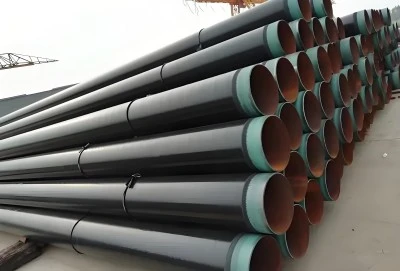
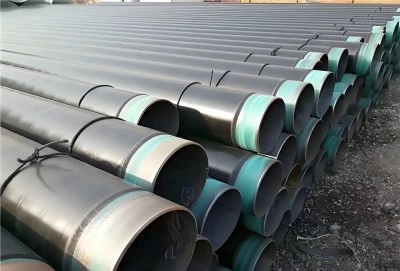
At 3PE, three levels are stacked on top of each other. When the FBE primer is applied at 100 µm, it chemically sticks to the steel and won't let go even when the steel gets weak. Along with copolymer glue that is about 170–250 µm thick, it stays together. The polyethylene jacket keeps the pipe safe from scratches, drops, and water. Depending on the size of the pipe, it's anywhere from 2.5 mm to 3.7 mm thick. Every layer is important for the others to work. Even if all the raw materials meet the standards in the datasheet, security can be less strong if there are breaks, pinholes, delamination, cracks, wear, and cathodic disbondment. That's why I think of the covering as a single system instead of three different ones.
Coating Life Versus Steel Life
If you want to know how long steel lasts, look at its coating. They are not the same thing. Metal walls can last for decades, but if there is even a small crack, dirt and water can get in and rust them. Also, thickness doesn't tell you anything about how well something works. A thick layer of polyethylene that hasn't been cleaned well can still come off of steel that has been touched. But if the coating is put on right and thick enough, it can keep the pipe safe for as long as it's meant to. When I look at a job, I don't just ask how long the steel should last; I also ask how long the finish will stay whole and stuck on. Carbon steel line pipe made to API 5L, ASTM A53, EN 10210, or AS/NZS 1163 still needs to have its coating on when it is buried.
Where 3PE Coated Pipe Is Used
People use 3PE for oil and gas transmission lines that are buried and go through deserts, swamps, and rocky areas. This is because the ground can damage coatings that aren't as strong. Plus, it keeps gas mains in towns, water lines that bring clean water to houses, and factory lines that carry corrosive fluids or wastewater safe. It stops galvanic rusting in places where there are random currents because it is a good barrier. I don't use a standard; instead, I match the service to the finish class and thickness. The finish is set in a different way for each setting. In terms of diameter, Longma Group sells 3PE coating steel pipe that is 60.3 mm to 1422 mm in length and 6.02 mm to 50.8 mm thick on the inside. This range of sizes works for both sending and receiving.
Factors 1–3: Surface, Materials, and Thickness
Factor 1—Steel Pipe Surface Preparation and Pretreatment
The first step in bonding is to get the surface ready. Things like oil, salts, rust, mill scale, moisture, and dust can make surfaces weak. These things can lead to peeling, burning, underfilm corrosion, or cathodic disbondment. I expect the abrasive blasting to be clean to Sa 2.5 and have an anchor pattern of 50–75 µm in order to get 3PE. This is based on ISO 8501-1 and ISO 8503. Since coating can't hide them, I also look for dents, laminations, weld-seam flaws, and odd shapes in the 3PE coating steel pipe. In the long run, it will save time and work to make sure the pipe meets its line-pipe standard, such as API 5L. If the surface is clean and has the right shape, the FBE layer will stick to it for decades.
Factor 2—3PE Coating Materials and Layer Quality
The three things need to be able to work together and be tracked. It is important to check the FBE powder's gel time, hardening temperature, glass transition temperature, and chemical protection. There can't be any gaps or chances for water to get between the epoxy and polyethylene for the glue to work. The polyethylene type should have the right break strength, flexibility, resistance to cracking from environmental stress, and temperature range for use. The temperature range for 3PE is -40°C to 60°C. If the service is hotter, it needs a different system, such as high-temperature FBE or 3PP. That's why I ask my sources for science datasheets, batch numbers, and records of how the material was kept. Once it's on, old or mixed material is easy to hide.
Factor 3—3PE Coating Thickness, Uniformity, and Coverage
There should be no extra cost or stress on the application, and the width should be strong enough to handle water, contact, abrasion, and dirt loads. There are different rules based on the standard, the type of covering, and the thickness of the pipe, such as DIN 30670 and ISO 21809-1. Taking extra care to note weld seams, pipe ends, bevels, and transition zones, I need readings at several points along the length and around the circumference. The product is less stable and harder to cover in the field when it has thin spots, drooping, runs, uneven extrusion, or too much buildup. It doesn't matter how thick the whole thing is if one of the weld seams is the smallest.
Factors 4–5: Manufacturing Control and Quality Assurance
Factor 4—Manufacturing Process Control for 3PE Coated Steel Pipe
The raw materials need to be worked with slowly, even if they are good. It is important to heat the FBE the right way so that it doesn't get too hot or the temperature changes along the pipe before it joins and cures. I keep an eye on the powder feed, pipe spinning, line speed, drying time, and electrostatic spraying while the paint is being put on. The link between the layers is made once the rubber temperature, the extruder pressure, and the polyethylene temperature are all set. Using controlled cooling to lower any remaining stress and being careful with the surface after production to keep it safe. Most of the time, the cutback is 100–150 mm at each pipe end. For welding, it stays bare, so its edge should be clean and clear so that it can hold the field joint coating that will come later.
Factor 5—Inspection, Testing, and Quality Assurance
Tests are done to see if the covering will last through production, shipping, installation, and use. Holiday detection at 25 kV, which is done on all pipes in real time, finds breaks and holes in the plastic. Tests of peel strength show that our product has a number above 100 N/cm at 20°C, which means it sticks very well. It takes 28 days for the cathodic disbondment test to see how well the coating stays on when cathodic protection is in place. Based on the requirements, I also need results for thickness, impact, and flexibility. Checks by a third party and eyewitnesses are extra proof, especially for big export sales.
Documents That Prove Coating Quality
I can only use test numbers if I can link them to a lot. You get an Inspection and Test Plan (ITP), a Manufacturing Procedure Specification (MPS), and a Material Test Certificate (MTC) from this company. We can also keep track of your goods from the time they are made to the time they are sold. Our steel comes from mills like TISCO, BX Steel, Shougang, HBIS, and Bao Steel. For health and safety at work, we have API 5L, ISO 9001, ISO 14001, and ISO 18001 certificates. Before approving a supplier, I tell buyers to compare these records to what the project needs. If there is a question about the finish years after it was put on, a full quality report can also help.
Factors 6–8: Field Conditions and Long-Term Care
Factor 6—Transportation, Storage, and Installation Conditions
Even if the factory accepted the coating, it may still fail if it gets broken while being shipped or put on. Chains, hooks, pulling, and rubbing pipes against each other can scratch, cut, or cause damage that is hard to see. Longma Group ships them in a bunch, a wooden box, or a wooden board. I think you should put stable, padded supports in a place that is out of the sun, water, chemicals, and mud, and keep them there for long periods of time. Heat shrink covers that look like the three-layer structure are often used for field joints. In the same way, the surfaces of these sleeves need to be cleaned and heated. When the ground is lowered and then filled back up, rocks and points are kept from getting loaded by padding and carefully chosen dirt.
Factor 7—Operating Environment and Pipeline Design
The resistivity, pH, chloride, sulfate, moisture, and microbial activity of the soil can change the risk of corrosion wherever there is a flaw in the coating. Standard 3PE can handle temperatures up to 60°C, so the temperature, changes in pressure, and thermal cycling must all be compatible with the polyethylene grade that was picked. There may be different ways to protect service that is buried, underwater, or close to the shore. Cathodic protection works with the covering, but it doesn't change what the covering does. This can happen when there is too much energy or when there is electrical noise, so the design should think about both. 3PE can last more than 50 years if it is kept in good shape underground and has the right cathodic protection.
Factor 8—Inspection, Maintenance, and Long-Term Corrosion Management
How long the service lasts depends on what happens after it is set up. Before turning it on, workers should do visual checks, look for holidays, check the field joints, and make repairs that have been cleared. When a layer is being used, close-interval surveys, cathodic protection surveys, and DC voltage gradient tests can show that it is ending its useful life. Pay extra attention to places that are crossing, draining, have valves, or are under a lot of stress. When fixing gouges, pinholes, and steel that shows, you should use materials that work well together and test them again before you fill them in. Of course, I keep good records because they help me decide what to do about integrity years later by showing me where damage to the coating happens most often.
Choosing, Specifying, and Checking 3PE Coated Steel Pipe
3PE Coated Steel Pipe Compared with Other Coating Options
Not all coatings are good for all jobs. 3PE is often used on long-distance 3PE coating steel pipes that are buried because it is very good at keeping mechanical damage at bay. In some temperature ranges or when you only need a thin coating, FBE may be enough. Polyethylene makes it stronger against damage, and epoxy makes it stick together better. Galvanized steel can be used for some things and in some sizes, but it's not always a good choice for long transmission lines that are buried. Due to its chemical bond to the steel, the FBE primer in 3PE makes it harder than 2PE. It is also less likely to come apart than mastic glue alone. What kind of soil it is, how it will be installed, how long it is supposed to last, how often it will need to be fixed, and how much it will cost over its whole life. They also do FBE, 2PP, and hot-dip galvanizing at Longma Group.
How to Specify and Purchase 3PE Coated Steel Pipe for Global Projects
First, write down all the technical information, like the pipe's standard and grade, diameter, wall thickness, length, end finish, coating standard, class, thickness, cuts, service medium, temperature, fitting method, and design life. This is the next step: make sure the supplier can coat, has worked with API 5L before, has certificates, a history of exports, and project references. The pipes we sell are made to meet the requirements of API 5L, ASTM A53, EN 10210, and AS/NZS 1163. The finishes we use are approved by AWWA C210 and C213, CSA Z245.20, EN 10339, ISO 21809-1, and DIN 30670 and 30678. That's not all you should look at. You should also see how much it costs to test, coat, package, ship, make field joints, fix things, and pay taxes.
Practical Checklist for Extending 3PE Coating Service Life
This is the short list I use to move from details to how it works. Before you finish the steel, you should look at its state, the batch records, the inspection plan, and where the materials are kept. Watch the product being made as it is blasted, heated, cured with FBE, adhesive applied, pushed out, and its thickness. Before you ship something, you should look it over visually, check for holidays, test its adhesion, measure its size, put it in protective packaging, and read over the paperwork. Don't drag; use the right pulling tools, and keep the field joints safe. Also, make sure to check the quality of the backfill. Cathodic protection and regular checks should be done on the system once it is up and running. With these steps, you can find problems with the cover that could have been avoided before the pipe gets to the hole.
Conclusion
There isn't just one number that tells you how long a 3PE coating steel pipe finish will last. There are a number of options. Steel that is clean and has the right profile holds the FBE layer in place. The three layers are held together by processing that is controlled and uses materials that work well together. Protection is ensured by testing and checking the thickness before shipping. Following this, the work on site is kept safe by being handled with care, having field joints that match, and backfilling slowly. It depends on the type of soil, the maximum and minimum temperatures, and the cathodic protection that is planned. Inspections and records make it possible to see problems over time. If it's laid right and has the right cathodic protection, 3PE can last more than 50 years. But this is only true if all the links stay strong. Instead of comparing things by their unit price, it's better to look at how much they cost over their whole life.
FAQ
1. How long does 3PE coating last?
It can last more than 50 years if it is buried normally and has the right cathodic protection. The result relies on the type of coating, the dirt, the temperature, how it is put on, and how well it is kept up. There is no one number that works for all jobs.
2. What temperature can standard 3PE handle?
-40°C to 60°C is the normal temperature range for 3PE. You need 3PP or high-temperature FBE versions when the temperature rises.
3. How do field joints affect service life?
Heat shrink sleeves are often used to keep the three-layer structure in place at welds. If I don't heat or prepare the surface properly, I might leave a weak spot. That's why I check the joints just as carefully as I check the factory finish.
4. Which tests should I request?
It's important to look at the results for 25 kV holiday detection, peel strength, cathodic disbondment, and thickness. You should also get material certificates and batch numbers. Another piece of proof is having a third party witness the event.
5. What separates 3PE from 2PE?
An FBE primer is mixed into 3PE, and it chemically sticks to steel. Because of this, it is stronger against cathodic disbondment than 2PE, which only uses mastic glue.
Request a 3PE Coating Steel Pipe Specification and Quote from Longma Group
Need 3PE coating steel pipes for a job in the oil, gas, water, or industry? Longma Group has been making ERW and LSAW pipe for people in over 90 countries since 2003. Send an email to info@longma-group.com with the type of pipe you need, its diameter, wall thickness, quantity, coating standard, service temperature, and where it needs to go. We will mail you back with choices for pipes and coatings, along with ITP, MPS, and MTC forms.