
There are times when FBE coated steel pipe is better than 3LPE, but not all the time. FBE coated steel pipe is used for projects that need it to stick well, be resistant to chemicals, be easy to fix, and work with cathodic protection. 3LPE is used for long buried lines that have to deal with rocky soil, rough backfill, and heavy handling. The best choice depends on the soil, the temperature, how it will be installed, and what the owner wants. It's up to you to choose the right coating for your project by looking at how it's put on, how well it works, what it's used for, and how well it's been checked for quality.
|
|
|
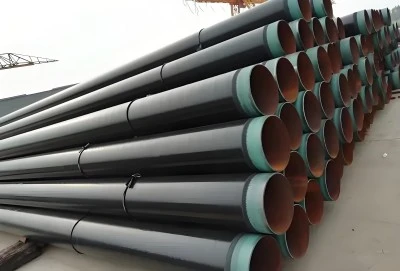
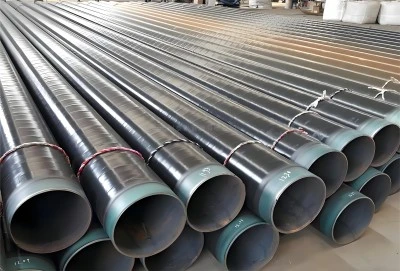
FBE Coated Steel Pipe and 3LPE: What Is the Difference?
How Each Coating Is Built?
FBE is a thermosetting epoxy powder that only has one layer. It melts on hot steel, flows into the blast profile, and forms a tough film when it crosses over itself. The coating won't melt again even if you heat it up again. 3LPE is made up of three layers: an FBE primer on the steel, a copolymer adhesive in the middle, and a polyethylene jacket on the outside. Together, the primer and jacket form a strong bond that is the same as stand-alone FBE. An epoxy film by itself is not the same as an epoxy primer with a plastic jacket. These are not two separate pieces of information.
Where FBE Fits Best?
Most of the time, FBE is chosen when handling is limited and corrosion is the main danger. The film sticks to steel very well and doesn't let water or many chemicals pass through it. FBE doesn't protect against cathodic protection current if the coating is broken. That helps keep the under-film corrosion from happening, which hurts asphalt enamel and tape wraps. FBE can also protect surfaces on the inside, which is good for water mains. Most stand-alone FBE is between 250 and 500 micrometers thick, but the specs can say it needs to be more or less. Parts and bends with complicated shapes also work well with powder.
Where 3LPE Fits Best?
Most of the time, 3LPE is used for long transmission lines that are buried in rough ground. The polyethylene jacket doesn't get damaged by impact, wear, or water, which is important in rocky soil or under heavy backfill. Plus, it's better at handling rough handling and stringing than a thin epoxy film. It costs more to coat, is thicker, requires more complicated field-joint work, and can't handle as high of temperatures in many types of polyethylene. It's also possible for a disbonded area to block cathodic protection because polyethylene blocks current. Before picking 3LPE just because you usually do, I think you should check the temperature and soil reports.
How Are FBE and 3LPE Coatings Applied to Steel Pipe?
Surface Preparation Comes First
Steel is clean at the start of both schemes. The plant gets rid of the oil and salts, and then it abrasively blasts the surface to make a groove that the coating can stick to. Adhesion is affected by dust, humidity, and steel temperature. A good plant keeps an eye on these things and keeps track of the readings. Because the bond is only as strong as the surface below it, a bad blast can ruin a great coating. First things I look at in a coating plan are the level of cleanliness, the depth of the profile, and how often it will be inspected. Don't think that the plant will choose these things on its own; put them in the purchase documents.
FBE Application Steps
Induction or an oven are used to heat the pipe after it has been blasted. Stand-alone FBE is usually used between 225°C and 250°C. Electric guns spray fluidized powder at a grounded pipe. The charged particles melt as they wrap around the pipe. The film gels in a matter of seconds and then hardens into a single layer. Spray lances move along the hot pipe as it turns to cover the insides. The next step is an inspection, which includes measuring the thickness and performing a holiday test, which looks for holes and pinholes. These steps are written down so that the coating record for each pipe can be found.
3LPE Application and Thickness
The same FBE primer is used to start 3LPE, and the application temperature may need to be changed by the manufacturer to meet intercoat adhesion requirements. It is then extruded or wrapped around the sides to add the adhesive and polyethylene layers. Before it cools, each layer has to stick to the one below it. Total thickness is greater than FBE by itself, and it depends on the needs of the project, the pipe size, the coating grade, and the environment. I tell people not to choose the thickness that comes with the lowest price. Find out what thickness class the owner wants and make sure the plant can write it on every pipe.
FBE vs 3LPE: Performance and Trade-Offs
Corrosion Resistance and Cathodic Protection
Both coatings do a good job of protecting steel when they are used correctly because they both depend on an epoxy layer being on the steel's surface. FBE coated steel pipe gives it good adhesion and chemical resistance, and 3LPE keeps water out. The way they differ is in cathodic protection. When there is a defect in the steel, FBE lets the protection current reach it, but polyethylene can block it. So, cathodic disbondment tests are important because they show how well the bond stays together when stress is put on it. NACE SP0169 talks about external corrosion control for system design on pipes that are buried or submerged.
Mechanical Protection and Temperature
The thick jacket on 3LPE protects better against impacts and wear. If crews don't keep an eye on the handling, rocks, rough backfill, or careless lifting can damage the thinner FBE film. It gets warmer on the other side. In general, epoxy can handle higher service temperatures than polyethylene. However, the exact limits depend on the type of resin used, the grade of polyethylene, and the adhesive system. I never take a general number; instead, I always ask for the manufacturer's rated limit and test data. FBE is also good for bends and fittings because powder wraps complex shapes very evenly.
Advantages and Disadvantages Side by Side
FBE sticks well, doesn't react badly with chemicals, is easy to use, has a lighter coating, and is simpler to fix than multilayer systems. If you handle it roughly, it can get damaged by impact and abrasion. 3LPE is better for protecting long buried lines mechanically, but it costs more up front, is thicker, makes field joints harder, and has polyethylene temperature limits. I tell buyers to look at the total cost of ownership, which includes the risk of damage during transport, labor for field joints, repairs, and upkeep. If the coating doesn't match the ground, the lowest price can end up being the most expensive part of the project.
Which Coating Is Better for Different Pipeline Applications?
Oil and Gas Pipelines
A lot of high-pressure gas and sour crude lines use FBE. Offshore, it is often used as the main layer that stops corrosion under concrete weight coatings. It stops corrosion caused by chloride and works with sacrificial anodes. On land, 3LPE is often used for buried lines that cross rocky ground because it provides extra mechanical protection. FBE works well in controlled trenches with sandy bedding, above-ground sections, and fittings. I think you should look over the route survey first. FBE can meet the goal for corrosion without the extra jacket if the soil is mostly soft and the backfill is screened.
Water and Wastewater Systems
Materials used in potable water lines must be approved for contact with drinking water. If needed, check for approvals like NSF/ANSI 61. AWWA C213 talks about fusion-bonded epoxy coatings for steel water pipes on the inside and outside. This is why FBE is often used in large-diameter water mains. It doesn't get damaged by biological fouling or many chemicals in treated wastewater. Before putting on a coating for sewage and industrial water, check for chlorides, acidity, hydrogen sulfide, and microbes. Always check the supplier's approval papers to make sure they are for the right coating product, since approvals are only good for certain materials.
Directional Drilling, Rocky Terrain, and Fittings
Pipes that are pulled through boreholes are scratched by rocks and rough slurry. Some projects use 3LPE for this work, while others use dual-layer FBE with an overlay that doesn't wear down easily. If your plans call for a two-layer system, check with the supplier early to make sure it's available. Straight pipe, fittings, bends, and field joints all need the same care. Materials used for field joints must be compatible with the factory coating, and damage that happens during shipping should be fixed with materials that have been approved. I don't think about joint planning after the fact; it's part of the decision to coat.
Standards, Inspection, and Choosing a Supplier
Standards to Match
Align the owner's requirements, the coating standard, and the pipe standard before you ask for quotes. You can get FBE coated steel pipe from Longma Group that is made to API 5L, ASTM A53, EN 10210, and AS/NZS 1163 standards. The pipe's outside diameters range from 60.3 mm to 1422 mm, and its wall thickness ranges from 6.02 mm to 50.8 mm. Some coating standards that can be used are CSA Z245.20, EN 10339, ISO 21809-1, AWWA C210, and C213. CSA Z245.20 and AWWA C213 talk about epoxy that is fused together, while DIN 30670 and ISO 21809-1 talk about polyolefin coatings like 3LPE. Match the paper to the coating you choose.
Tests and Documents to Request
A plan for sound quality includes things like blast cleanliness, surface profile, coating thickness, holiday testing, adhesion, cathodic disbondment, impact, flexibility, and looks. Ask for an Inspection and Test Plan, a Manufacturing Procedure Specification, a Material Test Certificate, as well as reports on the coating and records of how it was made. Most of the time, damaged FBE or 3LPE can be fixed using compatible materials and a proper method, followed by a holiday test again. Adding a third-party inspection to the RFQ gives you an extra safety check. Your QA/QC team can look over these records before the shipment.
Choosing and Qualifying a Supplier
A detailed RFQ lets the manufacturer give a correct quote. Include the standard, grade, size, shape, coating system, thickness, service conditions, amount, destination, need for inspection, and packing of the pipe. Take a look at the prices for everything: coating, testing, certification, freight, and inspection. Since 2003, Longma Group has been making ERW and LSAW steel pipe. By the end of 2023, they will have made more than 1,000,000 tons of steel each year. And it gets its steel from mills like Shagang, TISCO, HBIS, and Baosteel. It ships to more than 90 countries. Two of its certifications are API 5L and ISO 9001. Some of the services it offers are FBE, 2PP, 3LPE, and 3PE coating. Don't forget to ask about lead time, minimum order quantity, and packing for sea freight.
Conclusion
The epoxy bond that holds FBE and 3LPE to steel is the same, but they protect in different ways. FBE coated steel pipe sticks well, doesn't react with chemicals, is easy to fix, and works with cathodic protection. It's good for controlled handling, fittings, water mains, and offshore anti-corrosion layers. 3LPE adds a polyethylene jacket that protects against impact, abrasion, and moisture. It's better for long lines buried in rough ground, but it costs more and can't handle as high of temperatures. Aside from the type of coating, things like surface preparation, thickness, standards, field joints, and test records also have an impact on the results. The best choice is based on the needs of the project and the total cost of ownership, not on what one coating is said to be good at in general.
FAQ
Is FBE suitable for underground pipelines?
Yes. So long as handling and backfill are controlled, FBE can be used in buried service because it sticks well to steel and protects against corrosion.
Which resists corrosion better, FBE or 3LPE?
Both work well against corrosion as long as they are applied correctly because they both use an epoxy layer on the steel. 3LPE adds mechanical protection, while FBE lets protection current reach steel that isn't covered.
How is coating thickness decided?
The project requirements, pipe size, coating grade, and the setting all played a part. FBE that works on its own usually goes from 250 to 500 micrometers.
Can damaged coating be repaired?
Yes. Both coatings can usually be fixed with materials that work well together and approved methods, followed by a holiday test.
Request an FBE Coated Steel Pipe Quotation from Longma Group
If you need FBE coated steel pipe with outside diameters between 60.3 and 1422 mm and wall thicknesses between 6.02 and 50.8 mm, Longma Group can provide it. They can also coat your steel with 3LPE. Looking for a supplier of FBE coated steel pipe who keeps records of each step? For more information, go to longma-group.com or email info@longma-group.com with your pipe size, grade, standards, quantity, and where it needs to go.