
The FBE coating application process has seven steps. You review the pipe requirements, clean and blast the steel, preheat it, and spray electrostatically charged epoxy powder. The film then flows and cures, inspectors check thickness and adhesion, and the mill repairs defects and releases the pipe with documents. Each step affects how long fusion bonded epoxy coated steel pipe protects a buried or submerged line. I wrote this guide from a manufacturer's viewpoint so you can match each stage to your project specification and ask suppliers sharper questions before you order.
|
|
|
Why Fusion Bonded Epoxy Coated Steel Pipe Is Used for Corrosion Protection
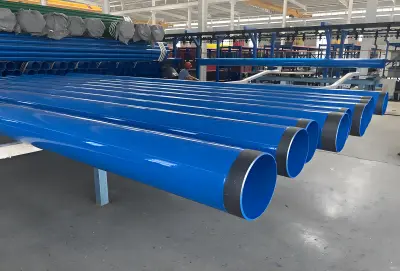
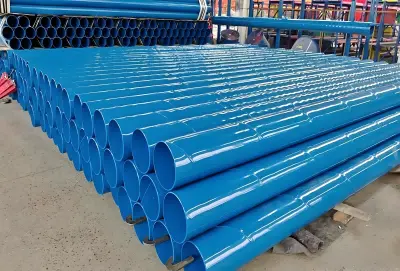
Fusion-Bonded Epoxy (FBE) coatings provide reliable corrosion protection through a strong, continuous barrier between the steel surface and the surrounding environment. The excellent adhesion keeps moisture, oxygen and corrosive substances away from the steel and reduces the probability of rust and coating failure. FBE coatings are widely used for pipelines buried or submerged in the oil and gas, water supply and industrial sectors due to their uniform application in a factory, low VOC emissions and good chemical resistance. The quality of the application and the preparation of the surface and also the correct protection during transport and installation are important for the long term performance of the coating.
How FBE Forms a Corrosion Barrier
These are the intro details. A thermoset powder coating is what FBE is. In the mill, the steel pipe gets hot, and charged epoxy powder falls onto the hot surface. When the powder melts, it wets the steel and chemically bonds it into a single layer. If you burn it again, the layer won't melt back because the reaction can't go backward once it's set. Most of the time, temperatures between 180°C and 250°C are used, but this can change depending on the powder. It doesn't break down when it comes to cathodic disbondment because the bond forms on smooth, clean steel. This is something that often happens on pipelines that are protected by cathodic acid. There is also little volatile organic compound (VOC) pollution because there are no solvents in the powder.
FBE Compared with Liquid Epoxy, 3LPE, and Galvanizing
It takes room temperature for epoxy that is still liquid to harden. That's good for broken parts and fixes in the field, but it's not as good as a factory line for controlling the heat. This kind of polyethylene (3LPE) is stronger against damage because it has an epoxy base, a glue, and a polyethylene jacket. A barrier film is not used to protect something when it is galvanized. Instead, sacrificial zinc is used. FBE is in the middle. It has a lighter film than 3LPE and sticks well. It is always put on in the same way in the plant. People normally ask for an overcoat or 3LPE that doesn't wear down quickly for HDD crosses or rocky backfill. For standard buried service, a lot of people choose single-layer FBE.
Applications, Advantages, and Limits
FBE-coated pipe is used for fire protection, sewage, chemical processing, marine infrastructure, and oil and gas lines. In your plan, make sure that the drinking water meets AWWA C213 guidelines and has approvals for drinking water from groups like NSF/ANSI 61. For oil and gas, make sure that the cathodic disbondment data, API 5L pipe, and field-joint compatibility are all correct. The best things about it are that it sticks well, stays the same quality in the plant, doesn't pollute with VOCs, and you can change the thickness. Also, the boundaries are very clear: the film can break if it gets hit, the temperature needs to be carefully managed, the surface needs to be properly prepared, and roughening it up takes it away. Don't just look at the price; think about the soil, the chemicals in it, and how it will be set up as well.
Steps 1–3: Specify, Prepare, and Preheat the Pipe
Step 1: Review Pipe Requirements and Select the FBE System
Start with the service terms. Record the kind of steel, how it was made, the outside diameter, the wall thickness, the length, the shape of the ends, the pressure, the temperature at which it will be used, and whether the specification calls for coating on the outside, lining on the inside, or both. Fusion bonded epoxy coated steel pipe that is 60.3 mm to 1422 mm in diameter and 6.02 mm to 50.8 mm thick is what we offer. It needs to be approved by API 5L, ASTM A53, EN 10210, or AS/NZS 1163. You should then make sure the coating meets CSA Z245.20, EN 10339, ISO 21809-1, AWWA C210, or C213. If your project uses ISO 21809-2 for FBE, you should add it. The written coating process should include the powder mixture, film thickness, limits for cathodic disbondment, abrasion performance, and compatibility with field joints.
Step 2: Inspect, Clean, and Blast the Surface
How well the surface is prepared affects how well it sticks. We check the pipe that is coming in for rust, mill scale, oil, grease, weld spatter, broken ends, sharp edges, laminations, and mill scale. First, the crews clean and dry the pipe. Then, they cover the ends that were cut off and use an abrasive blast. A lot of standards require NACE No. 2 / SSPC-SP 10 metal, which is almost white and has an anchor profile of 50 to 100 microns so the epoxy can physically stick to it. Before they heat the steel, the staff also checks it for flash rust and makes sure it is the right temperature, humidity, dew point, and dust level. Also, soluble salts are important because they can cause blisters due to shocks of water and salt. Not getting ready is the main cause of bad bonding, blistering, and separation too soon.
Step 3: Preheat the Steel to the Right Temperature
After drilling, the pipe goes through a heater station. People usually pick electric resistance, gas-fired, or induction systems. The goal temperature is set by looking at the chemistry of the powder, the speed of the line, the diameter and thickness of the pipe walls, and the powder maker's data sheet. It's between 220°C and 240°C for many things. The heat has to stay the same all the way around and along the pipe. If you don't heat the epoxy enough, it can break down, and if you heat it too much, it won't melt or bond properly. Monitoring equipment that has been calibrated should write down the readings, and those records should be kept in the production quality file. Bring them to your group's attention.
Steps 4–5: Apply the Powder and Let the Film Cure
Step 4: Apply the Epoxy Powder Electrostatically
Spray guns that are calibrated use powder that has been prepared. Each particle is given an electric charge and moves toward the pipe that is hot and metal. It melts, runs together, and makes the surface wet. The pipe turns as it moves, so coverage is even. To get the right thickness, the plant controls the batch of powder, how long it can be stored, the humidity in the storage area, the load on the gun, the flow of powder, the speed of the line, and the rotation. It's important to be able to find all the powder that has been wet or stored for too long, because holes can form in it. For the powder that comes with your pipe, ask for the certificate and batch number.
Choosing Single-Layer, Abrasion-Resistant, or Dual-Layer FBE
Single-layer FBE can be used for most lines that are buried. With this method, an abrasion-resistant topcoat (ARO) is put on top of the base coat. The overcoat protects the rust shield when the pipe is being rough-handled or when it is being pulled back during horizontal directional drilling, which puts rock and shear forces on it. Sticking with your gut isn't the best way to be sure that you need the extra cover. A geotechnical study is. Specs and an installation plan can help you decide between dual-layer FBE and 3LPE if a crossing will get a lot of use. Make sure the thickness range is written on the order no matter what system you pick.
Step 5: Flow, Cure, and Cool the Coating
As soon as the film is sprayed, it needs to move, bond, and cross-link. How well the heat is kept in, the mix, the film thickness, the pipe size, the line speed, and the weather all affect how long it takes to cure. Because thick-walled pipes keep heat longer than thin-walled ones, mills change the line for each size. Providers check to see how well the fix is done before sending the goods out. Differential Scanning Calorimetry is a common way to check that the epoxy has hardened more than 95%, which is what the standard requires. To cool down, you can use fans, forced air, or water cooling that has been approved. Do not move, stack, or lift the pipe until it is cool enough to do so. It's easy to hurt a warm pipe.
Steps 6–7: Inspect, Repair, and Release the Pipe
Step 6: Measure Thickness and Detect Holidays
Along the length and width of the pipe, inspectors measure the thickness of the dry film in a number of places. They are extra careful around the ends of the pipe and where the welds are. The next thing to do is look for holidays. There are holes, cracks, and steel that can be seen. The surface is being looked at by a high-voltage detector. NACE SP0490 sets 125 volts per mil depth for FBE films that are 250 to 760 microns thick. If the test comes back negative, the barrier is complete, since even one missed pinhole can make the soil corrode. Ask for the thickness log by fusion bonded epoxy coated steel pipe number.
Additional Tests and Visual Checks
Other tests that labs do rely on what needs to be done. Some of these are bonding, contact, flexibility, abrasion, cathodic disbondment, cure, and resistance to heat. We can tell if the finish can handle backfill loads by testing it according to ASTM G14. So long as it's written in your contract, these tests can be watched by a third party. When looking at something, you should look for bare spots, blisters, runs, sags, wrinkles, uneven weld coverage, overspray, and damage to the ends that were covered. You shouldn't use a general pass number to compare each result to because the limits are different for CSA Z245.20, AWWA C213, and other standards. Instead, you should use your project's acceptance criteria.
Step 7: Repair Defects and Complete Final Acceptance
You can fix most small flaws, such as rough spots, scratches, contact marks, and holiday marks. The right way to prepare the surface, preheating when needed, the right amount of overlap, and a full cure time are all used in the repair. After that, it's checked again. If there is a lot of delamination, bad bonding, serious porosity, or a lot of under-thickness, you might need to strip and recoat. The release package should have inspection reports, holiday results, thickness records, repair papers, tracking data, packing lists, and information on how to ship the goods. There should also be compliance certificates, steel certificates, and powder certificates. Some of the papers that Longma Group gives to your QA/QC team are the Material Test Certificate (MTC), the Manufacturing Procedure Specification (MPS), and the Inspection and Test Plan (ITP). So, they can look them over early.
Avoiding Problems and Choosing a Supplier
Common FBE Problems and How to Prevent Them
There are a few things that can cause sticking: oil, dust, water, the wrong blast profile, or flash rust. All four are taken care of by preparation of the surface and monitoring of the dew point. If the heating, spray settings, rotation, powder flow, or line speed aren't always the same, the thickness won't be the same. This problem can be fixed by calibrating and checking the scale often. Damage from holidays and handling can be caused by dirty powder, lack of fusion, sharp edges, moving tools that aren't right for the job, or bad stacking. Protective slings, padded separators, and approved repairs can help keep things from getting damaged during transport. How does the supplier pack colored pipe to ship by sea? How are your field joints going to connect to the factory base coat?
How to Choose a Fusion Bonded Epoxy Coated Steel Pipe Supplier
Look at business words, professional skills, and ability all at the same time. Find out about the different kinds of pipes, their lengths, coating systems, repair capabilities, lead times, minimum order quantities, and how they are packed for export. Make sure the certificates cover the whole project, the real factory, and the materials. They have been making ERW and LSAW steel pipe for people in more than 90 countries since 2003. They will have made more than 1,000,000 tons of steel every year by the end of 2023. We have certificates for API 5L, ISO 9001, ISO 14001, and ISO 18001, among others. When we need steel, we buy it from Shagang, TISCO, HBIS, and Bao Steel. There is a record of every pipe from the time it is made to the time it is scrapped. Some of the things we can do to stop corrosion are hot-dip galvanizing, FBE, 2PP, 3LPE, 3PE, and 3LPE.
Final Purchasing Checklist
Before you ask for quotes, write down the steel grade, pipe standard, diameter, wall thickness, pressure, temperature, coating type and thickness, environment, approvals, field-joint compatibility, and inspection criteria. Then, check out the ability to track, the minimum order, the wait time, the packaging, the guarantee, and the skills, experience, and qualifications of the supplier's coating line. Last, look at each quote one line at a time and see how it fits. Each one should have details about the treatment, testing, packing, shipping, location, payment terms, length of time it is good for, and any price changes for the material. The lack of certain items often makes packages arrive late or not up to par.
Conclusion
How long fusion bonded epoxy coated steel pipe with an epoxy coating will last is based on each link in the FBE coating process, which is like a chain. First, check to see if the standard pipe and cover fit the job. It is heated evenly and shot into the right form before the powder is applied. After that, a full fix takes place. The film is then checked for thickness, breaks, and mechanical problems. Finally, fixes that work are made and all the paperwork is turned in. FBE always sticks well and is of high quality, but it needs to be kept safe from damage. For tougher installations, 3LPE or a dual-layer method might be better. At each step, you should look at the records and choose the right layer based on the dirt, its chemistry, the temperature, and how it will be put down.
FAQ
1. What does FBE coated steel pipe mean?
The steel pipe has a heat-fused epoxy powder coating on the outside. As the powder cross-links, it turns into a hard, continuous shield against rust.
2. How thick is an FBE coating?
The thickness depends on what is needed and how it will be used. Units with two layers are bigger than those with only one. Look at the paperwork for your job and ask for records of thickness.
3. How long does an FBE coating last?
Which type of coating you use, the dirt, the weather, cathodic protection, how you handle it, and how you put it on can all affect how long it lasts. Most covers with cathodic protection are made to last between 40 and 50 years, but no cover comes with a 100% guarantee.
4. Is FBE suitable for underground water systems?
As long as the pipe and covering meet standards like AWWA C213 and are approved for drinking water in your area, the answer is yes.
5. How does FBE differ from 3LPE?
3LPE adds a layer of polyethylene to the outside to make it stronger against damage from drops and wear. Fusion-bonded epoxy-coated steel pipe isn't as thick and sticks straight to steel.
Request a Quote for Fusion Bonded Epoxy Coated Steel Pipe from Longma Group
Longma Group is a business that can look at your project and make fusion bonded epoxy coated steel pipes. Send an email to info@longma-group.com with the type of pipe you need, the steel grade, the size, the number, the coating thickness, where you want it delivered, and the standard. We'll help you pick out the finishing system, check all the paperwork and seals, and give you a price quote and time frame for when you can expect to receive it.