
FBE coating corrosion protection performance depends on how well a cured epoxy film bonds to clean steel and blocks water, oxygen, and salts from reaching the metal. A fusion bonded epoxy coated steel pipe gets this film from epoxy powder that melts on a hot, blasted surface and cross-links into a hard thermoset layer. When thickness, adhesion, cure, and holiday control meet the project specification, the coating can protect buried and submerged pipe for many decades, especially with cathodic protection. I will walk through how it works, how to test it, and how to buy it.
|
|
|
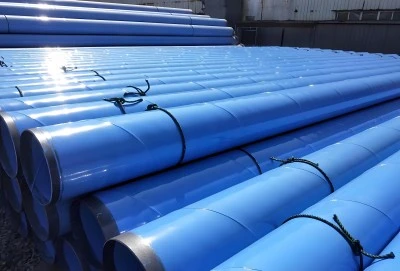
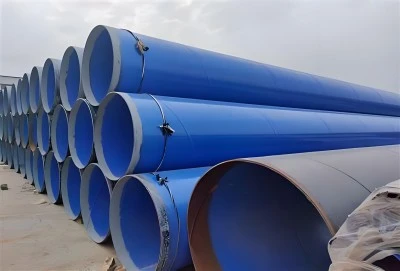
What Is Fusion Bonded Epoxy Coated Steel Pipe, and How Does It Protect Steel?
How the Coating Forms
Fusion-bonded epoxy-coated steel pipe is a kind of line pipe that has an epoxy powder glued to it. If you store the powder the right way, the glue and hardener won't mix. When the powder is heated to between 180 and 250 °C, it melts, wets the steel, and forms a thick film that is linked together. As long as this reaction is still going on, heating it up won't make the coating soft again. This is where the name "thermoset" comes from. FBE is very good at sticking to metal because it joins with heat instead of wet paint. Plates can go around the outside or cover both sides.
Barrier Protection and Adhesion
It's impossible for water, air, chlorides, and earth chemistry to pass through a film that has dried out. But barriers must do more than just work. If the link is strong, water can't get under the film. The layer will separate, and the underfilm will rust, if it does. Because underground pipes often have cathodic protection added to them, the coating needs to be able to stop cathodic disbondment as well. Rust cost the world about US$2.5 trillion in 2013, which is about 3.4% of the world's GDP. This means that a lot is at stake. Tests for both adhesion and disbondment are always what I ask for, because a thick film with a weak bond will still fail quickly.
Where Buyers Use It
Fusion-bonded epoxy-coated steel pipe is used for fire protection, ground utilities, mining, industrial processing, long-distance oil and gas lines, and city water mains. FBE is often used as the bottom layer under 3LPP or as a concrete weight cover in the ocean. A two-layer system puts an overcoat that doesn't wear off on top of the FBE for horizontal directional drilling (HDD). Water projects also like the lining because FBE stops tuberculation, which is when rust clouds form inside pipes. The standard must match the fluid, pressure, and temperature that will be used because each use has different needs.
FBE Coated Steel Pipe Manufacturing and Coating Process
Inspection and Blast Cleaning
Quality begins before any powder is sprayed. The plant checks the pipes' grade, size, condition of the welds, and how clean the outside is. After that, grit blasting removes the mill scale and rust and creates the anchor profile that keeps the finish in place. Steel that is almost white (NACE No. 2 or SSPC-SP10) and has a profile of 50 to 100 microns is often the goal. It is important for soluble salts like chlorides and sulfates to stay low in order for osmotic blistering to form. This is because salts that are stuck in the film pull water through it. As the design changes, so should the limits. Check them again in your project papers to be sure.
Powder Application and Curing
Fusion bonded epoxy coated steel pipe is sprayed on the hot steel by the plant after the pipe has been blasted. I melt the powder, let it flow, and then let it dry into a smooth film. We need to finish the fix. When manufacturers check the level of cure, they use differential scanning calorimetry (DSC). This is because a covering that isn't fully cured loses its chemical protection and mechanical strength. As the line speed, preheat temperature, and powder storage change, so does the quality of the film. This is why the coater needs to have tools that are properly adjusted and written directions. Internal FBE works the same way when the standard calls for lined pipe.
Cooling, Repair, and Release
The coating is cut off at the ends of the pipe once it is cool. It stays bare steel at each end (the cutback) so that crews can weld the joints. Inspectors look at the dates, how nice it looks, and how thick the dry film is. If the specification calls for it, they also test for adhesion, impact, flexibility, and cathodic disbondment. Once it is safe, any flaws are fixed and tried again. We give you an Inspection and Test Plan (ITP), a Manufacturing Procedure Specification (MPS), and a Material Test Certificate (MTC) when you buy something from Longma Group. We keep track of your order all the way through to the finished pipe.
Key FBE Coating Corrosion Protection Performance Indicators
Thickness and Holiday Detection
It's not very protective if the film is too thin, and it might get stiff when bent if it's too thick. The even spread is more important than the average number, so inspectors measure how thick the dry film is along the pipe. After that, a high voltage is used to check the surface for holes that let steel through. 125 volts per mil of thickness is a setting that is often used, but the real value is set by the rules. When a pinhole is missed, corrosion builds up, most often in water and power lines that are buried.
Adhesion, Impact, and Cathodic Disbondment
They look at how the coating works during service, backfill, and delivery. A lot of people test how well steel and cement stick together. Impact tests, such as ASTM G14, check to see if the film can take rough fill and loads that fall on it. A test called cathodic disbondment checks how much the layer comes off of a flaw when cathodic protection is put on it. This is a regular way for pipes in the ground to break. When I look at a source, I'm not looking for a broad claim about a product. I want small test results instead. HDD pull-back also needs to be resistant to wear, and dual-layer FBE adds a covering that is tough on wear.
Temperature and Service Life
If you want to know the difference between the application temperature and the working temperature, read on. In order to coat it, the pipe is heated to 180–250 °C. To find out how long it can be used continuously, though, you should look at the data sheet from the manufacturer. Changes in temperature can put stress on a bond that isn't very strong. That's why it's useful to have heat data for the whole project. Your service life will depend on the soil, how well it was put in, cathodic protection, and how well you take care of it. As long as FBE is used correctly and has cathodic protection, it can last up to 40 to 50 years. I want to reach that number, but it's not a promise.
FBE Compared with Other Corrosion Protection Options
FBE Versus Galvanized Steel and 3LPE
When galvanizing, a layer of zinc is added to protect the steel, and the steel slowly corrodes in its place. FBE stands in the way. There is a lot of FBE on underground lines that are covered by cathodes. 3LPE is made up of an epoxy base, an adhesive, and a polyethylene layer on the outside. This makes it less likely to be broken by rocks or handling. One-layer FBE is less thick and best for projects with low mechanical risk. Longma Group can give you prices for hot-dip galvanizing, FBE, 2PP, 3LPE, and 3PE for the same job.
FBE Versus Liquid Epoxy, Internal Versus External
Liquid epoxy is easy to work with and can be used to make fixes on the job site or tough shapes like fittings. It is easier to get a more accurate process with factory-applied FBE because the powder doesn't carry any liquid. A lot of projects use FBE at the plant, and liquid epoxy or heat-shrink covers at the field joints. It's not the same on the inside and outside. FBE from the outside stops soil rusting. The spread of tuberculosis is slowed down by internal FBE, which stops fluids from getting in. For use with drinking water, you need a coating that has been approved by NSF/ANSI 61. Make it clear in your RFQ whether the surface is inside, outside, or both.
Choosing a Coating for Underground Water Pipe
What kind to pick relies on the ground, the chance of damage, the temperature where it will be used, the width, and how it will be set up. It's easier for FBE to stick to and remove things from things in cities with rough soils and cathodic protection. Two-layer FBE or three-layer PE may be needed when there is rough backfill or no ditches are dug. A lot of people in the US who buy water start with AWWA C213, which talks about how to treat steel water lines with FBE. Before you compare systems, you should write down what you know about the soil's resistance, the groundwater's chemistry, and the backfill that you expect. Because of these things, the quote and the comparison are both fair.
Standards, Quality Requirements, and Common Problems
Pipe and Coating Standards
What is the difference between a pipe standard and a covering standard? These are the pipe standards we use for this item: API 5L, ASTM A53, EN 10210, and AS/NZS 1163. API 5L talks about line fusion bonded epoxy coated steel pipes. We follow these covering rules: AWWA C210, C213, CSA Z245.20, EN 10339, ISO 21809-1, and DIN 30670 and 30678. From 60.3 mm to 1422 mm across the outside, and from 6.02 mm to 50.8 mm thick on the inside. You should make it clear in your specification what the coating standard, thickness, test methods, and acceptance criteria are. That way, no one has to guess.
Why Coatings Fail
There are a few places where most bad starts can be found. Putting something on steel that is oily, salty, dusty, or wet will not stick well and will boil and peel. What if the warming, cure time, or line speed are off? The material might not cure fast enough or not enough, get thick all over, or stop being flexible. The risk goes up if the powder is not kept well. That time of year, bare steel is more likely to rust in the area. Controlling the dew point, using tools that have been properly calibrated, doing a written check, getting repairs approved, and trying again are all good ways to avoid problems. You should ask the seller how it handles each step and what records it keeps.
Handling, Transport, and Field Joints
Damage is often done after the fact to the plant. In the picture, chains, steel hooks, pulling, and rough backfill are used to make chips. When shipping by sea, use padded slings, the right kind of dunnage, and backfill that has been screened. Do not forget to ask for export packing that will protect the coating. If outdoor stock is going to sit for more than six months, cover it. UV light can turn FBE chalky. Field joints need to have coatings that are right for them. You can cover the original FBE on the cutback with heat-shrink plates and liquid glue to make a seal that goes all the way around. For small jobs, crews use two-part glue kits.
How to Select and Buy FBE Coated Steel Pipe for a Global Project
Define Requirements Before Requesting Quotes
Write down the pipe size, steel grade, manufacturing method, coating location, thickness, fluid conditions, installation environment, design life, and any paperwork that needs to be done. These are the outside diameters of our fusion-bonded epoxy-coated steel pipes: 60.3 mm to 1422 mm. The base pipe types we offer are API 5L PSL1 and PSL2 from Grade B to X80. Quotes that look the same on paper but aren't really the same should be stopped. Your supplier needs to know about any changes right away so they can make sure it's possible before they start making the product.
Assess Supplier Capability and Total Cost
Check how much the coating line can do, its quality systems, project experience, certifications, ability to inspect, and the technical support the company offers. Longma Group (Hebei Longma Group) has been making ERW and LSAW pipe since 2003. They will make more than 1,000,000 tons of pipe every year by the end of 2023, and people in over 90 countries will use it. For API 5L, ISO 9001, ISO 14001, and ISO 18001, we have the right paperwork. We get our steel from mills like Baosteel, HBIS, and TISCO. Not only how much the coating costs, but also how much it costs to deliver. It doesn't take long for damage, wait times, and freight to add up.
Prepare the RFQ and Confirm Delivery
A full RFQ tells you how much steel you need, what grade it is, and whether the FBE is internal, external, or dual-sided. It also has details about the diameter, test standards, fluid, temperature, pressure, fitting conditions, approvals, place of delivery, Incoterm, and schedule. Write down the capacity, the lead time, the export packaging, the shipping, and the insurance. It is possible to control the blasting, heating, curing, and checking in the factory. However, I still believe it is important to set acceptance standards and witness points. When items are sent from one supplier to another, mistakes are more likely to happen. Having one supplier handle the pipe, coating, testing, and paperwork cuts down on those mistakes.
Conclusion
A rust-proof FBE layer is made up of an epoxy barrier that has hardened and sticks well to steel that has been blasted properly. How the factory handles the blasting, heating, powder application, curing, and inspection determines the quality of the film. To find out if the coating meets the standards, it is put through tests that look at its thickness, holidays, adhesion, impact, cathodic disbondment, and cure. How long the coating lasts and what temperatures it can handle depend on the resin system, the soil, how it was installed, and the cathodic protection. All of these methods are not the same as FBE in terms of how they protect and where they fit. There should be separate rules for how to define fusion bonded epoxy coated steel pipes and how to define coatings. The effects after the plant are affected by how it was handled, moved, and joined to the area. So, clear requirements and written records show how well the pipe works.
FAQ
1. What is fusion-bonded epoxy-coated steel pipe used for?
It protects pipes in places like mines, fire stations, oil and gas pipelines, and city water mains.
2. How long does fusion-bonded epoxy-coated steel pipe last?
It is possible for the design life to be longer than 40–50 years with the right coating and cathodic protection. The result will still depend on the dirt, how well it was installed, and how well it is taken care of.
3. What temperature range is suitable?
Rules change based on the resin type. You can coat something between 180 and 250 °C, but the data sheet from the manufacturer will tell you the highest temperature and service time.
4. Is FBE suitable for potable water?
It is possible as long as the coating is approved for drinking water by a group like NSF/ANSI 61 and the project meets the rules set out in AWWA C213.
5. How are coating defects tested?
Inspectors measure the dry film's thickness, look for high-voltage breaks, and test the film's cathodic ability to stick, hit, and break apart.
6. What information is needed for a quotation?
Send the pipes' size, number, grade, standard, location, thickness, test needs, arrival time, and where they're going.
Request a Quotation for Fusion Bonded Epoxy Coated Steel Pipe from Longma Group
The fusion bonded epoxy coated steel pipe maker Longma Group has API 5L certification, ERW and LSAW production, as well as ITP, MPS, and MTC papers. Send an email to info@longma-group.com with the size, grade, location, thickness, test needs, destination, and schedule of your pipe. Our team will take a look at what you need and get back to you with a price that meets those needs.