
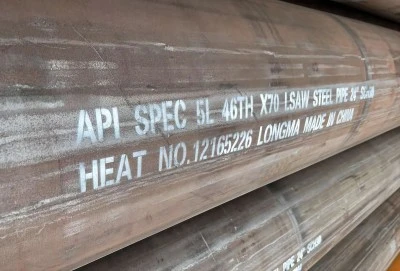
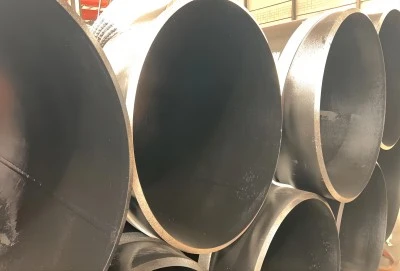
Meeting tight project deadlines in oil and gas pipeline construction demands more than just high-quality materials—it requires suppliers who can deliver rapidly without compromise. API 5L X70 pipe, a high-strength low-alloy steel product with a minimum yield strength of 485 MPa (70,000 psi), stands as the industry standard for demanding transmission projects. When procurement directors face urgent requirements, the ability to source X70 grade line pipe within compressed timelines becomes critical to avoiding costly project delays and maintaining EPC contract milestones.
|
|
|
Understanding API 5L X70 Pipe and Delivery Challenges
Long-distance oil and gas transmission has been changed by high-strength pipeline materials like X70 grade steel. These materials allow for thinner wall designs that save money on materials while still maintaining pressure integrity. These pipes meet the strict chemical composition standards and dimensional tolerances set out in API Specification 5L. This means they will work reliably in harsh environments like sour gas fields and offshore deepwater installations.
But getting these specialized goods to customers quickly does present some real problems. In order to make X70 grade pipe, precise thermomechanical controlled processing and strict quality validation protocols are needed. These steps usually take longer than expected. Large-diameter thick-wall configurations are often needed for transcontinental pipeline projects. They need high-tech production tools and a lot of non-destructive testing steps. When you add foreign planning problems like clearing customs, coordinating multiple modes of transportation, and the possibility of port congestion, the time pressures get a lot worse.
People who work in procurement who are on project-driven contracts know that every day of delay means fines and a strained relationship with the project owners. Finding suppliers who can balance speed with the strict quality standards needed by regulatory officials and third-party testers is the hard part. Managing these expectations requires open communication, reasonable planning based on knowing what output capabilities are actually available, and not making overly optimistic claims.
Causes Affecting X70 Pipe Delivery Speed and How to Address Them
Manufacturing Capacity Constraints
Sometimes there are problems with production because there aren't enough good raw materials. Premium steel plate made by trusted mills like HBIS, Bao Steel, or Shougang has to meet strict chemical requirements. It needs to have controlled levels of carbon equivalents and micro-alloying elements like vanadium and niobium. When the market is in high demand, it can be hard to get enough tonnage of the right coil or plate stock, which could make the procurement process take weeks longer.
Modern factories deal with this problem by managing their raw material inventories strategically and building partnerships with several steel mills. When suppliers keep extras of widely ordered plate types for api 5l x70 pipe on hand, they can start making the plates as soon as an order is confirmed, instead of having to wait for the materials to arrive. Automated production lines with real-time monitoring systems cut down on cycle times by reducing the number of manual steps and quality problems that need to be fixed.
Quality Assurance Complexity
PSL2 standard pipes must go through a lot of tests, such as Charpy V-notch impact tests, drop weight tear tests, acoustic examination, and hydrostatic pressure tests. These tests are important, but they take a lot of time. Before getting approval paperwork like EN 10204 3.1 material test certificates, each length of pipe goes through several steps of review.
Investing in advanced inspection tools and trained staff is needed to streamline quality processes without lowering the standards. Ultrasonic testing systems that are automated can scan whole pipe bodies and longitudinal welds faster and more accurately than manual methods. Setting up third-party witness inspections from SGS, Bureau Veritas, or other well-known companies early on in the production process keeps delays to a minimum when clients need independent confirmation before approving the shipment.
Logistics and Supply Chain Coordination
International shipments are affected by many factors that are hard to predict, such as the availability of ships, the speed of port handling, and the time it takes to handle documents. Lack of containers, bad weather during certain times of the year, and rules and regulations all cause delivery windows to get longer, which is frustrating for procurement teams that have to stick to strict project schedules.
These risks are lessened by experienced providers who use a variety of transportation partners and plan shipments ahead of time. Having working relationships with several freight forwarders gives you the freedom to reroute shipments when problems happen at certain ports. Getting all of the export paperwork ready ahead of time, like certificates of origin, packing lists, and inspection reports, cuts down on delays caused by paperwork during the important shipping phase.
Principles and Strategies Enabling Fast Delivery of X70 Pipes
Advanced Manufacturing Technologies
Modern ways of making things that cut down on steps that aren't needed are the first step toward efficient production. When automatic forming machines and dual-torch welding systems are used to make longitudinal submerged arc welded (LSAW) pipes, they can make big pipes with uniform weld quality and little need for repair. High-frequency welded (HFW) processes are used for smaller diameter jobs where production speeds are much faster than with traditional methods.
Integrated facilities that manage the whole production chain, from getting the steel to applying the final coating, get rid of the delays that come with multi-vendor supply networks. Longma Group's 230,000-square-meter manufacturing complex has full production lines that can handle everything from raw steel coil to finished, coated pipe without needing help from outside sources. This vertical integration helped us meet our 7-day fast delivery requirements for standard specs while still following all API 5L and ISO 9001 rules.
In the area of heat treatment procedures, too, faster times are made possible by better technology. Normalizing furnaces that are computer-controlled and have accurate temperature profiling cut down on cycle times while still making sure that the microstructure is fine-grained enough to meet specific toughness requirements. Automatic pipe handling systems move materials between steps of a process without any help from a person. This gets rid of jams during times when a lot of work needs to be done at once.
Strategic Inventory Management
Having a ready supply of widely ordered grades, sizes, and wall thicknesses lets you meet pressing orders right away, which would normally take full production cycles. Advanced inventory tracking systems show what's available in real time, so sales teams can confidently keep their shipping promises based on actual stock instead of optimistic production estimates.
For this method to be economically effective, it needs to be able to accurately predict demand based on past order patterns and ongoing communication with customers. Suppliers who work with certain regional markets or industry segments become experts at figuring out which specifications will be in high demand over and over again. This lets them strategically pre-produce items that will be in high demand. Framework agreements or blanket purchase orders set up by procurement professionals let sellers place their goods in the best way to support quick call-off deliveries.
Certified Supplier Partnerships
Getting to know manufacturers who have well-known quality certifications builds trust among buyers, which speeds up the decision-making process. Occupational health and safety system validations, ISO 9001 quality management certifications, and API 5L logo licenses for api 5l x70 pipe all show that uniform product quality is achieved in a planned way. These certifications are checked on a regular basis by outside groups, which makes sure that the internal controls stay strong over time.
In addition to basic certifications, providers who have a history of success in certain uses can offer helpful technical support that keeps specification mistakes and change orders from happening. During the quotation phase, engineering teams that know about international pipeline codes can look over the project requirements and find any problems before production starts. This way of working together stops situations that require expensive rework and throw off delivery schedules and project margins.
Real-World Case Studies: How Leading Suppliers Achieve Fast X70 Pipe Delivery
Case Study: Emergency Pipeline Repair Project
An EPC contractor in the Middle East was caught off guard when testing of the pipeline's integrity showed a section that needed to be replaced right away to keep production on schedule. For the job, they needed 36-inch diameter X70 grade LSAW pipe with a 3LPE coating. Usually, it takes 12 weeks to get this kind of pipe through normal routes of procurement.
The contractor got a promise for 7-day pipe production followed by quick coating application by working directly with a qualified source that kept a strategic reserve of large-diameter plate stock. The supplier set aside dedicated production line space, coordinated fast third-party inspection, and set up air freight for important certification documents while the physical product was shipped by sea. The whole order got to the project site within 28 days of the buy order being sent out. This kept the production from stopping, which would have cost the owner of the project about $2 million in lost revenue.
Case Study: Multi-Project Supply Framework
A European engineering firm that is in charge of several pipeline projects in Southeast Asia at the same time made a framework agreement with a certified X70 pipe manufacturer that covers their needs for the next 18 months. Instead of sending out separate purchase orders for each part of the project, the agreement set the total expected amounts and allowed for flexible call-offs.
Because of this deal, the supplier was able to store inventory ahead of time at a regional distribution hub in Singapore. This cut the average delivery time for standard configurations from 10 weeks to less than 3 weeks. The engineering company got stable prices that protected them from changes in the market, but they still had the freedom to change the standards as project needs changed. During the agreement term, average delivery performance was 40% better than when buying on the spot market. This directly led to projects being finished on time and end clients giving performance bonuses.
Conclusion
To get high-strength pipeline materials to customers quickly, manufacturing skills, quality systems, and transport coordination must all be in line with what customers want. Api 5l x70 pipe suppliers who invest in new production technology, keep strategic inventories, and set up strong paperwork systems are in a good position to help procurement pros who have to work with tight deadlines. The important thing is to choose partners who keep their promises instead of those who make empty ones. Realistically planning a schedule and finding suppliers who can speed up important parts is easier when you know what the real limits are of making steel pipes. As projects get more complicated and deadlines get tighter, companies that have carefully cut out needless delays in their supply chains without lowering the high quality standards needed for safe pipeline operations will have a competitive edge.
FAQ
What is the typical lead time for API 5L X70 pipe orders?
Depending on the complexity of the specifications, the number of orders, and the current production schedules, standard lead times can be anywhere from 6 to 12 weeks. When testing needs to be done in a specific way, large diameter thick-wall configurations usually take longer than common sizes. Most of the time, suppliers who keep stock of commonly asked-for grades can fill orders within 2 to 4 weeks. When a project needs to be done quickly, Longma Group can offer expedited 7-day delivery options for certain standard specifications. However, this depends on how much inventory is available and how much can be produced at the moment.
How do quality requirements impact delivery speed?
For high-pressure transmission applications, these requirements can't be changed, even though the extensive testing protocols needed for PSL2 products take longer than those for PSL1 products. Efficient providers automate and parallelize testing routines to speed up inspections and keep schedule impacts to a minimum. The key is to work together with third-party inspection agencies early on and make sure all the paperwork is ready before production ends. Manufacturers with a lot of experience don't add extra time for quality checks to their shipping promises; instead, they do it as planned and avoid delays.
What should procurement managers verify when selecting fast-delivery suppliers?
In addition to looking at certifications and production capacity, you should also ask for references from projects that are similar to yours and check the supplier's history with on-time delivery metrics. Check out their relationships with suppliers of raw materials and how they handle their inventory to see how they handle sudden increases in demand. Check to see how responsive they are to contact and how willing they are to give clear updates on the work state. Reliable suppliers make promises based on what they can actually do, not on unrealistic expectations that turn out to be false.
Partner with a Trusted X70 Pipe Supplier
Longma Group is ready to help you with your urgent pipeline material needs. We have a track record of fast delivery and all the necessary certifications and quality paperwork to back it up. We have been sending Api 5l x70 pipe to more than 90 countries since 2003. Our customers include large EPC companies, oil and gas operators, and marketing partners who need reliable products when time is of the essence. Our ability to produce 1,000,000 tons of X70 pipes every year, along with our API 5L PSL1 and PSL2 certifications for grades B through X80, makes us a reliable X70 pipe manufacturer for your important projects. We do all kinds of fabrication work, apply anti-corrosion coatings, and provide full documentation, such as ITP, MPS, and MTC certificates made to your exact specifications. You can talk to our technical team at info@longma-group.com about your specific needs and get detailed quotes with delivery promises you can trust.