
API 5L GR.B PSL1 pipe transports oil, gas, and water over worldwide transmission networks economically and robustly. ISO L245 carbon steel line pipe has a minimum yield strength of 245 MPa and tensile strength of 415 MPa, balancing modest structural capacity and outstanding weldability. Grade B PSL1 is appropriate for standard-pressure applications that do not need impact testing since it performs well at a lesser cost than X42 or X52. Its seamless and welded adaptability makes it competitive with ASTM A106 Grade B.
|
|
|
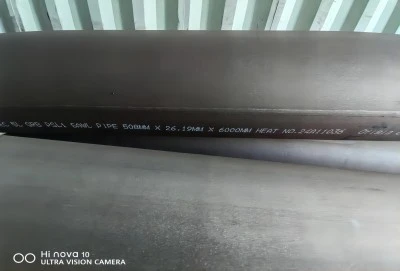
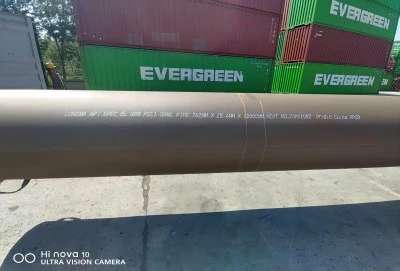
Understanding API 5L GR.B PSL1 Pipe and Its Standard
The American Petroleum Institute (API) 5L standard sets the requirements for line pipes used in the oil and gas businesses around the world. According to this system, Grade B is one of the basic types of carbon steel, and PSL1 is the normal quality level. In this case, the API 5L GR.B PSL1 pipe meets basic requirements for chemical composition and mechanical properties, so it doesn't need to go through the extra testing that PSL2 requires. We often see this grade chosen for projects with mild operating pressures and pipes that don't have to deal with very sour service or temperatures below zero.
Chemical Composition and Mechanical Properties
API 5L GR.B PSL1 pipe controls critical alloying constituents to ensure steel weldability and strength. Carbon, manganese, phosphorus, and sulphur are the highest at 0.28, 1.20, and 0.030 percent, respectively. It is robust enough for pipeline duty yet simpler to weld because to these composition constraints. Cross-country transmission lines may operate properly with minimum yield and tensile strengths of 245 and 415 MPa, respectively. Due to its elongation, the pipe might bend somewhat during installation and usage.
Manufacturing Methods and Heat Treatment
SMLS and LSAW/ERW are used to create PSL1 pipe by Longma Group. In high-pressure settings requiring wall stability, seamless pipes are optimal. Welded pipes are cheaper for large-diameter, long-distance projects. The weld seam is heated during ERW to normalise the grain and prevent cracking. This heat treatment ensures that the weld zone has the same mechanical properties as the surrounding material, ensuring pipeline stability.
Compliance Testing and Certification
The first phase in quality control is hydraulic testing, which presses each pipe length to 60 to 90% of its minimum yield strength. This ensures leak-free pipes. Dimensional tests verify API 5L outer diameter, wall thickness, ovality, and straightness specifications. Ladle and product samples are chemically analysed using spectroscopy to check element composition. Laminations and cracks are seen during inspections. Along with ISO 9001, ISO 14001, and ISO 18001, our facilities are API 5L certified. This demonstrates they follow global quality, safety, and environmental standards. These certifications ensure procurement teams can monitor goods and oversee procedures.
Comparison Between API 5L GR.B PSL1 and Other Common Pipe Grades
In order to choose the best pipe grade, you need to know how API 5L GR.B PSL1 pipe compares to other standards. To help you understand the trade-offs between performance and cost, we look at how it stacks up against PSL2, higher-strength X-grades, ASTM equivalents, and stainless steel options.
PSL1 versus PSL2
The quality of testing and capacity to find materials distinguish PSL1 from PSL2. PSL2 restricts sulphur and phosphorus, requires Charpy V-Notch impact testing at particular temperatures, and limits the greatest yield-to-tensile ratios to prevent hardening. Also, PSL2 needs comprehensive monitoring from raw material to end product. This aids hydrogen sulfide-affected sour service usage and stress cracking. PSL1's lack of these criteria simplifies and lowers manufacturing costs. For moderately sour and temperature projects, PSL1 yields satisfactory outcomes without the increased expenditures of PSL2.
Grade B versus X-Grades (X42, X52, X60)
API 5L uses X-grades for higher minimum yield strengths and ksi values following them. X42 yields 42,000 psi, X52 52,000, and X60 60,000. These qualities allow thinner wall portions to maintain the same pressure because of their strength. These make enormous projects lighter and cheaper to carry. API 5L GR.B PSL1 pipe has a yield strength of 35,500 psi and is utilised when pressure is low, and cost savings from lower-grade steel exceed weight savings. Most oil and gas firms use Grade B for collection lines and low-pressure distribution networks and X-grades for high-pressure trunk lines in tough terrain.
ASTM A106 Grade B and ASTM A53 Grade B
These ASTM standards have comparable chemical and mechanical properties to API 5L GR.B PSL1 pipe. They may be used interchangeably in various contexts. ASTM A106 is for seamless carbon steel pipe at high temperatures, while ASTM A53 is for seamless and welded pipes in structures and under pressure. Testing techniques and end-use emphasis vary most. API 5L emphasises size tolerances and hydrostatic testing for pipeline systems, whereas ASTM standards encompass broader industrial and construction circumstances. Because of its experience in oil and gas transport, procurement teams chose API 5L. ASTM equivalents may be used for water services and structure.
Stainless Steel Pipes
In hostile chemical and offshore conditions, ASTM A312 (austenitic) stainless steel pipes resist corrosion better. Stainless steels cost three to five times more than carbon steel and need specific welding methods. With FBE or 3LPE exterior coatings, API 5L GR.B PSL1 pipe resists rust better than stainless steel at a cheaper cost. Only use stainless steel if the fluid chemistry within or exterior exposure is worse than coated carbon steel.
| Property | API 5L GR.B PSL1 | API 5L X42 PSL1 | ASTM A106 GR.B | Stainless ASTM A312 |
|---|---|---|---|---|
| Min Yield Strength (MPa) | 245 | 290 | 240 | 205–515 (varies) |
| Min Tensile Strength (MPa) | 415 | 415 | 415 | 515–860 (varies) |
| Carbon Content (% max) | 0.28 | 0.28 | 0.30 | 0.08 (304L) |
| Impact Testing Required | No | No | No | Optional |
| Corrosion Resistance | Moderate (coated) | Moderate (coated) | Moderate (coated) | Excellent |
| Relative Cost | Low | Moderate | Low | High |
This comparison tool helps purchasing managers choose materials that meet technical needs and stay within budget, which maximizes value throughout the project's lifecycle.
Application Scenarios and Performance Advantages of API 5L GR.B PSL1 Pipes
API 5L GR.B PSL1 pipes have been used successfully in a wide range of applications, including coastal oil and gas networks, local water distribution, and the transport of industrial fluids. When engineers know where this grade really shines, they can choose materials that meet operational needs without over-engineering.
Oil and Gas Transmission
GR.B PSL1 pipe is often used for cross-country crude oil and natural gas pipes that work at moderate pressures because it is a good mix of strength, weldability, and cost. Pipes from us have been used in gathering systems that take oil and gas from wellheads and bring it to processing plants, where pressures are usually between 300 and 900 psi. The grade's mechanical properties make it suitable for these service conditions, and its high weldability makes construction in the field easier. Coating systems like 3LPE protect against corrosion from outside dirt, which means that under normal working conditions, they can last longer than 30 years.
Water Supply Systems
Municipal water officials like API 5L GR.B PSL1 pipe for trunk mains and distribution networks that move drinkable water between cities and rural areas. The low-carbon version of the pipe makes installation easier in cold weather because it doesn't need to be heated first, which speeds up the building process. If you ask for them, internal coatings stop tuberculation and keep the hydraulic efficiency for decades. Projects in Southeast Asia and the Middle East have shown that the grade works well in hot weather and difficult soil conditions, as long as the rust protection methods used on the outside are appropriate for the area.
Structural and Industrial Applications
In addition to moving fluids, PSL1 pipes are used for structural purposes when building bridges, building frameworks, and offshore platforms. The material's certified mechanical properties and ability to keep its shape help engineers make calculations for load-bearing parts. These pipes are also used by industrial makers for systems that carry low-pressure steam, compressed air, and process fluids inside company buildings. Standard wall thicknesses range from Schedule 10 to XXS, which can meet a wide range of structural and pressure needs.
Performance Under Operational Stresses
API 5L GR.B PSL1 pipe service ambient and process temperatures are -29°C to 120°C. The grade can handle cyclic stress but not cryogenic or high-temperature environments. External coatings and cathodic protection affect corrosion. In mild situations, FBE offers single-layer protection. 3LPE withstands submersion and difficult soils. Corrosive fluids may be protected by linings. Due to cost, operators choose rust inhibitors and pipeline inspections over interior coatings.
Impressive 48-inch LSAW pipes from the Middle East. GR.B PSL1 pipelines carried sweet crude 150 km across desert. Welds were robust with 3LPE coating and automated ultrasonic testing. The pipeline is leak-free and low-maintenance after five years. This material was good for moderate-pressure, non-sour duty.
Procurement Insights for API 5L GR.B PSL1 Pipes in the Global B2B Market
Finding line pipe means figuring out how the market works, what suppliers can do, and how to handle complicated logistics. To get reliable materials at low prices, procurement managers need to know about changes in prices, certification standards, and best practices in the supply chain for API 5L GR.B PSL1 pipe.
Market Trends and Pricing Drivers
Steel pipe prices worldwide depend on raw material prices, factory efficiency, and regional demand. Iron ore and metallurgical coal prices impact hot-rolled coil prices, which affect welded pipe pricing. Seamless pipe costs more for rotational piercing and extrusion. Standard grades have been consistent for many quarters due to Asian energy demand and Middle Eastern infrastructure expansion. Upstream drilling activity makes higher X-grades more volatile. Large orders normally take 60–90 days; however, producers that deal directly with mills may accelerate delivery for a price.
Supplier Certifications and Quality Assurance
API 5L certification remains standard. It verifies that a company's testing and manufacturing practices are industry-standard. Companies with ISO 9001 accreditation have good quality management systems. A company's ISO 14001 and ISO 18001 certifications demonstrate environmental and worker safety. Inspectors like Bureau Veritas, SGS, and TÜV examine material conformity separately. This makes large-project engineering firms feel comfortable. We maintain API 5L certification and encourage independent assessments. This transparency fosters buyer trust.
Logistics and Packaging
Pipes are protected during shipping and storage with proper packing. Use steel straps to bundle, protective end caps, and moisture-resistant covering to prevent handling damage and corrosion. Break-bulk or flat-rack containers may accommodate 48-inch pipes. Minimum order quantities depend on product diameter and wall thickness. Production runs that maximise mill productivity are preferred by manufacturers. Taking into consideration customs clearance and shipping dates to foreign job locations, purchasing teams should match delivery timeframes to project construction plans.
Warranty and After-Sales Support
Suppliers with a good reputation back up their goods with guarantees that cover material flaws and non-conformance with dimensions. Technical support services, like helping choose a covering, learning how to weld, and getting help with fitting, add value to the pipe itself. We offer a wide range of paperwork, such as Material Test Certificates (MTC) according to EN 10204 3.1, Inspection and Test Plans (ITP), and Manufacturing Procedure Specifications (MPS). This helps engineering companies with their quality control processes and regulatory submissions.
Selecting API 5L GR.B PSL1 Pipes Over Others
Frameworks for making decisions about pipe grades balance technical sufficiency, cost-effectiveness, and supplier dependability. We help buying workers match project requirements with real-world conditions by guiding them through the important factors that affect material choice for API 5L GR.B PSL1 pipe.
Technical Specifications and Application Fit
Start with operating temperatures, design pressures, and fluid characteristics. API 5L GR.B PSL1 pipe is suitable for applications where pressures are low and design codes or government agencies don't need impact toughness testing. PSL2 that fulfils NACE MR0175 criteria is required for sour service jobs. For trunk lines above 1,200 psi, X52 or X60 grades thin walls and lighten projects. Avoid over-specifying, which raises costs without benefiting service. Match pipe grade to service demands.
Cost-Benefit Analysis
API 5L GR.B PSL1 pipe costs 10–15% less per tonne than X42 and 25–30% less than X52, depending on the market. Long-distance projects with high diameters and thousands of tonnes of pipe have a larger pricing differential. But grades with greater strengths allow thinner walls to bear the same pressure. This reduces material and delivery costs. Lifecycle cost modelling should include material, freight, installation labour, and maintenance to discover the most cost-effective solution. For onshore projects with low pressure and easy-to-reach construction tracks, Grade B PSL1 is generally the cheapest.
Supplier Credibility and Partnership
Check providers' manufacturing capacity, qualifications, and experience with similar projects. Established in 2003, Longma Group has 441.8 billion RMB in registered capital. It produces about 1,000,000 tonnes of commodities annually and has long-term clients in 90 countries. Our raw materials come from reliable mills like Shagang, HBIS, and Bao Steel, ensuring quality. Modern heat treatment and testing technologies offer precise process control in our 230,000-square-meter structures. Also, check references with prior customers and visit production sites to ensure a supplier is competent.
Customization and Value-Added Services
For a perfect fit, find pipe vendors who bevel, thread, perforate, and expand. Field FBE, 2PP, 3LPE, and 3PP anti-corrosion treatments are less successful than controlled ones. Each project has engineering contractors specify and lacquer pipes. On-site work diminishes as performance rises. ITP, MPS, and MTC documentation simplify project quality and owner/regulator reporting.
Australian infrastructure initiatives need supplier cooperation. Someone wanted 36-inch API 5L GR.B PSL1 pipes with 3LPE coating for 200-kilometer water transfer. We helped with installation, met construction order delivery timeframes, and provided excellent documents for regulatory approvals. Customers said the supplier's reaction helped finish the project on schedule and on budget.
Conclusion
The API 5L GR.B PSL1 pipe is relatively robust, simple to connect, and affordable, making it vital to the global pipeline system. It moves oil, gas, and water. Due to its chemical and mechanical properties, it performs well in standard-pressure applications without stringent testing criteria. Grade B PSL1 is a good alternative to PSL2, X-grades, ASTM equivalents, and stainless steels for projects that desire quality and cost savings. Make sure technical requirements meet practical demands, examine supplier qualifications and expertise, and employ value-added services to simplify project completion to make procurement go smoothly. This kind may endure decades and be utilised in many situations with proper coating and quality control.
FAQ
1. What distinguishes API 5L PSL1 from PSL2?
PSL2 sets tighter limits on chemical composition, requires Charpy V-Notch impact tests, and needs full material tracking. PSL1 represents the standard quality of API 5L GR.B PSL1 pipe that doesn't require impact testing. It can be used in non-sour, moderate-pressure situations where extra toughness verification isn't needed.
2. Can Grade B PSL1 be used in sour service environments?
Not often, no. Sour service applications with hydrogen sulfide need to follow NACE MR0175, which is usually done with PSL2 grades that have controlled chemistry and hardness. API 5L GR.B PSL1 pipe doesn't have the strict controls that are needed to stop sulfur stress cracking.
3. What lead times are typical for bulk orders?
Lead times are usually between 60 and 90 days for production runs of 500 tons or more, but they depend on the width, wall thickness, and finishing needs. You may be able to negotiate faster delivery for a higher price or when the material is in stock.
4. How does tensile strength compare between Grade B and X52?
Grade B has the same minimum tensile strength as X42 and X52, which is 415 MPa (60,200 psi). What makes them different is their bending strength, which is Grade B at 245 MPa, X42 at 290 MPa, and X52 at 360 MPa. When the pressure is the same, walls can be smaller if the yield strength is higher.
Partner with a Trusted API 5L GR.B PSL1 Pipe Manufacturer
Longma Group offers certified API 5L GR.B PSL1 pipes that are backed by API 5L and ISO credentials. Our prices are competitive, and our technical support covers everything from specification to installation. As a top seller on the world market, we get our high-quality raw materials from Shagang, HBIS, and Bao Steel. This way, we can make sure that the quality of both ERW and LSAW production is always the same. Our manufacturing services, such as beveling, coating, and perforating, and full paperwork packages, make it easier to carry out your job. Email our team at info@longma-group.com to talk about your pipeline needs, get material test certificates, and get quotes that are specifically made for your application.