
API 5L X65 pipe has become the backbone of modern oil and gas pipeline projects because it delivers exceptional strength and reliability under high-pressure conditions. EPC contractors face rigorous demands—tight schedules, strict quality standards, and client audits—and choosing the right pipe grade directly impacts project success. X65 grade pipe, with its 65 ksi minimum yield strength, meets international specifications while offering cost efficiency and proven durability in demanding environments. This balance makes it an ideal choice for contractors managing multi-million-dollar projects across challenging geographies.
|
|
|
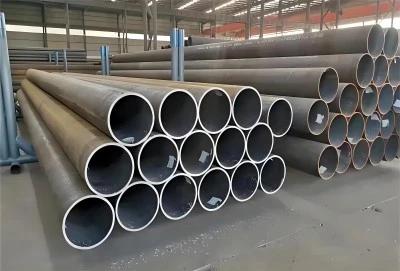
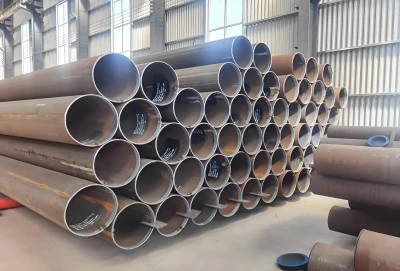
Understanding the Role of API 5L X65 Pipe in EPC Projects
For oil and gas EPC projects, the materials need to be able to handle high pressures, corrosive environments, and years of continuous use. X65 pipe is very important to these projects because it is both strong and meets API 5L standards, which are known all over the world by project owners and regulatory bodies.
Why EPC Contractors Prefer X65 Grade?
With a minimum yield strength of 65,000 psi, X65 grade is good for moving crude oil, natural gas, and processed products over long distances. When compared to smaller grades like X42 or Grade B, X65 lets walls be thinner without lowering safety. This means lower costs for materials, lighter loads for transport, and easier handling during installation. When you're in charge of several jobs at once, these things help you make more money total while still meeting client requirements.
Addressing Common EPC Project Challenges
EPC contractors often have to deal with short deadlines and supply chains that are hard to predict. When you buy X65 pipe from a reputable manufacturer, you can get it in as little as seven days, which helps you meet important project deadlines. Because the pipe can be welded using ERW, LSAW, DSAW, and SSAW, manufacturers have more options when making it. They can choose the best method based on the diameter, wall thickness, and needs of the application. This ability to change cuts down on delays in buying and helps projects run more smoothly.
Compliance and Certification Requirements
Owners of projects want full accountability and verification by a third party. Material Test Certificates (MTC) in accordance with EN 10204 3.1 or 3.2, hydrostatic test reports, and records of non-destructive testing are all included with Api 5l x65 pipe as standard equipment. You need these papers to pass client checks and government reviews. When pipes are certified to PSL2 standards, they go through stricter controls on their chemical composition and mechanical testing. This makes sure they are of higher quality and lowers the chance that they will fail in the field, which could throw off project schedules and costs.
Technical Specifications and Mechanical Properties of API 5L X65 Pipe
Knowing the technical details of X65 pipe helps procurement teams make smart choices and make sure that the materials they choose meet the needs of the project.
Chemical Composition and Heat Treatment
X65 pipe is made from carbon-manganese steel that has had elements like silicon, phosphorus, and sulfur added to it in a controlled way. The exact chemical makeup makes sure that it can be welded and is tough. Normalizing and tempering are two types of heat treatment that improve the grain so that it has the right mechanical properties. These treatments make the pipe stronger so it doesn't break easily in cold places. They also make it work better under the cyclic loading conditions that are common in pipeline operations.
Mechanical Properties and Pressure Ratings
For high-pressure uses, the mechanical qualities of X65 pipe are very important. The grade has a minimum yield strength of 65,000 psi and a tensile strength of 77,000 to 110,000 psi. Most of the time, elongation values are at least 20%, which is enough flexibility to handle installation stresses and ground movement. Because of these features, the pipe can withstand operating pressures that would be too high for lower-quality materials. This means that the wall thickness doesn't have to be increased as often, which saves money.
Dimensional Standards and Tolerances
Outside sizes range from 1/2 inch to 80 inches, and wall thicknesses range from SCH10 to SCH160 for Api 5l x65 pipe. Standard lengths are between 6 and 18 meters, but special lengths can be made to cut down on field welding and speed up installation. To make sure that the parts fit together correctly when they are welded and that they can be used with standard fittings and flanges, tight controls are put on the dimensions. Depending on how they are joined in the project drawings, ends can be supplied either straight or with a bevel.
Corrosion Resistance and Durability
Even though carbon steel naturally rusts, protective coats like 3LPE, FBE, or hot-dip galvanizing can be applied to X65 pipe to make it last longer in harsh settings. When the pipe is marked as X65QS or meets NACE MR0175 standards, it doesn't crack from sulfide stress in sour service situations involving hydrogen sulfide. This feature is very important for projects that will be done in places where the fluids being moved have corrosive parts that would break down normal materials over time.
Comparative Analysis: API 5L X65 vs Other Pipe Grades for EPC Projects
To choose the best pipe grade, you need to look at performance, cost, and how well it fits the purpose. This is how X65 stacks up against other popular options.
X65 vs X52: Strength and Cost Trade-offs
X52 pipe has a minimum yield strength of 52,000 psi, and is cheaper per ton than X65 pipe, but the wall has to be thicker to get the same pressure ratings. This greater wall thickness results in a heavier construction, higher shipping costs and a more difficult placement. X65 pipe can lower steel tonnage by up to 20% in several instances compared to X52. This reduces the costs of materials and delivery. There’s a slight premium per unit, but X65 is a superior option for long-haul transmission lines where every metric ton of weight counts.
X65 vs X70: Performance and Budget Considerations
X70 pipe is stronger with a 70,000 psi yield, so walls can be even thinner and more weight conserved. One reason X70 is more expensive is that it may require more rigorous welding and quality control processes. The slight benefits are usually out-weighted by the price difference between X65 and X70. In actual life X65 is a good compromise as it is strong enough for most oil and gas pipeline projects and not too complicated or expensive like the ultra-high-strength variants.
Lifecycle Cost Analysis
When you consider the overall cost of ownership, X65 pipe has benefits that are more than just the initial purchase price. It is more durable and needs less maintenance and lasts longer, thus reducing the total cost of ownership. There are multiple companies making X65 thus the supply chain is solid and pricing are good. X65 pipe projects have a proven track record for decades, minimizing the danger of expensive replacement mid-way through their useful lives or unscheduled downtime that slows operations and cuts into earnings.
Procurement Strategies: How to Source Certified X65 Pipes for EPC Projects?
Getting high-quality X65 pipe on time involves planning how to find suppliers and evaluating them.
Supplier Credibility and Certification Verification
First, ensure any potential suppliers have up-to-date API 5L certificates and can provide inspection reports from respected agencies like as SGS or Bureau Veritas. Confirm that the certification’s period of validity covers the entire duration of your project. Longma Group was created in 2003. We have been manufacturing things for more than 20 years. They export API 5L certified X65 pipe to more than 90 countries. Also, the chance of acquiring supplies that do not meet requirements, which can cause project delays and cost you money, is lessened when you buy from manufacturers that have a track record of success.
Lead Times and Delivery Logistics
Standard X65 pipe can be delivered in as little as seven days, however if you have particular demands lead time could be up to several weeks. Schedule your purchases and installations so you don't experience equipment and staff downtime. When you export items, you’ll want to pay special attention to the paperwork — business invoices, packing lists, certificates of origin, etc. Professional suppliers deal with export regulations and logistics, which simplifies the purchase process and ensures timely delivery to far-flung project sites.
Quality Assurance Documentation
In EPC projects you need documentation that covers everything. Material Test Certificates should be supplied for all pipes. Reports from chemical tests, mechanical tests and checks of the size of the pipes should be included. Ultrasonic, radiographic, and hydrostatic test findings that do not damage the thing demonstrate its quality inside and out. Longma Group supplies complete documentation packages including Inspection and Test Plans (ITP) and Manufacturing Procedure Specifications (MPS). The packages facilitate the checks for clients and the permissions for regulators with no delays in the paperwork procedure.
Building Long-Term Supplier Relationships
Successful EPC contractors don’t look at each transaction as a one-off, but rather create relationships with suppliers they can rely on. Suppliers who understand what your project requires can estimate what you will need, facilitate repeat orders, and provide you priority scheduling during periods of high demand. Long term relationships increase buying efficiency and stable prices over a series of projects leading to greater overall competitiveness. This is followed by initial verification by means of plant tours and pilot orders.
Conclusion
API 5L x65 pipe meets the needs of EPC projects because it is strong, has international approval, and can be made in a variety of ways. Its 65 ksi yield strength lets designers make designs that are safe and reliable in high-pressure situations while also keeping costs low. Chemical analysis, mechanical testing, and non-destructive checking are some of the quality control measures that are used to make sure that the product meets both customer requirements and government standards. Choosing certified providers with proven delivery skills and full paperwork support is key to successful procurement. This lowers project risks and helps finish on time and within budget.
FAQ
What distinguishes X65 from X52 pipe in EPC applications?
Because X65 pipe has a 25% higher yield strength than X52 pipe, the walls can be smaller and the steel mass can be lowered. This strength edge lowers the cost of materials, makes shipping easier, and speeds up the installation process. X65 can handle higher pressures without making the walls thicker, which makes it a better choice for long-distance communication lines.
How does heat treatment affect X65 pipe mechanical properties?
Normalizing and tempering are examples of heat treatment processes that improve the microstructure of steel. This makes the steel stronger and more flexible. These processes make sure that the pipe fits certain basic mechanical requirements and also make it less likely to break easily in cold places. The right heat treatment also improves the properties of the weld zone, which keeps the pipeline's integrity under stress from use.
How do I identify certified suppliers with reliable lead times?
Make sure that providers have current API 5L certifications and can give you recent inspection records from a third party. Look at how much they can produce and how they've done in the past with similar jobs. Ask clients in your area for references. Established manufacturers with more than 20 years of experience can usually deliver standard specifications within seven days and keep up global distribution networks that make it possible to deliver on time to remote project sites.
Partner with a Certified API 5L X65 Pipe Manufacturer
Longma Group has been making high-quality X65 pipe for challenging EPC projects around the world for more than twenty years. We are a certified API 5L manufacturer and use the ERW, LSAW, DSAW, and SSAW processes to make pipes with outside diameters ranging from 1/2 inch to 80 inches. We get our raw materials from trustworthy mills like Shagang and Bao Steel, and we keep a close eye on quality by doing full chemical analyzes, mechanical tests, and non-destructive inspections. Standard specs ship in seven days, and our team offers full documentation, such as MTC, ITP, and inspection records from a third party. Our api 5l x65 pipe supplier offers certified products and quick service, whether you need pipes for long-distance gas transmission, offshore installations, or sour service environments. Email our team at info@longma-group.com to talk about your project needs and get cheap quotes that are made just for you.








