
When specifying line pipe for oil and gas transmission projects, understanding wall thickness calculation is essential. API 5L X52 pipe wall thickness depends on several engineering variables including operating pressure, pipe diameter, material yield strength, and corrosion allowance. The basic formula used is derived from Barlow's equation: t = (P × D) / (2 × S × E × F) + C, where t represents wall thickness, P is design pressure, D is outer diameter, S is allowable stress (derived from the minimum yield strength of 52,000 psi for X52 grade), E is weld joint efficiency, F is design factor, and C is corrosion allowance. This calculation ensures pipeline integrity while meeting API 5L PSL1 and PSL2 standards for safe hydrocarbon transportation.
|
|
|
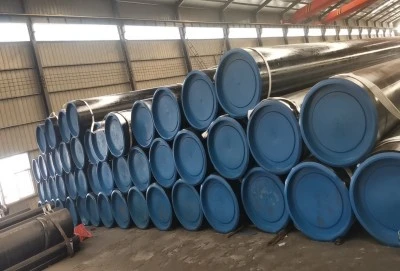
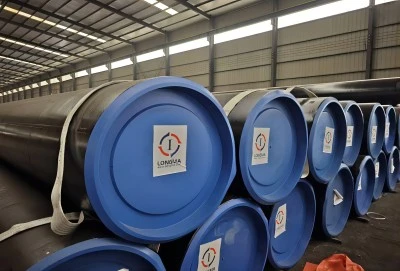
Understanding API 5L X52 Pipe and Its Specifications
A mid-range high-strength low-alloy steel grade called API 5L X52 line pipe is designed for oil and natural gas pipeline systems. The name "X52" means that it has a minimum yield strength of 52,000 psi, which is about 360 MPa. This puts it in the middle of lower-grade choices like X42 and higher-grade options like X60 or X65. This balance makes X52 pipe very appealing to EPC contractors who are in charge of projects that need to be kept within budget without sacrificing mechanical performance.
Material Grade Characteristics
To get the right level of strength and weldability, the chemicals that make up X52 grade steel are carefully managed. The carbon content is usually between 0.24% and 0.28%, and manganese levels can reach 1.35% to make the metal tougher. In premium production, sulfur content is tightly limited to a maximum of 0.007% to keep out impurities that could weaken impact resistance. To keep the material from breaking when it's used in low temperatures, the phosphorus level stays below 0.025%. These controls over the steel's composition make sure it meets both PSL1 and PSL2 product specifications. PSL2 has stricter chemistry tolerances and better testing for mechanical properties.
Core Dimensional Concepts
When defining line pipe, people who work in procurement need to know three important dimensional factors. The Nominal Pipe Size (NPS) is a standard measurement that might not match up exactly with real measures. In standard production, the outer diameter (OD) ranges from 1/2 inch to 80 inches (21.3mm to 2032mm), and tight tolerances are kept throughout the whole process. The pressure-bearing capacity is directly related to the wall thickness, which is given by schedule numbers (SCH10 through SCH160) or exact millimeter measures from 6.35mm to 59.54mm. Together, these measurements show how strong the pipe is and whether it can be used in certain situations.
The Critical Role of Wall Thickness
The thickness of a wall is used for more than just keeping pressure inside. The right amount of thickness gives the hoop the stress resistance it needs to withstand internal pressure without deforming or breaking. Keeping enough wall mass is important for keeping structural stability during installation, especially when pipes are being bent and moved in the field. Corrosion allowance put into the thickness standard takes into account the loss of material over the life of the pipeline, which for transmission lines is usually 20 to 30 years. Hydrogen sulfide-containing sour service environments need extra thickness margins to account for the possibility of hydrogen-induced cracking. Because these things affect each other, figuring out the thickness of API 5L X52 pipe is very important for both pipeline engineers and procurement directors.
How API 5L X52 Pipe Wall Thickness Is Calculated?
Finding the correct wall width stops both over-engineering, which raises project costs, and under-specification, which lowers safety. Regulatory systems, such as ASME B31.4 for liquid pipes and ASME B31.8 for gas transfer, require specific ways of calculating that take into account how things work in the real world and the risks of failure modes.
Factors Impacting Required Wall Thickness
The minimum wall thickness that is allowed for a given purpose is affected by a number of factors that affect each other. The design pressure is the highest pressure that is expected to be used, plus a safety margin that is usually 10% to 25% higher than normal. The operating temperature affects the strength of a material. High temperatures may lower the allowable stress values. Corrosion allowance varies from 1.5 mm for mild conditions to 6 mm for highly corrosive sour gas service and depends on the type of fluid and the environment it is exposed to. API 5L standards allow thickness variations of ±12.5% for seamless pipe and ±0.5mm for welded pipe. This means that designers have to figure out what the minimum acceptable thickness is after negative tolerance is taken into account. The joint efficiency factors are different for each welding method. Under API 5L, ERW and HFW pipes are usually given 1.0 efficiency. When properly qualified, LSAW and DSAW methods can also reach full efficiency.
The Core Calculation Formula
To do the basic math, use the Barlow formula: t = (P × D) / (2 × S × E × F) + C. By breaking each part down, the calculation process becomes clearer. The units used to talk about design pressure are megapascals (MPa) or pounds per square inch (psi). The real pipe's outer diameter (OD) is used to get the outer diameter (D). For X52 grade, the allowable stress (S) is equal to the minimum yield strength (52,000 psi) times a temperature derating factor, if one is needed. Weld joint effectiveness (E) measures how much the strength might drop at longitudinal seams. For current welding methods that meet API standards, E is usually 1. Design factor (F) is a safety factor required by pipeline rules. It is usually 0.72 for gas transmission in Class 1 areas and 0.60 for more crowded Class 3 areas. The corrosion tolerance (C) adds thickness to account for material loss, which is based on studies of corrosion rates and the service life that is expected.
Practical Case Study
Take a look at a natural gas transmission project that needs 24-inch OD line pipe to work at 1,200 psi design pressure in a Class 2 area. We do the math using X52 grade material that has an SMYS of 52,000 psi: Design factor F = 0.60 (per ASME B31.8 for Class 2), joint efficiency E = 1.0 (LSAW pipe with radiographic inspection), allowable stress S = 52,000 psi, and corrosion allowance C = 3mm (changed to 0.118 inches to make the math consistent). In order to find t, we need to divide (1,200 × 24) by (2 × 52,000 × 1.0 × 0.60) and add 0.118 to get 0.462 inches and 0.580 inches. To be on the safe side, this specification calls for about SCH 40 pipe with a nominal thickness of 0.688 inches, which is a good amount of extra space above the calculated minimum. This organized method makes sure that rules are followed while also maximizing the use of materials and the project's costs.
Comparing API 5L X52 Pipe Wall Thickness with Other Grades
Choosing the right material grade has a direct effect on the needed wall thickness and the total cost of the job. When procurement workers understand these connections, they can make smart choices that balance performance needs with price limits.
Thickness Requirements Across Grades
Different grades of steel need different wall thicknesses even when the diameter and pressure are the same. This is because the steel grades have different yield strengths. For the same pressure number, X42 grade, which has a minimum yield strength of 42,000 psi, needs walls that are about 24% thicker than API 5L X52 pipe grade. On the other hand, X56 grade, which has a yield strength of 56,000 psi, can handle the same amount of pressure with walls that are about 7% thinner than X52 grade. When working on big, long-diameter projects, these differences become important because the amount of material used directly impacts the cost of purchasing, the process of shipping, and the labor needed for installation. When deciding between grades, you have to weigh the extra cost of higher-grade steel against the money you'll save by having thinner walls and lighter pipes. The X52 grade is in the middle, giving a noticeable increase in strength over the X42 grade without the welding difficulties and heat input sensitivity that come with the X65 and higher grades.
Cost Implications of Thickness Variations
In most transmission projects, material costs make up 40% to 55% of the total cost of installing the pipeline. Choosing the right steel grades to reduce wall thickness saves money all the way through the lifecycle of a project. Shipping costs per kilometer go down when the pipe is lighter. This is especially true for international shipments where freight costs are based on weight. Less heavy pipes make installation more efficient by letting smaller tools and faster field handling happen. Welding materials and work hours go down as the wall thickness goes down because the amount of joint preparation and filling metal needed goes up as the material volume goes up. When project managers look at these trade-offs, they need to take into account the different prices of steel. For example, X52 usually costs 8% to 12% more than X42, but by optimizing the width, it could save the company money. Cost modeling that looks at the whole supply chain in great detail shows which standard choice is best for the bottom line.
Lightweight Versus Standard Options
New developments in pipe manufacturing have led to the creation of lightweight X52 standards. These specifications lower wall thickness while keeping pressure ratings the same. This is made possible by better material properties and stricter manufacturing controls. By staying closer to the minimum allowable thickness limits and getting rid of the extra material that is usually added for safety, these products are 10% to 15% lighter than standard schedules. Lightweight options are especially useful for projects where installation conditions limit the capacity of the equipment or where small reductions in thickness add up to big savings over large pipeline networks. To meet the requirements for lightweight specifications, the operating conditions must be carefully looked over to make sure there is enough room for corrosion and for possible pressure surges or hydraulic transients to be taken into account. When engineering teams work with certified manufacturers like Longma Group, they can customize thickness optimization to fit the needs of each project.
Conclusion
Figuring out the wall thickness of API 5L X52 pipe is a very important engineering decision that has to do with balancing safety, cost, and performance in a wide range of operating conditions. Using pressure design formulas, rust limits, and code-required safety factors in a planned way makes sure that the pipeline stays intact for as long as it is supposed to. When you compare the thickness standards for different grades of steel, you can find ways to make things better. Tough quality control measures, like NDT and certification compliance, make sure that the goods you make meet the design specs. Partnering with certified manufacturers who offer technical know-how, full testing capabilities, and quick project support is key to successful procurement.
FAQ
What minimum wall thickness is required for 36-inch X52 pipe at 1,400 psi?
To find the minimum thickness, you need to use Barlow's formula along with the right corrosion allowance and design factors. For normal gas transfer in Class 2 areas with a design factor of 0.60, a joint efficiency of 1.0, and a 3mm corrosion margin, the minimum width needed would be about 0.725 inches (18.4mm). Code compliance and a good safety margin are guarantyd by choosing a standard schedule thickness that is the same as or greater than this calculated minimum.
How does PSL1 differ from PSL2 regarding thickness tolerance?
Under API 5L, both PSL1 and PSL2 specifications allow thickness tolerances of ±12.5% for seamless pipe and different tolerances for welded pipe based on diameter and thickness. The main differences between PSL levels are not the size tolerances but the chemical composition limits, mechanical property requirements, and testing intensity. Even though the thickness tolerance bands are the same, PSL2 has tighter limits that make it stronger and more uniform, which makes it better for important uses.
Can lightweight X52 pipe substitute for standard schedules?
Standard schedules can be replaced by lightweight specs as long as engineering research shows that the materials are strong enough, can handle enough pressure, and won't rust. Suitability is determined by a careful examination of the working conditions, changes in pressure, and external stress conditions. Working with skilled manufacturers makes sure that lightweight specifications meet all building code requirements and save both weight and money.
Partner with a Trusted API 5L X52 Pipe Manufacturer
Choosing the right line pipe supplier affects the success of a project by affecting the quality of the products, the dependability of delivery, and the availability of expert help during execution. Longma Group has been making API 5L X52 pipe for more than 20 years. They can make it in ERW, HFW, LSAW, and DSAW forms, with widths from 1/2 inch to 80 inches and wall thicknesses from SCH10 to SCH160. Our extensive API 5L, ISO 9001, and other specialized certifications show that our quality system is mature. We also get our raw materials from top domestic mills like Shagang, TISCO, and Bao Steel to make sure that the metal's properties stay the same. Before a pipe is shipped, it is checked for quality using advanced NDT equipment, a full dimensional inspection, and rigorous hydrostatic testing. We can meet tight project plans in more than 90 countries with a capacity of more than 1,000,000 tons per year and shipping in seven days for standard items. Get in touch with our expert team at info@longma-group.com to talk about your X52 pipe needs and find out how our services as an API 5L X52 pipe provider can help you get the best deals by offering reasonable prices, custom manufacturing services, and full paperwork support.








