
Verifying weld quality in API 5L X70 pipe involves a comprehensive combination of non-destructive and destructive testing methods. Every pipe undergoes 100% hydrostatic testing to ensure leak-free performance under pressure. Non-destructive techniques like ultrasonic testing (UT) and radiographic testing (RT) inspect internal weld integrity without damaging the pipe. Destructive tests, including guided-bend tests and Charpy V-notch (CVN) impact tests, validate mechanical properties and toughness. Together, these methods confirm that X70 grade pipes meet stringent API 5L PSL2 standards, ensuring reliability for high-pressure oil and gas transmission projects worldwide.
|
|
|
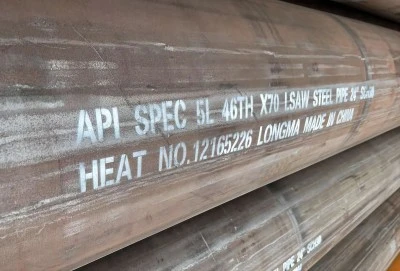
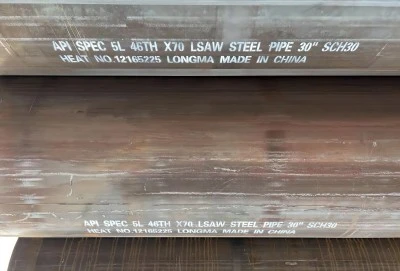
Understanding the Importance of Weld Quality in API 5L X70 Pipes
The quality of the weld is what makes a pipeline safe and last a long time. When moving natural gas or liquid oil at pressures higher than 10 MPa, even small weld flaws can turn into catastrophic fails that cause environmental damage, production stops, and fines from the government. Repair costs aren't the only thing that will be affected by this; project delays can also mess up supply lines and hurt stakeholder trust.
Common Welding Defects and Their Consequences
Cracks are the biggest danger. They usually happen because of hydrogen embrittlement when the metal cools down or a buildup of leftover stress. Porosity, which happens when gas gets trapped during solidification, makes the weld cross-section weaker and causes stress risers. When the weld metal doesn't fully bond with the base material, this is called incomplete fusion. It leaves areas that are weak and can start corrosion. Slag inclusions from bad flux removal lower mechanical strength and can be used as starting points for cracks to spread.
Microalloying elements like niobium, vanadium, and titanium are found in high-strength low-alloy (HSLA) steels like X70. These elements make the steel stronger and also make it easier to harden. The heat-affected zone (HAZ) could get microstructures that are easily broken if cooling rates are not controlled and pre-heating methods are not followed correctly. Welding methods need to be carefully chosen to keep strength while also keeping flexibility. This is especially important for longitudinal submerged arc welded (LSAW) pipes, where the stability of the seam directly affects the burst pressure values.
Procurement professionals can better judge the quality systems of suppliers when they understand these failure mechanisms. Paying close attention to the carbon equivalent (CE) values and heat input parameters on mill test certificates shows if manufacturers follow best practices for reducing the chance of weld defects.
Key Methods for Verifying API 5L X70 Weld Quality
A strong verification program uses more than one checking method to find flaws that a single method might miss. This multiple-barrier method protects against the statistical fact that no single test can find all kinds of defects 100% of the time.
Non-Destructive Testing (NDT) Techniques
A visual inspection sets the baseline by finding surface flaws, too much reinforcement, undercuts, or spatter. Inspectors use calipers and profile gages to measure the shape of the weld bead and make sure it meets the size requirements listed in the buy order. Standards for surface preparation, such as SSPC-SP6, make sure that contaminants don't hide flaws that will show up in later tests.
Ultrasonic testing has become the most common way to check the volume of LSAW pipes. Angle-beam sensors are used by technicians to send high-frequency sound waves through the metal that is being welded. On display screens, amplitude spikes are caused by reflections from internal discontinuities. Trained operators sort indications by size, location, and severity. Modern phased array systems are better at detecting things by using multiple beam angles at the same time. This cuts down on inspection time while increasing reliability. Coverage usually goes all the way to the end of the weld on pipes that are going to be used in sour water or deep water.
X-rays or gamma energy are used in radiographic testing to make film pictures of the structure of the weld inside. On the developed film, dark spots show areas of porosity, and linear marks show flaws that look like cracks. Digital radiography lets you look at images right away and store them electronically, which speeds up the documentation process for projects that need to be able to track things down to the source. RT is better for sampling plans than full-length inspections on large-diameter pipes, though, because of rules about radiation safety and the cost of the tools.
Magnetic particle testing is great at finding small cracks in surfaces that you can't see with the naked eye. When you put a magnetic field on the weld area of api 5l x70 pipe, ferro-magnetic particles gather at the places where the metal breaks. This makes signs that can be seen under ultraviolet light. This method works especially well for finding hydrogen-induced cracking (HIC) in pipes that are meant to be used for H₂S service according to API 5L Annex H standards.
Destructive Testing for Mechanical Validation
While NDT keeps the structure of the pipe, damaging tests give solid proof of how well it works mechanically. Guided-bend tests flex weld samples to certain radii, which shows any problems with the fusion or brittleness. Acceptance standards say that cracks bigger than 3.2 mm in any direction are not allowed. They pay special attention to the stability of the fusion line between the weld and the base metal.
Tensile testing finds out the final strength, break point, and elongation of a material. The minimum yield strength for the X70 grade is 485 MPa, and specimens that are machined from real production runs must meet or beat this. Tensile properties often have to stay within certain ranges in order to meet procurement requirements. Too much strength can mean that the material isn't flexible enough for field bending operations.
Charpy V-notch impact testing measures how tough something is at service temperatures. Three samples must meet certain levels of energy absorption when tested at the design minimum temperature, which is usually -20°C or lower for Arctic uses. Drop-weight tear tests (DWTT) go one step further by checking how well the pipe can stop ductile cracks from spreading. Getting 85% shear area on DWTT samples gives you peace of mind that a puncture won't cause the whole pipeline to unzip like a zipper failure.
Optical emission spectrometry-based chemical study proves that the makeup is correct. Carbon equivalent calculations check if the HAZ can be welded, and residual element screening finds any tramp elements that could weaken it. Third-party verification by labs like SGS or Bureau Veritas adds independent confirmation and addresses concerns raised by buyers about producer bias in self-reported data.
Standards and Specifications Guiding API 5L X70 Weld Quality
Finding their way around the maze of technical standards helps procurement teams set clear quality standards and regularly check that suppliers are meeting them.
API Specification 5L Requirements
API Spec 5L lists two levels of product specifications, which are called PSL1 and PSL2. Almost all orders for X70 pipe select PSL2 because it has tighter chemical composition limits and has to be tougher. The specification requires CVN impact testing, limits yield-to-tensile ratios to avoid too much strength that makes the material less flexible, and requires full traceability by stamping heat numbers on each length of pipe.
PSL2 also sets stricter limits for carbon equivalents, which are estimated using methods that take into account how alloying elements affect the ability to harden. The highest CE values, around 0.45%, make sure that the metal can be welded using standard methods. Limits on the amount of sulfur and phosphorus in the material make it less likely to crack when heated and make it more flexible throughout its thickness, which lowers the risk of lamellar tearing during production.
ISO 3183 and International Alignment
The foreign standard that is the same as API 5L is ISO 3183, which lists X70 as L485 (referring to the 485 MPa minimum yield) for api 5l x70 pipe. Harmonization between these standards makes it easier to buy things all over the world, but there are small differences in how often tests are done and what the acceptance criteria are. Specifying both standards is helpful for projects that go through more than one jurisdiction because it makes sure that all regulatory authorities will accept them.
ASME Section IX Welding Qualifications
Procedure qualification records (PQRs) and welder performance qualifications (WPQs) are used by manufacturers to make sure that welding procedures are safe and effective. These papers show that the mechanical qualities shown in qualification tests are also present in production welds. Audits of the buying process should make sure that mill welders have up-to-date certifications for the processes, positions, and thickness ranges that are important to the order.
Quality rating is easier when you know about the special features of X70 grade materials. Instead of having a lot of carbon, the microalloyed steel gets its strength from controlled rolling and fast cooling. This thermomechanical processing makes fine grain structures that are very tough, but welding breaks up these microstructures in the hot zone. The right way to weld uses controlled interpass temperatures and limited heat input to keep the base metal's engineered properties and minimize grain coarsening.
Conclusion
Checking the quality of welds in api 5l x70 pipe needs multi-level inspection methods that include eye inspection, advanced NDT, damaging testing, and careful record keeping. By understanding the technical reasons behind each method, procurement professionals can objectively judge the skills of suppliers and set up the right quality programs. The money spent on thorough verification pays off by making the pipeline more reliable, lowering the risk of failure, and boosting regulatory compliance confidence.
To do a good job of procurement, you need to balance expert needs with realistic ones like source capacity, supply schedules, and cost goals. Project teams can get materials that meet both the base requirements for specifications and the high standards of operational success by working with manufacturers that have proven quality systems, clear processes, and quick response times for technical support.
FAQ
Which test provides the most reliable weld quality verification for X70 pipes?
There is no one test that can give you 100% certainty; you need to use a mix of tests that work well together. For checking internal flaws along the whole length of a weld, ultrasonic testing gives the most complete results, making it the main quality check. But UT should be used with other surface tests, like magnetic particle testing, to find cracks and destructive tests (CVN, DWTT), to make sure the mechanical properties are correct. Hydrostatic testing proves that the leak is solid when pressure is applied. This multi-level approach covers various types of failure, giving statistical confidence that one method can't provide on its own.
How does weld integrity affect pipeline service life?
The quality of the weld directly affects how well it resists fatigue and how quickly corrosion starts. When pipelines are used, the repetitive pressure loads that happen cause flaws to form stress concentrations that speed up crack growth. If there is incomplete fusion or pores, it lets water in and starts internal erosion that spreads through the wall thickness. Studies show that pipelines with welds that are thoroughly checked last longer than 50 years, while pipelines with poor quality have failure rates 3–5 times higher in the first 10 years. Putting money into upfront verification protects safety records and lifecycle economics.
Partner with Longma Group for Certified API 5L X70 Pipe
Longma Group is a reliable Api 5l x70 pipe manufacturer that has been supplying EPC contractors around the world for more than 20 years. Our ISO-certified factories make PSL2-grade pipes with wall thicknesses ranging from SCH10 to SCH160 and diameters from 1/2" to 80". These pipes come with full API 5L certification and detailed quality documentation. We offer seven-day fast delivery for projects that need to be done quickly, and we never skimp on review standards.
Our quality assurance program includes full-body ultrasound testing, 100% hydrostatic testing, and checks by a third party as requested by the client. Only getting raw materials from top local mills like Bao Steel and HBIS guaranties stable manufacturing that can handle tough conditions like sour service and the Arctic. In addition to supplying pipes, we also offer fabrication services, anti-corrosion coatings, and full documentation packages that make sure projects run smoothly.
Email our technical team at info@longma-group.com to talk about the details of your project and find out how our skills match up with your quality standards. You can look at our certifications and production skills at longma-group.com, where we serve the global energy infrastructure industry.








