
The great strength and outstanding corrosion resistance of fusion bonded epoxy coated steel pipe displays itself in its protective performance, which may endure hard situations for 50 years or more. Using FBE technology, a chemically bonded barrier is formed, offering exceptional mechanical protection and withstanding temperatures up to 200°C. Due to their superior performance compared to conventional coating technologies, these coatings have become the material of choice for vital infrastructure projects throughout the globe. They remain intact even when subjected to harsh soil conditions, chemicals, and temperature changes.
|
|
|
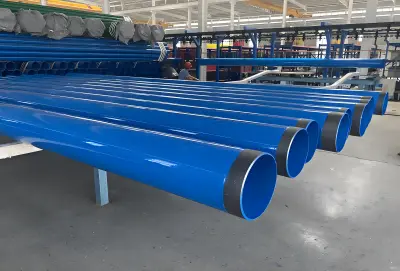
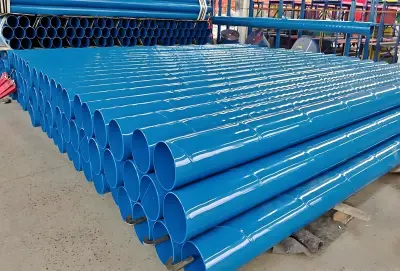
Understanding Fusion-Bonded Epoxy (FBE) Coated Steel Pipes
The Science Behind FBE Technology
We now approach corrosion prevention in industrial applications differently thanks to Fusion-Bonded Epoxy, a groundbreaking innovation in pipeline protection technology. By combining warmed steel surfaces with thermosetting polymer powder, an irreversible chemical bond is formed, providing a barrier against environmental hazards.
Fusion bonded epoxy coated steel pipe is blast cleaned to obtain the desired surface profile as part of the first surface preparation step of the application process. After that, the pipes are heated to about 200-250°C, and then the epoxy powder is sprayed onto the surface using an electrostatic gun. The powder melts, flows, and cures at high temperatures to form a continuous coating that chemically links with the steel substrate. This coating is devoid of pinholes.
Critical Performance Standards and Specifications
Strict international requirements must be met by modern FBE coatings to guarantee consistent performance in various operating situations. To obtain the best possible cross-linking density, it is essential to precisely manage the temperature during application and adhere to coating thickness ranges of 300–600 microns.
Coating requirements such as DIN 30670, DIN 30678, CSAZ245.20, EN10339, ISO21809-1, AWWAC210, and C213 are followed throughout the production process at Longma Group. Important criteria including adhesive strength, impact resistance, and holiday detection needs are regulated by these regulations. Throughout our diameter range of 60.3-1422mm and wall thickness requirements of 6.02-50.8mm, the structural integrity and coating compatibility of the pipes are guaranteed by adhering to the following standards: API 5L, ASTM A53, EN10210, and AS/NZS 1163.
Why Fusion-Bonded Epoxy Coatings Outperform Traditional Methods
Limitations of Conventional Coating SystemsWhen applied to high-stress industrial settings, traditional coating technologies have never been able to reliably provide long-term protection and consistent performance. Coatings made of tar are vulnerable to breaking when subjected to heat cycling, and bitumen systems often fail to adhere while it's raining. Traditional paint techniques aren't very chemical resistant and usually need a lot of upkeep.
Managing upfront costs with ongoing maintenance expenditures is a major difficulty for project managers and procurement experts when using these traditional methods. Operations are disrupted and lifecycle costs are significantly increased due to the frequent requirement for repairs and replacements.
Superior Performance Characteristics of FBE
Critical infrastructure projects may greatly benefit from FBE technology, which overcomes these restrictions and offers numerous important performance advantages:
•Compared to mechanical adhesion systems, the chemical bonding process produces adhesion strengths greater than 20 MPa, resulting in improved adhesive properties. Even when subjected to high levels of mechanical stress and temperature cycling, the coating will remain intact.
• FBE coatings are ideal for a wide variety of geographical applications due to their temperature resistance, which allows them to remain structurally intact in situations ranging from the Arctic to the desert.
• Compatible with Chemicals: The cross-linked polymer structure offers superior resistance to organic solvents, acids, and alkalis that are often found in industrial settings.
• Coatings are mechanically durable because they are very flexible and impact resistant, which means they do not get damaged during handling, installation, or operation and need much less maintenance.
As a result of these performance qualities, engineering contractors and project managers may expect their pipeline infrastructure to last longer and need less maintenance.
Comparative Analysis with Alternative Coating Systems
There are a number of clear benefits to using FBE instead of polyurethane or polyethylene. Despite their excellent flexibility, polyurethane coatings aren't very chemically resistant and usually need many application layers. While polyethylene systems are very resistant to chemicals, they aren't as strong as FBE and can't withstand high temperatures.
In applications involving subterranean pipelines, where working conditions are particularly difficult due to soil stress, moisture, and chemical exposure, the improved performance of FBE becomes more apparent. The total cost of ownership for project stakeholders is cheaper with FBE-coated pipes because, according to field tests, its protective integrity is maintained for a far longer period of time compared to alternatives.
Evaluating the Protective Performance of FBE Coated Pipes
Laboratory Testing and Performance ValidationExtensive information on the performance of FBE coatings under controlled settings is provided by rigorous laboratory testing techniques. Adhesion strength, chemical resistance, flexibility, and impact resistance are some of the important performance characteristics that are evaluated using standard test protocols. Coated samples are subjected to accelerated aging techniques that expose them to extreme temperatures, humidity, and chemical conditions in order to replicate decades of service life.
Results from impact resistance tests showed better performance than conventional coatings, and pull-off forces from adhesion tests usually surpass 20 MPa. The results of the flexibility tests show that FBE coatings are resilient enough to withstand thermal expansion and pipe movement without rupturing or peeling.
Real-World Performance Data
Coating durability over the long term may be better understood with the use of field performance data collected from large-scale infrastructure projects. Over 30 years of operation in the Middle East's severe desert environments have proven the FBE coating's durability. Even though coating technologies are challenged by salt exposure and temperature changes in maritime conditions, offshore platform installations in Australia have shown outstanding performance.
Coated pipes have maintained their protective integrity for lengthy service periods, as shown in the MOBIL OIL AUSTRALIA project, which is an example of FBE performance under severe situations. These practical uses confirm the accuracy of laboratory findings and provide assurance for important infrastructure project procurement choices.
Key Performance Metrics and Benchmarks
Corrosion protection efficacy, mechanical durability, and service life extension are critical performance indicators for FBE coated pipes. Evidence from the industry suggests that FBE coatings, when applied correctly, may increase the service life of pipelines by 200-300% when compared to systems without coatings. Even in harsh situations, corrosion rates kept under FBE protection are usually less than 0.01 mm/year.
Metrics for mechanical performance show that this coating technology outperforms the competition in terms of abrasion resistance and impact tolerance. When installing, these qualities are especially helpful since handling and backfilling might harm coatings that aren't up to grade. Coating integrity is guaranteed throughout the whole project lifespan by the robust nature of FBE.
Procurement Considerations for Fusion-Bonded Epoxy Coated Steel Pipes
Supplier Evaluation and Quality AssuranceIt is important to thoroughly assess the capabilities and quality management systems of suppliers when procuring fusion bonded epoxy coated steel pipes. Certifications for production, quality control methods, and results in comparable contexts are important evaluation factors. It is the responsibility of suppliers to have thorough documentation processes in place and show that they comply with applicable international standards.
The procedures of pipe production and coating application should both be included in quality assurance methods. All processes, from sourcing raw materials to final inspection techniques, must be double-checked. All suppliers are required to provide comprehensive documentation packages that include ITPs, MPSs, and MTCs (Material Test Certificates).
Logistics and Supply Chain Optimization
Supply chain management, project coordination, and delivery timetables are all aspects of logistics that should be part of any comprehensive strategic procurement strategy. You may save money and make sure you have enough on hand to keep a project running well by arranging for bulk purchases. Suppliers can meet the unique needs of each project by offering items with customization possibilities.
Maintaining positive connections with suppliers allows for quick access to technical help and the ability to resolve issues when they arise during project execution. By working together, we can reduce procurement risks and make sure coated pipe goods fit in with bigger infrastructure projects without a hitch.
Cost-Benefit Analysis and Value Engineering
Considerations of long-term value, such as operational dependability, service life, and maintenance needs, must be weighed against initial costs when making procurement selections. Despite a potentially greater upfront cost, the total cost of ownership is usually better for FBE coated pipes due to their longer service life and lower maintenance expenses.
Environmental concerns, operational needs, and accessibility for maintenance are some of the project-specific aspects that should be considered in value engineering evaluations. In order to optimize procurement choices for individual applications, several considerations impact the relative advantages of FBE coating.
Longma Group: Your Trusted Partner for Premium FBE Coated Steel Pipes
Company Heritage and Manufacturing ExcellenceWith a background in engineering spanning twenty years, Longma Group Limited has been a frontrunner among China's steel pipe producers since 2003. We have become a trusted collaborator on large-scale infrastructure projects throughout the globe, thanks to our 441.8 billion USD in registered capital and 230,000 square meters of industrial space.
We can handle the rigorous demands of large-scale engineering projects in a variety of sectors thanks to our yearly manufacturing capacity of over 1,000,000 tons. We use cutting-edge ERW and LSAW manufacturing processes to consistently produce thick-walled pipes with big diameters.
Comprehensive Product Range and Technical Capabilities
Outer diameters of our fusion bonded epoxy coated steel pipe solutions range from 60.3 mm to 1422 mm, and wall thicknesses from 6.02 mm to 50.8 mm are available. We are able to meet the varied needs of projects in the transportation of oil and gas, the delivery of water, and structural applications thanks to our wide variety of services.
Coating procedures conform to comprehensive standards such as DIN 30670, DIN30678, CSAZ245.20, EN10339, ISO21809-1, AWWAC210, and C213, and we strictly adhere to international pipe standards like API 5L, ASTM A53, EN10210, and AS/NZS 1163. Our coated pipe products are protected and structurally sound thanks to this dual compliance.
Global Market Presence and Customer Service
Our worldwide presence is enormous, spanning more than 90 countries. We excel in the markets of Southeast Asia, Australia, and the Middle East. We are able to assist large-scale projects like MOBIL OIL AUSTRALIA because to our global presence, which also allows us to provide our clients with regional service and technical assistance.
Our commitment to using only raw materials from trusted domestic steel mills like Shagang, Shangang, TISCO, BX Steel, Shougang, HBIS, and Bao Steel guarantees that our production process is built around constant quality. Welding, perforating, expanding, and specialty end treatments are all part of our extensive fabrication services. When it comes to anti-corrosion, we have you covered with hot-dip galvanizing, FBE, 2PP, 3LPE, and 3PE coating systems.
Quality Certifications and Documentation Support
Certifications such as API 5L, ISO9001: Quality Management Systems, ISO9001: 2016: Factory Production Control, 18001: Occupational Health and Safety Management Systems, and 14001: Environment Management Systems attest to our dedication to provide exceptional quality. Our quality management systems and production methods have been validated by these certifications.
With our full documentation packages, which include ITPs, MPSs, MTCs, and traceability documentation, engineering organizations have all the tools they need to accomplish their jobs well. Clients benefit from our meticulous documentation strategy since it helps them meet project compliance requirements and runs projects smoothly.
Conclusion
The protective performance of fusion bonded epoxy coated steel pipes represents a proven solution for demanding industrial applications requiring long-term corrosion protection. Through superior adhesion, chemical resistance, and mechanical durability, FBE technology delivers exceptional value for critical infrastructure projects. The comprehensive testing data and real-world performance records demonstrate clear advantages over traditional coating methods, making FBE the preferred choice for procurement professionals seeking reliable, cost-effective pipeline solutions for projects spanning decades of service life.
Partner with Longma Group for Superior FBE Coated Steel Pipe Solutions
Longma Group combines two decades of manufacturing expertise with cutting-edge FBE coating technology to deliver premium fusion bonded epoxy coated steel pipe solutions for your critical infrastructure projects. Our comprehensive product range, international certifications, and proven track record across 90+ countries make us the ideal fusion bonded epoxy coated steel pipe supplier for your demanding applications. Contact our technical team at info@longma-group.com to discuss your project requirements and discover how our customized solutions can enhance your pipeline performance and reduce lifecycle costs. Visit longma-group.com to explore our complete capabilities.
FAQ
How do FBE coated steel pipes compare cost-wise to galvanized alternatives?While FBE coated pipes typically require higher initial investment compared to galvanized alternatives, the superior corrosion protection and extended service life often result in lower total cost of ownership. FBE coatings can extend pipeline service life by 200-300%, significantly reducing replacement and maintenance costs over the project lifecycle. The cost differential varies based on project specifications, but most customers find the long-term value proposition compelling for critical infrastructure applications.
What are typical delivery timelines for bulk orders of FBE coated pipes?
Delivery timelines depend on order specifications, quantity, and current production schedules. Standard products from our inventory can typically ship within 2-3 weeks, while custom specifications may require 6-8 weeks for production and delivery. We maintain strategic inventory levels to support urgent project requirements and work closely with customers to coordinate delivery schedules that align with project timelines.
Can you provide custom sizing and specifications for unique project requirements?
We offer comprehensive customization capabilities to meet specific project requirements. Our manufacturing facilities can accommodate custom diameters, wall thicknesses, and coating specifications within our production range. We work closely with engineering teams to ensure products meet exact project specifications and performance requirements. Custom orders typically require detailed technical discussions to optimize product design for specific applications.