
To calculate ASTM A252 steel pipe weight, multiply 0.02466 by the wall thickness (t) and by the outside diameter minus the wall thickness (D − t), both in millimeters, to get the theoretical weight in kilograms per meter; then multiply by pipe length and pipe count and divide by 1,000 to get metric tons. For example, a 610 mm by 12.7 mm pipe weighs about 187.1 kg/m. The formula assumes a steel density of 7.85 g/cm³, so mill-weighed figures can differ slightly, and the steel grade does not change the result. This guide is for project managers, purchasing teams, and site engineers who need a figure they can defend in a bid, freight booking, or submittal, moving from the math to the checks that protect your budget and schedule.
|
|
|
Why Accurate ASTM A252 Steel Pipe Weight Matters
Four Weight Figures You Will See on a Project
People who buy four weight figures don't always agree, and when they do, it can cause fights. With the formula and the measurements given, it is possible to figure out what the weight should be. To get the real mill weight, packages or pipes are weighed at the plant. When you ship things, the supports, boxes, and covers that you use gain weight. Everything that was used on the project is added to its weight, even things that were added after the plan changed. Before I compare prices, I look at the number that each ad used. Prices that are based on ideal weight don't always match up with bills that are based on real weight. The budget and the freight plan can both be changed by this. When the basis is put down in the buy order, it's easier to understand.
How Weight Affects Cost and Schedule
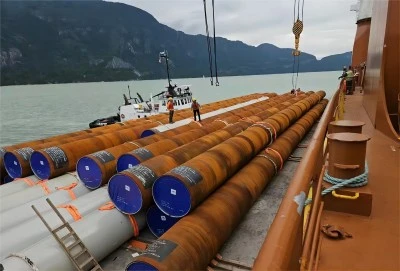
Weight changes almost every cost line in a pile order. The weight of the goods determines the price and the number of times they can be shipped by sea, handled at ports, or driven within the country. Also, cars must not weigh more than what the law allows on the roads. Big pieces need to be able to be moved by cranes and pile-driving rigs. You can't use the same lift plan for two different pipes. One is 18 meters long and has a large diameter, and the other is 6 meters long and has a small diameter. Tons are also used to plan stock. When you guess how much an order weighs, you can tell if it can be shipped right away or needs to be made. We have 50 to 100 tons on hand.
What Sets Weight and What Does Not
Steel's weight is based on four things: how heavy it is, how long it is, how wide it is, and how thick its walls are. 7.85 g/cm³ is the density of all types of ASTM A252 steel pipes. Grade 1, Grade 2, and Grade 3 are not different in size, but in how strong they are. Most math mistakes are caused by the numbers used, not by the math itself. A lot of the time, people use the inside diameter, enter the wall thickness in inches when the diameter is in millimeters, or add a coating layer to the diameter when it slips. Before you run the formula, each entry should match the drawing or bill of goods. You will not have to pay a lot of money for fixes in the future if you do a thirty-second check now.
ASTM A252 Steel Pipe Weight Formula and Worked Example
The Metric Formula in Kilograms per Meter
Add the length of the pipe to 0.02466 and then divide that number by (D - t). This will give you the weight of the ASTM A252 steel pipe. Both D and t are given in millimeters. D is the wall's outside width, and t is its thickness. Because steel is dense, you multiply the ring area of the pipe wall by 7.85 g/cm³ to get this number. You get the wall's average diameter when you use D − t to find the wall area. Add up how many pipes there are and how long they are in meters, then multiply by kg/m. Finally, divide the number by 1,000 to find out how many metric tons it is.
The Imperial Formula for U.S. Projects
It's helpful to know that weight (lb/ft) = 10.69 × t × (D − t), where D and t are both measured in inches. This is because people in the US often draw with inches and pounds. It weighs about 125.6 lb/ft for a 24-inch pipe with a 0.5-inch wall. Since 24 inches is 609.6 mm, that's pretty close to the 187.1 kg/m value for a 610 mm by 12.7 mm pipe. Also, pay attention to what "ton" means. It's the same as a short ton, which weighs 2,000 pounds. You can't just compare two prices that are the same (per ton).
Step-by-Step Example: 20 Pipes at 610 mm by 12.7 mm
The inside of each pipe should be 12.7 mm thick, 610 mm wide, and 12 m long. To begin, we find D - t, which is 610 - 12.7 = 597.3. The second step is to divide 0.02466 by 12.7, which gives us 187.1 kg/m. Step 3: Take 187.1 and divide it by 12 meters to get about 2,245 kg per pipe. Step 4: Divide 2,245 by 20 to get 44,900 kg, which is 44.9 metric tons. You can use this number to fill out customs forms, compare prices per ton, and find out how much freight will cost. You should only use that number as a guide, since the papers may actually weigh something different.
Dimensions, Grades, and Load Capacity of ASTM A252 Pipe Piles
Dimensions and Wall Thickness
Do the math first, then get the outside diameter, nominal wall thickness, length, number, type of end, and coating. We offer ASTM A252 steel pipe piles in 18 different lengths. They are between 219.1 mm and 1016 mm in outside diameter. They are between 8.18 mm and 25 mm thick. For 219.1 × 8.18 mm, the weight is about 42.5 kg/m, and for 1016 × 25 mm, it's about 611 kg/m. These points mark the range's edges. Make sure you remember that the outside diameter can be up to 1% of nominal and the wall can be at least 87.5 percent of nominal as you read the specification. The dimensional inspection, the weighbridge records, and the mill certificates can all be used to be sure of the true weight.
Grades 1, 2, and 3 and Their Link to Weight
ASTM A252 steel pipe has three grades based on how strong they are. The yield strength of Grade 1 must be at least 30 ksi (205 MPa), and the tensile strength must be at least 50 ksi (345 MPa). It goes up to 60 ksi (415 MPa) in Grade 2 and down to 35 ksi (240 MPa) in Grade 2. A lot of heavy projects need Grade 3 because it can handle up to 66 ksi (455 MPa) of force. The rule says that the most phosphorus that can be found is 0.050 percent. Other parts can be used if the tensile needs are met. Each grade has the same weight if it is the same size because density doesn't change. A Grade 3 wall might be able to be smaller in some plans, but the person in charge has to agree to that.
Why Weight Does Not Equal Load Capacity
The weight of steel tells you how heavy it is. This number tells you how much weight the pile can hold. It depends on the pitch, diameter, wall thickness, useful length, soil profile, how it is placed, the amount of corrosion allowed, the quality of the weld, and the design code that is used. ASTM A252 pipe piles are used to build bridge foundations, city skyscrapers, and wharves on the water. Often, heavy-duty concrete is poured into them to make the steel and concrete work as one pile. It's not always clear whether a bigger or smaller pipe is better for a base. The size and grade must be agreed upon by both engineers who study rocks and structures.
Comparing Standards and Avoiding Calculation Mistakes
ASTM A252 vs. API 5L, ASTM A106, and ASTM A500
Two standards have shapes that are very similar, but they can't be used together. ASTM A252 steel pipe piles are for base foundations. API 5L covers pipes that move oil and gas. ASTM A106 is for pipes that are used at high temperatures, and ASTM A500 is for structural tubing. While "steel piling pipe" is a thing, ASTM A252 is a set of rules. The Steel Tube Institute says you shouldn't just change A252 to A500. The grades of A252 aren't as good as the grades of A500. Also, they can handle a -12.5% wall tolerance, while the A500 can only handle a 10% tolerance. Also, they don't have many chemistry limits below phosphorus. The person who wants to make the change should give you two types of proof and sign off on the changes.
Common Weight Calculation Mistakes
Bad things happen more than once. People sometimes put the wall thickness with the wrong number, like the inside diameter instead of the outside diameter, or with a pipe size that doesn't match the real size. A few people add the width of the coating to the measurement. Some people get pounds, kilos, short tons, metric tons, and metric words mixed up. This kind of weight can help with prices and first quotes. As long as the contract says so, stamped or weighed numbers should be used on last bills, freight papers, customs reports, and inventory records. If you get quotes from more than one business, make sure they all have the same grade, size, quantity, delivery terms, coating, and paperwork. ASTM A252 steel pipe quotes should follow the same rule. A252 steel pipe orders are less likely to go wrong when every quote is compared on the same basis.
Practical Weight Calculation Checklist
I look at a quote against these three sets of rules before I accept it:
- Technical checks: Confirm the grade, length, number, unit system, outside diameter, wall thickness, and grade to see if it has technology. The next step is to write down the limits, end preparation, and covering weight. You should also write down the weight in tons and the theoretical kg/m. Write down the base price so that all providers charge the same amount for the pipe and there are no shocks when the project start date comes up.
- Procurement checks: To find out if something is in stock, how much it costs, how it will be packed, labeled, and shipped, and whether it is sold by the piece, the ton, or the meter. Before the goods leave the port, check that the heat numbers on the Material Test Certificate match the marks on the pipes and the shipping papers.
- Engineering checks: Ask the main engineer to look over the law, the way the parts are to be fitted, the rust limit, the design loads, and the soil conditions. Before work starts, everyone must agree in writing on any changes to the grade or wall thickness. It is never okay to change a load-bearing pile in a way that is against the law just to save weight.
These checks fill in the blanks in the quotes that lead to extra fees and more time. They also check to see if the supplier's paperwork fits the project's needs.
Buying ASTM A252 Steel Pipe by Weight
What to Include in a Quotation Request
You need more than just the size and number to get a correct quote. As well as the range of lengths, the chosen production method, the pipe ends, the coating, the inspection scope, the target port, the Incoterms, and the certification, you should also list the grade of the ASTM A252 steel pipes. Among other things, we weld, perforate, expand, and make other changes to the ends to get them ready for mating connections. FBE, 2PP, 3LPE, and 3PE are some of the ways to stop rust. If you list these things up front, the seller can price the whole job. The quote's weight will then match the weight you plan to ship and set up. Put in your own weight number too, that way both sides can see how the numbers fit together.
From Price per Ton to Cost per Meter
The price per ton is easy to understand and tells you how much you pay for each pile. Take the price per kilogram and multiply it by the theoretical kg/m. After that, add services like coating, welding, beveling, delivery, and coating. Before sales, the 610 mm by 12.7 mm pipe costs about 187.10 USD per meter, and the 44.9-ton order costs about 44,900 USD. It's not a quote; it's just an example. With each price, you should look at the costs of testing, packing, transport by land or sea, duties, and paperwork. This is because even if two quotes say the same price per ton, the cost to ship may be different.
Choosing a Supplier and Checking Documents
Since 2003, Longma Group has been making ERW and LSAW steel pipe. We were making more than 1,000,000 tons a year by the end of 2023. The steel we use comes from mills in China, like Bao Steel, TISCO, BX Steel, Shougang, and HBIS. Over 90 countries buy from us, and our steel is approved by ISO 9001 and API 5L. We keep track of the goods from the raw materials to the pipe that is being made. There are 50 to 100 tons of Grades 1, 2, and 3 ASTM A252 steel pipe piles in stock. Your order could arrive as early as 7 days after you place it. Inside are a number of papers, such as the Material Test Certificate, the Inspection and Test Plan, and the Manufacturing Procedure Specification.
Conclusion
The length, outside diameter, steel density, and steel density are the things that are used to weigh ASTM A252 steel pipes. Theoretical weight can be found in two ways: 0.02466 × t × (D – t) and 10.69 × t × (D – t). A 610 mm by 12.7 mm pipe was used to show this. This is the same as 187.1 kg/m or 44.9 tons for 20 pipes. Grades 1, 2, and 3 all have different skills, but not the right weights for them. Also, you should never use weight instead of an engineer's study of the load capacity. The answer and the certified weight might not match up because of differences in units, coatings, and tolerances. Prices given to buyers should all be based on the same things. Besides that, they should compare the final numbers to records of inspections and Material Test Certificates. API 5L, ASTM A106, and ASTM A500 serve other purposes and need formal approval before any substitution.
FAQ
What is the metric formula for ASTM A252 pipe weight?
To find the weight in kilograms per meter, multiply t by (D - t) and by 0.02466, where D is the outside diameter and t is the wall thickness for the ASTM A252 steel pipe. To get the total weight of an order, multiply the answer by the length and the number of items.
Does Grade 3 weigh more than Grade 2?
No, the things that make up weight are length, width, wall thickness, and mass. All grades of pipes that are the same length, width, and height have the same ideal weight.
Can weight tell me pile load capacity?
Not at all. Another skilled engineer needs to check the capacity because it is based on the dirt, how it is put, the part, the grade, and the design code.
How accurate is theoretical weight?
You can make plans and compare prices this way. The real weight can change because the width and wall thickness can be different. Finally, bills should only use numbers that have been checked or weighed because of this.
What information do you need for a quotation?
Write down the grade, length, price, where the item is going, the coating, and any certifications that need to be done. The Material Test Certificate we give you has the grade, heat number, chemical composition, mechanical properties, and sizes written on it.
Get Your ASTM A252 Steel Pipe Weight Calculation from Longma Group
Longma Group can be reached at info@longma-group.com. Please include the grade, outside diameter, wall thickness, length, quantity, and location of the ASTM A252 steel pipes you need. After that, we'll send you a price and weight estimate that works well for your project. We've been making A252 steel pipes since 2003. We have pipes in Grades 1, 2, and 3 from 219.1 mm to 1016 mm. We always have 50 to 100 tons on hand, and it only takes 7 days to send them out. Please go to longma-group.com to learn more.