
Checking AS/NZS 1163 C350 pipe quality starts with requesting a valid Mill Test Certificate (MTC) that confirms minimum yield strength of 350 MPa and tensile strength between 430–600 MPa. Next, verify dimensional tolerances against Table 7 of the AS/NZS 1163 standard, including wall thickness, outside diameter, and straightness. Supplement document checks with visual surface inspection and third-party mechanical testing. For weld integrity, ask for Eddy Current or Ultrasonic test records. These combined steps give procurement managers a clear, evidence-based picture of whether the material meets project and regulatory requirements before a single piece ships.
|
|
|
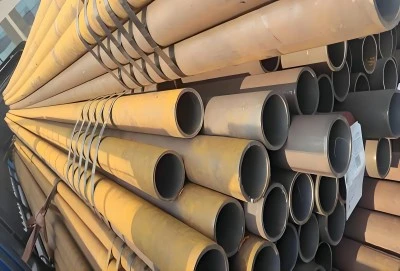
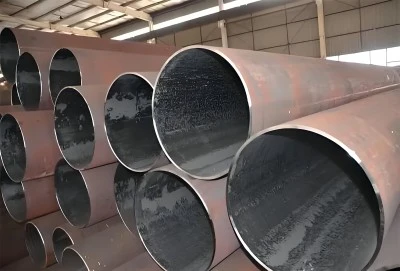
Understanding AS/NZS 1163 C350 Pipe Standards and Specifications
Cold-formed structural steel hollow sections are defined by the AS/NZS 1163 standard, which was jointly developed by the two countries. Among the strengths specified by the standard, the C350 grade falls somewhere in the center. Due to its reasonable price and high load capacity, it is the most popular grade in the Asian, Pacific, and Middle Eastern construction sectors.
Mechanical and Chemical Properties
C350 cold-formed hollow components have a minimum yield strength of 350 MPa and a minimum tensile strength of 430 MPa. In most cases, elongation exceeds 16–22%, however this might vary with wall width. Because the chemical profile maintains a maximum carbon content of 0.20% and a manganese content of roughly 1.60%, field welding without preheating is feasible with standard wall thickness.
Dimensional Benchmarks
Exacting standards are maintained with regard to the external diameter, wall thickness, mass/length ratio, and sphericity. The mass tolerance tests are necessary for compliance, however passing the size tests alone does not make a pipe compliant. It is important to verify your measurements against the manufacturer's specifications and AS/NZS 1163 Table 7 for accuracy.
Grade Comparison: C250, C350, and C450
C250 is ideal for applications with lesser weights because to its lower yield strength of 250 MPa. Section sizes decrease with increasing C350 up to 350 MPa, while the design load remains constant. C450 can withstand extreme conditions and has a minimum yield strength of 450 MPa. C350 is the most economical and robust solution for commercial building frames, bridges, and industrial platforms since it is not over-engineered.
Step-by-Step Process to Check AS/NZS 1163 C350 Pipe Quality
A structured quality-check method keeps your project safe from costly material fails and rejects for not meeting standards. The process includes paperwork, a physical check, and lab tests. Before you take a batch, all three must be in order.
Step 1 — Document Verification
Ask for an MTC that is EN 10204 Type 3.1 or 3.2 approved. Not just minimum numbers must be shown on the certificate; it must also include real heat chemistry and mechanical test results. Make sure that the grade of AS/NZS 1163 C350 pipe says C350 or C350L0 for low-temperature uses and that the standard reference says AS/NZS 1163. One that doesn't have heat numbers that can be tracked is a red flag.
Step 2 — Visual and Dimensional Inspection
Look for slivers, deep holes, and laminations on the outside of every pipe. Due to these imperfections, the galvanizing will not adhere as well, and the welds will not seem as nice. Verify that the dimensions (length, wall thickness, and outer diameter) match the order. If the part is significantly out of round compared to the standard, it might be due to faulty forming equipment or insufficient process control in the mill.
Step 3 — Mechanical and Non-Destructive Testing
Have samples evaluated for yield and tensile strength at an accredited lab by the business. Request documentation of all welds that have undergone 100% Eddy Current or Ultrasonic testing to ensure seam integrity. In order to validate the C350L0 classification, it is necessary to request Charpy V-notch impact test data at 0°C if the task is to be performed in cold environments. These records should be included with every batch delivery.
Comparing AS/NZS 1163 C350 Pipes with Other Grades and Standards
Knowing where C350 sits relative to alternative standards helps procurement teams avoid substituting materials that appear similar but carry different structural performance guarantees.
C350 vs. ASTM A500 Grade B
For circular sections, the minimum yield and tensile strengths specified by ASTM A500 Grade B are 317 and 400 MPa, respectively. Both numbers are surpassed by C350. Material certified to AS/NZS 1163, rather than ASTM A500, must be used in projects in Australia or New Zealand that are controlled by AS 4100 or NZS 3404. This is true even if the numbers seem same on paper. When standards are mixed, engineering sign-offs become worthless.
Corrosion Resistance Considerations
Being carbon steel grades, neither C350 nor ASTM A500 has any special properties that make them more resistant to corrosion. The service life in coastal or industrial settings is directly impacted by C350's consistently applied hot-dip galvanizing and FBE coatings, which are made possible by its low carbon equivalent and meticulously managed surface quality.
When to Specify C350L0?
Guarantyd Charpy V-notch impact energy at 0°C is an additional feature of the L0 type. This guaranty is not included with the standard C350. When designing structures for use in refrigeration plants, in alpine construction, or any other application where the danger of brittle fracture at low temperatures has to be specifically addressed, C350L0 should be included.
Procurement Considerations: How to Source Quality AS/NZS 1163 C350 Pipes?
It's not just about technical specs when it comes to finding material that is suitable. Supplier approval is also important. A trustworthy AS/NZS 1163 C350 pipe provider must show that they can produce the pipes, have valid licenses, and have a quality management system that is written down.
When shortlisting suppliers, these are the main qualifications that should be met:
- Valid AS/NZS 1163 certification and current ISO 9001 registration, confirming that the quality management system covers the full production cycle from raw material intake to finished product release.
- Traceable raw material sourcing from recognized steel mills, which allows you to verify chemistry at the heat level rather than relying solely on finished-product test results.
- Confirmed delivery windows of 15–30 days with documented inventory depth, reducing the risk of supply gaps on long-duration projects.
- English-language technical support, including welding procedure guidance and certificate interpretation, so your engineering team can make fast, confident decisions without communication delays.
These factors help procurement managers and chief engineers compare possible sellers in a structured way. No matter how much they charge, suppliers who can't show up with up-to-date MTC records, third-party inspection reports, or approved weld seam test data should be taken off the group.
Best Practices and Case Studies Demonstrating Quality Compliance
A vendor in the UAE was given a structural frame package by a medium-sized commercial construction firm. The package included AS/NZS 1163 C350 hollow sections, EN 10204 Type 3.1 MTCs, and documents of 100% Eddy Current weld tests. The tensile strength of five pipes were randomly selected by the project's third-party inspector. With yield values ranging from 365 to 390 MPa, all five of them exceeded the minimal requirement of 350 MPa. The owner was on board with the concept after the first evaluation.
The lesson to be learned from this is clear: what gets through the inspection gates is documented compliance, not verbal assurance. The following is a useful quality check list that your team can use for every new batch:
- Confirm MTC heat numbers match pipe markings.
- Check dimensional measurements against AS/NZS 1163 Table 7.
- Verify NDT records cover 100% of weld seam length.
- Confirm L0 impact test data if the grade is C350L0.
- Inspect surface condition before accepting delivery.
Check that the MTC heat numbers match the markings on the pipe.
Conclusion
To check the quality of AS/NZS 1163 C350 pipes, you need to check documents, look at the pipes in person, and test them in a lab all in one repeatable process. Before material goes into your project, you need to get independent confirmation of its mechanical properties, dimensional accuracy, and weld integrity. Most of the compliance risk is taken care of before the steel even leaves the plant by choosing a provider with valid certifications, raw materials that can be tracked, and helpful technical support. If you follow the steps and make the list in this guide for every buying cycle, you will have a solid quality record that owners, engineers, and third-party testers will all be happy with.
FAQ
What documents should I request to verify AS/NZS 1163 C350 compliance?
Ask for an MTC that is EN 10204 Type 3.1 or 3.2 approved. The report needs to have real heat chemistry, yield strength, tensile strength, and stretch values. Check that the certificate lists AS/NZS 1163 and the grade number C350.
Is C350 pipe suitable for corrosive environments?
Carbon steel, like C350, needs to have its surface protected when it's exposed to acidic circumstances. Its controlled surface quality lets hot-dip galvanizing and FBE finishing work consistently. Choose the right coating system based on the type of exposure you're facing, and ask your provider if the coating will work with the pipe's surface finish.
How does C350 compare to ASTM A500 Grade B in cost?
The base requirements for ASTM A500 Grade B are usually a little lower than those for C350. Building rules in Australia and New Zealand say that projects must use AS/NZS 1163-certified materials. Using A500 instead is not legal, even if it costs less. For international jobs, don't just look at price; compare both choices based on the project requirements.
What is C350L0 and when should I specify it?
The Charpy V-notch impact energy requirement at 0°C is added by C350L0. It should be used for construction in cold climates, refrigeration facilities, or applications with changing loads where the standard C350 impact properties are not clearly guaranteed.
Get a Compliant Quote from Longma Group — AS/NZS 1163 C350 Pipe Supplier
Longma Group has been making AS/NZS 1163 C350 pipe since 2003. They have supplied structural hollow sections to projects in Australia, New Zealand, Singapore, and the United Arab Emirates. An EN 10204 Type 3.1 MTC, an NDT weld record, and a full measurement report are sent with every batch. Visit longma-group.com or email our technical team at info@longma-group.com to get a quote on a specific product, look at the certifications we offer, or talk about how we can help you with your next project's welding procedure.