
When looking for an API 5L X56 pipe supplier, you need to carefully think about their production skills, certification requirements, and shipping options. A trustworthy Chinese provider should show that they follow API 5L standards for both PSL1 and PSL2 grades, keep their quality control methods open, and communicate clearly throughout the procurement process. The best partner has reasonable prices, clear paperwork, a track record of working on foreign projects, and the ability to produce using a range of welding technologies, such as ERW, LSAW, and SSAW, to meet the needs of different pipeline infrastructure projects.
|
|
|
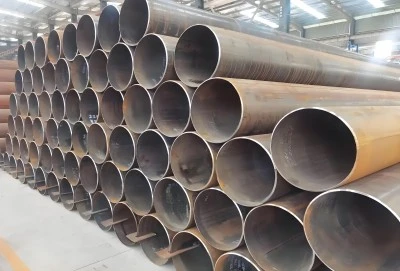
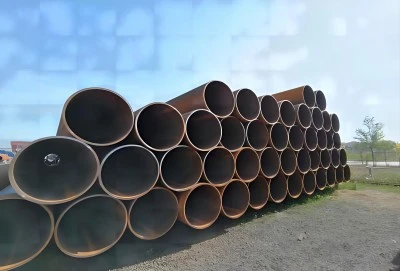
Key Factors to Evaluate When Choosing an API 5L X56 Pipe Supplier in China
There are thousands of factories in China that make steel pipes, and their skills, quality standards, and business practices are very different from one another. Systematic review across multiple aspects that directly affect procurement results is needed to tell the difference between reliable partners and marginal operators.
Manufacturing Capabilities and Production Methods
Welding technology has a big effect on how well pipes work and whether they are right for certain jobs.
- Electrical resistance welding makes ERW pipes, which come in widths up to about 24 inches, that are very consistent in size and cost-effective.
- The high-frequency welding type improves the quality of the weld by spreading the heat more evenly.
- LSAW pipes, which are made using longitudinal submerged arc welding, can have wall thicknesses up to 59.54 mm and widths from 16 to 80 inches. This makes them essential for use in trunk lines and offshore platforms.
- When spiral welding is used to make SSAW pipes, the best use of material is achieved, and the diameters can be customized.
When demand is high, production capacity has a direct effect on how reliably deliveries happen. Hebei Longma Group, which makes more than 1,000,000 tons of goods every year and has 230,000 square meters of factory space, can keep inventory levels high and production flexible in ways that smaller businesses can't. With this scale, multiple projects can be worked on at the same time, wait times for standard specifications can be cut down to as little as seven days, and custom fabrication needs can be met without interrupting normal production plans.
Certification Verification and Raw Material Sourcing
For API 5L certification to be real, proof goes beyond just looking over the papers that were sent in. The American Petroleum Institute's online database should be used by procurement teams to check that seller API monogram licenses are still valid and to see what the certification covers. Suppliers with multiple foreign certifications show they are committed to different legal systems and make it easier to get approval for projects that go through more than one state.
Where the raw materials come from has a big effect on the quality and traceability of the finished product. Steel bars and plates are bought by reputable makers from well-known mills that have uniform metallurgical controls. Longma Group's agreements with Chinese companies, which steel is known for having stable chemistry and mechanical qualities. Material test certificates should be able to be traced back to these main mills, showing full paperwork chains from analyzing the ladle to testing the API 5l X56 pipe.
Transparent Pricing and Comprehensive Documentation
To get clear prices when buying API 5l X56 pipes internationally, you need to know what goes into the numbers that are given. The prices of raw materials change with the global steel market, shipping costs depend on the method used and the port of arrival, and manufacturing costs depend on how complicated the welding is and how many tests need to be done. Responsible sellers give quotes with different items for each of these parts. This lets you make useful comparisons and finds any hidden costs that might come up during the contract execution.
Professional operations can tell the difference between those that don't know much about exporting and those that do. For example, engineering contractors need full packages that include Inspection and Test Plans that list all the activities that will be done to make sure the work is done right, Manufacturing Procedure Specifications that list the parameters for welding and heat treatment cycles, and Material Test Certificates that have chemical analysis results and mechanical property data. Extra papers like size reports, measures of coating thickness, and third-party inspection certificates are proof that the project meets quality standards and follows the rules.
Navigating the Procurement Process for API 5L X56 Pipes from China
International procurement is more complicated than domestic procurement because you have to think about processes, payment methods, and communication techniques that work across time zones and cultures.
Supplier Identification and Qualification
Digital platforms have changed how people find suppliers. For example, B2B markets give users access to the product catalogs of thousands of makers. However, an online presence by itself is not enough to choose a seller. Verification of reported skills is important, and can be done through third-party inspection services, industry trade shows, and reference checks with current customers. Physical factory checks take a lot of time and money, but they give you the best information about how things are actually made, how to maintain equipment, how quality control is used, and how well your organization is run.
Experience with exporting is a good way to tell how good you are at logistics and paperwork. Suppliers who have worked with customers in the Middle East, Australia, Southeast Asia, and North America in the past know what kinds of business invoices, packing lists, certificates of origin, and inspection paperwork are needed to make customs clearing easier. Their knowledge of foreign payment terms, optimizing containers, and coordinating freight handling cuts down on delays and avoids mistakes that cost a lot of money.
Quotation Evaluation and Contract Negotiation
Comparing quotes effectively involves more than just looking at unit prices. Lead time promises affect project schedules and may explain higher prices when actions on the critical path depend on materials being available. Minimum order numbers affect the costs of keeping inventory and the amount of cash that is needed. Some sellers allow for mixed specifications, which makes the best use of containers. Payment terms balance the buyer's need to keep their cash on hand against the supplier's financial risk. Structures that include partial deposits, payments during the production stage, and the balance due upon review or delivery show the level of trust that was agreed upon.
A lot of the time, promises to buy in bulk lead to better prices and earlier schedules for production. Long-term deals that cover more than one shipment keep prices stable, which makes budgeting for the project easier, and they promise suppliers' income, which supports allocating capacity. These deals work best when demand predictions are pretty accurate and the contract terms include ways to adjust for big changes in the cost of raw materials.
Logistics Planning and Import Compliance
Decisions about international shipping have a big effect on landing costs and the reliability of arrival. Long-distance pipe shipping is mostly done by ocean freight. Smaller diameter pipes can be shipped in containers, while larger diameter API 5l X56 pipes need special cradles to fit on break-bulk boats. The Incoterms designation makes it clear where responsibility is transferred. For example, FOB means that the buyers are responsible for loading the ship, while CIF includes freight and insurance but moves risk at the starting port. When you know these differences, you can avoid arguments over ruined goods and insurance claims.
The tax rates and import standards are based on the Harmonized System codes used for customs classification. Different tariffs apply to steel pipes based on their width, wall thickness, end finish, and finishing application. Hiring customs agents who know a lot about steel pipes makes sure that the right paperwork is prepared and that the goods are properly classified, which cuts down on clearance delays. Some countries put anti-dumping duties on Chinese steel goods, which means that you need to be careful with your country of origin paperwork and think about ways to lower your duties, such as through third-country processing or tariff engineering.
Building Long-Term Partnerships with API 5L X56 Pipe Suppliers in China
Transactional ways of buying things give up a lot of the value that can be gained by working together with suppliers. Strategic partnerships are good for both sides in ways that go beyond individual purchases.
Communication Channels and Technical Support
For a project to be successful, there needs to be effective communication during both the planning and running phases. Suppliers with expert staff that speaks more than one language, specialized account management, and real-time production updates make it easier to work together on things like clarifying specifications, changing testing protocols, and making schedule changes. This contact system is especially helpful when installing something in the field turns out to be different from expected, requiring quick changes to the material specifications or quick orders of extra parts.
Technical teamwork during the planning stages of a project makes specs more cost- and time-effective and easier to make. Suppliers with a lot of experience can help you choose the right material grade, the best wall thickness, the fit of your coating system, and the best end connection choices that balance technical needs with practical limitations. This review often finds chances for standardization across project stages, which makes buying easier and takes advantage of volume savings.
Quality Assurance and After-Sales Service
Continuous tracking of quality performance maintains trust in the supplier's abilities. Setting up clear KPIs for defect rates, dimensional accuracy, and paperwork completion gives you objective feedback that pushes you to keep getting better. Factory checks done on a regular basis make sure that quality system requirements are being followed and find new risks before they cause goods that don't meet standards.
Warranty terms and quick resolution of problems show that the seller cares about customer happiness. Manufacturers with a good reputation stand behind their products by giving clear guarantee periods, service terms, and quick ways to look into and fix quality issues. This support lasts throughout the whole project lifecycle. For example, some companies offer field service for installation help and technical issues that keep customers happy and project plans on track.
Leveraging Supplier Expertise for Operational Excellence
The best supply ties go beyond simple buy-and-sell deals and turn into strategic partnerships where everyone works together to solve problems. Suppliers who know a lot about the application can make a big difference in API 5l X56 pipe design reviews by finding ways to make the pipeline easier to build and lower its costs over its lifetime. Their experience with construction problems in a range of climates and environments gives engineers useful information that helps them make better choices.
Case studies from big building projects show how working together with suppliers can really help. In September 2020, Longma delivered 319 tons of API 5L Gr.B PSL1 LSAW steel pipes to a large industrial piping project located in Monterrey, Mexico, a core industrial and manufacturing hub of the nation.
The project adopted large-diameter line pipes sized at 914.4 mm OD × 9.53 mm WT with a single fixed length of 11,800 mm. These LSAW pipes were engineered for industrial utility and process piping networks to support the operation of multiple local manufacturing plants across Monterrey.
Conclusion
To find a trustworthy API 5L X56 pipe supplier in China, you need to carefully look at their manufacturing skills, certifications, quality control systems, and the business terms that make up the relationship value. During the selection process, current procurement needs are weighed against strategic factors such as the quality of technical support, how quickly communications are responded to, and the potential for long-term partnership. Buyers who are good at their jobs check what suppliers say by looking at paperwork, calling references, and inspecting the facility. They also negotiate contracts that set clear performance standards and align rewards. Spending time and money to carefully choose suppliers pays off in the form of consistent product quality, on-time delivery, reasonable pricing, and expert teamwork that improves project results throughout the entire lifecycle of an infrastructure.
FAQs
What certifications should an API 5L X56 pipe supplier possess?
Suppliers that are legitimate must have current API 5L monogram licenses that can be checked through the online register of the American Petroleum Institute. These licenses show that the supplier is authorized to make pipes with API markings. Getting ISO 9001 certification shows that your quality control system meets foreign standards. Extra certifications, like ISO 14001 for managing the environment and ISO 45001 for making sure workers are safe on the job, show that the business is doing a great job overall. Suppliers who work with niche markets may also keep certificates from classification societies, pressure equipment guidelines, or programs designed just for the oil and gas or water infrastructure industries.
How do PSL1 and PSL2 specifications differ for X56 pipe?
PSL2 has a lot more strict rules than PSL1. It has tougher chemical composition standards with carbon equivalent limits, it requires impact testing using Charpy V-Notch methods at certain temperatures, and it has maximum yield strength caps that stop things from becoming too hard. In addition, PSL2 calls for more thorough non-destructive testing and larger data files. These better controls are good for important tasks that involve high pressures, low temperatures, or bad service conditions where failure would mean extra quality control steps and small price rises.
What delivery times are realistic for API 5L X56 pipes from China?
Standard specs with common sizes and wall thicknesses usually ship within seven to fourteen days from reputable sources who keep extra stock on hand. Custom orders with specific sizes, coatings, or end treatments usually take four to eight weeks, but this depends on production plans and testing needs. Lead times can go up to ten or twelve weeks for large orders or grades that aren't commonly found. This is especially true during times of high demand. Realistic planning includes backups for things like how long tests take, when inspections happen, and the two to six weeks it takes for packages to get from one country to another by international shipping, based on the method used and the location.
Partner With Longma Group for Premium API 5L X56 Pipe Supply
Longma Group has been making API 5L X56 pipes for 20 years and has worked on oil and gas, water infrastructure, and industry building projects around the world. Our 230,000-square-meter factory makes more than 1,000,000 tons of steel every year using cutting-edge ERW and LSAW technologies. We can handle widths from 1/2 inch to 80 inches and wall thicknesses from SCH10 to SCH160. We only get our raw materials from trustworthy Chinese mills like TISCO, Bao Steel, and HBIS. This way, we can be sure of the consistency of the metal and its full tracking. Our ISO 9001 quality control systems, API 5L approval, and wide range of testing services make sure that we meet even the strictest requirements. Get in touch with our technical team at info@longma-group.com to talk about your project needs and get detailed quotes that come with full documentation packages and quick help during the purchase and installation stages.