
Choosing the right EN10219-1 S235J2H pipe manufacturer demands careful evaluation of technical capabilities, quality assurance systems, and supply chain reliability. Procurement managers and structural engineers must prioritize manufacturers who demonstrate verifiable compliance with international standards, possess advanced testing facilities, and maintain transparent certification processes. The selection process involves analyzing production capacity for large-diameter structural hollow sections, assessing customization flexibility for project-specific requirements, and verifying the manufacturer's track record in delivering impact-tested cold-formed steel pipes for harsh environmental conditions across global infrastructure projects.
|
|
|
Understanding EN 10219 S235J2H Pipes and Their Specifications
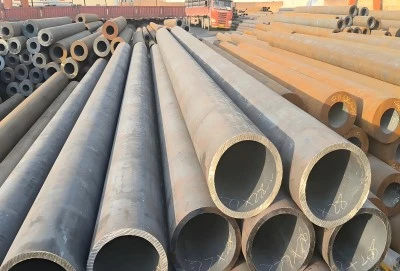
The EN10219-1 standard sets the rules for cold-formed welded structural hollow sections, which are widely used in building and improving infrastructure. Within this set of specifications, the EN10219-1 S235J2H pipe is the best choice for structural steel because it was made to handle tough conditions and heavy loads.
Technical Properties and Performance Standards
The name "S235J2H" tells you about certain properties of the material that have a direct effect on how well it works as a structure. The "S235" number means that the minimum yield strength is 235 MPa, and the "J2" number means that the material is very tough at low temperatures and can withstand a Charpy V-notch impact energy of 27 joules at -20°C. This impact protection makes it much less likely that the material will break when used in cold climates. The "H" at the end of the product's name tells you that it is a structural hollow section, which is different from materials that are made of plates or bars but have similar chemical makeup.
Chemical makeup is a very important factor in determining how well something can be welded and how it can be made. The managed amounts of carbon, manganese, silicon, and trace elements in these structural EN10219-1 S235J2H pipes make them strong and flexible. To make sure that all of their products have the same mechanical qualities, manufacturers stick to very strict compositional limits. This is especially important for large-diameter pipes that are used in infrastructure that is safety-critical.
Manufacturing Processes and Quality Assurance
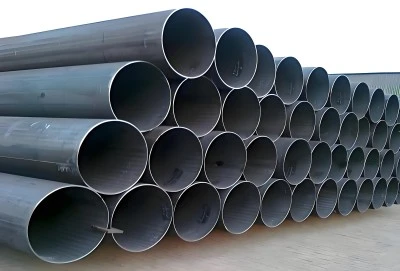
For larger diameters, longitudinal welding methods like ERW (Electric Resistance Welding) or LSAW (Longitudinal Submerged Arc Welding) are used after cold-forming processes to make these structural hollow sections. Work hardening effects of cold-forming make the material stronger, but makers have to carefully control these processes to keep the weld zone's mechanical qualities the same as the base material.
Quality control methods do more than just check the sizes of things. Manufacturers with a good reputation test their products thoroughly. They have to do Charpy V-notch impact tests at -20°C, check the tensile and yield strengths, and use eddy current or ultrasonic methods to test lengthwise weld lines without damaging them. Inspections of the surface find laminations or spots that could weaken the structure. Full heat-number traceability from raw materials to finished products is shown on EN 10204 Type 3.1 or 3.2 inspection papers, which buying teams need to make sure that the project is completed correctly.
Applications Across Infrastructure Sectors
These pipes are perfect for bridges that are exposed to thermal cycling, offshore platforms that are exposed to marine environments, wind power towers that need to resist fatigue, and heavy steel structures in industrial facilities because they are very reliable, don't crack easily, and are tough at low temperatures. Because they are so easy to weld, they can be made in the field using standard methods like cutting, drilling, and forming. This speeds up the building process and lowers the cost of installation.
Key Criteria to Evaluate When Choosing a Pipe Manufacturer
When choosing a structural pipe maker, you have to look at a lot of different factors that all affect the job directly. Procurement experts have to find a balance between technical skills and business needs while also making sure the supply chain is stable in the long run.
Standards Compliance and Certification Verification
Validation of real certifications is the basis of evaluating manufacturers. Reliable manufacturers keep their certifications up to date across a number of international frameworks, such as ISO 9001 for quality management, ISO 14001 for environmental management, and industry-specific credentials like API 5L for oil and gas uses. Leading makers show compliance in more ways than just having certificates. They use open documentation practices.
As part of the verification process, it should be checked to see if makers include full material test papers with every shipment, keep third-party inspection plans in place, and let engineering teams do factory audits. Being able to provide complete paperwork like Inspection and Test Plans (ITP), Manufacturing Procedure Specifications (MPS), and Material Test Certificates (MTC) shows that the company is mature and focused on the customer. These papers are especially useful for engineering firms that have to handle complicated building projects that have to follow strict rules.
Production Capacity and Customization Capabilities
Investing a lot of money in bending machines, welding systems, and testing facilities is needed to make large-diameter structural pipes. Companies that make more than a million tons of goods a year usually have enough capacity to handle both large orders and urgent project needs. The amount of raw materials that can be bought is also related to the size of the production. This can lead to competitive prices without lowering quality.
Customization gives capable manufacturers a competitive edge over commodity suppliers. Specific size limits, unique end treatments like beveling or fitting, and custom anti-corrosion solutions like hot-dip galvanizing, fusion-bonded epoxy (FBE), or multi-layer polyethylene finishes are often needed for infrastructure projects. Manufacturers that do their own welding, perforating, and expanding can simplify their supply chains and make it easier for everyone to work together. Being able to handle orders with different requirements—from standard structural parts to custom-engineered solutions for specific load situations—shows that you have a lot of technical knowledge and are quick to your customers.
Supply Chain Logistics and Global Reach
When you buy something from another country, the logistics become more complicated, which impacts the overall cost of ownership and project timelines. Manufacturers who have been exporting for a while know what paperwork is needed in different countries, keep in touch with freight forwarders who specialize in large goods, and can quickly get through customs processes. Serving clients in markets in the Middle East, Australia, and Southeast Asia shows that you can adapt to different business practices and regulatory environments.
Dependable delivery depends on both being able to plan production and having access to a transportation network. Being close to important ports makes shipping containers of standard lengths easier, but for long lengths of big diameter pipes, you need to make special heavy-haul plans. Clear information about production lead times, shipping dates, and possible delays helps procurement teams plan the best way to get the site ready for construction and start building.
Comparing EN 10219 S235J2H Pipes with Alternatives in the Market
Knowing how different grades of structural steel work differently lets you choose the right material for your job and stay within your budget.
Mechanical Property Distinctions
The S235JRH grade is the standard in the S235 family. It was tested for resistance to impact at room temperature (20°C). This means that JRH can be used for construction uses where cold-weather performance isn't important. The main difference is that the J2H grade needs to be tested for impact at -20°C, which makes sure it works well in cold places and lowers the risk of weak fracture when temperatures change.
When you move up to S275J2H, the yield strength at 275 MPa is higher, but the low-temperature toughness stays the same. This grade is good for uses where thinner walls can still hold the same amount of weight, which could help cover the higher cost of the materials by saving weight. Choosing between EN10219-1 S235J2H pipes and S275J2H often depends on how the design can be improved and what the loading conditions are.
Cross-Standard Comparisons
For structural hollow sections, ASTM A500 is the North American counterpart, and Grade B has strength properties that are similar to S235JRH. However, ASTM A500 standards don't require low-temperature impact testing, which is important for projects in cold regions or where the load changes over time. The rules for piling pipes are set by ASTM A252, and the rules for pipeline uses are set by API 5L. API 5L has extra rules for pressure control and longitudinal weld quality.
The zinc coating on galvanized structural pipes makes them more resistant to corrosion, which means they last longer in wet or salty environments. To make EN10219-1 S235J2H pipe steel that can be galvanized, the amounts of silicon and phosphorus must be controlled during the steelmaking process to avoid the Sandelin Effect, which makes the coating stick unevenly. During the request-for-quotation step, buyers should make it clear that they want galvanizing-suitable material to make sure the right mill treatment.
Cost-Benefit Analysis for Project Planning
The prices of materials are based on many things, such as the cost of the base steel, the difficulty of production, the need for testing, and changes in the market demand. The J2H grade usually costs more than the JRH grades because of tighter chemical control and having to go through low-temperature testing. The price difference can be anywhere from 8 to 15%, based on the market and the number of orders. This extra cost protects against failures in the field during cold weather situations, where replacement costs and project delays would more than make up for any savings from using lower-grade materials at first.
Maintenance costs, planned service life, and lifecycle success should all be part of a long-term value review. For structural uses in offshore platforms or bridge building, high-quality materials are necessary because repairs can be hard to get to and safety is very important. On the other hand, standard-grade specs could help interior structural members in climate-controlled manufacturing buildings save money. To find a good balance between upfront costs for procurement and operational concerns, procurement teams, structural engineers, and project managers must work together closely during the material selection process.
Conclusion
When choosing an EN10219-1 S235J2H pipe manufacturer, you need to think about their technical skills, quality standards, production capacity, and ability to meet your business's needs. The better low-temperature toughness of the J2H grade makes it necessary for infrastructure that is subject to harsh circumstances. This is why suppliers should be carefully evaluated. For big engineering projects to be reliable, manufacturers must show that they follow standards, have full testing capabilities, and have worked on projects in multiple global markets. Strategic procurement practices, such as clear specification writing, careful source due research, and quality control procedures, make sure that the performance of materials matches the needs of the structure design while minimizing the business risks that come with buying from other countries.
FAQ
What distinguishes S235J2H from S235JRH in practical applications?
The main difference is the temperature needs for impact testing. Impact tests are done on S235JRH at 20°C (room temperature), which means it can be used for construction purposes at room temperature. Charpy V-notch testing at -20°C with a minimum of 27-joule impact energy is needed for S235J2H. This makes sure it works reliably in cold climates and lowers the risk of brittle fractures during temperature changes. This difference is very important for bridges, structures in the ocean, and infrastructure in the north, where cold weather performance has a direct effect on the safety and service life of structures.
Can EN10219-1 S235J2H pipes be hot-dip galvanized for corrosion protection?
When the right amounts of silicon and phosphorus are used to make steel, these structural empty pieces can be hot-dip galvanized. During the request-for-quotation part, buyers must include the phrase "suitable for galvanizing" to make sure that mills use the right chemical controls to stop the Sandelin Effect, which makes zinc coatings stick unevenly. When S235J2H is properly treated, it can be galvanized without affecting the quality of the coating. This gives the structure better performance and more rust protection, which means it will last longer in wet or salty environments.
Is this structural pipe appropriate for high-pressure fluid transport systems?
The rules in EN10219 are only for structural hollow parts, not for use in pressure pipes. If you need to contain pressure in a project, you should look at EN 10217 for welded steel tubes or EN 10216 for seamless steel tubes. These standards have extra rules for testing under pressure, making sure the welds are good, and making sure the materials are right for moving fluids. When you use EN10219 material for structural purposes, you can be sure that it meets the code. But when you use it for pressure applications, you need to make sure that the specifications clearly address containment requirements and safety factors that are right for the operating conditions.
Partner with Longma Group for Your Structural Pipe Requirements
Since 2003, Longma Group has been making high-quality structural hollow sections. They have supplied EN10219-1 S235J2H pipe to infrastructure projects in more than 90 countries. Our modern LSAW and ERW technology-equipped 230,000-square-meter production plants make more than a million tons of steel every year, so we can handle both big orders and urgent project needs. We have many certifications, such as ISO 9001, API 5L, and FPC, and we offer full paperwork help for engineering compliance through ITP, MPS, and MTC. Our technical team helps with specifications, offers customization services like welding and anti-corrosion treatments, and stays in touch during the whole procurement process. Get in touch with info@longma-group.com to talk about your structural pipe needs with a dependable and skilled EN10219-1 S235J2H pipe provider.








