
Finding a reliable supplier for high-pressure steel piping requires diligence, technical understanding, and strategic evaluation. ASTM A672 B65 pipe represents a specialized electric-fusion-welded solution designed for demanding industrial environments where conventional seamless options prove economically unfeasible or technically limiting. When sourcing from Chinese manufacturers, procurement managers and pipeline engineers can leverage competitive pricing and robust production capacity without sacrificing quality—provided they know how to separate reputable manufacturers from mediocre suppliers. This comprehensive guide walks you through the essential steps to identify trustworthy partners who can deliver certified, inspection-ready large-diameter welded steel pipe that meets your project specifications and operational safety standards.
|
|
|
Understanding ASTM A672 B65 Pipe Specifications and Quality Standards
Chemical Composition and Mechanical Properties
Knowing how to use the product technically is the first step in any reliable procurement process. ASTM A672 B65 pipe is made from ASTM A515 Grade 65 carbon steel plate, which is welded together using electric fusion to make large-diameter tubes. The chemical make-up usually has carbon levels between 0.28% and 0.33% (depending on thickness), manganese levels between 0.85% and 1.20%, and silicon levels between 0.15% and 0.40%. This balanced chemistry makes it easier to weld while keeping the strength needed for pressure vessel applications.
The mechanical features show how well something works under practical stress. The base plate has a tensile strength of 450 to 585 MPa (65 to 85 ksi) and a yield strength of at least 240 MPa (35 ksi). The number B65 refers to Series B carbon-manganese base steel that has a minimum yield strength of 65 ksi (448.17 MPa) after it has been fabricated and heated. Higher manganese content than in B60 grades raises both yield and tensile strength without affecting the quality of the weld, which is an important balance for heavy-load, thick-wall uses.
Heat Treatment Classes and Pressure Ratings
ASTM A672 includes a rating system that controls the amount of heat treatment needed after welding and the frequency of inspections. Pipes go through stress relieving, normalising, or other heating processes based on their class names, such as Class 12, Class 22, and Class 32. These treatments make the microstructure the same in both the parent material and the heat-affected area next to longitudinal welds. This makes sure that the pipe wall has the same mechanical properties all the way through.
This standard is especially useful for medium- to high-pressure steam headers, petrochemical process pipes, and boiler auxiliary circulation systems because it allows for safe long-term service at temperatures up to 390°C. Engineers can choose thinner wall designs when the pressure is the same as with B60 grades because they have higher pressure resistance. This lowers the cost of materials and the weight of installation without sacrificing safety margins. When you buy from manufacturers who keep strict standards for process controls and documentation, these performance benefits show up directly in the value of your project.
International Compliance and Certification Requirements
For global building projects to work, they have to follow a lot of different rules at the same time. In addition to meeting ASTM standards, trustworthy Chinese providers also get licenses from groups like the American Petroleum Institute (API), the International Organization for Standardisation (ISO), and European conformity assessment bodies. With these credentials, you can be sure that the way products are made, how they are managed, and how they are tested all meet internationally recognised standards.
Material Test Certificates (MTC) make it possible to track everything from the chemical makeup of the raw materials to the final mechanical tests. Inspection and Test Plans (ITPs) spell out the exact steps and criteria for acceptance that will be used during the manufacturing process. Manufacturing Procedure Specifications (MPS) list the parameters for welding, the cycles of heat treatment, and the quality control steps that will be taken. When considering possible suppliers, make sure you look at sample paperwork from past projects to make sure they can provide the full paper trail that engineering companies and regulatory bodies in your target market need.
How to Evaluate the Reliability of ASTM A672 B65 Pipe Suppliers in China?
Verification of Manufacturing Credentials and Certifications
Trustworthiness of suppliers is built on proper proof by a third party. Purchasing managers should give more weight to manufacturers who are currently certified with the ISO 9001 quality management system. This sets baseline controls for processes and protocols for continuous improvement. ISO 14001 certifications for environmental management and ISO 45001 certifications for health and safety at work show that a company is mature and follows strict rules, which usually means that the products are consistent.
Even though API 5L certification officially covers a different specification, it shows that you know how to meet the strict testing requirements that are common in pressure piping uses. Manufacturers that sell to people in North America often try to get Factory Production Control (FPC) certification, which shows that they follow the rules for that region. Instead of depending only on documentation given by suppliers, ask for copies of certificates directly from the organisations that issued them. This will help stop credential fraud during ASTM A672 B65 pipe competitive bidding.
Assessment of Production Capabilities and Quality Control Infrastructure
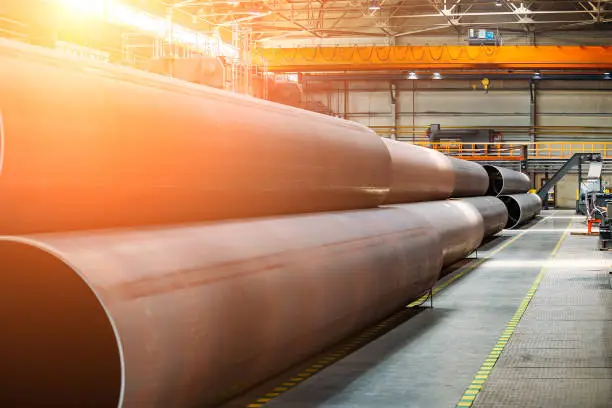
To understand a supplier's technical infrastructure, you need to look beyond their marketing materials and into how they actually make things. The biggest LSAW pipe makers in China use multistage production lines with automated plate edge milling, pre-bending and forming tools, dual-side submerged arc welding systems, and inline furnaces for heat treatment. Modern factories have automatic ultrasonic testing stations and real-time weld tracking systems that check all horizontal seams for internal flaws.
Quality control includes more than just checking tools; it also includes how the company is set up. Competent makers have separate quality control teams from production management that are able to reject materials that don't meet standards before they are shipped. Ask possible providers about the steps they take to make sure their heat treatment processes are accurate. In particular, find out if they keep regulated recording tools that keep track of time-temperature profiles for normalising or stress-relieving cycles. Find out how they test weld samples for transverse tension and guided-bend, which make sure that the fusion zones meet or exceed the strength requirements of the base metal.
Analysis of Supplier Reputation and Service History
Track record proof shows how reliable someone is in a way that qualifications alone can't. Ask for client examples from projects that were similar to the ones you want to work on in terms of scale and specifications. Manufacturers with a good reputation who work with the oil and gas industry, the power generation industry, or big building projects can usually give case studies that show how they've successfully fulfilled large orders with complicated technical requirements.
Ask about average client relationship length and return business rates to look at service continuity. Long-term partnerships with suppliers show that they provide consistent quality and quick after-sales support. Check out how they handle non-conformances—skilled makers have clear procedures for dealing with issues like missing measurements, cosmetic flaws, or mistakes found in paperwork during receiving inspection. Companies that are confident in their quality and are ready to let a third party check their goods before they are shipped and allow open factory audits can be told apart from companies that have something to hide.
Practical Advice for Buying ASTM A672 B65 Pipes from China
Requesting Comprehensive and Transparent Quotations
A good procurement process starts with clear request-for-quotation (RFQ) documents that clear up any confusion and allow suppliers to give correct answers. Include more details than just the outside diameter, wall thickness, and total length needed. For example, you should say the exact ASTM A672 class designation, end preparation requirements, coating or lining expectations, and marking/stenciling standards. Clear RFQs make it less likely that there will be mistakes that cause supplies that don't meet requirements and project delays.
Ask for detailed price lists that separate the base price of the pipe from any extra fees that are needed for special testing, third-party inspection, custom packaging, or faster production schedules. Understanding the parts of a cost gives you more power in negotiations and helps you find providers who add secret fees to their quotes to make them look better. Find out about volume discounts and minimum order amounts for ASTM A672 B65 pipes. Manufacturers often offer price breaks at certain tonnages, which may change your buying strategy so that you purchase in bulk instead of several small lots.
Navigating Logistics and Shipping Considerations
When you buy something from another country, things like transportation, insurance coverage, clearing customs, and dividing up delivery risk become more complicated. Learn about the International Commercial Terms (Incoterms) that spell out the duties of both buyers and sellers. With ex works (EXW) pricing, the buyer is fully responsible for all shipping and takes on all risk from the supplier's location. Cost, Insurance, and Freight (CIF) quotes include delivery to your target port, while Free on Board (FOB) terms move the arrangement and risk of ocean freight to the place where the ship loads.
Think about whether to ship in containers or in pieces, depending on the size of the pipes and the logistics of the project. Standard 20-foot and 40-foot containers can fit pipes of certain lengths, but pipes that are too big or have thick walls may need flat racks or break-bulk vessel room. Chinese suppliers who have been exporting for a while keep in touch with freight forwarders who specialise in steel pipe logistics. These experts can help Chinese suppliers get the best prices and handle all the paperwork that needs to be done.
Communication Strategies and Negotiation Tactics
To build good relationships with Chinese manufacturers, you need to understand how they like to communicate and do business. Even though a lot of export-focused suppliers have gotten much better at English, technical terms and complicated specifications can still lead to misunderstandings. Add to the written specs with sized drawings, photos of similar projects, and callouts that show the most important requirements. Visual communication clears things up and shows expertise, which Chinese partners value.
During the bargaining process, being patient shows respect and helps build trust. Instead of putting aggressive price pressure on buyers, talk about how to create mutual value. Reliable suppliers value long-term relationships with buyers who care about quality over one-time deals with buyers who only care about price. Say that you're ready to give testimonials, act as references, or look into future jobs if the first ones go well. This shows them that you're a long-term business chance that is worth the time and money they put into quality and service.
Conclusion
Buying ASTM A672 B65 pipe from Chinese makers can save you a lot of money and time if you know how to do it right and have the right supplier evaluation process. The B65 grade has a high yield strength, better temperature protection, and great weldability, making it suitable for hard uses in the power generation, petrochemical processing, and industrial infrastructure sectors. Reliable suppliers can work with China on big international projects as a strategic partner because of its ability to manufacture goods, low prices, and improving quality management systems. To be successful, you need to check credentials, look at production capabilities, match technical specs to project needs, follow strict procurement procedures, and choose well-known makers with a history of exporting.
FAQ
1. What factors have the most important effect on how resistant ASTM A672 B65 pipes are to corrosion?
Corrosion resistance in carbon-manganese steel pipe rests more on the setting in which it is used than on its own qualities. The B65 grade doesn't have much chromium or molybdenum, so it doesn't form passive films as easily as stainless metals do. The main thing that stops corrosion is protective coatings, like fusion-bonded epoxy for inside surfaces and three-layer polyethylene systems for outside surfaces. The pH, chloride content, oxygen levels, and temperature in the environment determine the type of material that is used and how long it is expected to last.
2. Can makers change the sizes and heat treatment requirements for ASTM A672 B65 pipes?
Manufacturers with a good reputation allow customisation as much as it's possible. The standard outside widths are between 16 and 60 inches, and the wall thicknesses are set to meet the design pressure needs. Depending on the needs of the project, we can negotiate different lengths, end preparations, and heat treatment cycles. Extreme customisation, on the other hand, may require minimum order quantities or longer wait times because mills make plates that don't fit standard specs. Talk about the needs for customisation early on in the seller selection process to make sure that production of ASTM A672 B65 pipes is possible.
3. How can buyers be sure that a supplier is following ASTM standards?
Authentication needs more than one step of proof. Get copies of third-party certifications (API, ISO, FPC) and check with the organisations that issued them to make sure they are current. Look over sample Material Test Certificates from past projects to make sure that the results of the chemical analysis and mechanical tests meet the requirements of A515 Grade 65. Set up workplace audits before the awarding process to look at the production tools, quality control infrastructure, and documentation systems. Hire independent inspection firms to watch as your order is made and tested. This will give you objective proof of compliance before it is shipped.
Partner with Longma Group for Certified ASTM A672 B65 Pipe Supply
Longma Group is a reliable ASTM A672 B65 pipe manufacturer with 20 years of experience, a long list of quality certifications, and service that puts the customer first. Over a million tonnes of large-diameter LSAW pipe are made every year in our 230,000-square-meter production plant, which serves engineering contractors, procurement managers, and infrastructure makers in more than 90 countries. We have API 5L, ISO 9001, ISO 14001, and Factory Production Control certifications, and we only buy raw materials from Bao Steel, HBIS, and Shougang, three of China's best steel mills. In addition to manufacturing, we offer full fabrication services, the application of anti-corrosion coatings, and complete documentation packages that are tailored to the needs of your project. Please email our team at info@longma-group.com to talk about your needs, get full quotes, or set up a plant tour. We give your projects the quality assurance, expert help, and low prices they need.








