
Finding high-quality PE-coated steel pipe from China means finding certified manufacturers, making sure they follow international standards like API 5L and DIN 30670, checking the quality of the coating and its ability to resist corrosion, doing thorough audits of suppliers, negotiating contracts with clear specifications, and setting up reliable quality control procedures throughout the buying process. Working with experienced vendors that have a track record of success in polyethylene coating applications and reliable delivery is key to success.
The need for PE-coated steel pipe is still rising across the world for projects including building offshore platforms, transporting oil and gas, and supplying water. China has been a top supplier because it offers low prices, superior production skills, and a wide range of quality certifications. But to successfully navigate the difficulties of foreign procurement, you need to plan ahead and have a strong grasp of technical standards, regulatory compliance, and supply chain management.
Pipeline engineers and procurement managers are under more and more pressure to find trusted suppliers while keeping tight quality requirements. For big projects, the stakes are especially high because the integrity of the pipeline directly affects safety and long-term performance. To make smart choices that safeguard both project timetables and budget allocations, you need to know how the procurement process works.
|
|
|
Why Source PE Coated Steel Pipe from China?
Manufacturing Excellence and Scale
The steel pipe manufacturing business in China has changed a lot in the last twenty years. Modern buildings have the latest technology, automated manufacturing lines, and strict quality control systems. The country makes more than 60% of the world's steel, which gives firms consistent access to high-quality raw materials and well-established supply systems.
The biggest Chinese firms may make more than a million tonnes of goods per year. This size allows for reasonable prices while also meeting the needs of big projects. Advanced heat treatment methods and high-tech inspection tools make sure that the quality of the products stays the same from one manufacturing run to the next.
Technical Capabilities and Standards Compliance
Chinese PE coated steel pipe manufacturers have put a lot of money into research and development, and they have met the requirements of important international standards including API 5L PSL1 & PSL2, ASTM A53, EN10210, and AS/NZS 1163. According to DIN 30670, DIN30678, CSAZ245.20, and ISO21809-1 standards, coating applications must follow very strict standards.
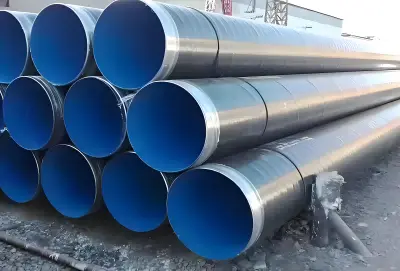
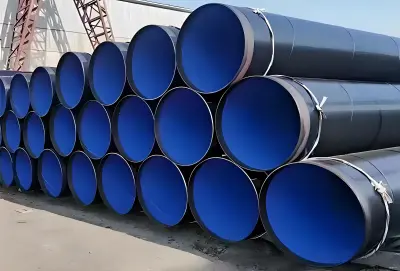
The technique of coating with polyethylene uses modern extrusion technology to make sure that the thickness is uniform and that the coating sticks well. Throughout the manufacturing cycles, quality control systems keep an eye on the thickness of the coating, the strength of the adhesion, and the efficiency of the corrosion barrier.
Cost Structure Transparency
Compared to vendors from other areas, Chinese suppliers usually have clearer pricing systems. When you buy directly from the manufacturer, you don't have to pay extra for middlemen, and when you use efficient production methods, you save money overall. Being able to buy in bulk lets you get good prices on big projects without lowering quality requirements.
Stable exchange rates and long-term trade partnerships make it much easier to estimate costs. Many suppliers give thorough cost breakdowns, which helps procurement managers make the most use of their budgets and achieve the best deals.
Understanding Technical Specifications and Industry Standards
Critical Performance ParametersThe performance of PE-coated steel pipe depends on a number of important characteristics that affect the longevity and dependability of the pipeline. The wall thickness may be anywhere from 6.02mm to 50.8mm, which makes it possible to meet different pressure and environmental needs. The outside diameter parameters range from 60.3mm to 1422mm, which makes them useful for a wide range of industries and applications.
The thickness of the coating is an important component that affects how well it resists corrosion and how long the pipeline lasts. For normal use, the minimum thickness is 2.5mm, but for tough conditions, it may need to be 3.0mm or more. The right thickness protects against corrosion while keeping the coating stuck to the surface during normal use.
Material Grade Selection
Choosing the right steel grade affects both its mechanical qualities and how well it works over time. variable API 5L grades, such X42, X52, X60, and X65, have variable strength properties that make them good for different pressure ratings and operating situations. Higher grades have better tensile strength, but you need to be very careful about how you weld and how you heat treat them.
ISO 3183 standards (L245, L290, L320, L360, L390, L415, L450, L485, L555) offer several grading methods that are used all over the world. Knowing grade equivalencies helps you choose the right materials while making sure they work with the pipeline systems that are already in place.
Coating System Evaluation
Different polyethylene coating systems have different ways of making and using them. Three-layer polyethylene (3PE) systems offer better corrosion protection since they have an epoxy primer, an adhesive, and a PE topcoat layer all in one. Two-layer systems (2PE) are a cheap way to get things done that don't need a lot of power.
Testing the adherence of coatings checks how strong the link is between the steel substrate and the PE layers. Peel strength tests, which usually show values above 100 N/25mm, make sure that the coating stays intact even when it is put under stress. Holiday detection testing finds possible coating flaws that might make corrosion protection less effective.
The Complete Import Process: From Inquiry to Delivery
Initial Inquiry and Specification DevelopmentThe first step in the procurement process is to write clear specifications and ask suppliers questions. Technical specifications should list the steel grade criteria, coating specifications, dimensional tolerances, and any other standards that apply. Clear specifications help avoid misunderstandings and make it possible to make accurate quotes.
Supplier requests should ask for specific technical suggestions, quality control systems, manufacturing schedules, and price structures. Evaluating many suppliers puts pressure on them to compete and gives you backup choices. The first talks should be on how much they can make, how quickly they can deliver, and their quality control processes.
Quotation Analysis and Commercial Negotiation
You need to look at supplier quotes more closely than just the initial price. When figuring out the total cost, you should add shipping, insurance, customs charges, and any possible changes in the value of the currency. The terms of payment, delivery schedules, and warranty guarantees have a big effect on the ultimate cost of a project.
Negotiation is about getting the best deal while keeping quality standards. Volume discounts, delivery times that may be changed, and good payment terms are all good for both sides. Long-term cooperation talks might lead to other benefits, such as priority scheduling and help with technical issues.
Contract Development and Purchase Order Processing
Full contracts protect both sides and make it clear what is expected of each party. You need to write down all the details for technical specs, quality standards, delivery timelines, and acceptance criteria. Terms of payment, responsibility clauses, and ways to settle disputes are all parts of the law that govern commercial relationships.
Before a formal purchase order can be made, a proforma invoice (PI) must be created. The PI should include information on the products, such as their specifications, quantities, unit pricing, total values, and delivery periods. The commercial framework is finished with bank information, shipping instructions, and paperwork needs.
Understanding International Trade Terms
Trade conditions have a big effect on how costs are split up and how risks are handled. Under FOB (Free on Board) arrangements, purchasers have to pay for and arrange shipping from the supplier's port. The vendor takes care of the paperwork for exporting items to the port. When goods leave the port, the risk moves to the ship.
The supplier's quote includes shipping and insurance fees when using CIF (Cost, Insurance, and Freight) terms. The vendor pays for and arranges transportation to the port of destination. Even when the seller pays for shipping, the risk still moves at the departure port. Because the provider has established shipping contacts, this approach frequently saves money.
EXW (Ex Works) conditions put less responsibility on the seller and require the customer to pick up the goods from the seller's location. EXW conditions may cut prices, but they also make buyers more responsible for paperwork and shipping for exports. This choice is good for experienced importers who already have good logistics.
Production Monitoring and Quality Control
Monitoring production makes ensuring that requirements and delivery timelines are followed. Regular progress updates show how things are going in the factory and any possible delays. Quality control checks throughout manufacturing find problems before the job is done, saving money on fixing them.
Third-party inspection firms check quality on their own. These services may keep an eye on production processes, run tests, and make sure that specifications are being followed. Before items leave the supplier's plant, pre-shipment checks make sure that they are of the highest quality.
Shipping and Documentation Management
Suppliers, freight forwarders, and customs agents all need to work together to make shipping arrangements. The size of the goods and how much protection it needs will help you choose the right container. When transporting PE-coated pipes, you need to be careful not to damage the coating.
The Commercial Invoice, Packing List, Bill of Lading (B/L), Certificate of Origin, and quality certificates are all important shipping papers. The Commercial Invoice lists the product's characteristics, quantities, values, and payment terms. Packing Lists show customs exactly what is in the container.
The Bill of Lading is a receipt for shipping and proof of ownership. A clean B/L means that the products were received in good shape, whereas a claused B/L says that there was damage or a mistake. You need the original B/L documentation to get your shipment released at its destination.
Customs Clearance and Import Procedures
The steps to clear customs are different for each country, but they usually involve paperwork to be sent in ahead of time. Customs brokers know a lot about local rules and how to classify goods. The right way to classify products influences tariff rates and limits on imports.
Taxes and levies on imports raise the overall cost of landing. Under certain trade agreements, several nations give steel pipes lower duty rates. Knowing the rates that apply helps keep project costs and delivery times as low as possible.
Payment Methods and Financial Security
Trade financing alternatives take into account both security and cash flow. Telegraphic Transfer (T/T) lets banks send money directly to one other with reduced fees, but both sides must trust each other. Letters of Credit (L/C) give you protection through bank guarantees, but they cost more and are harder to manage.
A lot of the time, partial payment plans include both advance payments and payments due when the item is delivered. Most of the time, advance payments are between 30% and 50% of the overall amount. Payments are made once the documents are shown or the products are checked and accepted.
Documentary collections are a halfway ground between T/T and L/C arrangements. Banks help people exchange documents and collect payments, and they do so for less money than L/C transactions. These partnerships need businesses to have a history of working together and trust each other.
Why Longma Group is Your Ideal Import Partner?
Proven Manufacturing ExcellenceLongma Group has been a top maker of ERW and LSAW steel pipes since 2003. It has 441.8 billion yuan in registered capital and factories that cover 230,000 square meters. The ability to produce more than one million tonnes a year shows that the company can handle big projects. The company has been in business for 20 years, which gives it the consistency and dependability that long-term partners need.
Advanced manufacturing includes submerged arc welding technology that can weld thick-walled, large-diameter pipes on both sides. LSAW (Longitudinal Submerged Arc Welded) and ERW production lines can handle a wide range of specification needs. Modern tools and automated procedures make sure that the quality is always the same while keeping manufacturing costs low.
Comprehensive Quality Assurance
Quality management systems include a number of international certifications, such as API 5L, ISO 9001, FPC (Factory Production Control), and standards for managing the environment. These certifications show that the company is committed to using systematic quality control and making things better all the time.
Getting raw materials from well-known domestic steel mills including Shagang, Shangang, TISCO, BX Steel, Shougang, HBIS, and Bao Steel guarantees high-quality inputs. Advanced heat treatment methods make welds stronger, and high-tech inspection tools find any problems. Full traceability from raw ingredients to finished items helps with quality control and following the rules.
Technical Support and Value-Added Services
Comprehensive fabrication services including welding, perforating, expanding, and end treatments provide complete solutions for complex projects. Anti-corrosion services encompassing hot-dip galvanizing, FBE, 2PP, 3LPE, and 3PE coating options ensure optimal corrosion protection for specific applications.
Complete documentation packages support engineering companies with Inspection and Test Plans (ITP), Manufacturing Procedure Specifications (MPS), Material Test Certificates (MTC), and additional technical documentation. This comprehensive approach reduces administrative burden while ensuring regulatory compliance.
Global Market Experience
Extensive global reach spanning over 90 countries demonstrates international market expertise and cultural competency. Experience with diverse regional standards and regulations enables smooth project execution across different markets. Established logistics networks support efficient delivery to remote locations.
Customer-centric approach serves engineering contractors, stockists, and import traders with tailored solutions. Flexible manufacturing capabilities accommodate custom specifications and urgent delivery requirements. Long-term partnership focus creates mutually beneficial relationships extending beyond individual transactions.
Conclusion
Sourcing high-quality PE coated steel pipe from China requires strategic planning, technical expertise, and reliable partnerships. Success depends on understanding product specifications, regulatory requirements, and supply chain management principles. The procurement process involves multiple stages from initial inquiry through final delivery, each requiring careful attention to detail and proactive communication.
China's manufacturing capabilities, competitive pricing, and quality certifications make it an attractive sourcing destination for pipeline projects worldwide. However, successful procurement requires thorough supplier evaluation, clear specifications, and comprehensive quality assurance programs. Understanding trade terms, payment methods, and logistics coordination ensures smooth transaction execution and on-time delivery.
Partner with Longma Group for Your PE Coated Steel Pipe Requirements
Ready to secure reliable, high-quality PE coated steel pipe for your next project? Longma Group combines 20 years of manufacturing expertise with comprehensive quality assurance and competitive pricing. Our global experience spanning 90+ countries ensures smooth procurement and on-time delivery for projects worldwide.
As a leading PE coated steel pipe manufacturer, we maintain API 5L certification, ISO 9001 quality management systems, and complete documentation packages supporting your technical requirements. Our customer-centric approach provides value-added services including custom fabrication, anti-corrosion treatments, and technical support throughout project execution.
Contact our experienced team at info@longma-group.com to discuss your specific requirements and discover why engineering companies worldwide choose Longma Group as their trusted PE coated steel pipe supplier. Our technical expertise and reliable delivery performance ensure your project success while optimizing total cost of ownership.
FAQs
Q1:What are the typical lead times for PE coated steel pipe from China?Standard PE coated steel pipe orders typically require 4-6 weeks for production, plus 2-4 weeks for shipping depending on destination. Custom specifications or large quantities may extend production time to 8-12 weeks. Rush orders can often be accommodated with priority scheduling for established customers.
Q2:How do I verify the quality of PE coating before shipment?
Quality verification involves multiple testing procedures including coating thickness measurement, adhesion testing, and holiday detection. Third-party inspection services provide independent verification of specification compliance. Pre-shipment inspection reports document coating quality and ensure conformance with project requirements.
Q3:What documentation is required for importing PE coated steel pipes?
Essential import documentation includes Commercial Invoice, Packing List, Bill of Lading, Certificate of Origin, and Material Test Certificates. Additional documents may include inspection certificates, insurance policies, and customs declarations. Specific requirements vary by destination country and should be verified with local customs authorities.
Q4:Which coating standards are most commonly used internationally?
DIN 30670 and ISO 21809-1 represent the most widely accepted international standards for PE coating applications. AWWA C210 and C213 are commonly specified for water applications in North America. Regional preferences may favor specific standards, so project specifications should be carefully reviewed.
Q5:What factors affect PE coated steel pipe pricing?
Pricing factors include steel grade, pipe dimensions, coating thickness, order quantity, and delivery requirements. Raw material costs represent the largest component, followed by coating materials and processing costs. Transportation and currency fluctuations also impact delivered pricing.








