
High-strength line pipe materials have changed the oil and gas transport business by making it safer and cheaper to move hydrocarbons across countries. X70 stands out as a working material because it has a yield strength of 485 MPa, can be welded in the field, and has been proven to be easy to build with. We have seen X70 line pipe used in sour service settings, offshore flowlines, national gas pipelines, and more, from the Middle East to Southeast Asia and Australia. These include MOBIL OIL AUSTRALIA and other well-known projects.
Even though it has some technical benefits, rust is still the worst thing about pipeline infrastructure. Electrochemical degradation happens on steel surfaces that are exposed to water in the soil, fluids being moved, and the weather. This threatens the safety and stability of the structure. When corrosion isn't managed, it causes walls to thin, pits to form in the walls, stress corrosion cracks to form, and finally catastrophic failure. This stops operations, raises upkeep costs, and poses environmental risks.
The people who should read this guide are buying managers, pipeline engineers, project procurement managers, and large-scale engineering workers who want to know how to keep high-strength line pipe from corroding. We give you a detailed plan based on industry standards, real-life uses, and factory knowledge to make sure long-term performance and dependability in tough service conditions. Choosing the right materials, applying protective coatings, installing cathodic protection systems, and adhering to strict upkeep guidelines are all necessary to prevent rust in API 5L X70 pipe.
|
|
|
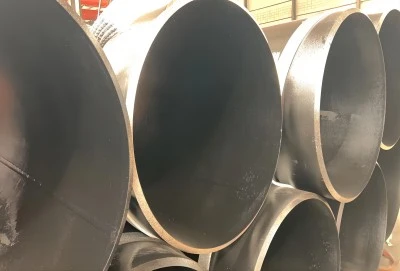
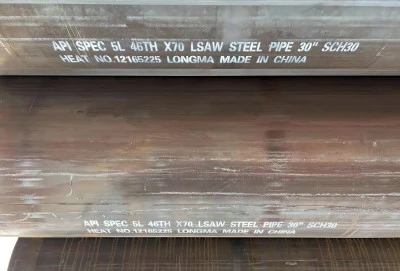
Corrosion in API 5L X70 Line Pipe
Corrosion in pipeline steel is caused by electrochemical processes between the metal's surface and the things around it. When X70 line pipe comes into contact with water, air, and electrolytes, like in dirt, seawater, or media that is being moved, iron atoms lose their electrons and dissolve, creating rust and other corrosion products. This breakdown happens faster in places with acidic soils, a lot of chlorine, and pipes that carry sour gas with hydrogen sulfide in it.
Types of Corrosion Affecting High-Strength Pipelines
There are several types of rust that can damage pipelines. Engineers can predict how much the wall will thin over time because uniform corrosion attacks the whole uncovered area at a steady rate.
- Pitting rust is more sneaky; it makes small holes that go deep into the steel wall, often leading to puncture before a lot of mass is lost.
- Galvanic corrosion happens when two different metals touch each other in a solution, with the more active metal being attacked first.
- Stress corrosion cracking happens when tension stress and corrosive surroundings work together to make cracks move through the pipe wall. This is especially dangerous in high-pressure situations.
Environmental Factors Accelerating Degradation
The chemistry of the soil is very important when it comes to underground cable corrosion. Soils that are low in resistance, have a lot of water in them, and have salts dissolved in them are good for electrical action. Soils that are too wet for bacteria to live in make sulfides that are bad for steel. Transported media also plays a role. For example, pipes that move wet gas, produced water with carbon dioxide dissolved in it, or crude oil with organic acids in it have problems with internal corrosion. Changes in temperature, operating pressure cycles, and damage from outside forces all make protective shields less effective and speed up the rate of degradation.
By understanding these processes, buying teams and engineers can figure out where the biggest corrosion risks are and come up with the best ways to stop them in different working conditions.
Key Principles and Methods to Prevent Corrosion in X70 Line Pipes
To stop corrosion effectively, you need methods that take into account the qualities of the material, the barriers that protect it, the control of electrochemistry, and the way it is used. No single method can completely protect you. Instead, using a mix of methods that work well together makes a strong defense against environmental damage.
Material Specification and Compliance
Starting with the right material specifications is the first step in making something resistant to rust. Compared to PSL1, API 5L X70 PSL2 pipe rules require tighter limits on chemical composition, notch toughness tests, and yield-to-tensile ratio controls. Lower carbon equivalent values make it easier to bond and less likely that hydrogen will cause cracks in bad service. Micro-alloying elements like niobium, vanadium, and titanium smooth out the grain structure, which makes the metal stronger and less likely to crack. When you buy line pipe for a corrosive environment, make sure the steel meets the metallurgical standards to prevent sulfide stress cracking and hydrogen embrittlement by selecting PSL2 with Annex H compliance for sour service.
Protective Coating Systems
Coatings on the api 5l x70 pipe outside are the first line of defense against damage from the surroundings. Fusion-bonded epoxy sticks well and doesn't react with chemicals, and it can be used at temperatures up to 110°C. Three-layer polyethylene systems have an epoxy primer, an adhesive copolymer, and a polyethylene topcoat. They provide better mechanical protection and moisture shields for uses that are underground or offshore. Even though coal tar enamel isn't used as much in new projects, it's still useful in some old ones. Internal coats keep fluids from corroding the metal. For example, epoxy linings protect against produced water and acidic crude, and cement mortar coatings are used in water transmission lines.
The quality of the coating treatment is just as important as the choice of material. Cleaning the surface according to NACE/SSPC rules gets rid of mill scale and other impurities, which makes sure that the coating sticks well. Holiday recognition finds flaws in the paint before it is installed. Longma Group offers a wide range of anti-corrosion services, such as hot-dip galvanizing, FBE, 2PP, 3LPE, and 3PE coats. These protective layers are put on in a workshop setting that ensures quality and consistency.
Cathodic Protection Implementation
Cathodic protection is a tried-and-true electrical method that almost completely stops rust. In this method, the steel pipe is used as the cathode in an electrochemical cell. This stops the iron from dissolving at the anode. Pipeline systems mostly use two ways. For long-distance transmission lines that need to be controlled in a fluid way, impressed current cathodic protection is a good choice. It uses rectifiers and inert anodes to send protected current into the pipeline. Sacrificial anode systems connect magnesium or zinc anodes to the pipe. These metals rust more quickly than steel, which protects the steel cathode. Because they are simple and reliable, sacrificial anodes are often used on offshore sites and in pipeline pieces that are far away from each other.
The right design takes into account the resistivity of the dirt, the quality of the coating, the shape of the pipeline, and the present needs. The protection potential is checked regularly at test stations to make sure it stays within the desired ranges, which are usually between -850 mV and -1200 mV compared to copper/copper sulfate reference electrodes. Corrosion can happen even if there isn't enough protection, and too much polarity can cause hydrogen embrittlement or layer separation.
Operational Maintenance and Monitoring
Installation is not the only way to prevent. Intelligent pigging programs use inline inspection tools to map the width of walls, find unusual rust, and find coating problems without having to dig up the ground. Cleaning pigs get rid of internal buildups that are home to harmful bacteria and make cells that concentrate in one area. Every so often, based on a risk estimate, pressure testing verifies the mechanical stability. Using automatic remote terminal units to check on the performance of cathodic protection lets changes be made in real time and system problems be found early.
External threats are lessened by environmental controls around pipeline routes. Managing drains to keep water from building up, keeping the coatings on api 5l x70 pipes that cross roads or rivers in good shape, and getting rid of plants that trap water all help to extend the life of the system. When coating alone isn't enough to protect against rust, internal corrosion inhibitors poured into gas lines or crude oil do the job.
Case Studies and Best Practices in Corrosion Prevention with API 5L X70 Pipes
Using combined corrosion avoidance techniques in the real world shows that they can keep pipelines intact over time and in a variety of working conditions. These examples show useful things to think about and lessons learned that can help with planning future projects.
Offshore Pipeline Applications
Subsea pipes are affected by corrosion from both saltwater on the outside and created fluids on the inside at the same time. A big offshore project in Southeast Asia needed API 5L X70 LSAW pipe with a three-layer polypropylene cover and impressed current cathodic protection with titanium anodes that had been plated and placed on the pipeline route. The epoxy coating on the inside kept the formation water and organic acids in the crude oil from corroding the metal. The mix increased the expected service life beyond 30 years. This was proven by inline inspection operations that showed little wall loss after 10 years of use.
The buying plan put a lot of weight on how experienced the maker was with applying coatings abroad and how strict the quality control was. The specification called for 100% ultrasonic testing of weld seams, holiday detection of coatings, and damaging testing, such as drop-weight tear tests, to make sure the crack arrestor was strong enough. During the qualification phase, engineering companies worked with the maker to look over the manufacturing process and watch important tests before approving mass production.
High-Pressure Gas Transmission
A transcontinental gas pipeline that went through deserts and farmlands picked API 5L X70 PSL2 pipe with an epoxy coating that was fusion-bonded and put cathodic protection units every 15 kilometers. Different types of dirt were used for the project, from dry sand with a high resistivity to clay with a low resistivity and a high rusting potential. The cathodic protection design was based on thorough earth studies, which helped find the best places for rectifiers and the best ways to set up the anode beds so that the current flowed evenly.
Lessons for Procurement and Engineering Teams
These cases make a few points clear. It is much cheaper to specify complete coating systems and cathodic protection during the initial planning phase than to fix problems that have already happened due to rust. Execution risks are lower when you choose makers with quality systems and technical depth that have been proven to work. When the procurement, engineering, and operations teams work together to make the specifications, they make sure that the material qualities, safety measures, and long-term upkeep plans are all in line with each other. Throughout the lifetime of a pipeline, asset integrity management is helped by records such as Material Test Certificates, inspection records, and as-built plans.
Conclusion
To keep API 5L X70 line pipes from rusting, you need methods that include choosing the right materials, applying protective coatings, using cathodic protection, and doing regular upkeep. The metallurgical basis is set by PSL2 agreement with strict chemical makeup and toughness standards. Coatings on the outside and linings on the inside protect against damage from the surroundings. Electrochemical processes can be controlled by cathodic protection devices, which almost completely eliminates corrosion. Regular checks and intelligent pigging find problems early, so they can be fixed before they become a threat to purity. Successful buying works with qualified makers who offer clear quality systems, technical support, and quick delivery. All of these things work together to make sure that pipeline assets provide decades of safe, dependable service in the harsh areas where high-strength line pipe is used.
FAQ
What role do alloying elements play in corrosion resistance of X70 pipe?
Micro-alloying elements like niobium, vanadium, and titanium smooth out the grain structure in API 5L X70 steel. This makes it stronger and harder to break, but it doesn't directly make it more resistant to rust. Formulations with less carbon are less likely to crack when hydrogen is present in sour service settings. Corrosion protection comes mostly from coats on the outside, cathodic protection, and linings on the inside, not from the steel's chemical makeup. Annex H requirements for bad service say that ultra-clean steel must be treated with calcium to control the forms of the inclusions and stop cracks from starting in places where hydrogen can build up.
How does cathodic protection prevent pipeline corrosion?
In the electrochemical corrosion cell, cathodic protection moves the steel in the pipeline to a cathodic state. This stops the breakdown of iron atoms, which is what causes corrosion. To add safe current, impressed current systems use rectifiers and inactive anodes. On the other hand, sacrificial anode systems connect more active metals like magnesium or zinc that rust more easily. The right potential ranges—usually between -850 mV and -1200 mV compared to a copper/copper sulfate reference—ensure good safety without damaging the layer or making the metal more fragile. Regular checks at test points and tweaks keep performance at its best.
Is standard X70 suitable for sour service applications?
Standard API 5L X70 needs extra rules to make sure it can be used safely in sour service settings with hydrogen sulfide. In order to meet the requirements of Annex H, steel must be made in a clean way, its inclusion shape must be managed through calcium treatment, and it must be tested for resistance to hydrogen-induced cracking and sulfide stress cracking. When properly defined and built, API 5L X70 made to Annex H works well in sour gas fields. However, standard material that doesn't have these controls runs the risk of failing early due to cracking processes that are only seen when H2S is present.
Partner with a Trusted API 5L X70 Pipe Manufacturer
To protect the integrity of the pipeline, you must first choose a dependable provider who knows how to handle the technical requirements and business facts of buying from other businesses. Longma Group has been making pipes for 20 years and can make both seamless and LSAW API 5L X70 pipes that meet API 5L PSL1 and PSL2 standards. Our products come in a wide range of sizes, from 1/2 inch to 80 inches in diameter and from SCH10 to SCH160 in wall thickness. They are backed by a number of standards, such as API 5L, ISO 9001, and workplace health and safety management systems. We offer full anti-corrosion services, including hot-dip galvanizing, FBE, 3LPE, and 3PE coats, all of which are done under controlled conditions to ensure quality. We support project plans without compromising because we produce more than 1,000,000 tons of goods every year and can send them in as little as 7 days for standard requirements. Email our team at info@longma-group.com to talk about your unique needs, ask for detailed documentation, and get quotes from other companies. Find out how working with a well-known manufacturer can improve the results of a project by providing high-quality goods, quick service, and expert support.