
Selecting the right API 5L X46 pipe in 2026 requires careful evaluation of certifications, material properties, and supplier reliability. This medium-strength line pipe grade, also known as L320, offers a minimum yield strength of 46,000 psi (317 MPa), making it ideal for low-to-medium pressure petroleum and natural gas transportation. Procurement directors must prioritize API 5L PSL1/PSL2 certification, verify manufacturing processes like ERW or LSAW, and confirm third-party inspection compliance to meet project milestones and ensure long-term operational integrity.
|
|
|
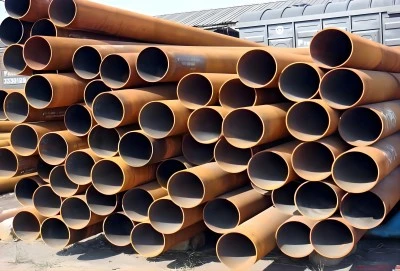
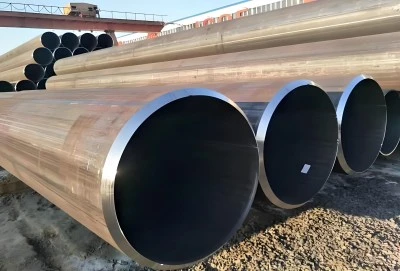
Introduction
The Middle East, Southeast Asia, and South America all have growing oil and gas infrastructure industries that are increasing the need for solid line pipe options. API 5L X46 pipe is a key material for EPC companies who are in charge of pipeline projects that cost millions of dollars. To avoid costly project delays, procurement leaders need to understand the technical specs, certification requirements, and quality guidelines as supply chains get more complicated.
This guide answers the most important questions that project-driven buyers have, like how to make sure that API compliance is met for third-party checks, how to make sure that large-diameter thick-walled pipes are delivered on time, and how to create quality documents that can be tracked from the mill to the field. Find the best suppliers for a new cross-country transmission line in Saudi Arabia or an expansion of a gathering system in Brazil with these tips. They will help your team make decisions based on facts that balance performance, cost, and supply chain reliability.
We will look at the properties of the material that make up this grade of pipe, compare it to other specifications, talk about good ways to buy things from other countries, and go over the quality control procedures that will protect your investment. By understanding these factors, your company can build long-lasting relationships with suppliers that allow projects to be worked on at the same time in multiple regions.
Understanding API 5L X46 Pipe – Key Specifications and Properties
The API 5L X46 pipe is part of the API Specification 5L standard, which sets the rules for steel line pipe used to transport oil and natural gas. The number "X46" means that the minimum yield strength is 46,000 psi (317 MPa). This puts it between Grade B (35,000 psi) and grades with higher strengths, such as X60. This amount of moderate strength strikes the perfect balance for moderate pressure uses where extra-thick walls would raise the cost of materials without adding to their usefulness.
There are two levels of product specification for the pipe. PSL1 is a set of standard quality requirements that control basic chemistry and mechanical properties. PSL2 has stricter rules on chemical composition, Charpy V-Notch impact tests to check how tough the material is to break, and higher limits on the highest yield-to-tensile ratios to make sure the material can be shaped while welding in the field. For projects that need to be resistant to bad service in H2S settings, X46 PSL2 made to NACE MR0175/ISO 15156 standards is needed.
Chemical Composition and Mechanical Performance
For seamless pipes under PSL1, the chemical makeup usually limits the carbon content to no more than 0.28%. Manganese is kept between 0.90 and 1.40% to improve strength without making it harder to solder. A silicon content of no more than 0.40% helps with deoxidation during production. The highest levels of phosphorus and sulfur are still limited to 0.030 percent each. This keeps the metal from becoming brittle and hot cracking during welding.
Other mechanical qualities besides yield strength include a minimum tensile strength of 63,100 psi (434 MPa) and certain elongation percentages that depend on the shape of the material. The carbon equivalent (CE) method helps figure out if a metal can be welded. Lower numbers mean there is less chance of heat-affected zone cracking. PSL2 grades keep the CE controls tighter, so they don't need to be heated up before they can be welded in the field when the temperature is moderate.
Manufacturing Methods and Dimensional Ranges
Different project needs can be met by using different manufacturing methods. For sizes up to 24 inches, Electric Resistance Welded (ERW) pipes are the most cost-effective option. Longitudinally Submerged Arc Welded (LSAW) pipes, on the other hand, are better for big diameters (16 to 80 inches). Even though it costs more, seamless production is better for high-pressure uses because the properties are all the same and there are no longitudinal weld seams.
Outside widths can be anywhere from 0.5 to 80 inches (21.3mm to 2032mm), and wall thicknesses can be anywhere from Schedule 10 to Schedule 160 (6.35mm to 59.54mm). Standard lengths of 6 to 18 meters make shipping easier and keep field joints to a minimum. Depending on the type of connection needed, pipe ends can be plain for threading or beveled for welding.
Comparative Analysis – How API 5L X46 Stands Out Among Pipe Grades?
Understanding the relationships between strength and cost is important for budget optimization when looking at pipe grades. API 5L X46 has a 31% higher yield strength than Grade B, but it can still be welded just as easily. Because of this, thinner wall schedules can have the same pressure ratings as thicker ones. This lowers the weight of the materials and the cost of shipping per project mile.
X46 has lower carbon equivalent values than X52 and X60 grades. This makes field welding easier and cuts down on the time needed for Quality Assurance/Quality Control (QA/QC) inspections. For gathering systems and distribution networks that work below 1,000 psi, the moderate strength level is enough. Higher-grade specifications would be too much engineering. Cost differences between neighboring grades are usually between 8 and 15%, which makes X46 a good choice when project requirements allow for it.
Material Alternatives and Application Contexts
ASTM A106 seamless pipe is another option for high-temperature use, but it can only handle up to 30,000 psi of pressure because it has a lower yield strength. When the right coating systems are used, API 5L X46 pipe is stronger and more resistant to corrosion at the same time. The API specification also includes detailed tolerances for sizes and testing rules that are in line with how the pipeline industry works.
Carbon steel options like ASTM A53 can be used for structural purposes, but they don't have the tracking paperwork and impact tests that are needed for pipeline service. Stainless steel grades are better at resisting corrosion, but they cost three to five times more than carbon steel that has been coated to protect it. Coated X46 pipe gives the best lifetime value for most oil and gas transportation projects.
Procurement Guidelines – How to Source API 5L X46 Pipe Effectively?
To start a successful procurement process, you need to get full technical specs from the project engineering papers. Material requests should make it clear what PSL level is needed, which manufacturing method is preferred, what the dimensions must be (including any tolerances), how the product must be finished, and if there are any other requirements, such as NACE compliance. Specifications that aren't clear can lead to mistakes in how the seller interprets them, which show up during third-party review.
Lead times depend a lot on how the product is made and how many of them are ordered. Standard-sized ERW pipes usually ship within 30 to 45 days. On the other hand, LSAW heavy-wall pipes may take 60 to 90 days, which includes mill scheduling and testing. Standard specifications can be met in seven days or less with expedited shipping plans, but there is an extra cost. Directors of procurement should make sure that placing orders fits in with the building plans of projects, taking into account the time it takes for goods to travel and clear customs.
Supplier Qualification Criteria
The American Petroleum Institute's online database can be used to check that the licenses of reputable makers are still valid for API 5L monograms. The license shows that the manufacturing, inspection, and testing protocols for APIs are being followed. APIs may do audits from time to time. Getting certified as an ISO 9001 Quality Management System gives you more confidence in the systems that control processes and keep track of them.
When buying for multi-phase projects that need consistent material properties across shipping batches, production capability is important. Companies that make more than 500,000 tons of goods a year usually have stable supply lines for raw materials from big steel mills like Shagang, TISCO, or Bao Steel. This vertical integration makes sure that the chemical composition stays the same from batch to batch, which is very important for the qualification of welding procedures.
Value-added services, on top of providing base pipes, make projects run more smoothly. Beveling services cut down on the time needed to prepare the job site, and factory-applied coatings like Fusion Bonded Epoxy (FBE), 2-layer Polypropylene (2PP), or 3-layer Polyethylene (3LPE) make it easier to move things around on-site. Cutting to the exact lengths cuts down on field waste and joint count. With these services, you only have to deal with one source of quality responsibility for all of your vendors.
Documentation and Compliance Verification
The basis of quality assurance is full mill paperwork packages. This is the Material Test Certificate (MTC) for EN 10204 Type 3.1 or 3.2. It has information about the chemical analysis, the mechanical properties, the heat treatment, and the measurements. Every length of pipe is given a unique heat number that can be used to connect test samples to specific production runs.
Third-party inspection records from SGS, Bureau Veritas, or Lloyd's Register can be used to confirm the test results provided by the maker. Witnessed tests, such as hydraulic pressure tests, non-destructive examination coverage, and measurement inspection sampling, should be included in these reports. The Inspection and Test Plan (ITP) lists "hold points" where important steps of production can be inspected by representatives of the client or third parties.
Manufacturing Procedure Specifications (MPS) spell out the steps that will be taken to make your order, including the heat treatment cycles and quality checkpoints. These documents help engineering teams make sure that the welding methods they use fit the properties of the real pipe, not just generic values. To avoid customs delays, procurement contracts should require that all paperwork be delivered at the same time as the shipment of goods.
Conclusion
When choosing API 5L X46 pipe in 2026, you need to pay close attention to the authenticity of the certification, the quality of the manufacturing, and the supplier's abilities. A successful procurement depends on having clear technical specs that are in line with the engineering needs of the project, carefully screening suppliers based on more than just price, and lots of paperwork that can be used for third-party checks. Because it is moderately strong and easily welded, X46 is a cost-effective choice for gathering systems and medium-pressure transmission lines where higher grades would make material costs go up for no reason. Structured quality verification protocols and building strategic relationships with suppliers are two ways that EPC contractors can make sure they have reliable material supply chains that allow them to work on multiple projects at the same time in different markets around the world. They can also keep the traceability and compliance documentation that owners need in order to approve the work.
FAQ
What distinguishes API 5L X46 PSL1 from PSL2?
For better weldability, PSL2 sets stricter limits on chemical composition and controls the maximum amount of carbon equivalent. Charpy V-Notch impact testing at certain temperatures makes sure the material is tough to break, and highest yield-to-tensile ratios make sure it can be bent. PSL2 doesn't allow weld fixes on pipe bodies and needs tighter limits on size, so it's best for high-stakes service situations while PSL1 is better for everyday transmission needs.
Can API 5L X46 replace lower-grade specifications?
The higher yield strength lets the wall thickness be lowered while still maintaining the same pressure ratings. This could lower the cost of materials even though they are more expensive per ton. Design verification is still important because the switch changes the standards for the welding process and could change the requirements for growth compensation. To stop galvanic corrosion at metal-to-metal contacts that are not compatible, engineers need to check if the new material will work with the old pipeline sections.
What typical lead times should procurement teams expect?
Standard ERW specifications from stock ship within 7–14 days, but custom orders that need specific production runs take 45–60 days. Large-diameter LSAW pipes with thick walls can be made in 75 to 90 days, which includes heat treatment and thorough testing. International shipping can add 15 to 30 days, based on the route from the origin to the location and how quickly customs clearance is completed. Early involvement in buying keeps delivery of materials from becoming a key path constraint.
Partner with a Trusted API 5L X46 Pipe Manufacturer
Since 2003, Longma Group has been making high-quality line pipe for EPC contractors in over 90 countries. Their products are API 5L certified and meet X46 PSL1 and PSL2 specifications. Our factories make more than 1,000,000 tons of steel every year using ERW and LSAW methods. The widths range from 0.5 to 80 inches, and the wall thickness goes up to Schedule 160. We only get our raw materials from the best steel mills in China, like Shagang, TISCO, and Bao Steel. This way, we can be sure that all of our output batches have the same chemistry and mechanical qualities.
For your third-party audit needs, full documentation packages with MTCs according to EN 10204 Type 3.1/3.2, Inspection and Test Plans, and Manufacturing Procedure Specifications are available. In line with API 5L and ISO 3183 standards, our quality control lab does chemical analysis, mechanical testing, ultrasonic examination, hydrostatic testing, and dimensional verification. Value-added services like beveling, FBE coating, 3LPE coating, and custom length cutting make project planning easier and keep responsibility with a single source.
Get in touch with our expert team at info@longma-group.com to talk about the details of your project and get competitive quotes from a dependable API 5L X46 pipe provider that guaranties on-time delivery and top-notch quality.








