
Selecting the right API 5L X56 pipe for your pipeline project in 2026 requires balancing certified quality, delivery reliability, and cost efficiency. This grade, also known as L390, offers a minimum yield strength of 56,000 psi (390 MPa), making it ideal for oil and gas transmission under moderate to high pressure. Successful procurement depends on verifying API 5L PSL1 or PSL2 certification, confirming manufacturing methods align with project specifications, and partnering with suppliers who provide comprehensive quality documentation and rapid turnaround times.
|
|
|
Introduction
The growth of pipeline systems is driven by the need for energy in the Middle East, Southeast Asia and South America globally. Choosing the proper grade of line pipe directly impacts project schedules, safety compliance and profitability for EPC contractors and project procurement heads responsible for oil and gas installations. API 5L X56 pipe is an important material standard widely utilized in the transport of oil and natural gas because it is strong, durable and flexible. With 2026 looming, evolving business norms, supply chain disruptions and new technology are pushing procurement professionals to rethink how they buy.
This article is intended for purchasing managers, pipeline engineers, QA/QC managers, and EPC contractors who are looking to purchase line pipes and make sensible purchasing decisions. We provide buyers with a complete picture of the industry including information on the materials used and how reputable each supplier is, so they can receive the best deal on price, quality and reliability in a very competitive market. Whether you are managing multimillion-dollar projects or searching for long-term supply agreements, knowing how to choose the proper X56 pipe can preserve your investment and put your organization on the path to success.
Understanding API 5L X56 Pipe – Specifications and Performance
The American Petroleum Institute specifies that API 5L X56 pipe is a high-strength low-alloy steel grade that is known for having a balanced chemical composition and mechanical properties. With a minimum yield strength of 56,000 psi and tensile strength of 71,000 psi, the X56 name means that the material is intended to work in high-pressure situations.
Chemical Composition Requirements
To get good performance you have to grasp the essential components. The manganese can be as high as 1.40% to make the metal stronger without making it brittle, while the carbon must be kept below 0.24% to keep the metal weldable. PSL2 specs are frequently rather tight as well, with a .015% sulfur max and .025% phosphorus max to prevent the particles that cause cracking. The regulated chemistry means that it is compatible with typical field welding processes without extensive pre-heating. This overcomes one of the greatest issues of project sites in multiple temperature zones.
Mechanical Properties and Performance
Because of the manner of its manufacturing, X56 pipe can be employed in medium- to high-pressure transportation lines. Along with the yield and tensile strength numbers, elongation values ensure that the material is flexible when bent in the field. Impact testing with the Charpy V-Notch shall be performed at temperatures as low as 0°C per PSL2 requirements. This prevents the propagation of ductile cracks, which is very critical for pipelines running through areas of temperature change or where ground movement is possible. Such fracture toughness fulfills the extremely crucial requirement of arresting the catastrophic brittle fracture under severe service circumstances.
Manufacturing Methods and Quality Impact
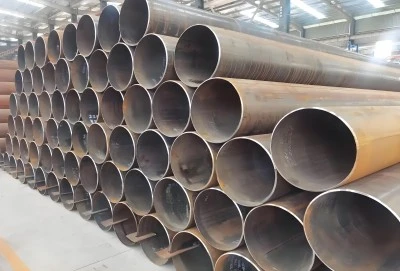
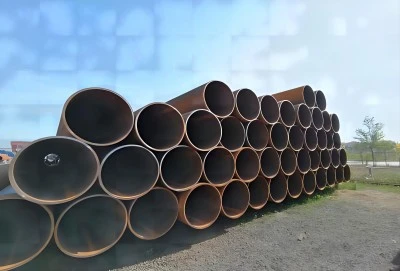
Manufacturing processes such as ERW, LSAW, DSAW and SSAW involving the fabrication of both seamless and welded pipes directly affect the soundness, rust resistance and longevity of pipes used in a broad variety of settings. The Electric Resistance Welded pipes are available from 1/2” to 24” diameters. The Longitudinally Submerged Arc Welded techniques are applicable to large diameters up to 80” with wall thicknesses from SCH10 up to SCH160. The heat treatment techniques applied after welding reinforce the welds and eliminate the residual stresses, increasing the reliability of the pipeline throughout its service life.
Comparison of API 5L X56 with Other Pipe Grades
It is important to compare X56 with nearby grades like X52, X60, and higher grades like X65 or X70 when choosing pipeline materials in order to get the best value for money and performance. These grades are different in terms of their mechanical strength, chemical makeup, and cost, which means they aren't all suitable for all pressure ratings and environmental conditions.
Strength vs. Cost Analysis
By falling in the middle of medium-grade pipes like Grade B (yield strength 35,000 psi) and high-grade pipes like X70 (yield strength 70,000 psi), API 5L X56 pipe offers the best wall thickness reduction compared to lower grades without the higher price of X70 material, which helps with budget issues in long-distance midstream transmission. The higher strength-to-weight ratio lets for thinner walls than Grade B pipe for the same operating pressure, which lowers transport and installation costs—a big plus for contractors in charge of large pipeline networks.
Weldability Considerations
X56 often has a lower carbon equivalent than X65 or X70. That makes it a bit easier to weld because there is less chance of cold cracking and maybe no pre-heat needed, especially out in the field. This real plus means less time & money spent on labor in installation, a great benefit for projects with tight milestone dates. The controlled chemical composition facilitates the qualification of welding techniques in the diverse environmental circumstances encountered in worldwide projects.
Service Environment Suitability
By providing a detailed comparison, procurement teams can identify the optimal balance between upfront investment and ongoing savings in maintenance and operations, thereby minimizing the total cost of ownership for pipeline projects. Stainless steel pipes are more corrosion resistant but significantly more expensive. The cost benefit analysis must be done for the service conditions. X56MS specs with HIC and SSCC testing to NACE MR0175 provide the required hydrogen-induced cracking resistance for sour service applications with hydrogen sulfide without moving up to premium alloy grades.
How to Evaluate API 5L X56 Pipe Suppliers and Brands?
When buying line pipes, it's very important to choose a reliable supplier. This affects project delivery, quality control, and the stability of the supply chain in the long term. Some of the most important things to do are to check the supplier's industry certifications, do factory audits, and figure out how much production can meet demand.
Certification Verification
The API 5L certification from the American Petroleum Institute is the bare minimum, and it indicates that the production techniques used to make the line pipe match the defined specifications. ISO 9001 Quality Management Systems accreditation means you have continuous quality control throughout the production process. Additionally, suppliers should possess pertinent regional certifications like ISO 14001 for environmental management and ISO 18001 for occupational health and safety, reflecting their comprehensive dedication to operational excellence. You may also be asked to provide current copies of certificates with valid dates to ensure certifications cover your project duration, which is critical when project cycles are 12 to 24 months long.
Production Capacity and Technology
“Leading manufacturers possess manufacturing capabilities that provide a competitive advantage in quality, consistency and supply chain resilience. For example, production facilities equipped with high-tech inspection tools such as ultrasonic testing, X-ray testing and hydrostatic testing systems enable finished pipes to be checked without hurting them in any way. Automatic welding lines with possibilities for post-weld heat treatment guaranty that all manufacturing batches have the same mechanical qualities. The company has an annual production capacity of over 1,000,000 tons, allowing it to handle many projects simultaneously without impacting delivery timelines, a critical factor for major EPC contracts with phased deliveries.
Quality Documentation and Traceability
All of them need to be trackable through the whole manufacturing process from raw materials to completed goods. Material Test Certificates (EN 10204 3.1 or 3.2) state the chemical composition and mechanical properties of each thermal batch. Welding and heat treatment conditions are specified in the Manufacturing Procedure Specifications. Quality control will be performed at the stages specified in the Inspection and Test Plans during manufacture. Third party inspections by SGS, Bureau Veritas or similar organizations provide independent validation, establishing confidence during owner audits. This paperwork package is critical for project commissioning and regulatory compliance checks.
Delivery Capabilities and Logistics
By monitoring stock levels in real time, lead times and negotiating suitable payment and delivery terms clients can avoid expensive delays that put contract milestones at risk. Suppliers stock typical specs for fast deployment and some can offer standard sizes within seven days. Special specifications such as big diameters or heavy wall thicknesses have realistic production lead times of 30 to 60 days depending on order volume. The approaches for supplier evaluation allow clients to procure reliable pipes and reduce the supply risks. Shipping logistics and raw materials availability will continue to be a concern for global supply chains in the shifting market in 2026.
Conclusion
For projects commencing in 2026, selecting API 5L X56 pipe necessitates a rigorous strategy incorporating technical standards, supplier capabilities and commercial terms. If you know the mechanical qualities of the material and how it may be made in different ways, you can make intelligent comparisons with other grades. Procurement risks are reduced by careful assessment of suppliers according to their certifications, production capability and quality paperwork. Welding techniques, installation practices and maintenance plans are important aspects in pipeline integrity management during the service life of pipelines. By applying the evaluation frameworks given in this guide, procurement professionals will be able to select linepipes that fulfill project needs and maximize cost and schedule performance in an increasingly competitive global market.
FAQ
What distinguishes API 5L X56 PSL1 from PSL2?
PSL1 is a standard quality that meets basic mechanical property needs for most pipeline applications. PSL2 has stricter limits on chemical composition, including carbon equivalent limits, requires Charpy V-Notch impact testing to check fracture toughness, and sets maximum yield strength caps to avoid too much brittleness. PSL2 is needed for high-pressure or dangerous gas transmission where extra safety margins are needed.
Can standard X56 pipe be used in sour service environments?
Standard X56 pipe isn't always good for sour service with hydrogen sulfide. You need to specify API 5L X56MS or PSL2 with HIC and SSCC testing according to NACE TM0284 standards. This makes sure the steel chemistry is clean enough (with controlled sulfur and phosphorus levels) to withstand hydrogen-induced cracking in H2S environments, which is what NACE MR0175 says should happen.
How does X56 compare to the European L390 grade?
The specifications for X56 and L390 are pretty much the same. The ISO 3183 standard, which is aligned with API 5L, says that L390 must have a minimum yield strength of 390 MPa, which is the same as X56's requirement of 56,000 psi (about 386 MPa). The chemical composition limits and mechanical property ranges for both grades are similar, so they can be used interchangeably in international projects.
Partner with Longma Group for Your API 5L X56 Pipe Requirements
If you require certified line pipe on schedule for your EPC project, trust API 5L X56 pipe manufacturer Longma Group. We produce ERW and LSAW pipes from SCH10 to SCH160 and diameters from 1/2" to 80" since 2003. We have produced more than 1,000,000 tons. Our API 5L accreditation includes PSL1 and PSL2 criteria, and our ISO 9001, ISO 14001 and ISO 18001 certifications guaranty that each pipe fulfills the worldwide quality standards your projects demand.
We understand the difficulties EPC contractors face in meeting contract deadlines, which is why we keep common specifications in store so we can deliver within seven days for urgent demands. We have state of the art manufacturing facilities to support custom requests with short lead times. We also offer full paperwork to assist you with your project audits and regulatory compliance requirements such as Material Test Certificates in accordance with EN 10204 3.1/3.2, Inspection and Test Plans and third party inspection reports from SGS or Bureau Veritas.
Please contact our technical team at info@longma-group.com to discuss your project needs, acquire full pricing and schedule factory audits. You can also visit longma-group.com to view our full range of products and discover why engineering contractors in 90 countries chose Longma Group as their first choice for critical pipeline infrastructure projects.








