
To find a good source for ASTM A672 A55 pipe, you need to look at their certifications, production skills, supply chain stability, and customer service after the sale. Managers in charge of buying things should check the supplier's mill test certificates, third-party inspections, and quality control processes. They should also make sure the supplier can deliver custom solutions on time. Setting up clear lines of communication, looking at how past projects went, and learning about the technical details of electric-fusion-welded steel pipe are all important steps to take to make sure the project meets international standards and is successful in the long run.
|
|
|
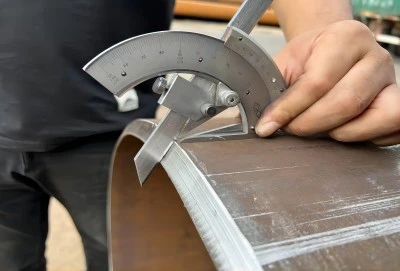
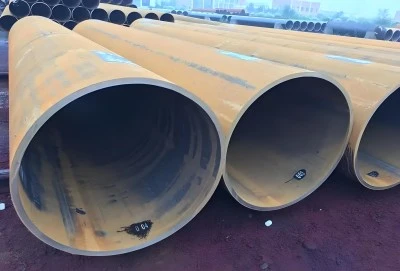
Understanding ASTM A672 A55 Large Diameter Welded Pipe Specifications
Understanding what an ASTM A672 A55 pipe is and how it works is very important before talking to possible providers. With this information, you can clearly explain what you need and see if suppliers can meet your exact requirements.
What Makes ASTM A672 A55 Unique
The ASTM A672 A55 pipe is made from pressure-vessel-quality plate that has been electric-fusion-welded. It is specifically ASTM A516 Grade 55. Series A low-carbon base steel plate with a minimum yield strength of 55 ksi (379.225 MPa) is what "A55" stands for. This grade of material stands out because it is very tough and easy to weld at moderate temperatures. The specification covers pipes with an outside diameter of 16 inches or more. This makes it perfect for large-scale infrastructure where making seamless pipes would be too expensive.
Along with filling metal, longitudinal submerged arc welding (LSAW) is used to make the product. This makes a strong joint that meets the standards of the ASME Boiler and Pressure Vessel Code. Electric-fusion welding, on the other hand, gives more accurate measurements for bigger diameters while keeping the structure strong in high-pressure operation conditions at normal temperatures.
Key Material Properties and Performance Characteristics
Knowing the basic properties of a material helps you check what the seller says and make sure it fits the needs of your project. The low carbon and manganese content gives this grade the lowest carbon equivalent of all the grades that are close, so there is no need for a complicated heat treatment after welding. This feature cuts down on production time and costs by a large amount while still providing excellent performance in cold bending and expanding forming operations.
The mechanical features are better than Series B and C grades of the same strength when it comes to Charpy impact toughness at room temperature and low temperatures, with almost no chance of welding cracking. For long-term use, the material works reliably up to about 340°C, but its mechanical strength drops quickly at higher temperatures that stay in place for a long time. When compared to grades B60, B65, B70, and C60, A55 has less structural strength, so the walls need to be thicker to keep the same working pressure. This trade-off does, however, come with big cost savings because the material is made from standard low-carbon pressure vessel steel pieces.
Application Environments and Industry Use Cases
ASTM A672 A55 pipe is very important in many different types of industries. In power plants, it works in the main steam and feedwater systems, where large-bore pipes have to be able to handle constant high-pressure cycles without getting worn out. In petrochemical refineries, this pipe is used as the main path for hydrocarbon processing units. The quality of the pressure tank provides safety against the corrosive pressures inside the unit.
These pipes are used in compressor stations and manifold headers by midstream oil and gas companies because they are available in large diameters and thick walls. This feature makes it easier for fluids to move quickly even when there are big differences in pressure, even when they need to go through rough terrain that needs to be stable. Low-pressure, medium-temperature steam pipes, cooling water circulation lines, non-critical process fluid piping, and projects with strict forming and welding standards but lower pressure loads are some of the other uses.
Core Criteria for Evaluating ASTM A672 A55 Pipe Suppliers
Comparing unit prices is only one part of choosing the right ASTM A672 A55 pipe supplier. A thorough evaluation method will help you work with makers who can provide consistent quality, follow regulations, and provide quick support throughout the entire project lifecycle.
Certification and Quality Documentation Requirements
Evaluations of suppliers are based on thorough checks of certifications. Manufacturers who are qualified keep their API 5L certification, ISO 9001 Quality Management Systems certification, and other qualifications that show they follow foreign standards. These certifications show that the production process is regularly checked by a third party and that quality control procedures are written down.
Mill Test Certificates (MTCs) keep track of chemical makeup, mechanical properties, and heat treatment records for materials from raw materials to final goods. Suppliers with a good reputation also give complete paperwork packages that include full testing records, Inspection and Test Plans (ITP), and Manufacturing Procedure Specifications (MPS). A supplier's ability to show Factory Production Control (FPC) certificates, ISO 14001 Environment Management Systems, and OHSAS 18001 Occupational Health and Safety certificates shows that they are dedicated to safe and environmentally friendly production.
Manufacturing Capabilities and Process Control
Production capacity has a direct effect on delivery times and the quality of the products. Suppliers with modern factories that make more than 1,000,000 tonnes of goods a year show that they have the infrastructure to handle large orders without lowering the quality. Modern electric-fusion-welding tools make sure that longitudinal welds are precise, with even penetration and few defects.
Process control measures tell the difference between great providers and average ones. It is best to buy from companies that use high-tech checking tools like ultrasonic testing, x-rays, and hydrostatic pressure testing methods. For welds to meet certain requirements, heat treatment procedures must strengthen them, and controlled furnace operations must make sure that the material properties are the same throughout each production run. Suppliers who get their raw materials from well-known steel mills like Shagang, TISCO, BX Steel, and Bao Steel show that they care about quality from the very beginning of the production process.
Supply Chain Reliability and Value-Added Services
How well the supply chain works affects when and where things get to their destination. Look at a supplier's transport networks, how much experience they have sending to your area, and how often they've kept their delivery promises. Suppliers that have a presence in more than 90 countries usually have good shipping partnerships and know what paperwork is needed for each country.
Value-added services, on top of just supplying pipes, make projects run more smoothly. Suppliers can send parts that are ready to be installed because they can join, perforate, expand, and treat the ends of links so they fit together properly. Services that stop rust, like hot-dip galvanizing, Fusion Bonded Epoxy (FBE), two-layer polypropylene (2PP), three-layer polyethylene (3LPE), and 3PE coating, make things last longer in tough conditions. Flexible order quantities, cutting services that can be customized, and expert help for consultations all show that the business is focused on the customer and can adapt to changing project needs.
Practical Steps to Source and Procure ASTM A672 A55 Large Diameter Welded Pipes
Using a structured approach to procure ASTM A672 A55 pipes lowers risk, finds the best prices, and builds relationships with suppliers that will help with current and future projects.
Identifying and Vetting Potential Suppliers
Use industry databases, trade groups, and verified company directories to start finding suppliers. Platforms that focus on industrial materials connect people who want to buy with makers who have clear quality systems and experience exporting. Check out the company's online presence, which should include detailed product specifications, a list of certifications, and customer reviews that show how reliable the business is.
To directly confirm production capabilities, ask for audit reports or set up plant visits. Documentation alone can't show how mature an operation is; seeing the production halls, review processes, and quality control systems in action does. Suppliers who are open to openness show that they believe in their processes and want to make sure their customers are happy.
Requesting Quotes and Evaluating Proposals
Make thorough request for quote (RFQ) papers that list the diameter, wall thickness, length, number, shipping location, and due date. Include any licenses or testing procedures that are needed, as well as any extra services that will add value, like special cuts or coating. Clear RFQs help with price and communication by removing misunderstandings.
Instead of just looking at the unit price, look at proposals as a whole. Look at the total landed cost, which includes shipping, insurance, and any customs fees. Check the lead times, payment terms, and minimum order amounts against the project plans. Suppliers who give technical help, samples, and open order changes show a relationship attitude that is useful throughout the project.
Negotiating Terms and Establishing Quality Agreements
There is more to negotiation than just lowering the price. Talk about quality hold points, chances to be a witness during an inspection, and when documents need to be delivered. Set clear standards for acceptance that are based on limits for dimensions, mechanical features, and surface quality. Put these deals in writing by using purchase orders or supply contracts that protect both sides.
Include instructions on how to handle non-conformances, how to repair items, and the terms of the guarantee. Make it clear who is responsible for logistics by stating the delivery method, packaging needs, and points where risk is transferred. Strong contractual bases stop disagreements and make sure that everyone in the supply chain is responsible.
Case Studies: Successful Procurement of ASTM A672 A55 Pipes
Real-life examples of buying show the rules that make ASTM A672 A55 pipe seller partnerships and project results work.
Midstream Oil & Gas Infrastructure Project
For an expansion at a compressor station in Southeast Asia, a multinational engineering firm needed 2,000 tonnes of large diameter welded pipe. The purchasing team looked at several providers and ranked them by API 5L licensing, output capacity, and experience delivering to the area. After checking out the manufacturer's facilities and references, they chose one that had worked on similar projects in the Middle East and Australia, including the MOBIL OIL AUSTRALIA project.
During negotiations, quality hold points were set up at key stages of production. This let the contractor's inspection team see hydraulic testing and sound examination. The seller gave all the necessary MTC paperwork and set up consolidated shipping, which cut logistics costs by 18% compared to other quotes. Field changes were handled by on-site expert help during installation, and the job was finished two weeks early with no material rejections.
Lessons in Transparency and Risk Mitigation
In another procurement situation, there was an increase of the water supply system that had to be done quickly and in strict accordance with local rules. The purchasing manager gave more weight to suppliers who offered complete documentation packages that included ITP, MPS, and inspection reports from a third party. Communication methods set up weekly reports on production and photos to show how things are going with production.
When delays in delivering raw materials put the deadline at risk, the supplier brought it to the customer's attention and suggested getting the materials from secondary approved mills instead. Because of this, the procurement team was able to change the project's schedule and keep the trust of all stakeholders. To keep their original delivery promises, the seller paid for faster shipping, which built trust and made them the chosen vendor for future jobs. This experience showed how responsive suppliers and clear communication can lower the risks that come with complicated industrial procurement.
Conclusion
To find a good ASTM A672 A55 pipe provider, you need to carefully look at their certifications, production skills, supply chain dependability, and customer service systems. By comparing options, understanding material specs, and using structured buying methods, you can lower risk and get better results from your projects. Partners work well together when providers show technical know-how, clear communication, and a dedication to quality throughout the whole process of making and delivering the goods. By using these criteria and learning from well-documented case studies, procurement professionals can find materials that meet safety standards, delivery deadlines, and budget limits. They can also build relationships with vendors that will help the business succeed in the long term.
FAQ
1. What distinguishes ASTM A672 from ASTM A671 pipes?
Both standards cover carbon steel lines that have been electric-fusion-welded, but A672 is for high-pressure service at mild temperatures, while A671 is for atmospheric and lower temperature uses. The testing requirements are very different. A672 allows weld samples to be taken from 500-foot lengths of pipe and allows for resampling if the first tests fail, but A671 only allows samples from 200-foot lengths and does not allow for resampling. Even though these are different, pipes of the same grade (like A672 C60 and A671 CC60) use the same raw material plates and have the same end mechanical features.
2. How does heat treatment affect A672 A55 pipe performance?
The heat process affects the strength of the weld, the release of residual stress, and the general mechanical qualities. The low carbon level of A55 grades makes heat treatment easier than with higher-strength grades. Controlled heat treatment processes make welds stronger, tougher, and more stable in terms of their dimensions. Proper heat treatment records kept in MTCs show that pipes went through the right thermal processing to meet project and specification needs.
Partner with a Trusted ASTM A672 A55 Pipe Manufacturer
Longma Group offers certified large diameter welded pipe that is backed by 20 years of manufacturing excellence and a wide range of quality systems. Our factories make more than 1,000,000 tonnes of steel every year. They get their products from top mills like Bao Steel and HBIS and keep their API 5L, ISO 9001, and FPC certifications. We offer full paperwork packages, manufacturing services with added value, and quick technical support that turns buying from a one-time transaction into a strategic relationship. Get in touch with our team at info@longma-group.com to talk about your project needs and see why we're a trusted seller in more than 90 countries.








