
To store and transport black coated steel pipe correctly, keep every length off the ground on padded supports and shield it from water and prolonged sunlight. Stack pipe by size and lot, chock the stack against rolling, and cap the ends. Lift only with soft slings or padded forks. For shipping, use padded bearers, secure the load against movement, and use ISPM 15-compliant wood for export. On arrival, check the coating with a holiday detector and repair damage with a compatible material. These steps protect the coating, which determines how long a buried pipeline lasts.
I wrote this guide for EPC contractors, procurement directors, and QA/QC teams who need pipe to reach the trench in the condition it left the mill. A quick note on terms: "black steel pipe" often means plain carbon steel with a dark mill-scale surface. Here, I mean pipe with an applied black coating, which is what the handling rules below protect.
|
|
|

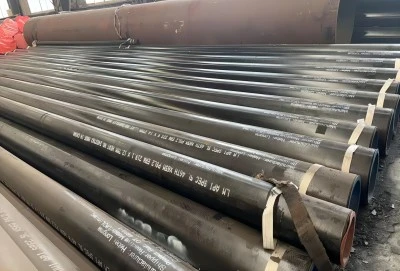
Identify Risks Before Shipment and Storage
Moisture and Corrosion Risks
Water, mist, rain, and wet boxes are the first things that can damage a pipe that is hidden. It is possible for water to get caught under a cover or wrap and damage the film below. This can leave rust lines and separate the damaged areas from the coating. The salty air near the coast is bad for bare steel at the ends of pipes or in holes. From the mill to the site, I think you should make a map that shows any port yards or temporary laydown areas. You should also draw a line around where the pipe will rest without being locked down. It is also important to remember to use stored time. The risks are different for six months on the coast compared to a few days in a dry yard. Also, look at the coating's information sheet to find out how long it can stay outside. Paints made from plastic may chalk if they are left out in the sun for a long time.
Mechanical and Chemical Hazards
Handling is the main way that coatings get damaged. When pipes rub against each other, sharp edges, pulling, or a lot of building pressure can cut or crush cloth. Things get more dangerous as groups get bigger. Our black coated steel pipe range has walls that are between 6.02 mm and 50.8 mm thick and an outside diameter of between 60.3 mm and 1422 mm. A heavy length that moves can quickly wear through film. The chemicals are also very important. Acids, salts, and fuel spills can soften or stain some coverings. Pipes shouldn't be near chemical drums, fuel tanks, or places where concrete is made. Before you decide where to put the covering, ask the company that makes it what the chemical protection limits are.
Pre-Storage Inspection and Records
I believe that a written check should be made before a lot of things are put away. Look at the number, length, grade marks, rust, dents, scratches, broken ends, and dents. Check out how even the coating is too. There should be a link between each lot and its buy order, mill certificate, final report, and heat number. This record will show you where you stand. If someone doesn't agree on a spot or holiday, you can show them how the pipe looked at the beginning. It also helps the field team make sure that every pipe has the right diameter and coating before it leaves the yard. A cheap and useful way to keep track of things is to write the date on each picture of each box.
Store Black Coated Steel Pipe Correctly
Indoor Storage Conditions
Black coated steel pipes should be kept in a clean, dry space with lots of airflow. Heat, chemical vapors, and humidity should all change quickly. Condensation happens when warm, wet air meets cold steel. Place the pipe on posts made of wood or rubber that are above the ground. You should leave space between the posts so you can move things around. It's not safe to grind, weld, or work with chemicals on it because sparks and splatter can burn through the covering. If you don't want to seal off the ends, let air flow around the pipe body. The newest lots should go in first, and the oldest ones shouldn't stay for too long. Keep the forms for each lot next to the stack.
Outdoor Storage Setup
You need a plan because a lot of projects don't have a place outside to store things that is covered. Start by making the base. So the pipe doesn't hit any water or dirt, the ground should be level, drain well, and have raised beds. They let air flow through but keep out rain and direct sunlight. This can happen if you put plastic over a damp pipe that doesn't let air pass over it. This hurts the pipe more than keeping it open. After it rains, snows, or gets really wet, check to see if the beds have sunk. Write down the date of each check in the log because it can be used for QA files and warranty talks. If you want to keep something for a long time, fix any finish damage right away.
Stacking, Separation, and Long-Term Checks
To stack them, go through these steps: by lot, grade, wall thickness, and width. Put the bigger pipe at the bottom and use chocks to keep the pieces on the outside in place. The stack won't be able to move. Spread the weight out between the layers with good dividers made of wood, rubber, or something else. This will make sure that the finish doesn't get too stressed in one spot. Do not guess; instead, look at the project plan or the data sheet that goes with it and follow the stacked limit. Before putting it away for a long time, check the coating, the mark, the supports, the wrapping, and any water buildup on the ends of the pipes. It might need to be fixed or put back together. In order to keep tracking safe, most EPC rules say that real stickers must be used.
Package, Load, and Ship Without Damaging the Coating
Packaging for Domestic and Export Shipments
The finish, markings, pipe shape, and coating are all protected by the packaging. Most bundles are made with strong straps with edge guards, wooden supports, dividers that don't scratch, end caps, wrapping that doesn't get wet, and labels that are easy to read. When you send black-coated steel pipes overseas, you need to think about things like customs, ocean humidity, and salt exposure more ahead of time. When wood is used for packaging, ISPM 15 says it must be treated wood with a stamp that says it's okay. At the port, US Customs and Border Protection checks this to make sure it's true. A load is put in a container, on a flat rack, or as break bulk based on its length, width, and weight. There should be information about the coating, amounts, sizes, weights, and how to handle the items on the packing lists. There should also be bundle numbers.
Lifting and Loading Practices
Every lift should be done by trained teams with the right tools for the length and weight of the bundle. Soft slings, lifting tools with pads, forks that are protected, and beams that spread out can help keep things in good shape and keep loads from being uneven. Never let sharp hooks, chains, or wire rope that hasn't been protected touch a surface if you don't want to damage it. Check trucks, trailers, and bins for trash, dangerous edges, water, and floor damage before you move. Under each layer, put a clean piece of wood or rubber. It doesn't matter how far away you are; don't drop or drag pipe across its bed. The collision might have broken the finish, but there would be no sign of it.
Securing the Load in Transit
The plant sent this pipe out in great shape, but it breaks on the way to the customer. The load can't move from side to side or length to width because of the lashings, blocks, supports, edge guards, and wood pieces that are in place. If you tighten the steel straps too much, you could damage the finish or bend thin-wall pipe. When things are shipped by sea, they are affected by changes in temperature, shocks, port workers' handling, and air from the coast. It might take a long time to get through customs. Also, make sure the covers don't let air in so water doesn't build up. Ask the people who are handling the cargo to let you know if it is being moved around or treated badly before it is unloaded. Picture the lashing from the day the cargo was loaded and keep them as proof.
Inspect on Arrival and Match Handling to the Application
Receiving Inspection
Have someone check the box before they leave if you can. Check the length, the marks, the lack of bundles, the amount, the size, the grade, the number of bundles, the amount, the packing, the end protection, and the way the black coated steel pipe coating looks. Small scratches, deep scratches, pinholes, holidays, blisters, peeling, delamination, color changes, and impact cracks are some of the things you should look for. You may also want to clean the surface, see if it sticks, look for holiday patterns, or measure the dry film's thickness if the project calls for it. On the delivery ticket, you should write down the bundle numbers, addresses, and carrier details right away. You should also take a picture of any damage. This record proves that claims are true and finds out if the damage started during shipping or when it arrived at the destination.
Repair and Field-Joint Compatibility
If a coating has a small flaw, it can usually be fixed with a coating material that is made to work with flaws. They need to work together. Make sure the repair patch or field-joint coating will stick to the factory coating before sending the parts to the job site. You can call the coating supplier to find out. The tests that must be done on each type of coating are set by standards. These include ISO 21809-1 for polyolefin coatings, DIN 30670 for polyethylene, DIN 30678 for polypropylene, CSA Z245.20 for fusion-bonded epoxy, and AWWA C210 and C213 for epoxy-based water pipe coatings. Any big cracks or form changes should be looked at by the provider or the engineer of record.
Matching Handling to the Final Application
The tool tells you how to handle things. Most of the time, oil and gas lines need to be fully traceable, have approved coatings, be able to take contact, be checked over the holidays, and have controlled field-joint safety. Inside water lines might need to be cleaned, have their ends taped off, and have safe linings for the water they carry. The outside of the building pipe can't get dents, bends, or other damage that can be seen. More care needs to be taken with fire sprinkler pipe ends that have threads or grooves, and the inside needs to stay clean. The group should decide how long they are kept, how long they are outside, what supplies they need, and how often they are checked. This shouldn't be based on how the yard is usually run.
Avoid Mistakes and Control Shipments with Your Supplier
Common Mistakes That Damage Coating
Most handling problems are caused by a few easy mistakes. You shouldn't lift or fix all FBE and 3LPE black-coated steel pipes the same way because they work in different ways. The coating will come off the pipe if you put it straight down on dirt or concrete. The water will stay in. Covers that keep air out catch water that builds up on wet pipes. Hooks and chains that don't go anywhere only scratch the surface. Things that aren't tied down get hit over and over again as trucks and containers move them around. It's easy to avoid making a mistake, but it takes a lot to fix it on the job.
Supplier Evaluation and Documentation
They should be able to do both polishing and pipes. When there is only one source, the mill and the coater can talk to each other better. You should know the steel grade, what it's made of, the measurements, the tolerances, the type and thickness of the coating, how the surface is prepared, how the end is finished, the standards, the testing, the packing, and the marking before you place your order. Since 2003, Longma Group has been making ERW and LSAW steel pipe. By the end of 2023, they'll be making more than 1,000,000 tons of it each year. Steel comes from domestic mills, like TISCO and Baosteel. The raw materials to the finished goods are all things that we can keep track of. You can also get FBE, 2PP, 3LPE, and 3PE from us. We also have papers for ITP, MPS, and MTC. If the order is big or important, have someone else check the containers and watch as they are loaded.
Practical Storage and Transport Checklist
This list can be used by the project, warehouse, logistics, and buying teams.
- Before shipment: Confirm all the details, like how long the coating needs to dry, the inspection results, the packing, the moving tools, and the papers that show how the product was made. Make sure each bundle has clear labels that say how much it weighs. Write the date on a picture of each load before it leaves the yard. This way, you'll always remember how it looked when it was first picked up.
- During loading and storage: Use safe straps, lift with tools that are safe, and make sure the load is even. Do not pull or drop the pipe. As well as being off the ground and well-ventilated, the pipe should be clearly marked, kept dry, and checked often. For the QA file, write down each check that you do.
- At delivery: Before unloading, check the box to make sure it was not broken and take pictures of it. Also make sure the numbers and marks on it are correct. Double-check that the coating's shape and size meet the needs. Then, write down all the problems on the paperwork before the delivery person leaves. That way, if someone makes a claim, they have proof.
Conclusion
A black coated steel pipe will only keep a pipeline safe if the coating arrives intact. The main things that damage things are water, handling effects, chemicals, and changing loads. This is why shipping and storage controls are based on these problems. Pipes should be stacked by size and lot on padded stands above the ground, under breathable covers, and lifted with soft slings. You need to think about the width, the path, and the ISPM 15 rules for export when you package and lash. Before and after delivery, claims are backed up by inspections, and any materials used to fix something must work with the factory finish and the rules that govern them. These rules are different for different uses, like oil and gas, water, building, and fire system service.
FAQ
1. Can I store black coated steel pipe outdoors?
Yes, with things that let air pass through them, the pipe can be used as long as it is on high beds and not in the water. The info sheet for the cover will tell you how much sun it can stand. You can see the stack after it rains.
2. What lifting equipment protects the coating?
You can use soft, padded ones, forks with guards, and spreader beams. Don't use chains, hooks, or wire rope that isn't covered on the smooth surface.
3. Can I repair minor coating damage on site?
Yes, most of the time. First, clean up and get the place ready. After that, fix it with something that matches the finish. Any major flaws, damage, or deformation should be looked at by a seller or expert.
4. What does export packaging need?
It has to deal with the salty water, the heat, and the customs checks. The wooden boxes need to follow the rules in ISPM 15. Labels and end caps that are clear keep the pipe ends safe and make them easy to find.
Request a Black Coated Steel Pipe Quote from Longma Group
Longma Group makes black coated steel pipes with ERW and LSAW production. They can coat FBE, 2PP, 3LPE, and 3PE. They can also provide full ITP, MPS, and MTC documents. Email info@longma-group.com with the pipe's size, wall thickness, grade, finishing standard, number, and the address where it needs to go. When we get back to you, we'll give you a price quote and a plan for how to package it.