
To verify ISO 3183 L415 pipe quality before purchase, you need to check three things: documentation, manufacturing process, and third-party inspection results. Start by requesting the Mill Test Certificate (MTC) to confirm the pipe meets the minimum 415 MPa yield strength and 520 MPa tensile strength under PSL1, or the tighter PSL2 thresholds. Then review the supplier's API 5L certification, welding records, and NDT reports. Finally, arrange an independent inspection through SGS or Bureau Veritas before shipment. This process protects your project from costly non-conformance failures.
|
|
|
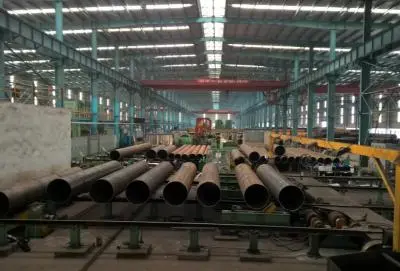
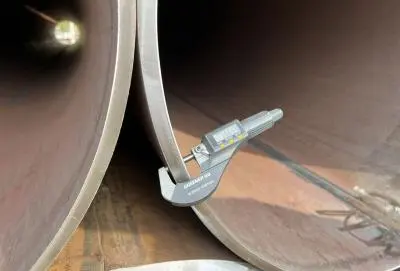
Understanding ISO 3183 L415 Pipe Specifications and Requirements
You need to know exactly what this grade calls for before you can check the quality. The ISO 3183 series goes all the way up to ISO 3183 L415 pipe and is the same as API 5L X60. Its name comes from the fact that it has a minimum yield strength of 415 MPa. This means that engineers can specify thinner wall widths while keeping the same pressure grade. This means that on large-diameter projects, much less steel is used overall.
Mechanical Property Thresholds
At least 415 MPa of yield strength and 520 MPa of tensile strength must be present in PSL1. This is made stricter in PSL2; the yield range is now 415–565 MPa and the tensile range is now 520–760 MPa. The yield-to-tensile ratio must be less than 0.93. That ratio cap isn't just for looks; it keeps high-pressure gas trunklines from breaking apart when there is a rise in pressure.
Chemical Composition and Microalloying
L415 is a low-carbon, high-manganese steel that has Nb/V/Ti microalloying mixed in. Even on thick-wall parts, the controlled-carbon version keeps the ability to weld in the field. This is important because most EPC projects use field girth welds that happen in real life, and a high carbon equivalent means there is a chance that the welds will crack.
Dimensional and Tolerance Requirements
ISO 3183 has strict rules about the outside width, wall thickness, and straightness of pipes. Even small changes in the sizes of large-diameter LSAW pipes used in high-flow transportation projects can cause them to be misaligned during field assembly, which will cost you more money and take longer than planned.
Step-by-Step Process to Verify L415 Pipe Quality Before Purchase
Quality assurance is a step-by-step process. When you skip any step, you leave gaps that could become obvious during owner audits or on-site hydrostatic testing. This is how EPC companies' buying teams should go about verifying ISO 3183 L415 pipe quality.
Step 1 — Authenticate the Mill Test Certificate
Ask for the EN 10204 3.1 or 3.2 MTC and compare the heat number, chemical analysis, and mechanical test results with the requirements in ISO 3183 PSL1 or PSL2. A 3.2 certificate is more trustworthy because it was signed by a third party that is not part of the company. Make sure the API 5L license number is up-to-date and covers the time frame for delivering your project.
Step 2 — Review NDT and Weld Inspection Records
Ask for records of 100% ultrasonic testing (UT) and radiography testing (RT) on the seam weld for LSAW pipes. A procurement risk is a supplier that won't share their weld inspection records before the contract is signed. Most field problems start in the weld heat-affected zone, so look over these records very closely.
Step 3 — Commission Independent Third-Party Inspection
Have SGS or Bureau Veritas do a pre-shipment check at the mill. This includes checking the sizes, trying the fluid's strength at a certain pressure, checking the chemicals again, and looking at the surface state. If there is a dispute between the owner and the contractor during the project, third-party inspection reports are directly used as proof.
Comparing L415 with Adjacent Pipe Grades
Knowing what you get and what you give up is important for choosing the right grade. Many buying teams choose ISO 3183 L415 pipe just because they've always done it, but a grade comparison can help owners and cost leaders understand why they made that choice.
L415 vs. L360 (X52)
L360 has a lower minimum yield strength of 360 MPa, which means that walls need to be thicker to keep the same working pressure. For long-diameter pipes with a lot of length, that means heavier materials and higher welding costs per point. When used on a large scale, L415 is more cost-effective.
L415 vs. L450 (X65)
While L450 has a higher yield floor, it also has stricter chemical controls and costs more for materials. L415 already gives enough safety margins for most high-pressure gas trunklines. L450 is used when the design pressure calls for it, like in ultra-high-pressure deepwater situations.
L415 vs. ASTM A106 Grade B
A106 Grade B is a seamless carbon steel pipe that is mostly used for process piping at moderate pressures. Yield strength is about 240 MPa, which is a lot less than L415. A106 is not a replacement for pipeline uses that follow ISO 3183 or API 5L. It is against the rules to include A106 in the scope of an ISO 3183 project.
Practical Guidance: Selecting a Verified L415 Pipe Supplier
Checks of the paperwork and reviews by a third party will only work if the seller can actually make the goods. When procurement teams choose an ISO 3183 L415 pipe supplier, they either limit risk or make it worse.
Evaluate Certification Scope and Validity
Check to see if the seller has a valid API 5L license that covers PSL2 and the width and wall thickness range your project needs. Some manufacturers hold API 5L, but only for certain sizes of products. Make sure that the scope of the certificate exactly fits the line items on your buy order.
Assess Manufacturing Capacity and Delivery Track Record
Lead time is a real problem for large-diameter thick-wall pipes, which are often used in trunkline projects in the Middle East and South America. Ask the seller to show you proof of arrival for similar orders. A manufacturer that makes more than a million tons of goods a year and has dedicated LSAW production lines has lower delivery risk than a trading middleman.
Verify Raw Material Traceability
Quality starts with the steel plates. When suppliers get plates from big mills with well-established quality systems, they can track heat numbers from the coil to the finished pipe. The owner of most EPC projects wants full tracking, which must be proven before a purchase order is issued.
These three things—the scope of the certification, the production capacity, and the ability to track materials—are at the heart of any reliable source review. Taking care of them before the RFQ step saves weeks of work later on.
Conclusion
It's not a one-step process to check the quality of ISO 3183 L415 pipes before buying them. There are steps that include reviewing the paperwork, analyzing the weld and NDT records, having a third party inspect the pipe, and figuring out how capable the seller is. It is important to make sure that the specification level for your project is right from the start because PSL2 adds important quality gates that PSL1 doesn't cover. Long-term pipeline procurement programs should only consider suppliers who offer full MTC packages, up-to-date API 5L certification, and easy access to owner surveillance inspections.
FAQ
1. Is ISO 3183 L415 the same as API 5L X60?
Yes. In terms of how they work, their mechanical properties are the same. The world standard is ISO 3183, and the American Petroleum Institute's standard is API 5L. On Mill Test Certificates for foreign projects, both names are often found together.
2. What is the difference between PSL1 and PSL2 for L415 pipe?
PSL2 requires tests to check how tough a material is to break, sets stricter chemical limits, and limits the yield-to-tensile ratio to 0.93. PSL2 is usually used in high-pressure or low-temperature situations where stopping cracks from spreading is very important.
3. Can L415 pipe be used in sour service?
Yes, but you have to buy it with HIC and SSC tests according to NACE MR0175/ISO 15156. Standard L415 doesn't instantly work in H₂S settings if it doesn't have special proof of sour service tests.
4. What delivery conditions are available for L415?
Thermomechanical Rolled (M), Normalizing Rolled (N), and Quenched and Tempered (Q) are all common delivery conditions. For low-temperature toughness in permafrost or underwater uses, the M condition is best.
5. What third-party inspectors are accepted by most project owners?
The most well-known are SGS and Bureau Veritas. There are also owners who will accept Intertek or TÜV. Before placing your inspection order, you should always check with the owner's QA/QC team to make sure the list of acceptable inspectors is correct.
Request a Verified Quote from Longma Group — ISO 3183 L415 Pipe Supplier
Since 2003, Longma Group has been making LSAW and ERW steel pipes. Each year, they make more than a million tons of steel pipes and send them to 90 different countries. We offer ISO 3183 L415 pipe that is fully certified by API 5L PSL1/PSL2 and comes with EN 10204 3.1/3.2 MTCs, a 100% UT/RT inspection, and SGS/BV third-party reports. Support is provided for owner monitoring and mill checks. To get a price, email your project details to info@longma-group.com.