
Internal FBE coating protects the bore of a pipe from the fluid it carries. External FBE coating protects the outside wall from soil, moisture, salts, and handling damage. A fusion bonded epoxy coated steel pipe can carry either layer or both, and the right choice depends on where corrosion risk starts. I wrote this guide for engineers, QA/QC managers, and procurement teams who must match a coating to a project specification. Below, I compare the two options, review the coating process and inspection steps, and show how to request a quotation from Longma Group with the right data.
|
|
|
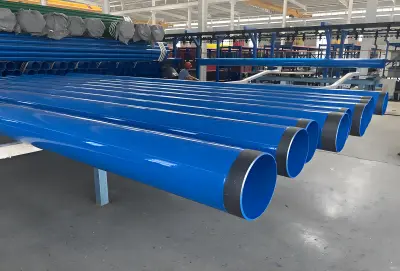
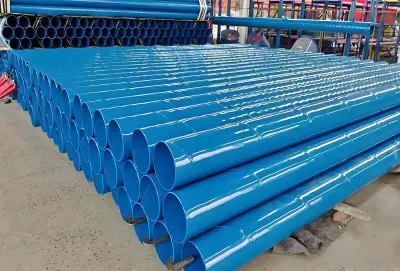
Internal FBE Coating vs External FBE Coating: Why the Difference Matters
What FBE Is and How It Bonds
This type of finish is made of fusion-bonded epoxy that has been joined together. A blast heats and cleans the pipe, and the powder is applied using electricity. It melts, flows, and connects to the hot steel in cross-links. Most work is done at temperatures between 180°C and 250°C. If you heat the reaction, it won't go away, so the hard film won't become more flexible. This is not the same as liquid paint, which dries when the solvent is gone. As long as the formulation and surface treatment are right, the cathode can't split because there is a continuous barrier. The powder itself is important, but so is how clean the steel is, the shape of the anchors, and how long they've been cured.
Service Exposure Sets the Design
The formulation is chosen based on the chemistry, pH, chlorides, solids, and operating temperature of the fluid being moved because the FBE is inside the fluid. External FBE has to deal with salty soil, air, backfill, and stress from installation. This is why the design is based on how corrosive the dirt is and how dangerous it is to drive on. Threats can come from both inside and outside of a pipe. A water main can carry mild water even if it sits on rough ground. Something rough might move through a process line, but only dry air. Make a list of the pressure, temperature, installation method, standards that apply, and long-term failure you want to avoid the most before you make your choice. That list helps you get set up right most of the time.
When Dual Coating Makes Sense
Dual coating places FBE on both sides of the steel. Pipes that are hidden in hard dirt or fire-water lines that are corroded by both the water and the ground can use this method. Because the same person does the pipe, blasting, and coating, a coordinated factory package also cuts down on the number of times suppliers have to talk to each other. It costs more to cover both sides, but you can see more, so having contact on both sides should be worth it. If only one side is really at risk, it might be enough to cover just that side, and it will also cost less. Before you place your order, compare the option to the project papers.
Internal and External FBE Coating: Uses, Advantages, and Limitations
Internal FBE: Bore Protection
By having an internal FBE, the tube is kept from rusting, pitting, rust scale, and pollution. Flow area gets smaller when tubes of rust form on bare steel. This is known as tuberculation. One with a smooth surface doesn't let these happen. People often use water for things like drinking, fire safety, process water, mine slurry, and some oil, gas, and chemical services. Check for labels like NSF/ANSI 61 if you want to drink the water. Some of the benefits are strong bonding, resistance to water and chemicals, application without solvents, and consistent quality over time. You can only do so much. Performance is changed by preparation and curing, and there isn't a single formula that works for all temperatures or fluids. Also, problems can be hard to fix at the ends of fusion bonded epoxy coated steel pipes, at field joints, or where the diameters are small.
External FBE: Barrier Against Soil and Water
Corrosion can't happen underground, underwater, or in the air because of external FBE. It stops salts, water in the ground, and dirty ground, and it does this by protecting against corrosion. People often use it for building projects, fire-water systems, underground water pipes, oil and gas lines, and industrial services. It sticks well, can be put on in a controlled way in the factory, and doesn't easily separate when the specification calls for it to. It's not as mechanically safe as some 3LPE systems, turns chalky after being exposed to UV light for a long time, gets damaged when it's handled or backfilled, and needs to be fixed by a skilled field-joiner. Outside stock that is being stored for a long time is kept out of the sun with blankets.
Technical Comparison
The most important parts of the internal design are how well it works with fluids, how well it resists wear and tear, how smooth it is, and how hot it can get. The outside design puts a lot of thought into how the soil will react to impact, backfill, cathodic protection, and storage. So, the guide standard and the surface affect the thickness of the coating, the preparation of the surface, the finding of holidays, the testing of adhesion, and the confirmation of cure. I never give a single number because the range of temperatures and service life depend on what's in it. For that particular system, you should ask for the technical paper, the inspection and test plan, field references, and the terms of the warranty. Our pipe is made according to API 5L, ASTM A53, EN10210, and AS/NZS 1163. These standards can help you coat something: CSA Z245.20, EN10339, ISO 21809-1, AWWA C210, and C213.
FBE Coating Process, Quality Control, and Other Coating Systems
Step-by-Step Coating Process
The process starts with incoming pipe inspection and degreasing. Another step is to use abrasive blasting on metal that is almost white (NACE No. 2 or SSPC-SP10) and has an anchor profile of 50 to 100 microns. The workers cool the pipe, use electricity to spread the powder, and then wait for it to melt and harden. They keep an eye on the dew point and humidity. Cooling and fixing are the last parts of the cycle. With each stage, adhesion changes. After some time, osmotic blistering can happen if soluble salts are left on the steel. A film that isn't fully healed also loses its ability to fight chemicals and its ability to hold up against force. I tell people who are buying to pay close attention to the final look, as well as the blasting and curing records.
Inspection and Documentation
Checking the product visually, finding flaws, measuring the thickness of the dry film, and testing for bonding or cure are all part of quality control. This test measures how well the material has hardened, and impact tests like ASTM G14 measure how well it can handle damage from backfilling. Checkers need to look at the repairs again. When you order something from another country, make sure you get coating instructions, records for each batch of powder, environmental logs, inspection and test plans, calibration records, certificates, and reports from a third party. In order to keep track of contracts and make sure they are carried out, engineering firms can use Longma Group documents such as ITP, MPS, and MTC.
FBE Compared with Other Coating Systems
When steel is galvanized, zinc is mostly used as a sacrificial layer. FBE, on the other hand, sticks together to make a barrier. 3LPE is usually better at protecting against mechanical damage and moisture than FBE, even though FBE is thinner and sticks to surfaces better. The polyethylene and liquid epoxy systems are not the same when it comes to chemical protection, temperature limits, repair methods, or what they can be used for. When I compare them, I look at where the pipes are located, how they are installed, the risk of impact, the fluid service, the field-joint needs, the cost, and the project standards. I don't pick a winner. That way, you can get quotes from more than one company at the same time. Longma Group also does hot-dip galvanizing, 2PP, 3LPE, and 3PE.
How to Choose, Price, and Source FBE Coated Steel Pipe
Selecting the Pipe and Preparing the RFQ
First, think about the fluid's chemistry, pH, chlorides, solids, temperature, pressure, pipe size, and how it will be installed. It should also be exposed to air or water. Next, make a list of the performance requirements, such as the thickness, suitability, holiday testing, resistance to abrasion and cathodic disbondment, approvals, and ability to work with field joints. After making sure you know the rules, write a full RFQ that includes the steel grade, size, number, coating setup, inspection requirements, Incoterms, packing, delivery schedule, and paperwork. Our fusion-bonded epoxy-coated steel pipe covers an outer diameter of 60.3 mm to 1422 mm, and its wall thickness is between 6.02 mm and 50.8 mm.
Price and Procurement Factors
The price isn't just based on how much it costs to coat one meter. It depends on the type of steel, its size, how it's made, the shape and make-up of the coating, how thick it is, approvals, inspections, packing, freight, taxes, and insurance. Find several quotes that cover the same specific area, and make sure that all of them include field-joint materials, repair tools, certificates, and inspection by a third party. Wholesale and OEM buyers should also check the finishing line's ability to make things, the sizes it can handle, how it handles delays, how it packs for export, and examples of projects that are similar to their own. Since 2003, Longma Group has been making steel pipes. More than 90 countries will have bought their pipes by the end of 2023. Each year, they will make more than 1,000,000 tons of pipes.
Evaluating a Qualified Supplier
Check out the places where the fusion bonded epoxy coated steel pipes and coatings that can be used on them can be blasted, powdered, cured, fixed, and inspected. Check the testing records, quality dossiers, and records of how each batch was made. Don't just believe what the certificate says; check it against the product, coating system, and building where it was made. Longma Group is certified by API 5L, ISO 9001, ISO 14001, and ISO 18001, and it can keep track of goods from raw materials to finished fusion-bonded epoxy-coated steel pipes. Before you start production, you should also agree on when inspections will stop, how to handle changes, support for field joints, documentation in English, and procedures for nonconformance.
Common Mistakes to Avoid
One out of every three arguments is caused by five mistakes. People who buy FBE think that all formulations are the same. They choose the thickness without thinking about how it would be used. They don't care about field joints or how to fix things, even though heat-shrink sleeves and liquid epoxy joint coats should match the film that came from the factory. When they choose external FBE, they don't think about rough backfill, pulling, trenchless installation, or wear and tear. When horizontal directional drilling, you usually need a covering that doesn't wear down quickly. They also pick the supplier whose first price is the cheapest. Instead, you should look at the paperwork, the scope of the inspection, how reliable the delivery is, how well the repair support is, and how well the covered pipe is protected for sea freight.
Final Decision Guide: Internal FBE, External FBE, or Dual FBE?
Choose Internal FBE When the Fluid Is the Threat
Internal FBE is the best choice if the fluid being moved is the main risk and the project needs a smooth covering that can work with chemicals. Common ones are those that handle potable water, wastewater, process water, and firefighting water. That is why you should use a datasheet of the exact mixture to compare the chemical, temperature, and approvals of the fluid. You should try a different lining first if the fluid is rough or very aggressive, or if the temperature is higher than what is suggested.
Choose External FBE When the Ground Is the Threat
External FBE can be used on buried, submerged, or exposed pipe where soil, water, and salts cause corrosion. The way it is installed needs to match the mechanical strength of the coating. It works well when used with cathodic protection. Look over the type of backfill, how to use it, and the field joint repair plans first. If the road has rocks, trenchless crosses, or heavy pulls, you should think about whether to use 3LPE or an overcoat that won't wear down easily.
Choose Dual FBE or Another System
When both the fluid and the environment are corrosive, a combined plant package is more useful. This is when it makes sense to use dual FBE. If you need to install something without digging a trench, deal with rough fluids or chemicals, or the temperature is higher than the FBE grade you chose, you might want to look at alternatives like 3LPE or polyethylene. Tell our engineers what's going on, and we'll see how the options match up with what you want.
Conclusion
There are different areas that internal and external FBE coatings cover, so the choice depends on how much contact there is. The inside covering needs to be right for the fluid, the temperature, and any laws that say it can be used with drinking water. The outside layer needs to be able to handle soil corrosivity, mounting stress, and cathodic protection. Dual coating works best for pipelines where both sides are likely to rust. 3LPE or polyethylene may be better for places that will be hit hard or need work to be done without digging a trench. Preparing the surface, drying, checking the thickness, finding holidays, and checking the record are all important parts of the quality of the coating. The temperature range and service life of fusion bonded epoxy coated steel pipe are set by the exact formula, so test records and datasheets are more accurate than claims made in general. If the technical scope of the quotes is different, you can't compare prices. You should look at a supplier's manufacturing skills, certificates, ability to track products, and repair support when you check them out.
FAQ
1. Do internal and external FBE use the same thickness?
Not all the time. It is possible to use a different mix, thickness, and testing standard for each surface. Follow the project requirements and the datasheet to get the exact system.
2. What temperature range and service life can I expect?
Both depend on the mix, the amount of contact, how well it was installed, and how well it is taken care of. Do not rely on a single broad number. Instead, ask for test results that are specific to the formulation and project references that are similar.
3. Is FBE suitable for drinking water?
It could be if the lining has the right stamps for your job, like NSF/ANSI 61. Find the papers that say you can sell that product and ask for them.
4. How do I choose between FBE and 3LPE?
FBE is not as thick, but it sticks to things really well. For the most part, 3LPE is safer against mechanical damage and water when installing it in tough conditions. Look at how much it costs, how it's installed, the risk of impact, and the fluid service.
Request a Technical Quotation for Fusion Bonded Epoxy Coated Steel Pipe
You can email info@longma-group.com with the size of the pipe, the steel grade, the number of pipes, the covering side, the thickness, the service medium, the temperature, the fitting method, the standards, the inspection scope, and the location of the pipes. Longma Group, a supplier of fusion bonded epoxy coated steel pipe, will recommend the coating configuration, test package, repair system, packaging, and delivery method, with clear pricing for the pipe, coating, inspection, and logistics services.