
If you've ever sourced galvanized mechanical tubing and wondered exactly how the zinc coating gets there — before or after welding — you're asking the right question. A787 tubing is manufactured from pre-coated metallic steel, meaning the zinc coating is applied to the flat steel strip before the tube is formed and welded. This is the defining characteristic that separates it from post-weld hot-dip galvanized pipe. Understanding this distinction directly affects your material selection, machining performance, and total procurement cost.
|
|
|
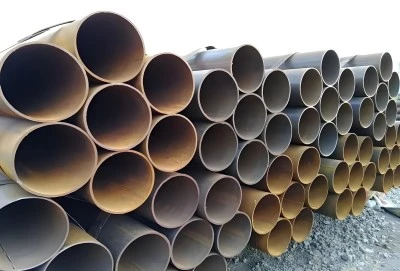
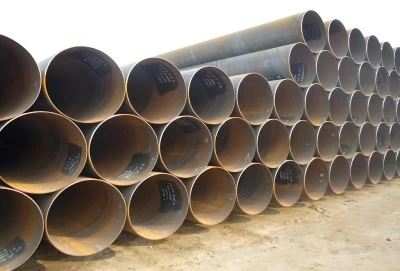
A787 Tubing Galvanization Processes
What Is A787 Tubing?
As per ASTM A787, carbon steel that has been covered with metal must be used to make electric-resistance-welded (ERW) tube. Low-carbon grades like MT1010, MT1015, or MT1020 are most of the time used as base steel. Its yield strength is between 30,000 and 45,000 psi. This tubing is often used to frame greenhouses, farm buildings, furniture frames, and car parts. It is used in places where both structural strength and resistance to corrosion are important.
Pre-Coated vs. Post-Weld Hot-Dip Galvanizing
The order is the main thing that has changed here. Zinc is added to the steel strip at the mill before it is rolled into a tube to make A787 tubing. In hot-dip galvanizing, the finished tube is put into a bath of molten zinc that is about 840°F (449°C) hot. For each method, the surface profile, how well the coating sticks, and how the weld zone needs to be treated are all different.
Why Coating Sequence Matters to Engineers
With post-weld hot-dip galvanizing, a thick layer of zinc is added. This layer isn't always even, and it has patterns that look like spangles. When you pre-coat the strip stage, the zinc layer is more even and tightly linked, so it doesn't break when you bend or roll it. For precise machining jobs like making sleeve bearings or structural connections, it's important that the dimensions stay the same. Pre-coated tubing makes it more likely that this will happen.
Technical Specifications and Performance Characteristics
Chemical Composition and Mechanical Properties
Astm A787 tubing comes in three grades: 1010, 1015, and 1020. The outside sizes of these grades range from 1/2" to 16", and the wall thicknesses from SCH10 to SCHXXS. Some grades have as little as 0.10% to 0.20% carbon, which makes them easy to shape and machine. When you heat treat different grades, the yield strength changes, but these grades always meet the ASTM A787/A787M standards for mechanical properties.
Coating Designations and Corrosion Performance
Pure zinc coating weights as per A787 are G60 (0.60 oz/sq ft) and G90 (0.90 oz/sq ft). When used outside in the country, G90 coating lasts about twice as long before it starts to rust than G60 coating. The AZ50 version of Galvalume has aluminum added to the zinc matrix. This makes it less likely to rust when it's hot. Galvanic healing can also happen with pre-coated zinc. This means that the zinc gives up its own protection to protect the steel where it has been cut or scratched.
A787 vs. Alternative Tubing Materials
A787 tubing is cheaper than stainless steel, which in mild conditions costs 3–5 times more per ton for the same amount of corrosion protection. The wall of ASTM A787 ERW tube is thinner than that of ASTM A106 seamless pipe, but it is still strong enough for structural uses that don't involve pressure. Because the weight-to-strength ratio and surface finish both affect how much can be made, A787 is a good choice for people who make workout tools or car parts.
Manufacturing and Galvanization: Process Breakdown
From Steel Strip to Finished Tube
Metallic-coated steel tube is the first thing that is used to make A787 tubing. A number of roll stations take the coil out of its coil shape and make it into a round tube. After that, HF-ERW (high-frequency electric resistance welding) is used to connect the tubes. Since the heat from the welding burns the zinc where it was welded, there is one more thing that needs to be done to protect against rust.
Weld Seam Protection: The Remetallizing Step
After the welding unit is done, a heated zinc spray is put on the outside of the join area. This is also called seam spraying or remetallizing. Putting the zinc back on top of the pre-coated surface makes it match. If you don't do this step, the bond crack would be a piece of carbon steel that isn't held together and could rust. This is a very important step to make sure that the A787 production is better than other choices.
Post-Fabrication Welding Precautions
If the plan for your shop is to weld A787 tubing after you buy it, you need to pay attention to safety. They make zinc fumes when pre-coated tube is bonded, which is against OSHA rules and needs enough airflow and safety gear for breathing. Any new weld will damage the zinc covering nearby. To protect that area from rust again, it needs to be fixed with a cold-galvanizing spray that is high in zinc. If you don't do this step, you can see steel in the joint.
Procurement Considerations for A787 Tubing Coatings
Pricing and Minimum Order Quantities
It costs a little more than bare A513 tubing to buy pre-coated A787 tubing because the metallic-coated strip supply is more expensive. But it skips the step of galvanizing after fabrication, which cuts down on the overall cost of the process. Longma Group always has 100–200 tons of stock on hand and can take small orders. For the fastest shipping, it takes 7 days from the time an order is approved. This means that flexible buying is a good choice for test runs or gap sales.
Vetting Suppliers for Quality Compliance
When you're looking at different A787 tubing providers, these are the most important licenses and papers you should ask for:
- Material Test Certificate (MTC): Confirms chemical composition and mechanical test results batch by batch, addressing concerns about carbon content variation between heats.
- ISO 9001 Quality Management Certification: Indicates that the manufacturer's production and inspection processes meet an audited quality standard.
- Dimensional Inspection Reports: Wall thickness, OD tolerance, and straightness data should be provided per ASTM A787 requirements.
- Coating Weight Test Records: Verifies G60 or G90 designation compliance, critical for outdoor or humid-environment applications.
Makes sure the coating meets the standards for the G60 or G90 label, which is very important for uses that will be outside or in damp places.
Custom Dimensions and Lead Time Planning
Longma Group can cut to any length and width, from 1/2" to 16", and through walls that are as thick as SCH10 to SCHXXS. If your production design needs lengths that aren't standard or certain OD-to-wall combinations, you can place a custom order. When placing a first order, it's best to plan your buying cycle around a decision timeline of two to four weeks. This gives you time to check samples before sending out the bulk. When you order the same size more than once, shipping can happen within seven days.
Making the Right Decision: Is Hot-Dip Galvanized or Pre-Coated Best?
Corrosion Resistance Trade-Offs
Hot-dip galvanized pipe has a zinc layer that is 3–5 mils thicker than mill pre-coated tube, which has a zinc layer that is 0.5–1.0 mil thick for G90. Hot-dip galvanized pipe might last longer in places with a lot of chemicals, like the sea or an industrial plant. Pre-coated A787 tubing, on the other hand, keeps its shape better and resists corrosion better than other types of tubing used in controlled or moderately exposed environments, such as in car parts, furniture frames, and fitness equipment.
Real-World Application Fit
A787 tubing has taken the place of Schedule 40 pipe in many greenhouse frame projects. Its lighter wall makes shipping cheaper, but it can still handle the high humidity and fertilizer that grow conditions have. People who put up solar panels also like it because the surface is smooth and already finished, so it doesn't need to be painted on-site. Here are some examples of the good things that buying teams in manufacturing and building say they've seen since moving from heavier options to A787.
Matching the Product to Your Machining Requirements
When your shop plans to cut tube into sleeve parts or structural links, it should look at the pre-coated surface of A787. It takes a little longer for the zinc layer to wear away. You can be sure that your machining program takes into account the coating layer if you ask your seller about the finished tube's OD limit before you place your order. This way, you won't have to throw away the first runs.
FAQ
Does hot-dip galvanizing always happen after welding in A787 production?
Steel strip that has already been zinc-coated is used to make No. A787 tubing. The zinc is added before the tube is shaped and joined. If you weld something like ASTM A53 pipe, you can also hot-dip galvanize it. A post-weld thermal zinc spray is used to protect the seam after A787 tubing is welded. This isn't a real hot tub.
How does pre-coated A787 compare to hot-dip galvanized pipe for corrosion resistance?
There is more zinc on hot-dip galvanized pipe, which can help it last longer in harsh environments or with chemicals. The zinc layer on pre-coated A787 tubing is even and sticks well. It reliably does its job in mechanical and structural settings with some exposure. If you live in the country, G90 A787 tubing lasts about twice as long as G60 tubing.
What are typical lead times and MOQs for custom A787 orders?
Longma Group keeps between 100 and 200 tons of standard sizes in stock. The quickest delivery time for items that are in stock is 7 days. Making things in sizes or lengths that aren't standard takes longer. You can place small-batch orders, which let you test things out and buy things when you need to without having to commit to big orders all at once.
Request A787 Tubing Samples and Pricing From Longma Group
As of now, Longma Group has sold items made by A787 tubing to people in more than 90 countries since 2003. We have 1010, 1015, and 1020 grades in stock. Wall schedules range from SCH10 to SCHXXS, and ODs run from 1/2" to 16". We can help procurement teams that need precise measurements, materials that are always the same, and a variety of order sizes. We are ISO 9001 approved, give you all the paperwork you need for MTC, and ship things that are in stock within 7 days. Send your needs to info@longma-group.com or visit longma-group.com to get a price right away.