
Depending on how they are made and the needs of the job, API 5L pipes can be either seamless or soldered. The standard covers both ways of making the product so that it can be used in a variety of oil, gas, and water transportation situations. When solid steel billets are used to make seamless pipes, there are no longitudinal seams. This gives them better strength regularity even under high pressure. Welded types, on the other hand, like ERW, LSAW, and SSAW, offer cost savings and more size options.
The API 5L X46 pipe grade meets this flexible standard and has a minimum yield strength of 46,000 psi (320 MPa). It balances performance with weldability for medium-pressure transmission lines used in building projects around the world.
|
|
|
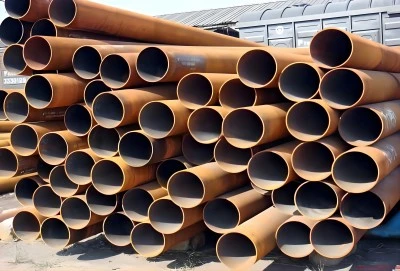
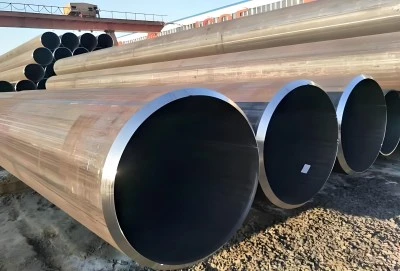
API 5L Pipe Types and Seamless vs. Welded Pipes
API 5L is the internationally accepted standard for line pipe used in the natural gas and oil businesses. It was created by the American Petroleum Institute. This specification covers a number of different ways to make things, so engineers and purchasing managers can choose the best options for their particular situations.
Manufacturing Methods Explained
Before they are cut and rolled into hollow pipe shapes, solid round billets are fired to very high temperatures as the first step in the seamless manufacturing process. This method gets rid of all weld gaps, making the material properties the same all the way through the pipe wall. As a result, the product is very resistant to changes in internal pressure and temperature cycles. This makes seamless pipes very useful for important uses in high-pressure transmission systems and offshore platforms.
Several different methods are used to make welded pipes, and each has its own benefits. Electrical Resistance Welding, or ERW, uses high-frequency electric currents to join the edges of steel strips together. This makes strong longitudinal lines that can fit widths up to 24 inches. Longitudinally Submerged Arc Welding (LSAW) can handle bigger widths and thicker walls by rolling steel plates into cylinders before joining them together under flux covers for safety. SSAW (Spirally Submerged Arc Welding) twists steel tubes around while they are being welded, which makes it possible to make pipes with big diameters while using materials efficiently. When it comes to building large pipelines, these welded methods are the most common because they are more flexible in terms of size and production efficiency than seamless options.
Performance Characteristics and Selection Criteria
When uniform mechanical qualities and wear resistance are needed, seamless pipes are the best choice. The fact that they don't have any weld seams means that they can't fail under the cyclic loading conditions that are common in underwater sites and petroleum processing plants. The controlled manufacturing setting makes sure that the wall thickness stays the same, which is important for doing correct stress estimates in engineering design.
For jobs that involve moving things along a straight line, welded lines are clearly better. Modern welding techniques have closed the performance gaps of the past, and in large-diameter uses, LSAW pipes often match the quality of seamless pipes. Their ability to make more of them means that projects can be started quickly, and their ability to adapt to different sizes means that unique requirements can be met without having to change the tools. When it comes to medium-pressure systems that work below 1,500 psi, welding options are often the most cost-effective because they save a lot of material.
Choosing the right material grade and the right way to make it are related. The X46 grade standard for API 5L PSL1 and PSL2 levels applies to both seamless and welded versions. However, PSL2 has tighter chemical composition limits and requires impact testing. This higher level of standard makes it easier to weld and guarantees consistent performance in tough work conditions, such as low temperatures and situations with changing loads.
Deep Dive into API 5L X46 Pipe Specifications and Properties
The L320 designation, which is the same as the ISO 3183 X46 name, describes certain mechanical properties of metals that make pipelines work best for medium-strength uses. The API 5L X46 pipe standard is carefully maintained to ensure structural integrity across varied environments.
Chemical Composition and Mechanical Properties
X46 steel uses controlled micro-alloying with elements like titanium, niobium, and vanadium, which add up to less than 0.15% of the total amount. This specific formula creates acicular ferrite and bainite microstructures, which are much easier to weld than higher-strength types like X60 or X70. The resulting carbon equivalent values stay low enough to keep the risk of heat-affected zone cracking to a minimum during field welding.
As per the mechanical property standards, the minimum yield strength is 320 MPa (46,400 psi) and the minimum tensile strength is 435 MPa (63,075 psi). The material has good elongation properties, usually more than 22% in normal tensile tests. This means it is flexible enough to handle installation stresses and ground movement without breaking. Because it is strong and tough at the same time, X46 is a great choice for pipes that go through rough areas where ground movement and earthquakes are common.
Manufacturing Process and Quality Assurance
To make seamless X46, the billet has to be heated to an exact temperature, usually between 1,200°C and 1,280°C, and then it is pierced with a rotating tool to make the first hollow shape. After that, rolling is done to get the end size while keeping the grain structure intact. Controlled cooling rates stop phase changes that aren't wanted and could damage material qualities.
Welded X46 pipes go through strict quality checks that check the strength of the seams. Ultrasonic checking of the plate edges before forming, real-time weld tracking during submerged arc processes, and heat treatment after welding to remove any remaining stresses are all parts of LSAW production. High-frequency induction testing is done on ERW pipes to make sure that the weld contact is fully fused.
Corrosion Protection and Coating Systems
Bare X46 carbon steel has a middling resistance to corrosion in air, so it needs protection coatings for use in underground or underwater environments. Three-layer polyethylene (3LPE) systems protect steel from corrosive conditions by mixing an epoxy primer that is fusion-bonded, a copolymer glue, and a polyethylene finish. When applied correctly and reviewed regularly, this coating method stays strong for decades of use.
For systems above ground, hot-dip galvanizing is an alternative way to protect them. Fusion-bonded epoxy (FBE) is used for high-temperature situations where polyethylene coats would become soft. In addition to coating technologies, cathodic protection devices protect underground pipeline parts from rust below the ground using electrochemical shielding. The choice of material must take into account the total costs over its entire life, weighing the costs of the original treatment against the costs of repairs and the time the product is expected to last.
Procurement Considerations for API 5L X46 Pipes
To do strategic buying, you need to know how the market works and what your suppliers can do in order to get a steady supply of API 5L X46 pipes while staying within your budget.
Pricing Factors and Market Trends
The price of steel commodities has a direct effect on the cost of pipes, since the cost of raw materials makes up 60–70% of the value of the final product. A recent study of the market shows that X46 prices are about 8–12% higher than Grade B baselines. This is because it has more alloying elements and is made using controlled manufacturing methods. Large-diameter LSAW pipes cost more than ERW pipes because they require special tools to make and are made in smaller quantities.
The site of the factory has a big effect on the total landing costs. If a project is made in the same country as the manufacturer, there are no foreign shipping costs or customs taxes. However, the base manufacturing costs may be higher. Importing from well-known Asian makers can often get you good deals on big orders, but you need to plan your project carefully because of the long lead times and difficulty of coordinating logistics.
Supplier Evaluation and Certification Requirements
Reputable makers keep a full range of certifications that show they meet international quality standards. API 5L approval shows that the product meets the standard's standards for mechanical properties, tolerances on dimensions, and testing methods. Having an ISO 9001 Quality Management System certification means that there are set controls over the process and models for constant growth that help keep the quality of the products consistent.
Verification of production capacity makes sure that providers can meet project delivery deadlines without rushing the manufacturing process and lowering the standard. Mills that make more than 500,000 tons of goods a year usually keep enough backup equipment and quality control systems to handle big orders. Site checks let you see the manufacturing processes, testing facilities, and quality paperwork systems up close and personal. This gives you more confidence than just paper certifications.
Documentation and Logistics Management
Full sets of documents make it easier to get through customs and follow the rules when traveling across foreign lines. Material Test Certificates (MTCs) list the chemical makeup analysis and mechanical property test results for each production heat. This makes it possible to track the goods all the way through the supply chain. Inspection and Test Plans (ITPs) list the steps that will be taken to make sure the quality of the product during production, and Manufacturing Procedure Specifications (MPSs) list the steps that will be taken to make sure the process can be repeated.
When shipping big diameter pipes, you need to use special handling tools and make special transportation plans. When shipping smaller sizes, containers work well, but when shipping more than 2,000 tons, break-bulk vessel rentals become more cost-effective. Protecting the ends of pipes while they're being moved keeps them from getting damaged and needing expensive fixes in the field. Beveled ends are especially likely to get damaged by impact during handling.
Conclusion
API 5L pipes can be made in two different ways: seamless or welded. Each type is used for different things in the world pipeline system. The API 5l X46 pipe grade standard has well-balanced mechanical qualities that make it good for medium-pressure transmission systems. It has the right amount of strength, can be easily welded, and is inexpensive. Understanding the changes in manufacturing, carefully evaluating suppliers, and putting in place strict quality control methods are all important for successful procurement. When choosing materials, you have to think about both how well they work and how much they will cost. This is because the best options depend on the project's needs, the surroundings, and your budget. Strategic buying from qualified makers guarantees a steady supply of compliant materials that support safe, long-lasting pipeline systems.
FAQs
Can API 5L X46 PSL2 pipes be used for sour service environments?
For hydrogen sulfide conditions, standard X46 PSL2 material needs extra specs. Buyers must specifically ask for API 5L X46 that meets NACE MR0175/ISO 15156 standards. This type of oil is often called X46MS or X46NS, and it has better resistance to sulfur stress cracking thanks to controlled chemistry and heat treatment. Without these extra measures, standard X46 isn't naturally good for sour service.
What distinguishes API 5L X46 PSL1 from PSL2 specifications?
PSL2 has tighter rules, such as Charpy V-notch impact tests being required, maximum yield-to-tensile strength ratios to ensure ductility, tougher chemical makeup limits to improve weldability, and not being able to do weld repairs on pipe bodies. These higher standards are good for important uses where reliable performance supports the extra cost of testing.
How does X46 weldability compare to higher-strength grades?
Because its carbon equivalent values are smaller than those of grades X60–X80, X46 is very easy to weld in the field. Less carbon in the material makes it less likely to harden and crack in heat-affected zones, so in mild conditions, it's often not necessary to pre-heat the material. This feature lowers the cost of installation and the time it takes to build something.
Partner with a Trusted API 5L X46 Pipe Manufacturer
Longma Group is one of the best API 5L X46 pipe suppliers. For 20 years, they have been making high-quality pipes for pipeline projects around the world. Our wide range of production options includes both seamless and welded types, using ERW and LSAW techniques, and sizes ranging from 1/2-inch to 80-inch widths with wall thicknesses up to SCH160. We provide materials that meet PSL1 and PSL2 specs and come with full paperwork that shows where they came from. Our products are certified by API 5L, ISO 9001, and other international quality standards. Standard specs can be delivered in seven days thanks to our accelerated production plans and fabrication services, which include beveling, coating application (3LPE, FBE, galvanizing), and custom end treatments. With more than 1,000,000 tons of production each year and direct deliveries to projects in 90 countries, we offer low prices and full quality guarantee. You can talk to our technical team about your project needs and get thorough quotes that match your standards by emailing info@longma-group.com.