
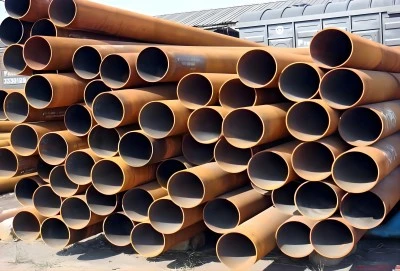
API 5L X46 PSL1 pipe represents a practical middle-ground solution for standard pipeline infrastructure. With a minimum yield strength of 46,000 psi (317 MPa), this grade delivers reliable performance without the premium costs associated with higher specifications. Throughout decades of application in oil and gas transmission, water distribution, and industrial fluid transport, X46 PSL1 has proven its value in environments where extreme toughness requirements are not mandated, making it an economically sensible choice for procurement managers balancing budget constraints with operational reliability.
|
|
|
Introduction
The choice of pipeline materials has a direct effect on the project's costs and its long-term success. There is always pressure on procurement managers to find ways to cut costs while still meeting safety and performance standards. API 5L X46 PSL1 pipe is in a key spot in the standard structure. It is stronger than Grade B but less expensive than X52 or X60 grades. This review looks at the technical specs, comparison economics, and sourcing issues of API 5L X46 PSL1 pipe to see if it really is the most cost-effective choice for standard uses. When engineering teams and procurement professionals understand these factors, they can make decisions based on facts that balance technical needs with the realities of money for global pipeline projects.
Understanding API 5L X46 PSL1 Pipe Specifications and Properties
Chemical Composition and Mechanical Strength
API 5L X46 PSL1 pipe is made up of chemicals that meet API 5L standards. The carbon content is managed and is usually between 0.26% and 0.31%, but this can change based on how it was made and the diameter. The amount of manganese in steel is generally between 0.90% and 1.40%, which makes it stronger and easier to weld. Under PSL1 rules, the most phosphorus and sulfur that can be present is 0.030 percent. This is enough for most service conditions. The minimum yield strength for this material is 317 MPa, and the minimum tensile strength is 434 MPa. This gives it enough structural stability for moderate-pressure uses. The carbon equivalent method helps figure out if something can be welded. API 5L X46 PSL1 pipe is more flexible than PSL2 in this area, which makes field welding easier because the material doesn't need to be heated up in a special way in most climates.
Manufacturing Processes and Heat Treatment
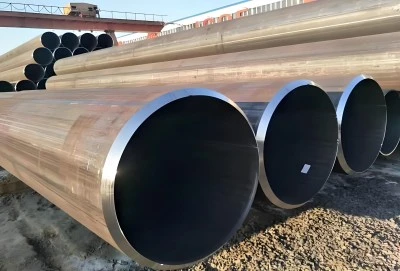
API 5L X46 PSL1 pipes are weldable in many ways. After high-frequency induction welding, ERW pipes are heated to normalise the weld seam microstructure and prevent breakage. LSAW pipes are created via plate forming and submerged arc welding on both sides. They handle 16–80-inch diameters. Connecting bigger pipes using spirally submerged arc welding (SSAW) is affordable. Each manufacturing technique achieves API 5L X46 PSL1 pipe mechanical properties via regulated rolling and heating cycles. Heat treatment ensures weld zone qualities match source material. Maintaining performance under operating pressures and preventing weld interface failure are crucial.
Corrosion Resistance and Operating Conditions
API 5L X46 PSL1 pipe has basic corrosion protection that works well in non-sour working settings. However, protective coatings on the outside and inside of the steel make it last a lot longer. Soil corrosion can be stopped with coatings on the outside, like three-layer polyethylene (3LPE), fusion-bonded epoxy (FBE), or coal tar enamel. Concerns about fluid interaction can be solved with coats or linings on the inside. The grade works consistently in temperature ranges that are normally cool to slightly hot, usually between -20°C and 120°C, but this depends on the thickness of the pipe wall and the pressure class. Chemical protection works well with water, natural gas, crude oil, and processed oil products in normal use. Cathodic protection systems work with coating systems in buried applications to fix any flaws in the coating and offer complete strategies for managing corrosion.
Evaluating the Cost-Effectiveness of API 5L X46 PSL1 for Pipeline Applications
Price Positioning Against Alternative Grades
When you compare API 5L X46 PSL1 pipe to similar specifications, you can see that it has clear economic benefits. Grade X42 PSL1 has slightly lower strength and is slightly cheaper—usually 3–5% less—but it needs bigger walls to get the same pressure ratings, which often cancels out any material cost savings by making the structure heavier. Although Grade X52 is 8–12% more expensive than API 5L X46 PSL1 pipe, it has higher strength, which lets walls be thinner. The PSL2 version of API 5L X46 PSL1 pipe needs more testing, such as Charpy V-notch impact tests and tighter chemical controls, which raises the cost of materials by 15 to 20 percent. Even though ASTM A106 seamless pipes are very reliable, they usually cost 25–35% more than welded API 5L X46 PSL1 pipes of the same size. Because of its position, API 5L X46 PSL1 pipe is a great choice for normal uses where PSL2 needs are not required by contract.
Application Suitability Across Industries
API 5L X46 PSL1 pipe works great for water distribution networks, industrial plant pipes, moderate-pressure transmission lines (less than 1,000 psi), and structural uses. Its balance of strength and economy is good for oil and gas gathering systems, especially in places that aren't sour. Municipal water officials like how reliable the grade is and how cheap it is for large-diameter transmission mains. API 5L X46 PSL1 pipe is used for process pipes, cold water systems, and firewater networks in factories. Middle Eastern and Southeast Asian projects often choose API 5L X46 PSL1 pipe for low-cost infrastructure in areas with mild temperatures and acidic conditions that can be controlled with normal covering systems.
Total Cost of Ownership Analysis
API 5L X46 PSL1 pipe saves money over time since it requires less maintenance than lower-grade alternatives. It needs fewer inspections since its strength lowers deflection and stress-related fatigue. Good carbon equivalent values keep welding output high. This implies lower installation labour costs than for higher-alloy grades that need specific procedures. Because API 5L X46 PSL1 pipe is readily accessible, lead times are lower, and vendors compete more. Dimensional compatibility with existing infrastructure aids replacement and expansion. When maintenance costs, projected service life of over 30 years under normal conditions, and installation speed and ease are considered, API 5L X46 PSL1 pipe often outperforms premium and economy grades for standard uses.
Procurement Insights for API 5L X46 PSL1 Pipes
Global Supplier Landscape and Availability
No nation manufactures more seamless line pipe than China. Hebei manufacturers can produce massive volumes of pipe in various sizes. American mills predominantly produce ERW API 5L X46 PSL1 pipe in smaller sizes. Non-stock sizes take 8–12 weeks to ship. European enterprises make specialised items with high-quality finishes. Seasons affect availability. Chinese suppliers stock more in spring and autumn, when manufacturing cycles are longer. Trusted suppliers can offer standard sizes (8" to 24" widths and Sch 40 and Sch 80 wall thicknesses) in 7 to 14 days. When diameter, wall thickness, and length vary, mill manufacturing runs may be required. This may add 4–8 weeks to the lead time, depending on the mill's schedule and order size.
Pricing Dynamics and Certification Requirements
Iron ore, coking coal, and energy prices impact raw material prices, which affect steel prices worldwide. Transportation, tariffs, and local market dynamics affect regional prices. When the specifications are the same, Chinese pipes cost 20–30% less than Western pipes, but purchasing teams must verify the certificates and quality. Mill Test Reports (MTRs) including chemical and mechanical test findings, API 5L monogram licenses from the manufacturer, and third-party inspection certifications are crucial documents. ISO 9001 accreditation proves quality management system compliance. Countries have varied export paperwork requirements. Certificates of origin, phytosanitary certifications for wooden packing, and pressure equipment directive compliance statements in regulated markets are examples.
Regulatory Compliance and Quality Documentation
International pipeline projects face many restrictions. Pressure Equipment Directive (PED) regulations and CE marking are required for European sales. Australian projects employ API specifications and AS/NZS. The ASME code and third-party inspections by respected organisations are common in Middle Eastern projects. Complete documentation packages should include ITP, MPS, WPS, and NDT reports with ultrasonic, radiographic, or magnetic particle inspection data. Tracking materials from the steel mill to the pipe manufacturer ensures accountability and simplifies warranty claims for installation or testing issues.
Making an Informed Decision: Selecting API 5L X46 PSL1 for Your Pipeline Project
Aligning Specifications with Project Requirements
Design engineers determine wall thickness using pressure design techniques such as design pressure, pipe diameter, permitted stress (based on yield strength and safety criteria), weld joint efficiency, and corrosion allowances. API 5L X46 PSL1 pipe can withstand distribution and moderate-pressure gearbox pressures with a yield strength of 46,000 psi. Extreme temperatures, earthquakes, and terrain condition effect material choice. The initial cost of capital must be matched with its overall cost during its useful life due to limited funding. In hydrogen service, sour gas including H2S, or extremely low temperatures, API 5L X46 PSL1 pipe may not operate; hence, additional standards are required. A complete design rationale evaluation ensures that your grade will operate in real-world settings and not be excessively cautious.
PSL1 Versus PSL2 Certification Trade-offs
Basic chemical analysis, tensile testing, and hydrostatic pressure testing are required for PSL1 clearance. This quality guarantee is sufficient for everyday usage at the greatest price. PSL2 needs additional Charpy V-notch impact tests to ensure toughness at particular temperatures, stricter chemical composition limitations with maximum carbon equivalents, yield-to-tensile ratio criteria, and improved monitoring. When operating in sour environments, low temperatures, or conditions where the material might break quickly, PSL2 certification is worth the 15-20% material cost and lengthier testing timeframes. Some laws demand PSL2 for certain programs. Most water distribution, room-temperature oil movement, and factory pipe connection systems function with PSL1 certification. This prevents procurement teams from rising expenses without boosting performance due to specification creep.
Risk Mitigation Through Supplier Evaluation
A firm considering becoming a supplier should evaluate their manufacturing capacity, quality management systems, technical assistance, and delivery reliability. Third-party site audits or plant inspections assess production tools, testing laboratories, and process controls. References from prior customers demonstrate quality consistency and contractual compliance. Financial stability indicators assess supply continuity threats. Discusses payment conditions and provider risk tolerance. Escrow agreements or letters of credit safeguard international commerce. Value is added by after-sales support, including installation assistance, warranty coverage, and product replacement in case of fault. Having many competent suppliers gives competition and backup capacity if primary sources have production issues or capacity restrictions.
Building Trust with Reliable API 5L X46 PSL1 Pipe Suppliers
Manufacturer Credentials and Production Capabilities
Leading manufacturers maintain API 5L logo licenses to demonstrate API Quality Program compliance. These standards include mill inspections, product testing, and approval. ISO 9001 accreditation establishes quality control standards for planning, manufacturing, and customer service. Facilities that produce more than 500,000 tonnes of products annually are considered to be well-established with quality procedures and technological expertise. Advanced manufacturing equipment, including digital hydrostatic test stations, automated ultrasonic testing systems, and precise cutting tools, maintains product quality. Longma Group's 230,000-square-meter facility, which produces over 1,000,000 tonnes of steel annually and has various production lines for ERW, LSAW, and SSAW processes on diameters from half-inch to 80 inches, demonstrates these talents.
Verification Protocols for Supply Chain Integrity
Verifying certificates prevents buyers from purchasing low-quality items with fraudulent documents. Check the API's online registration for monogram rights to verify authorisation. When comparing material test report data to statistical patterns, you may identify inconsistencies that need further examination. Third-party testing agencies like SGS, Bureau Veritas, or TÜV may verify product quality before shipping. Ultrasonic testing, inspection for measurement errors, and witness testing provide real-time quality control. Chemical composition is checked by optical emission spectrometry to verify material quality. Together, these standards reduce supply chain risks. This is particularly critical when purchasing from unknown sources or entering new markets with varying quality requirements.
Best Practices for Procurement Execution
Open communication throughout the quote and negotiation sets norms for specifications, testing, documentation, packaging, and shipment. Purchase orders that clearly state standards, certificates, inspection points, and acceptance criteria reduce uncertainty. Customised manufacturing services including bevelled edges, end guards, unique branding, and packaging must be documented. Selecting Incoterms, inland transportation, container loading supervision, and ship insurance are all part of operations planning. Consider the time needed to manufacture, transport, and pass customs when planning a delivery. Technical assistance, warranty claims, and additional quantities for project expansion are crucial after-sales services. When procurement teams deal with timely suppliers who can address these difficulties, projects run more easily, and scheduling risks are reduced.
Conclusion
Because it is a good mix of mechanical strength, weldability, and cost-effectiveness, API 5L X46 PSL1 pipe is a great choice for standard pipeline applications. The grade's 46 ksi yield strength can handle moderate-pressure needs without the higher prices that come with higher specs. Procurement teams benefit from having a wide range of suppliers to choose from, simple licensing standards, and products that have been tested and proven to work in a variety of settings. To do buying right, you need to carefully evaluate suppliers, read all the paperwork, and make sure that technical specs match up with real-world working conditions. This grade minimizes capital costs while keeping operational integrity when project needs match API 5L X46 PSL1 pipe capabilities.
FAQ
1. How does X46 compare mechanically and economically to X52 grade?
When compared to API 5L X46 PSL1 pipe, X52 grade has a minimum yield strength of 52,000 psi, which means that thinner wall shapes can be used for the same pressure values. This extra strength cuts down on the number of tons needed by about 12 to 15 percent in pressure-limited systems. Because X52 costs 8–12% more per ton than API 5L X46 PSL1 pipe, the economic trade-off depends on the details of the project. The higher strength-to-weight ratio of X52 makes it better for projects where less weight makes installation or transportation easier. Most of the time, API 5L X46 PSL1 pipe is cheaper than X42 in standard distribution systems with modest pressures. This is because wall thickness is usually determined by the smallest possible thicknesses rather than pressure estimates alone.
2. Can X46 PSL1 be used in places where it will rust?
When it's toxic, API 5L X46 PSL1 pipe needs to be protected. For buried uses, coatings on the outside like FBE, 3LPE, or coal tar systems keep soil from corroding the metal. Corrosive fluids are dealt with by internal linings. The grade can't be used for sour service with hydrogen sulfide without being upgraded to PSL2 that meets NACE MR0175 standards. Coating strategies work better with cathodic protection systems. Mildly corrosive water uses work well with the right coating choice and tools that check for rust. Chemically aggressive environments may need stainless steel or an alloy that doesn't rust.
3. What impact does PSL1 certification have on project budgets?
Because testing standards are less strict for PSL1 certification, material prices are 15-20% lower than for PSL2 certification. PSL1 doesn't require impact testing, has less tight rules on chemical composition, and doesn't need as many inspection witness spots. These simplified standards shorten the time it takes to send items and lower the cost of running the business. By specifying PSL1 when regulatory requirements allow, projects in non-critical service classifications save a lot of money because they don't have to meet too many requirements, which raise costs without improving performance in real-world conditions.
Partner With a Trusted API 5L X46 PSL1 Pipe Supplier
When procurement teams need reliable line pipe options, they should work with well-known makers who offer both technical know-how and helpful customer service. Since 2003, Longma Group has sent certified API 5L pipe to more than 90 countries to help with projects ranging from building oil infrastructure in the Middle East to water systems in Australia. Our factory makes API 5L X46 PSL1 pipe using both ERW and LSAW methods, and it comes in sizes ranging from half an inch to eighty inches. All of the pipe goes through a lot of tests, such as chemical analysis, mechanical property verification, ultrasound examination, and hydrostatic testing. We only get our raw materials from the best steel mills in China, like Shagang and HBIS, so you can be sure of the quality. Full paperwork sets come with MTRs, API certificates, and custom inspection reports that meet the needs of the project. Our expert team helps with application building and making sure that the specs are right for your needs. Standard specifications can be delivered in as little as seven days, and fabrication services are available for beveling, coating, and other special end treatments. Get in touch with our purchasing experts at info@longma-group.com to talk about your pipeline needs and get quotes from a reputable API 5L X46 PSL1 pipe maker that wants your project to succeed.