
Yes, API 5L X46 PSL1 pipe is indeed considered a mid-strength line pipe grade within the API 5L specification family. This classification stems from its minimum yield strength of 46,000 psi (317 MPa), positioning it between the standard-strength Grade B and X42 pipes and the higher-strength X52, X60, and X65 variants. For procurement managers and pipeline engineers handling oil and gas transportation projects, understanding this mid-strength designation is critical to balancing structural performance with cost-efficiency while meeting operational demands across global pipeline networks.
|
|
|
Introduction
Right line pipe grade may make or break huge pipeline infrastructure projects. Due to its mild pressure ratings, structural strength, and affordability, API 5L X46 PSL1 pipe is popular worldwide. Buyers and construction engineers choose materials based on this grade's strength. We provide "mid-strength" pipes that are stronger than basic but cheaper than premium. This categorisation affects design, minimum wall thickness, installation, and maintenance. Engineering teams may design projects that fulfil regulatory compliance, operational efficiency, and budgetary responsibility in Middle Eastern oil fields and Southeast Asian water supply systems by understanding this balance.
Understanding API 5L X46 PSL1 Pipe Grade
Definition and Standard Classification
API 5L X46 PSL1 pipe is a special level of product specification within the API 5L standard, which controls the production of line pipes for the oil and gas businesses. The symbol "X46" means a minimum yield strength of 46 ksi (kilopounds per square inch), and "PSL1" means the Product Specification Level 1, which has standard quality requirements but doesn't require the more thorough testing procedures that PSL2 specifications do.
Chemical Composition and Mechanical Properties
API 5L X46 PSL1 pipe has the right amount of carbon, manganese, phosphorus, and sulfur in its chemical makeup to make it easy to weld and keep its shape. Typically, the most phosphorus and sulfur that can be present is 0.030 percent. This allows for basic welding operations on a wide range of pipeline projects. Mechanically, the grade has a minimum yield strength of 317 MPa and a minimum tensile strength of 434 MPa, which means it can hold enough weight for moderate-pressure transmission systems. This makes the pipe strong enough to handle the stresses of normal oil and gas delivery while still being flexible enough for fitting in the field.
Manufacturing Processes and Dimensional Standards
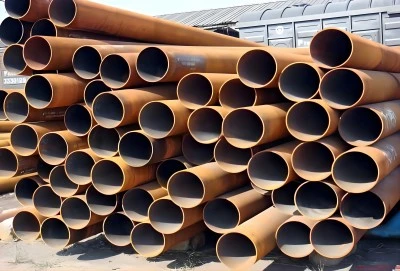
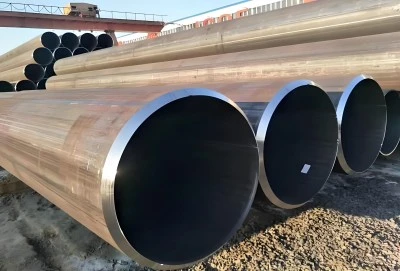
Each welding process Longma Group utilises to make API 5L X46 PSL1 pipes is perfect. Cheap methods for connecting 1/2-inch to 24-inch pipes include ERW and HFW. They fit water supply and distribution. LSAW and DSAW make 16-80-inch pipes. The pipes support oil and gas mainline transmission pipelines. Spirally Submerged Arc Welding (SSAW) effectively produces parts of varied sizes. SCH10–SCH160 wall thicknesses can handle low-stress to moderate-pressure gearbox systems. Standards are 6–18 meters long with pointed or straight ends for field welding or mechanical connections.
Corrosion Resistance and Protective Measures
API 5L X46 PSL1 pipe needs to be protected from the outside to keep it from rusting, but the qualities of its base material make it suitable for a number of coating uses. Coatings made of Fusion Bonded Epoxy (FBE), 3-Layer Polyethylene (3LPE), and 3-Layer Polypropylene (3LPP) last longer in harsh places like offshore bases and buried pipeline installs. After welding, heat treatment methods make the microstructure of the weld seam normal. This keeps the pipe from breaking and makes sure that its mechanical properties are the same along its entire length.
Typical Applications in Global Infrastructure
Many companies worldwide utilise API 5L X46 PSL1 pipes. Oil and gas firms utilise these pipes for moderate-pressure collection, transmission, and distribution lines. The grade balances strength and cost, which is suitable for water supply. This is particularly true for Southeast Asian and Australian municipal construction projects. The pipe's uniform size and weldability make it valuable for bridge and industrial construction. This grade works well in large-scale energy infrastructure, where reliability and cost-effectiveness are crucial, as shown by MOBIL OIL AUSTRALIA.
Is API 5L X46 PSL1 Classified as a Mid-Strength Line Pipe?
Industry Strength Classification Framework
The API 5L standard organises line pipe types by yield strength. Grade A and B, with minimum yield strengths of 25 and 35 ksi, are excellent for low-pressure usage and supporting structures. Mid-strength grades X42–X56 have yield strengths between 42 and 56 ksi and are utilised in moderate-pressure gearbox and distribution systems. High-strength grades X60 to X80 and beyond provide yield strengths of 60 ksi to 80 ksi for high-pressure mainline gearbox pipes that transport natural gas and crude oil nationwide.
Comparative Analysis: X46 Versus Adjacent Grades
API 5L X46 PSL1 pipe has 11 ksi stronger yield strength than X42 and 6 ksi less than X52. This tiny difference simplifies system construction. Compared to X42, its additional strength helps engineers decrease wall thickness by 8–10% while maintaining pressure ratings. This reduces material and shipping costs. Compared to X52, API 5L X46 PSL1 pipe grade performs well for purposes where high operating pressures don't justify investing in stronger materials. The material is flexible enough to withstand installation pressures and minor ground vibrations with a minimum tensile strength of 434 MPa.
PSL1 Versus PSL2: Practical Considerations
The difference between PSL1 and PSL2 features has a big impact on choices about what to buy. PSL2 requires tighter controls over chemical composition, Charpy V-Notch impact tests to prove toughness, and better paperwork for tracking. API 5L X46 PSL1 pipe offers steady performance at lower costs, making it an economically smart choice for projects in moderate areas that don't need sour service standards. PSL1 is often chosen by engineering teams working on standard oil and gas gathering systems, water transmission pipelines, and structural applications to save money on capital costs without sacrificing operational safety.
Performance Limits and the Best Ways to Use It
Knowing API 5L X46 PSL1 pipe restrictions helps you pick a material. Depending on how the diameter and wall thickness are determined according to ASME B31.4 or B31.8 pipeline regulations, this grade performs well at 1,200 psi. Non-sour service conditions have minimal hydrogen sulphide concentrations; thus, it operates consistently. Most pipelines and water delivery networks function from -20°C to 120°C. Procurement managers know that API 5L X46 PSL1 pipe is the optimum structural strength-to-cost ratio for project evaluation.
Comparing API 5L X46 PSL1 with Other Pipe Grades for Procurement
X46 PSL1 Versus X52 PSL1: Mechanical and Cost Implications
The 6 ksi difference in yield strength between X52 PSL1 and API 5L X46 PSL1 pipe means that thinner wall schedules can be used in X52 applications, which could lower the cost of materials per ton. The economic benefit is lessened, though, because X52 usually costs 5 to 8 percent more per ton than API 5L X46 PSL1 pipe. For projects where the design forces are within the range of API 5L X46 PSL1 pipe, choosing X52 costs more than it's worth. Because Longma Group can produce both grades in a variety of ways, procurement teams can use real-time steel price and supply information to find the most cost-effective option while still getting competitive quotes.
X46 PSL1 Versus Stainless Steel: Application-Specific Trade-offs
Stainless steel pipes are three to five times more expensive than carbon steel API 5L X46 PSL1 pipe, but they are better at resisting rust. When aggressive corrosion protection is needed, advanced coatings applied to API 5L X46 PSL1 pipe give the same service life at a fraction of the cost of stainless steel. Stainless steel may be worth the money for projects that will be exposed to salt or high temperatures during oxidation, but most oil, gas, and water transportation projects meet their lifetime goals by choosing the right coatings for API 5L X46 PSL1 pipe base material.
Cost-Value Analysis Against X42: Price Per Meter and Bulk Availability
X42 is the most popular mid-strength grade since it's been utilised and is readily available. API 5L X46 PSL1 pipe costs 2–4% more than X42 in materials, but thinner walls make up for this. When purchasing above 500 tonnes, economies of scale matter. Longma Group stocks API 5L X46 PSL1 pipe in typical wall thicknesses and diameters, so regular standards may be provided in seven days. Buy in bulk to save 3–7% on project costs. This makes the API 5L X46 PSL1 pipe cheaper than the X42 after welding, shipping, and installation.
Procurement Insights for API 5L X46 PSL1 Pipes
Supplier Certification and Quality Assurance
By choosing a manufacturer with a wide range of certifications, you can be sure that they are following international standards and government rules. Longma Group has API 5L certification, ISO 9001 Quality Management Systems certification, and ISO 14001 Environmental Management Systems certification. These show that they follow quality control standards that are accepted around the world. Material Test Certificates (MTC) are included with every API 5L X46 PSL1 pipe delivery. These show the chemical makeup, mechanical qualities, and hydrostatic testing results. This makes it possible to track the pipes all the way from where the raw materials came from to when they were inspected for quality.
Market Pricing Trends and Delivery Logistics
Global steel prices depend on raw material costs, energy costs, and demand cycles in the world's largest construction markets. Procurement managers should monitor annual patterns and establish long-term supplier relationships at cheap rates. Longma Group produces about 1,000,000 tonnes per year, ensuring a constant supply even in tight markets. This prevents material shortages from delaying projects. Stock products average seven days for delivery. Special orders require 20–30 days, depending on width, wall thickness, and coating. Container and bulk vessel shipping may handle minor installations to massive infrastructure undertakings.
Minimum Order Quantities and Negotiation Strategies
To manage inventory well and buy things quickly, you need to know what the minimum order quantities (MOQ) are for each supplier. Depending on the width and complexity of the design, the standard MOQ for API 5L X46 PSL1 pipe is between 10 and 25 tons. There are different levels of price cuts based on the size of the order. For example, contracts for more than 100 tons get 3-5% off, and contracts for more than 500 tons get 5-7% off. Using multi-year framework agreements, combining purchases across multiple project phases, and placing orders during slow times in manufacturing can help procurement teams get better terms.
Technical Usage, Maintenance, and Best Practices
Welding Techniques and Installation Procedures
API 5L X46 PSL1 pipes will stay structurally sound for as long as they are used if they are welded correctly. Shielded Metal Arc Welding (SMAW), Gas Tungsten Arc Welding (GTAW), and Gas Metal Arc Welding (GMAW) can all be used on this grade as long as the welding procedures follow ASME Section IX or an equivalent international code. Preheating at temperatures between 50°C and 100°C stops hydrogen cracking when the temperature outside is less than 10°C. For important jobs, post-weld heat treatment may be needed, but the mild carbon equivalent of the grade usually lets the weld quality be good enough without this extra step. Beveled ends that are cut to 30-degree angles make it easier for the root pass to go through and lower the risk of incomplete fusion defects.
Maintenance Strategies and Corrosion Prevention
Routine checking procedures keep pipelines in good shape and stop them from breaking down without warning. External surveys done once a year using cathodic protection monitoring check the integrity of the coating and find places that need fixing. Smart pigs, which are inline inspection tools, can find internal rust, wall thickness loss, and mechanical damage when they are equipped with magnetic flux leaks or ultrasonic sensors. When used in corrosive environments, impressed current cathodic protection systems work with coating protection to keep steel surfaces at safe electrochemical potentials. Some ways to fix things are composite wrap systems for small amounts of wall loss and full-section replacements for areas with a lot of damage.
Quality Control Procedures and Pressure Ratings
Quality control begins with product manufacturing and continues during installation and start-up. Hydrostatic testing subjects each pipe length to 60–90% of the minimum yield strength. Pressure is controlled, and leaks are prevented. Measurements reveal that the outside width, wall thickness, and ovality meet API 5L requirements. Test weld gaps without harming them. Radiographs and ultrasonics may detect slag inclusions, porosity, and absence of fusion. Carbon, manganese, phosphorus, and sulphur levels are within limits, according to chemical tests. These quality control methods ensure that supplied pipes fulfil ASME B31.4 for liquid petroleum pipelines and ASME B31.8 for gas pipelines design pressure ratings.
Conclusion
Middle-strength line pipe API 5L X46 PSL1 is a major player. Its well-balanced mechanical qualities, consistent performance, and low cost make it suitable for many pipeline applications. The minimum yield strength of 46 ksi serves moderate-pressure demands in water transmission networks, oil and gas collection systems, and structural applications at a lower cost than higher grades. Procurement and pipeline engineers may make informed material choices that meet project technical and economic goals by knowing where this grade falls in with industry standards. API 5L X46 PSL1 pipe is a solid choice for efficient, cost-effective projects as the world's construction demands expand.
FAQ
1. What makes API 5L X46 PSL1 suitable for mid-strength applications?
With a minimum yield strength of 46,000 psi, API 5L X46 PSL1 pipe falls between standard-strength Grade B pipes and higher-strength X52 and X60 grades. It can support moderate-pressure transmission lines and is still cost-effective. This level of strength is good for normal design pressures in water networks, oil and gas gathering lines, and industrial piping systems, and it doesn't cost as much as high-strength options.
2. How do PSL1 and PSL2 mechanical properties differ for X46 grade?
Compared to PSL1, PSL2 standards require more documentation, Charpy V-Notch impact tests, and tighter limits on chemical composition. Both have the same minimum yield and tensile strength values, but PSL2 guarantees toughness performance at certain temperatures, which is important for service at low temperatures or in sour environments. PSL1 is good enough for everyday uses when the project requirements don't call for these extra properties.
3. Can X46 PSL1 pipe handle high-pressure oil and gas environments?
API 5L X46 PSL1 pipe works well in moderate-pressure situations, usually up to 1,200 psi, but this depends on how the diameter and wall thickness are calculated. High-pressure trunk transmission systems that work above 1,500 psi usually ask for grades X60, X65, or X70 to keep wall thickness as low as possible and save money. To make sure that API 5L X46 PSL1 pipe is suitable for certain working conditions, project engineers should do thorough pressure-temperature estimates in line with the relevant pipeline codes.
Source Certified API 5L X46 PSL1 Pipes from a Trusted Manufacturer
Longma Group is ready to help you with your future pipeline projects by providing certified API 5L X46 PSL1 pipe options that are fit to your specific technical and business needs. Our manufacturing methods include ERW, LSAW, and SSAW, and we can make pipes with diameters from 1/2 inch to 80 inches and wall thicknesses from SCH10 to SCH160. With API 5L approval, ISO 9001 Quality Management System compliance, and thorough testing methods, we make sure that every pipe meets the highest standards set by governments around the world. Our production capacity of more than one million tons per year allows us to keep delivery schedules, and standard specifications can be provided within seven days. Competitive bulk prices, flexible minimum order quantities, and full documentation that includes MTCs, ITPs, and manufacturing procedures are all good things for procurement managers. Visit or email our experienced sales team at info@longma-group.com to talk about the details of your project, get full quotes, and make sure you have a solid supply plan. We provide value by providing quality goods and quick customer service to engineering companies, project procurement managers, and plant equipment managers in more than 90 countries.








