
Selecting the right line pipe for oil and gas transmission projects remains one of the most critical decisions EPC contractors face. When specification sheets list API 5L X52 pipe as a requirement, project procurement directors must quickly evaluate whether this grade delivers the performance, compliance, and cost balance their projects demand. With minimum yield strength of 52,000 psi (360 MPa), X52 grade offers a practical middle ground—providing sufficient mechanical integrity for medium-to-high pressure pipelines without the welding complexities and expense of higher carbon equivalent grades like X65 or X70. As global infrastructure projects accelerate through 2026, X52 continues to prove its value across diverse environments from Middle Eastern sour gas fields to Southeast Asian offshore platforms, making it a strategically sound choice for engineering contractors managing multi-million dollar procurement budgets.
|
|
|
Understanding API 5L X52 Pipe: Specifications and Key Properties
What Defines API 5L X52 Metallurgical Standards?
API 5L X52 is a type of high-strength low-alloy steel that is made according to American Petroleum Institute Specification 5L. It has a minimum yield strength of 360 MPa and a minimum tensile strength of 460 MPa, which puts it in the middle of the performance range. This grade has to meet strict chemical makeup standards. The carbon content has to be between 0.24 and 0.28%, the manganese content has to be no more than 1.35%, and the sulfur content has to be less than 0.007% so that there aren't any manganese sulfide inclusions that make it less resistant to impact. The controlled chemistry makes it very easy to weld and keeps the structure strong even when the pressure changes, which is common in transmission pipelines.
Dimensional Range and Manufacturing Capabilities
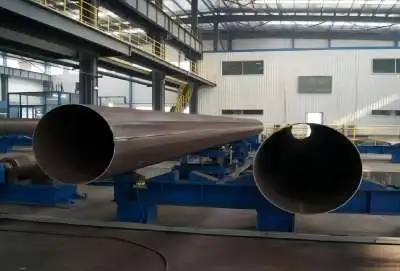
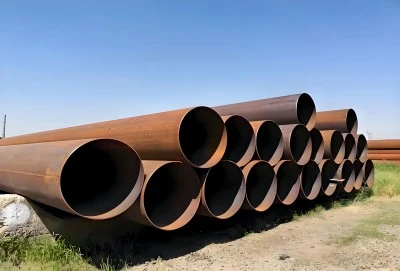
Manufacturing facilities today make X52 pipes that meet a wide range of size requirements. Outer diameters can be anywhere from a half-inch nominal bore to 80 inches (21.3mm to 2032mm), so they can fit everything from trunk pipelines to gathering lines. Wall thickness ranges from SCH10 to SCH160 (6.35mm to 59.54mm), which lets engineers give exact pressure numbers. Standard lengths range from 6 to 18 meters, and projects that need fewer field joints can choose double random lengths. You can choose between regular ends and beveled ends, based on the welding needs further down the line and the connection requirements spelled out in the project's technical papers.
Manufacturing Methods and Their Applications
X52 pipes are made using five different welding methods that are each best for a specific application. The ERW (Electric Resistance Welded) and HFW (High Frequency Welded) methods can make lines up to 24 inches in diameter, which are perfect for medium-pressure uses that need fast transport. Longitudinally Submerged Arc Welded (LSAW) and Double Submerged Arc Welded (DSAW) are two methods used to make thick-walled pipes with a big diameter that are needed for high-pressure trunk lines. SSAW (Spirally Submerged Arc Welded) is a cheaper way to join big diameter pieces that need mild pressure. To make sure that each method meets the requirements of API 5L PSL1 or PSL2, it is put through strict quality checks that include chemical analysis, checking the mechanical properties, ultrasonic testing, NDT inspection, hydrostatic pressure testing, and X-ray examination.
Comparing API 5L X52 Pipe with Other Pipeline Grades and Materials
Performance Benchmarking Against Adjacent Grades
When looking at pipeline materials, knowing how X52 stacks up against nearby grades helps you figure out where it should be used most. Lower grades, like ASTM A53 Grade B or API 5L Grade B, have yield strengths of about 240 MPa, which is good for moving low-pressure water but not good enough for most petroleum service. The X42 and X46 grades are about the same strength as X52, so they don't really offer any advantages over API 5L X52 pipe. On the other hand, X60 and X65 grades have higher strengths, which means thinner walls for the same pressure ratings. However, they also have stricter welding rules, require preheating, and cost more materials, which can add 15 to 25 percent to project budgets. The X52 is in the ideal position where power and cost-effectiveness meet.
Material Selection Trade-offs
Stainless steel pipes are better at resisting corrosion, but they are too expensive to be used for long-distance transmission and are usually only used in refineries for specific tasks. Alternatives made of carbon steel don't have the same strength-to-weight ratio as X52, which means that infrastructure will be heavier and installation costs will be higher. The controlled microstructure of X52 allows for thinner wall designs than lower grades. This lowers the amount of material needed and the cost of transporting it across projects that span hundreds of kilometers, which is an important factor to think about when purchasing thousands of tons of materials every year.
Coating Systems and Environmental Protection
External protection systems are very important for the longevity of pipelines. Hot-dip galvanizing is a cheap way to protect against corrosion in mild conditions. Fusion Bonded Epoxy (FBE) is a single-layer coating that can protect underground pipes in soft soils. Multi-layer systems, such as 2PP, 3LPE, and 3PE, offer full security by mixing adhesion, corrosion barrier, and mechanical shielding. This is very important for chemically active environments and marine sites. When properly specified and applied, these coating choices make X52 even more durable, stretching its useful life beyond 30 years.
Why Choose API 5L X52 Pipe? Value and Benefits for B2B Procurement
Strategic Advantages for EPC Contractors
For project-driven buying to work, the products must meet the needs of many people at the same time. X52 pipes deal with this level of complexity in a number of ways. The grade has full API 5L certification in both PSL1 and PSL2 versions, which makes sure it meets the technical requirements of the owner and the audit requirements set by a third party that control project milestone payments. Manufacturing sites usually have ISO 9001, ISO 14001, and ISO 18001 certifications. These provide the quality management paperwork that EPC companies need for the prequalification processes for contractors. Every package comes with a Material Test Certificate that meets EN 10204 3.1 or 3.2 standards. This makes the owner accepting process easier.
Cost-Performance Optimization
Procurement managers who are careful with their budgets like how X52 handles different goals. The grade's mechanical properties allow for optimized wall thickness calculations, which cut material use by 10–15 percent compared to alternatives with lower strengths for the same pressure classes. This directly leads to lower costs for materials and construction, as lighter buildings need less expensive foundation work. At the same time, X52 doesn't have the high prices or complicated welding requirements of X65 and higher grades. This helps companies keep their profit margins when they are bidding on EPC projects. This leads to a 5–15% rise in the overall project's economics, which is important when yearly buying contracts are worth $5–50 million.
Proven Field Performance
Decades of operational records show that the X52 is reliable even in tough service circumstances. Many millions of hours have been spent on major transmission projects in the Middle East moving sour gas with H2S levels above 15%, as required by NACE MR0175 for sulfide stress cracking resistance. Southeast Asian offshore platforms have worked well in sea environments without rusting when they were covered with the right coating methods. Installations in the jungles of South America confirm their mechanical integrity by surviving earthquakes and foundation settlements that would weaken less durable materials. This track record lowers the risk of the project and gives the owner confidence during technical reviews.
Practical Guide to Procuring API 5L X52 Pipes in 2026
Supplier Evaluation Framework
To find skilled makers, you need to carefully look at a lot of different factors. API 5L product certification is the minimum requirement for entry, and current certificates showing that API 5L X52 pipe is within the approved scope can confirm this. It is important to look closely at a company's manufacturing capacity. Annual production of more than one million tons shows that it is an industrial-scale operation that can handle multi-phase projects with consistent quality. Getting your raw materials from top mills like Shagang, HBIS, or Baosteel makes sure that the quality of the metal stays the same from one heat to the next. Automated ultrasonic testing stations, X-ray inspection systems, and hydraulic test rigs are used in advanced facilities to make sure that the product is 100% correct. This is very important for projects where field failure would have major schedule impacts.
Understanding Delivery Dynamics
Good time management is what separates projects that go well from ones that go badly. Established makers keep large stockpiles of common specs, which lets standard sizes be delivered in seven days, giving them a competitive edge when project deadlines get tight. Custom sizes start production runs that need to buy materials, shape them, weld them, heat treat them, and inspect them. This adds time, up to 4 to 6 weeks. Export logistics add another layer, as optimizing containers, preparing paperwork, and clearing customs all take extra weeks. Smart procurement directors start working with vendors 90 to 120 days before they are needed on-site. This gives the plan time to accommodate any shocks that may come up.
Certification and Documentation Requirements
As important as the physical product is, paperwork is just as important in places where engineering contractors work. The owners want an audit trail that includes full material traceability from mill test reports to production records to final inspection certificates. Before production starts, Inspection and Test Plans (ITP) set hold places and witness standards. Manufacturing Procedure Specifications (MPS) list the parameters for welding, the cycles of heat treatment, and the steps for quality control. For each piece of pipe, Material Test Certificates (MTC) show its mechanical qualities, chemical analysis, and compliance statements. Third-party verification from SGS, Bureau Veritas, or similar organizations adds independent proof that QA/QC managers can trust, which is important for managers who aren't sure. Reliable suppliers usually give full documentation packages without being asked, not just when asked.
Conclusion
Through 2026 and beyond, X52 grade line pipe will continue to show its value by providing the best balance of mechanical performance, cost-effectiveness, and ease of manufacturing. Its yield strength of 52,000 psi is strong enough for medium- to high-pressure transmission uses, and it doesn't cost as much or require special welding techniques like higher types do. There are many certification choices, such as API 5L PSL1/PSL2 variants and NACE compliance standards, which allow operation in a wide range of service environments, from sweet gas transport to sour service environments. For EPC contractors who are in charge of project-driven procurement and have yearly material budgets of $5 million to $50 million, X52 provides the dependability, paperwork support, and supply chain security that are needed to meet owner requirements and project deadlines. When purchased from reputable companies with the right certifications, production capacity, and quality systems, API 5L X52 pipe is a smart choice that improves project economics and effectively manages technical risk.
FAQ
What distinguishes PSL1 from PSL2 specifications in API 5L X52?
PSL1 is the normal quality level and only requires basic mechanical testing. PSL2 has tougher chemical composition limits, requires Charpy V-notch impact testing, tighter dimensional tolerances, and all welds must be checked without damaging them. PSL2 costs about 8–12% more than PSL1, but it offers better reliability for important applications where failure would have bad results.
Can X52 pipes handle sour gas service with high H2S content?
For bad service, Standard X52 needs extra specs. The designations X52MS or X52QS show that the material was made with controlled chemistry and processing to prevent Hydrogen Induced Cracking and Sulfide Stress Cracking in line with NACE MR0175/ISO 15156 standards. To get material that is compliant, the procurement specifications must clearly list the sour service requirements.
What typical lead times should procurement teams expect for custom dimensions?
Standard standards from well-known makers ship seven days after stock arrives. Custom sizes need production runs, which adds to the lead time of 4 to 6 weeks for getting the materials, shaping, welding, heat treating, and inspecting them. Timelines can be pushed back to 8–10 weeks by adding third-party witness inspections or special coating systems. Depending on the location, international shipping and clearing customs can take an extra two to four weeks.
Partner with Longma Group for Your API 5L X52 Pipe Requirements
For over 20 years, Longma Group has been making high-quality X52 pipes, and they are ready to help you with your pipeline projects. We have been a top producer of LSAW and ERW steel pipes since 2003. Our ISO 9001, ISO 14001, and ISO 18001 quality management systems help us keep our full API 5L approval, which covers grades B through X80. Our facility covers 230,000 square meters and can make more than a million tons of products every year. The diameters range from 21.3 mm to 2032 mm, and the wall thicknesses range from 6.35 mm to 59.54 mm. We only get high-quality raw materials from top Chinese mills like Shagang, HBIS, and Baosteel. This way, we can be sure that the mechanical qualities of your project will stay the same. Standard specs allow for seven-day delivery, which works with tight plans, and our experienced export team takes care of all the paperwork, including ITP, MPS, and MTC packages that engineering contractors around the world need. Our technical team will make sure that you get exactly what you need, whether you need PSL1 for low-cost uses or PSL2 with full impact testing for important services. Email our procurement experts at info@longma-group.com to get specific technical paperwork, cheap quotes, and delivery schedules that fit the needs of your project. As a reliable API 5L X52 pipe supplier, we serve over 90 countries on six continents. Visit longma-group.com to learn more about what we can do for you.








