
When sourcing steel pipe for critical infrastructure projects, procurement managers and pipeline engineers often encounter grade designations that appear interchangeable but carry nuanced differences. API 5L X56 PSL1 pipe and L390 PSL1 pipe frequently surface in specifications for oil and gas transportation systems, water supply networks, and offshore construction projects. While these two designations share similar mechanical properties and applications, they originate from different standardization bodies and present distinct implications for international procurement, regulatory compliance, and quality assurance protocols. Understanding whether API 5L X56 PSL1 is functionally equivalent to L390 PSL1 pipe becomes essential for project managers coordinating multi-regional supply chains and ensuring material compatibility across diverse regulatory landscapes.
|
|
|
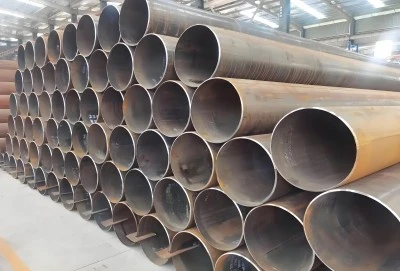
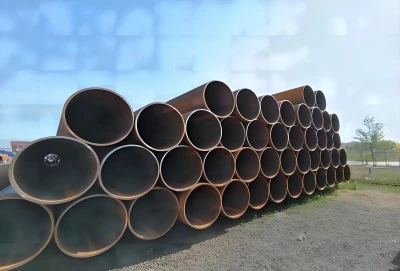
Understanding API 5L X56 PSL1 and L390 PSL1 Pipe Standards
The American Petroleum Institute-approved API 5L X56 PSL1 pipe transports oil and natural gas in pipelines. "X56" signifies the minimum yield strength is 56,000 pounds per square inch (386 MPa), and "PSL1" means the quality is standard, fulfils most typical applications, and is cost-effective.
Europe and other countries utilise ISO 3183 or EN 10208. These specifications apply to L390 PSL1 pipe. The minimum yield strength of "L390" is 390 megapascals, or 56,600 psi, identical to X56. ISO 3183 PSL1 satisfies quality criteria like API but without the rigorous testing procedures of PSL2.
Origin and Governing Bodies
API 5L comes from the American Petroleum Institute and is the most common way to buy things in North America, especially for big projects with companies like those in the US and Canada. ISO 3183, on the other hand, is a set of international standards that were made by working together with people from around the world. It is more widely used in markets in the Middle East, Asia, and Australia. In the past, projects like MOBIL OIL AUSTRALIA have used both ISO standards and API requirements. This shows that sellers need to be able to hold two types of certification.
Chemical Composition Parameters
To make sure the steel can be welded and stays together, the amounts of carbon, manganese, phosphorus, and sulfur that can be in it are limited in both grades. The maximum amount of carbon allowed by API 5L X56 PSL1 pipe is 0.26%, the maximum amount of manganese is 1.40%, and the maximum amount of phosphorus and sulfur is each 0.030%. Similar limits are set by ISO 3183 L390 PSL1, though exact tolerance values may be slightly different based on how the pipe is made. Minor differences in composition don't usually have an effect on how well something works in real life, but they do have an effect on mill certification paperwork and traceability requirements during project audits and customs clearance.
Mechanical Property Benchmarks
The defining mechanical properties show that these grades are functionally equivalent. The minimum yield strength required by X56 is 386 MPa, and the minimum tensile strength is between 490 and 760 MPa. The extension rates depend on the pipe diameter and wall thickness. L390 sets almost the same yield standards at a minimum of 390 MPa and a tensile strength range of 490 to 760 MPa. Pipes that meet either specification can usually handle similar operating pressures and stress conditions because of this overlap. This means that they can be used interchangeably in many situations.
Technical Comparison: Chemical Composition and Mechanical Properties
A thorough study of materials science can reveal small differences that are important for negotiating purchases and checking the quality of products. Knowing these technical terms helps engineering teams check what suppliers say and make sure the materials supplied meet the project's needs. API 5L X56 PSL1 pipe properties are central to these evaluations.
Alloying Element Impact on Performance
Carbon content directly impacts hardness and welding ability. Field welding is more efficient with lower carbon ratios, but tensile strength may decrease. Low-temperature locations like offshore bases and arctic pipelines need manganese's strength and toughness. To prevent brittleness and cracking in sour service environments with hydrogen, phosphorus and sulphur should be minimised.
The composition range of API 5L X56 PSL1 pipe is somewhat broader than PSL2. It's supposed to be a cheap basic service option. ISO 3183 L390 PSL1 sets similar requirements, but European mills utilise tougher internal controls to fulfil several regional approvals. To ensure the chemicals utilised match the request, purchasing teams should get ladle analysis reports and product analysis certifications from recognised producers.
Yield and Tensile Strength Comparison
The yield strength level indicates how much stress a pipe may withstand before permanently changing form. This is a crucial pressure vessel design measure. X56 and L390 strive for 386-390 MPa minimum yield, which puts them in the same engineering stress calculation position. Both grades have tensile strengths between 490 and 760 MPa, which is suitable for most gearbox applications.
Elongation rates indicate a material's flexibility and shapeability before breaking. Both standards require minimum elongation values to decrease with wall thickness. Thicker-walled pipes have lower elongation but better absolute toughness. Project engineers should pay special attention to cold bending or field adjustments when checking that the prescribed elongation meets the predicted installation stresses.
Temperature and Pressure Ratings
When projects are in harsh areas, operating temperature ranges affect the choice of materials. Standard grades X56 and L390 PSL1 work reliably from -29°C to 120°C (-20°F to 250°F), which is enough for most onshore and offshore uses. Extreme cold service below -29°C might need impact testing like in PSL2 standards, even though Charpy V-notch testing isn't required by default for PSL1 grades.
The pressure values are based on the pipe's width, wall thickness, and the safety factors that were used when it was designed by engineers. Both grades can handle normal transmission pressures of up to 1500 psi in normal pipeline service. The ASME B31.4 or B31.8 code specifies the highest pressures that can be used. When pipes are used as load-bearing members instead of pressure vessels, structural applications may have different design requirements.
Practical Differences in Application and Performance
Standard selection affects purchase logistics, manufacturing workflows, and long-term operating stability. This is shown by real-world project performance. When deciding between API 5L X56 PSL1 pipe and L390 PSL1, you need to think about which one is recognized by regulators, which one is available from suppliers, and which one works with the infrastructure you already have.
Industry-Specific Applications
Both kinds are used in oil and gas gearbox pipelines, where their strength-to-cost ratio makes long-distance transit economical. This kind is increasingly employed for large-diameter trunk mains in water supply systems. Applications that must fulfil AWWA C200, API, and ISO standards are notably affected. Tho fabrication norms vary, bridge piling, building columns, and offshore jacket structures employ the same material grades.
Manufacturers employ these pipes to make pressure vessels, heat exchangers, and process equipment. If buying managers understand grade equivalency and account for modest strength changes when determining wall thickness, they can source materials from throughout the globe without rethinking processes. This independence is particularly useful for multi-country projects, because material delays may derail plans and increase costs.
Welding and Fabrication Considerations
PSL1 grades' chemical and mechanical properties must be evaluated before field welding. Warming uses CO2. To avoid cold cracking in hot locations, high carbon content demands higher preheating temperatures. Carbon equivalent ranges are comparable for X56 and L390 PSL1. This implies welding process standards (WPS) from one grade may be used for the other with minor adjustments.
ERW, HFW, LSAW, DSAW, and SSAW are used by Longma Group to weld API 5L X56 PSL1 pipe to 1/2" to 24" diameters and 80" pipes with SCH10 to SCH160 wall thicknesses. We test weld integrity against base material characteristics utilising ultrasonic waves, hydrostatic pressure, and X-rays for each production method.
Fabricators employing these grades must heat treat after welding for cyclic loads or low temps. PSL1 doesn't require this; however, good engineering practice advises normalising weld zones to eliminate residual stresses and strengthen material. Arctic pipelines and offshore facilities with seasonal temperature changes require this.
Environmental and Operational Constraints
Corrosion protection strategies affect both the total cost of the project and the amount of maintenance that needs to be done over time. Our specialized anti-corrosion facilities can apply standard coating systems such as Fusion Bonded Epoxy (FBE), 3-Layer Polyethylene (3LPE), and 3-Layer Polypropylene (3LPP). For projects in marine environments, 3LPE is usually chosen because it is better at resisting moisture, and for buried pipelines, cathodic protection systems may be used along with coatings.
In sour service environments with hydrogen sulfide, it's important to choose materials that are better than PSL1. Neither X56 PSL1 nor L390 PSL1 naturally meet the requirements of NACE MR0175 without extra hardness controls and impact testing. So, procurement teams looking at pipelines for sour gas transmission should upgrade to PSL2 grades or ask for extra testing to make sure they won't crack under sulfide stress.
Market Comparison: Procurement Considerations and Supplier Overview
When buying steel pipes around the world, buyers have to balance technical needs with business realities. Things like lead times, changing prices, certification costs, and the reliability of suppliers all affect the project's economics. Knowing how the market works helps buyers improve their sourcing strategies and lower supply chain risks. API 5L X56 PSL1 pipe remains a global benchmark.
Global Availability and Regional Preferences
North American projects mostly utilise API 5L. This is owing to its massive mill and inspection facilities. Large Gulf Coast and oil sands engineering and construction organisations choose API grades after decades of performance and regulatory expertise. In the Middle East, Southeast Asia, and Australia's resource business, global consortium partners favour ISO 3183.
ISO 9001, ISO 14001, ISO 18001, and API 5L-certified Longma Group factories. We can meet any need without sacrificing quality or timelines. As exporters to over 90 countries since 2003, we understand different regulatory systems and customer demands. Our 441.8 billion yuan registered capital and 230,000-square-meter production location enable us to produce over 1,000,000 tonnes of goods yearly and handle large orders with quality.
Pricing Trends and Lead Time Factors
Steel pipe prices rely on raw material, energy, and construction demand cycles. API-certified pipe may cost more overseas owing to brand recognition and third-party inspection. ISO-accredited mills may sell cheaper ISO-certified alternatives, especially for projects where regulatory authorities accept either standard.
Product quantity and demand complexity affect lead times. Longma Group delivers normal measurements with plain ends in 7 days, but bevelled edges, specific heat treatment, and third-party verification take 4-6 weeks. Buyers with tight construction schedules should contact suppliers early in engineering to reserve production slots and avoid peak demand market allocation shortages.
We acquire raw materials from trusted domestic mills including Shagang, Shangang, TISCO, BX Steel, Shougang, HBIS, and Baosteel. We can track materials from steel production to pipe delivery and verify quality. Vertical integration reduces supply chain volatility and speeds project response.
Supplier Reliability and Certification Verification
Foreign pipe purchases risk false materials and mill test results. Buyers should check API monograms, API's online certification registry, and third-party inspection agencies throughout manufacture for validity. ISO 3183 pipe purchasers should request notified body certifications and do chemical analysis spot checks during receipt inspection.
Engineering firms may acquire Longma Group documentation packages. ITP, MPS, MTC per EN 10204 3.1 or 3.2, radiographic film, and dimensional inspection reports are examples. If field issues arise, our quality control system tracks each pipe length from raw material heat number to final hydrostatic testing to recreate the pipeline's history.
Procurement teams should evaluate suppliers' manufacturing, technical, quality, and post-delivery capabilities. Beveling, threading, perforating, expanding, and coating reduce supply chain suppliers, improving project logistics. Our integrated manufacturing capabilities offer pipe ready for installation, eliminating subcontractor coordination.
Conclusion
The main difference between API 5L X56 PSL1 pipe and L390 PSL1 pipe is that they are made by different governing bodies, not differences in how well they work in real life. Both specifications offer a minimum yield strength of 386-390 MPa, similar tensile properties, and the right chemistry for welding in oil and gas transmission, water infrastructure, and structural applications. Choosing between these grades depends on the location of the project, the rules that apply, and the way the materials are bought, not on which grade is better.
When buyers are dealing with international supply chains, it's helpful to have suppliers who can certify to both standards. This way, buyers don't have to redesign systems or delay projects because of specification conflicts. Knowing the technical details and business effects helps procurement teams make decisions that are in line with project economics and risk management goals.
FAQ
1. Can I substitute L390 PSL1 pipe for API 5L X56 PSL1 in pipeline specifications?
Usually, yes, as long as the project requirements and regulatory bodies agree that ISO 3183 certification is the same as API 5L X56 PSL1 pipe. The mechanical properties are similar enough that stress calculations give the same results. Before finalizing the procurement, make sure that the engineering drawings clearly allow substitution or get approval from the project engineer to avoid problems with not meeting specifications during receiving inspection.
2. What advantages does API 5L X56 PSL1 offer over L390 PSL1?
API certification is more widely recognized in North American markets and among international companies with U.S. headquarters. Projects that need to follow the ASME B31 code may prefer API 5L to make code reconciliation easier during design reviews. In some regions, inspection infrastructure and third-party testing laboratories are also more familiar with API standards, which could speed up quality assurance workflows.
3. How can I be sure that the API 5L X56 PSL1 pipe certification I have is real?
Ask for copies of the mill's API monogram license and check the license number in the online database of the American Petroleum Institute. Look at the pipe stenciling to make sure it correctly identifies the API, including the specification, grade, and PSL level. Hire authorized third-party inspection agencies to watch the production and testing, and demand full material traceability documentation, such as heat numbers and chemical analysis reports from certified laboratories.
Partner with a Trusted API 5L X56 PSL1 Pipe Manufacturer
Longma Group has been making high-quality API 5L X56 PSL1 pipe for 20 years and has a lot of certifications to back it up. We are a reliable supplier for difficult global projects because we are certified to both API 5L and ISO 3183, and our advanced production facilities can handle diameters from 1/2" to 80" and wall thicknesses from 6.35mm to 59.54mm using ERW, LSAW, and SSAW methods.
We deliver standard specifications within 7 days and offer full documentation packages that include MTC, ITP, and MPS to meet the needs of engineering contractors. Our value-added services, such as beveling, coating, and custom fabrication, make your supply chain easier to manage and make project coordination simpler. Getting our raw materials from China's best steel mills guarantees consistent quality and full traceability from the ladle to the installation site.
You can email our engineering support team at info@longma-group.com to talk about your project requirements, get technical datasheets, or get quotes that fit your delivery schedule.